

Your Dog Doesn't Love the Word. It Loves the Promise.
Every word you say to your dog is a contract. Keep it and the word gets more powerful. Break it and the word dies, quietly, and you never find out until you need it.

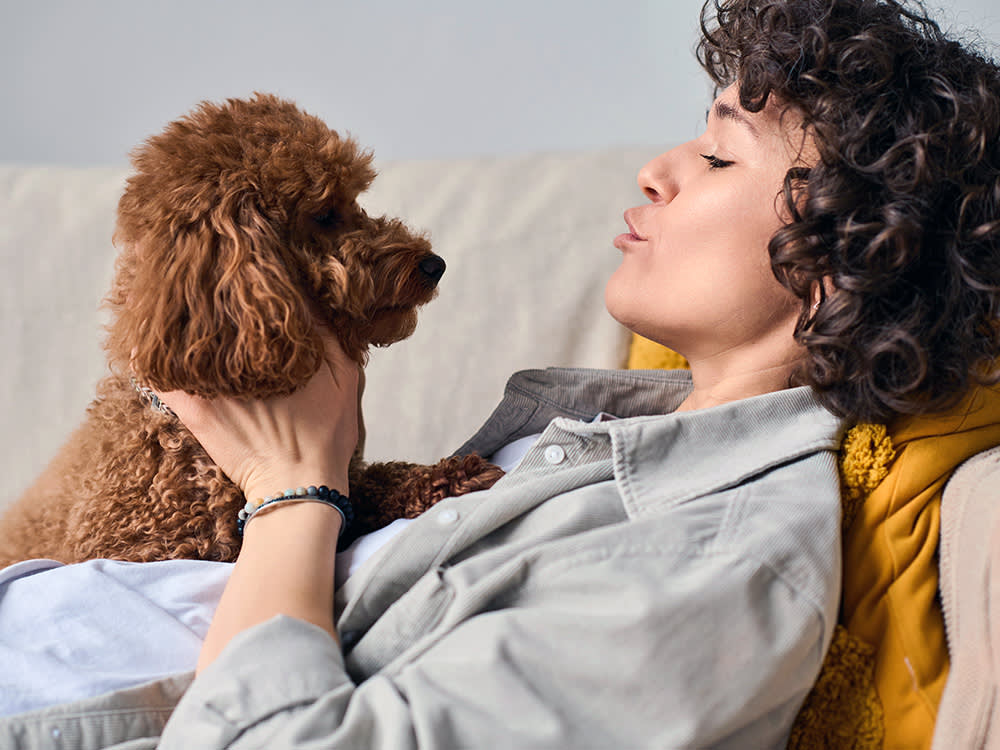
Say “walk” in most houses and something happens. Ears up, body up, a scramble toward the door that arrives before you’ve finished the syllable.
It is tempting to read that as vocabulary. It isn’t. Your dog has not learned what the word means. Your dog has learned what the word predicts, which is a completely different achievement, and understanding the difference changes how you talk to them for the rest of their life.
Here is the frame worth holding: every word you say to your dog is a contract. The word makes a promise about what happens next. If you keep it, the word gains power. If you break it, the word loses power, and it loses power silently, without any announcement, until one day you call “come” in a parking lot and your dog does the math and declines.
That’s the whole article. Everything below is what follows from it.
Why a sound becomes a feeling
Dogs build associations between a sound and an outcome, and when the outcome carries a strong emotional charge, so does the sound. That’s not vocabulary in the human sense. It’s prediction.
The clearest proof is that dogs respond to pitch long before they respond to any specific word. A brand-new puppy who has never been trained will run toward a person making high, repetitive, excited sounds with hands clapping. Nobody taught that puppy the word. The tone itself was the prediction, and the prediction was good things.
“People assume they’re teaching a dog a word, and what they’re actually teaching is a forecast,” says Dr. Mara Chen. “The dog isn’t parsing English. The dog is asking one question, which is ‘what usually happens after this noise,’ and then behaving accordingly. That’s the whole system, and it’s remarkably honest.”
Once an emotion is attached, it sticks. After enough repetitions with a consistent outcome, a word is not easily forgotten.
The ten, sorted by what they actually promise
The useful way to think about your dog’s favorite words is not as a ranked list of hits. It’s as a set of promise types, because the type tells you how easily each one breaks. Yours will vary wildly, and the variation is the point: a friend’s Havanese would rather be launched from a cannon than go for a walk, and “car” is a threat to any dog whose car only goes to the vet.
Promises of freedom
- “Outside.” The gateway word, and for many dogs the single best one they own. It promises exploration, sniffing, novelty, and relief. For a dog shut in all day, especially through a long winter, it’s the difference between a life and a waiting room.
- “Go play.” A release. It tells your dog the formal part is over and they are off the clock, which is exactly why it’s so powerful at the dog park immediately after a recall (more on that below, because it’s also the fix for the biggest mistake in this article).
- “All done.” The word almost nobody teaches, and the one that most improves an anxious dog’s life. It means the thing is genuinely over, nothing further is coming, you may stand down. Dogs who never get a clear end-of-activity signal stay switched on, watching, waiting for the next cue. Give them a period at the end of the sentence and the vigilance drops.
Promises of a resource
- “Treat.” The shortest, most reliable contract in the language. No explanation required.
- “Good boy” / “Good girl.” The oldest contract there is, and the one most often written as a blank check. It stays meaningful only as long as it keeps pointing at something real.
Promises of a job
- “Find it.” The most underrated word here, and one most owners never teach. Scatter a handful of kibble in the grass, say it, walk away. Sniffing is genuine cognitive labor, and dogs given regular nosework have been shown to become measurably more optimistic on judgment-bias tests, which is about as close as behavior science gets to reading a mood. Five minutes of this does what twenty minutes of fetch cannot.
- “Go get your toy.” Toy-driven dogs will do nearly anything for this, and it comes with a bonus: it’s a task. It gives a jittery dog something to do with the arousal you just handed them, instead of leaving them vibrating in the hallway.
Promises of a trip
- “Walk.” For most dogs the highlight of the day, and specifically because of novelty. A route full of ever-changing smells is real enrichment. For a low-energy or anxious dog it’s a chore, and there is no shame in that.
- “Ride in the car.” Entirely dependent on where the car goes. Training class, the woods, the beach, and the word is electric. The vet and the nail trim, and the word is a warning.
A promise of safety
- “Crate.” Counterintuitive, and only true if the crate was built properly. Say the word, toss a treat in, let them chase it, repeat, and a crate-trained dog will sprint at the sound. A well-conditioned crate is a den, and the word inherits everything the room means.
How a word dies
This is the section the cheerful version of this article always leaves out, and it’s the one that will actually save you.
A word does not stay good on its own. It stays good because the outcome keeps arriving. Break that link enough times and the word degrades. Trainers call it a poisoned cue, and it happens in ordinary, well-meaning households constantly:
- “Come” that ends the fun. You call your dog at the dog park, and the reward for coming is the leash, the exit, and the end of the best hour of their week. Do that twenty times and you have taught your dog that “come” means the good stuff stops. The word still exists. It just now predicts a loss, and your dog will hesitate at exactly the moment you cannot afford hesitation.
- “Car” that only means the vet. Same mechanism. The word inherits whatever it points at. A dog who has learned that the car takes them to frightening places will start showing fear behaviors, including bolting, at the word alone.
- Your dog’s name, used as a scold. If the name arrives right before displeasure often enough, the name stops being an invitation and starts being a warning.
- Tone as a leak. Anxious or angry delivery attaches anxious or angry feelings to whatever word you happen to be holding. You can poison a perfectly good cue purely with how you said it.
The repair is not complicated, but it is not fast: stop using the damaged word for a while, retrain a fresh one with a clean history, and keep the promise this time.
How to build a new one, deliberately
The mechanism is genuinely this simple, and works for any word you want:
- Say the word.
- Then make the good thing happen. In that order, every time. The word has to come before the outcome, because the word’s entire job is to be a prediction. Said after, it’s just commentary.
- Repeat until your dog anticipates. When they reliably know what’s coming next, they have learned the word. That’s the finish line.
- Then keep the contract. Forever, or at least often enough that the forecast stays accurate.
One caution about winding your dog up
Excitement is not free. Anytime you reward a dog for a behavior, you get more of that behavior and more of the emotion attached to it, and that includes the emotions you didn’t mean to install.
Tug is a great example: it gets a dog enormously excited, and that’s fine, because you want an excited dog when you’re playing tug. Getting your dog thrilled every time someone comes to the door is the same mechanism with a much worse outcome, because now you have a dog who cannot be calm when guests arrive. Same tool. Different context. Ask what emotional state you actually want at that moment before you cue it.
What this really buys you
Being deliberate about the words you use, and honest about the promises they make, doesn’t just get you a dog who does what you ask. It gets you a shared language, built out of kept promises, that makes ordinary days better for both of you.
Your dog’s favorite word was never the word. It was you, being reliable.
References
- Let me sniff! Nosework induces positive judgment bias in pet dogs — Duranton & Horowitz, Applied Animal Behaviour Science, 2019
- Neural mechanisms for lexical processing in dogs — Andics et al., Science, 2016
Dr. Kohl is a board-certified veterinary dentist with a particular interest in preventive oral care. She reviews all dental health content at The Pet Times and contributes practical guides on home dental routines, professional cleaning, and oral disease prevention.
Meet our experts ↗Keep reading
 TrainingAsking Your Dog for Consent Sounds Ridiculous. It Works Anyway.Dr. Ravi Mehta · 8 min
 Training'Gentle Parenting' Your Dog Isn't Permissive. That's the Part People Get Wrong.Dr. Nina Kohl · 9 min
 TrainingHow to Actually Start Dancing With Your Dog (No Rhythm Required)Sasha Ford · 8 min
 TrainingThat Embarrassing Baby Voice? Your Dog Is Begging You to Keep Doing It.Dr. Amara Solis · 5 min
 TrainingStop Pushing Your Dog Down. Catch Them Doing It.Dr. Nina Kohl · 6 min
 TrainingThe Wagging Tail Lie: Why Reading One Dog Signal Gets People BittenTom Hadley · 8 min