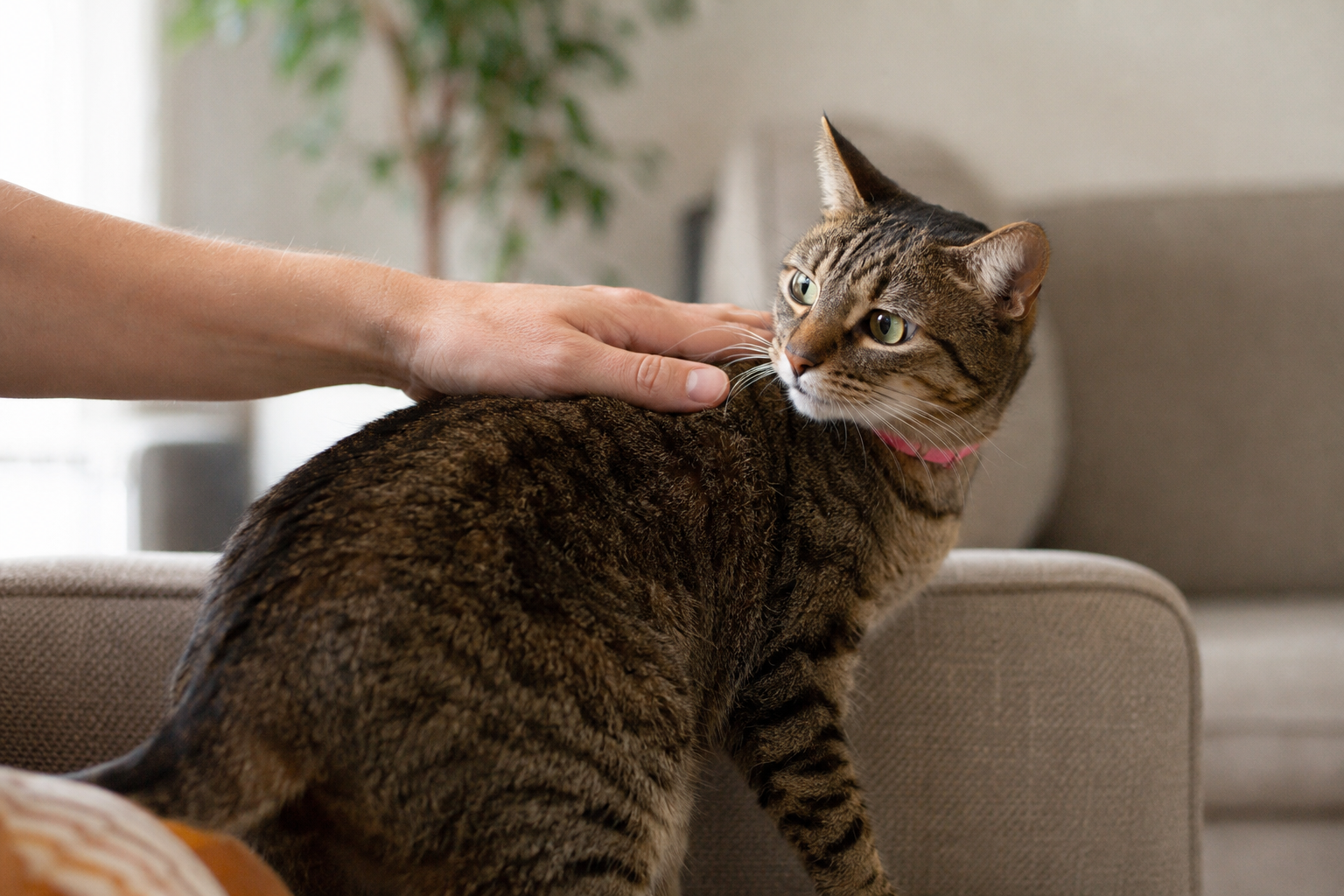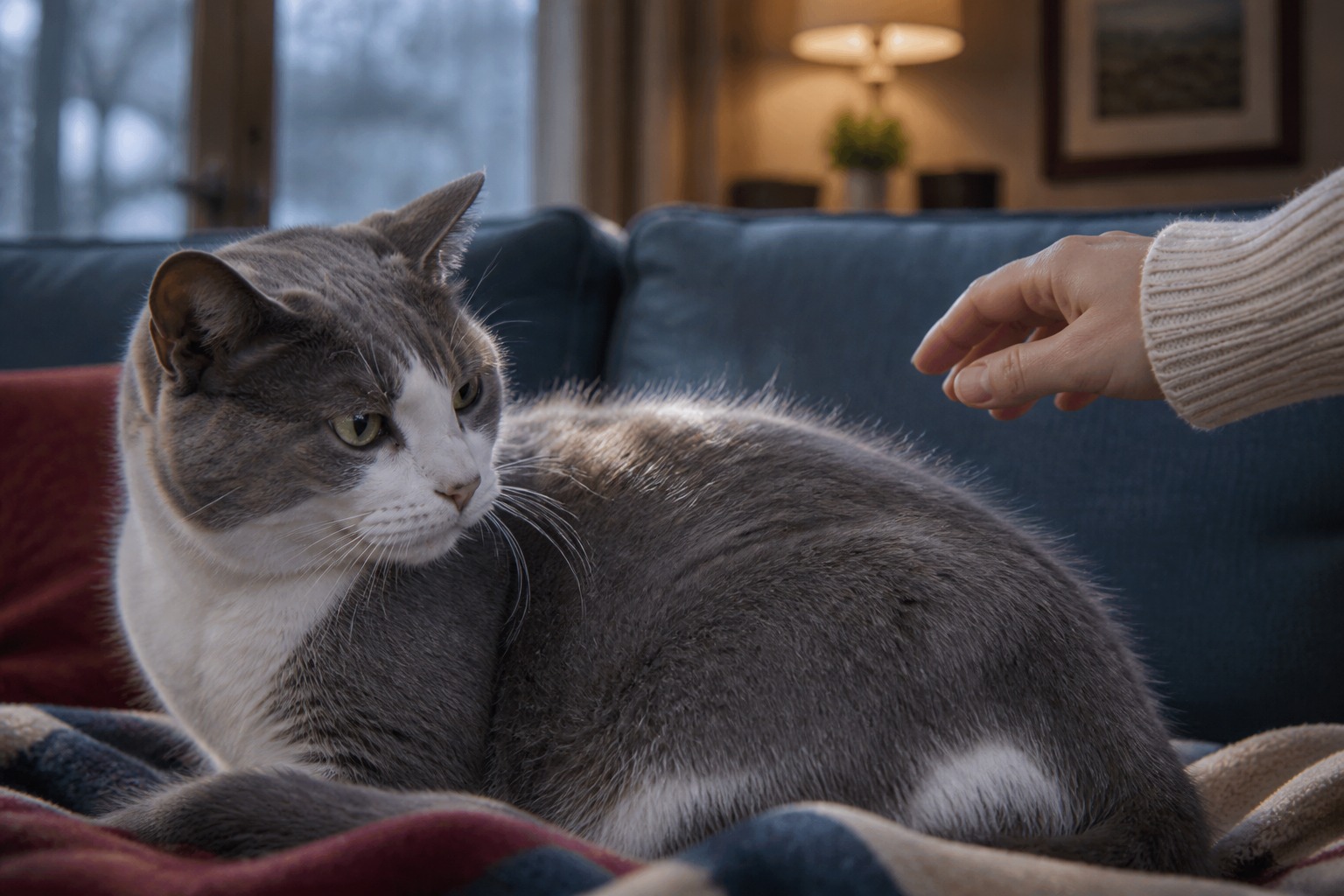
There is a small, specific indignity to cold weather: you reach out to pet the dog you love, and a spark snaps between you. Sometimes your pet flinches. Sometimes they carry on as if nothing happened. Either way, you are now the person who occasionally electrocutes the family cat, which is not the winter bonding experience anyone signed up for.
The good news is that these shocks are harmless. The better news is that they are easy to reduce. And the reason to bother is not the tiny sting itself. It is that, dose after dose, a zap where a cuddle should be can quietly teach your pet that your hands are something to brace against.
Where the spark comes from
Static electricity works the same way on a pet as it does on you dragging your socks across a rug. When two materials rub together, they trade electrons, leaving a buildup of charge on the surface. When the air is dry, that charge has nowhere to go, so it collects on blankets, carpets, clothing, and fur. Touch your pet, and the stored charge releases all at once as that familiar little shock.
Fur makes the whole thing more likely. As a dog or cat moves around the house, their coat is constantly brushing against fabric, floors, and furniture, and every bit of that friction generates static. Winter is prime time because indoor heating dries the air out. The drier the air, the more easily the charge builds and stays trapped, waiting for your hand.
Do pets actually feel it?
They do, but probably not the way you fear.
“For most dogs and cats, static isn’t a pain issue, it’s a surprise issue,” says Dr. Mara Chen. “Pets don’t see the shock coming the way we do, so the sensation registers as a jolt out of nowhere. That startle, more than any discomfort, is what makes them react.”
In an ordinary household, a shock poses no real threat and won’t injure your pet. The numbers can sound dramatic, but the current involved is extremely low, which keeps it firmly in the category of brief annoyance rather than health concern.
Why, then, does one pet whip around while another does not even blink? Temperament, mostly. Sensitivity comes down to personality, past experiences, and how reactive a given animal’s nervous system is overall. A pet who is already anxious or touchy about handling may respond strongly to even a mild shock, while a mellow one shrugs it off.
When the zaps start to add up
An occasional spark is trivial. A steady pattern is worth heading off, because pets learn by association. If touch keeps ending in an unpleasant snap, some animals begin to link the two, and you can end up with avoidance or hesitation during cuddling and grooming, particularly in cats and more sensitive dogs.
There is also a coat clue hidden in frequent static. Long-coated or dry-coated pets collect charge more readily, which makes this less a breed trait than a matter of coat texture, skin health, and how dry the room is. Persistent zapping can actually be a small flag for overly dry skin, low household humidity, or even over-grooming. Improving the health of the skin and coat often makes the static problem shrink on its own.
The fixes that actually help
You do not need much to break the cycle.
Start with the air. A humidifier is the single most effective move, because adding moisture back into a dry room stops charge from building on surfaces in the first place.
Next, tend the coat. Keeping your pet’s fur moisturized with vet-approved products cuts static and does double duty for dry winter skin. Look for a dog- and cat-safe conditioning spray or gentle, pet-safe grooming wipes formulated to reduce dryness. Regular brushing helps too, by pulling natural oils through the coat, and a genuinely low-tech trick works surprisingly well: lightly dampen your hands before you pet. Choosing natural-fiber bedding over synthetics and keeping the home from getting too dry round out the list.
Finally, mind the moment itself. If a shock rattles your pet, stay calm.
“The worst move is to make a big startled reaction of your own and then go right back in for another pet,” Dr. Chen says. “Keep your voice low, let them reset for a moment, and don’t force that same touch on them again straightaway. If you notice fear that lingers, or a real shift in how your pet takes handling, that’s worth a call to your vet.”
Winter will keep drying out the air no matter what you do. But with a humidifier humming, a conditioned coat, and a little patience in the moment, the spark stops being a thing your pet has to endure, and your hands go back to meaning what they should.