


The Best Wildlife Photo of 2026 Is Hard to Look At. Here's Why It Won
A mother elephant carrying her lost calf took the top prize at Wildlife Photographer of the Year 2026. Here are the winning photos, and the stories behind them.
Some photos make you smile. This one makes you go quiet.
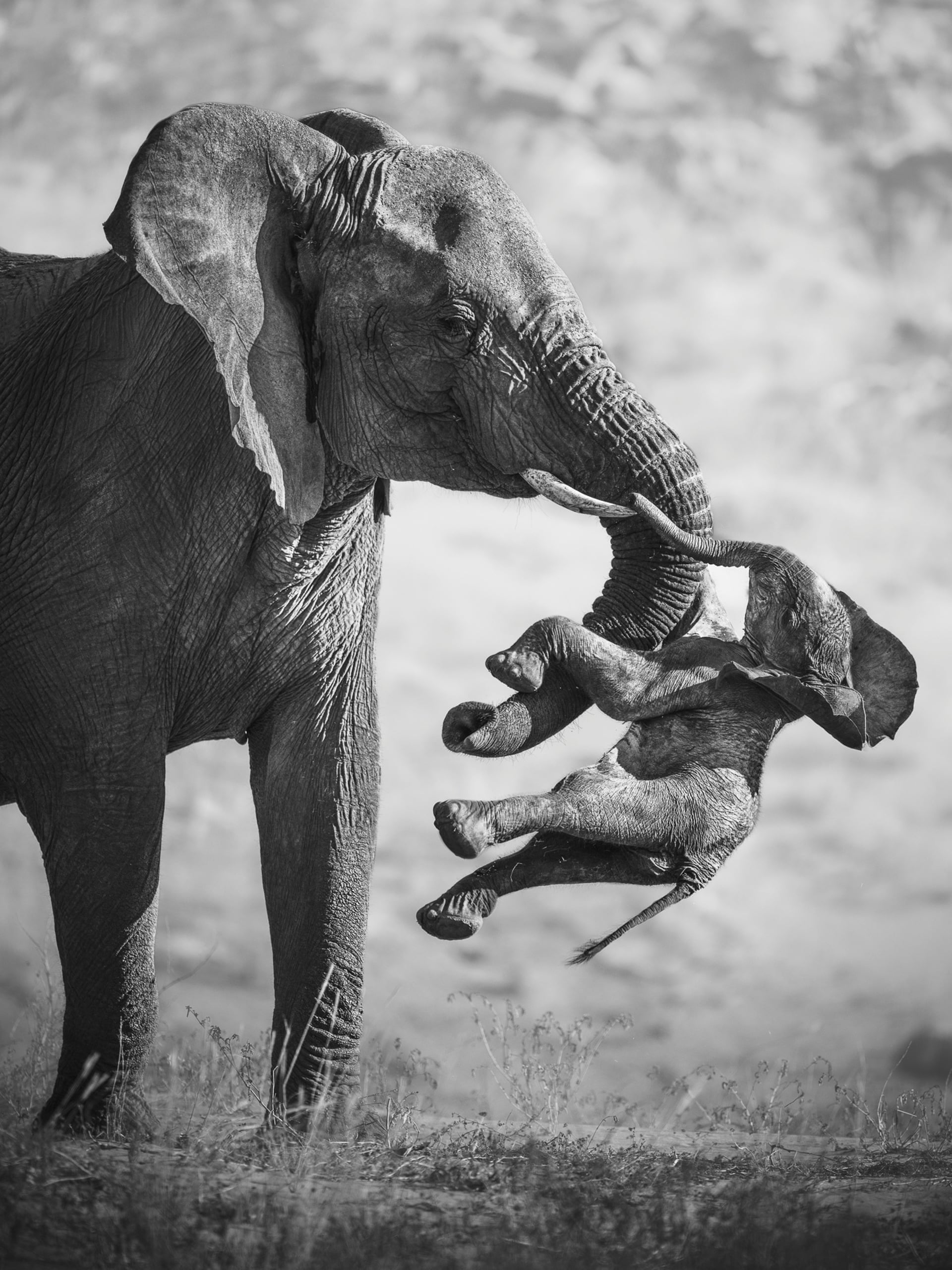
The Natural History Museum in London just named its Wildlife Photographer of the Year for 2026, and the winner is a black-and-white image of a female elephant carrying her dead calf across a dry riverbed in Namibia. It’s called “The Aftermath,” and it was taken by Italian photographer Federico Veronesi.
If you have ever sat on the floor with a pet who just lost a companion, you already understand why it landed so hard with the judges.
The photo that won it all
Veronesi was tracking elephants in Namibia’s Huab River Valley when he spotted strange drag marks in the sand. Following them led him to a family group. A female emerged carrying the calf, its leg wedged between her tusk and trunk.
Elephants in both Africa and Asia have been seen guarding their dead, touching bones, calling out, and carrying the body. Some researchers think this may be part of how elephants come to understand death. Others read it as grief.
Jury chair Kathy Moran put it plainly: “Intellectually it’s proof that animals have cognition.”
This year’s contest drew a record 65,403 entries from 121 countries and territories. It is also the first time in the competition’s 62-year history that both the adult and young overall winners were black-and-white shots.
The young winners
The Young Wildlife Photographer of the Year title went to Oscar Whitfield, a British photographer living in Zimbabwe, for a dung beetle straining to push a ball of dung. Oscar lay flat on the ground to shoot at the beetle’s eye level, with dry dust swirling around him. The payoff is a tiny worker who looks like it’s hauling a boulder.
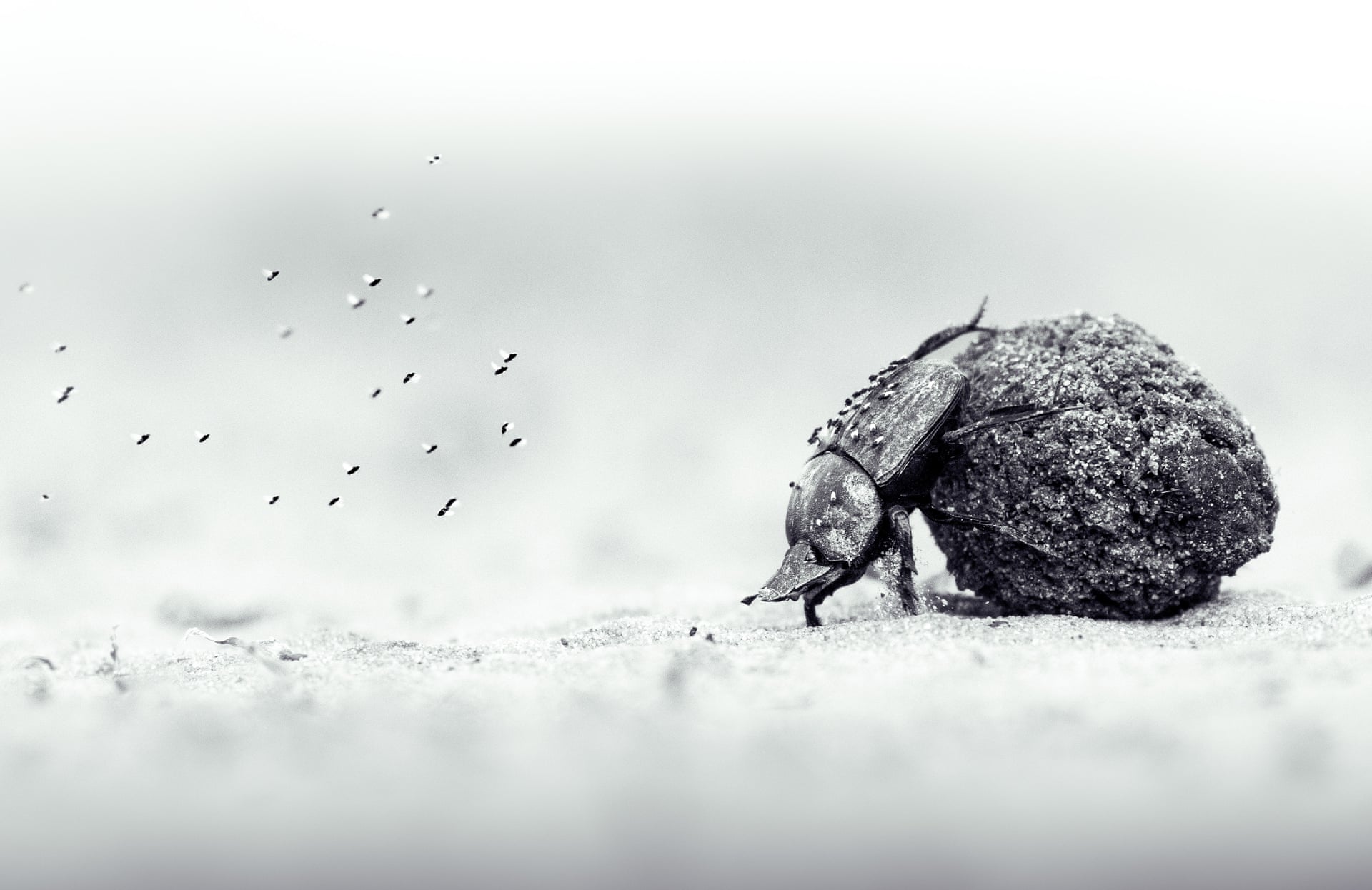
“Labour of Love,” © Oscar Whitfield, Wildlife Photographer of the Year 2026
There are more than 5,000 dung beetle species, and they do real good. Burying dung helps it break down faster and cuts down on pests that bother livestock and wildlife. If you have ever scooped a yard, you can appreciate the competition.
The other two young category winners are just as good. Konrad Gräeter, from Germany, won the 15 to 17 category with a blackbird singing in silhouette in a vineyard.
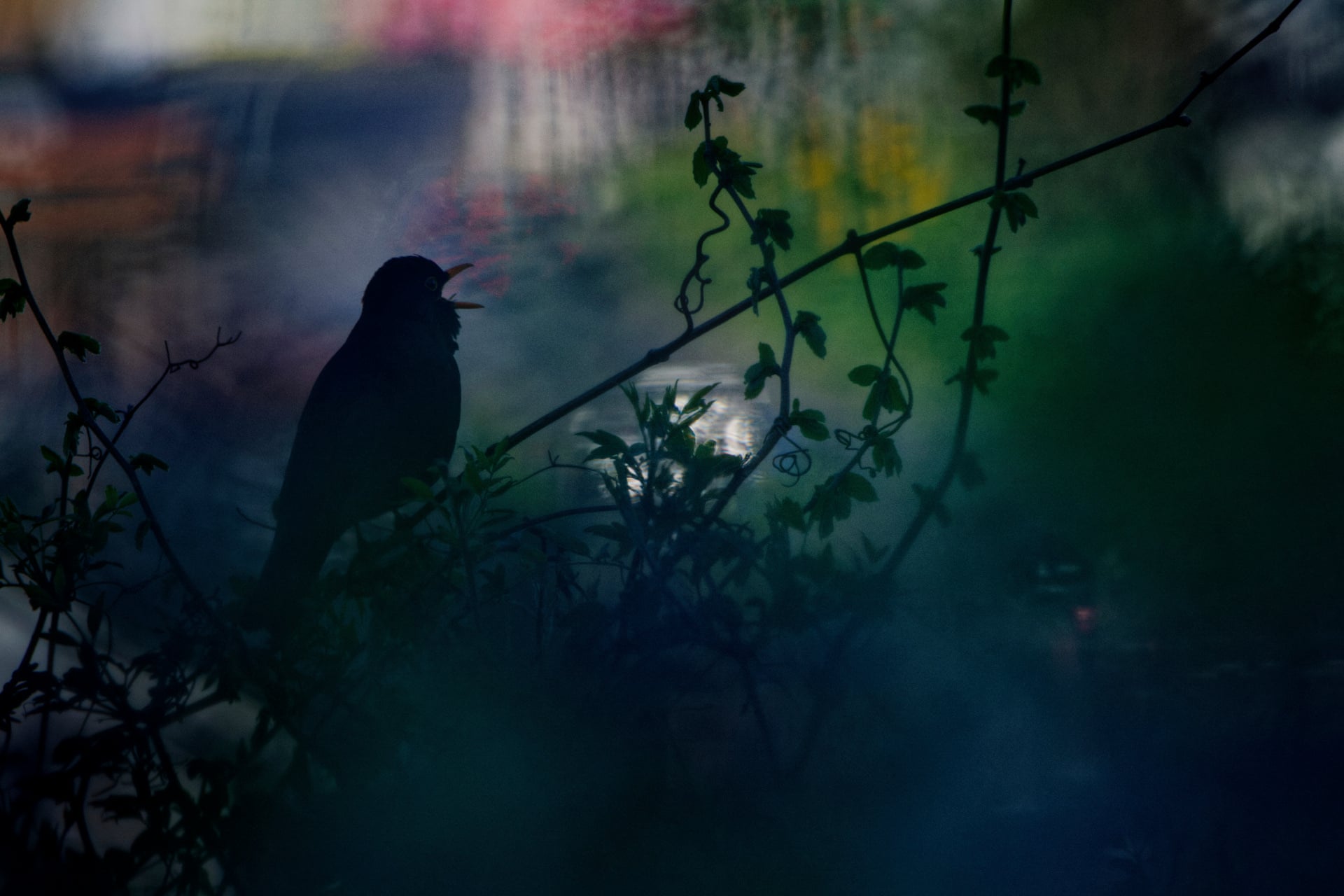
“Birdsong Painted in Light,” © Konrad Gräeter, Wildlife Photographer of the Year 2026
In the ten and under category, Amelie Davis caught a common carder bee in mid-flight as it came in to land on a flower in southern England.
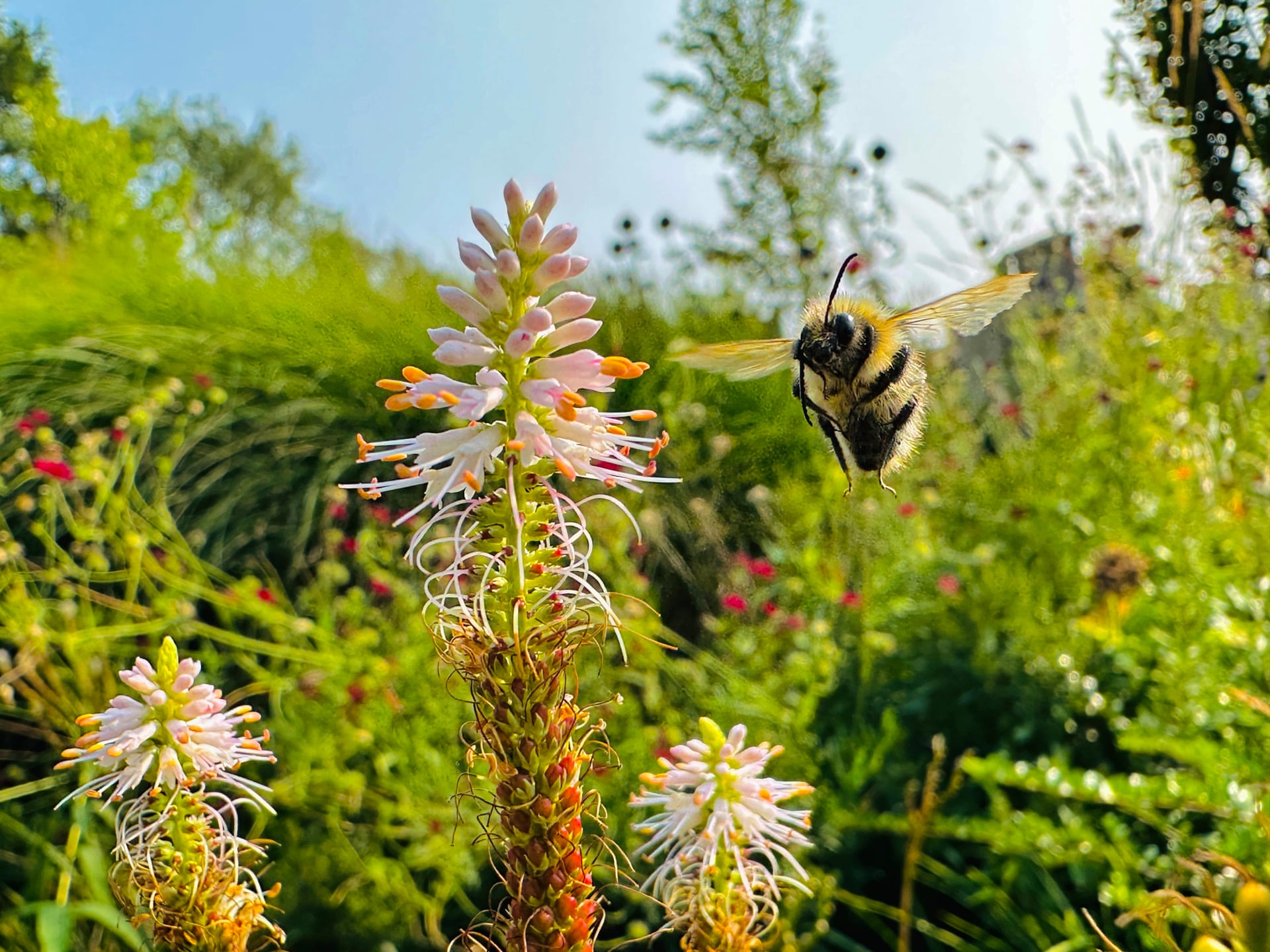
“Flight of the Bumblebee,” © Amelie Davis, Wildlife Photographer of the Year 2026
Big mammals, big feelings
James Lewin won Animals in their Environment with a young bull elephant spraying water at a group of zebras at a Kenyan waterhole, while giraffes wait their turn nearby. It’s the happy flip side of the grand prize winner.
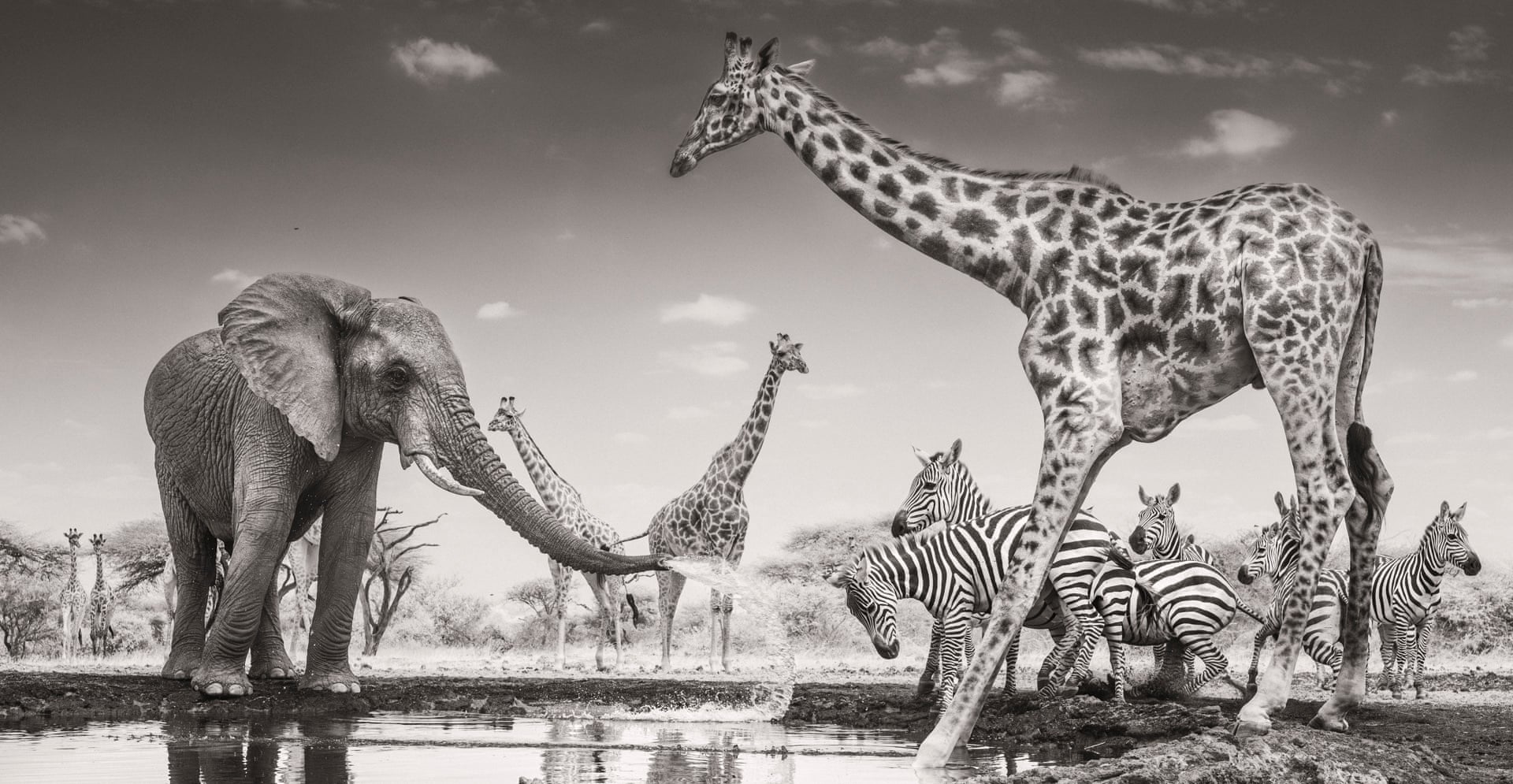
“The Meeting Place,” © James Lewin, Wildlife Photographer of the Year 2026
Wildlife next door
Loren Elliott took the Photojournalist Story Award with “On the Outskirts,” a coyote padding along a trail in San Francisco’s Bernal Heights Park, with the city and bay behind it. Loren watched a resident pack hunt rodents there, in a park that is also popular with people and dogs. If you walk a dog in coyote country, this one is worth a long look.
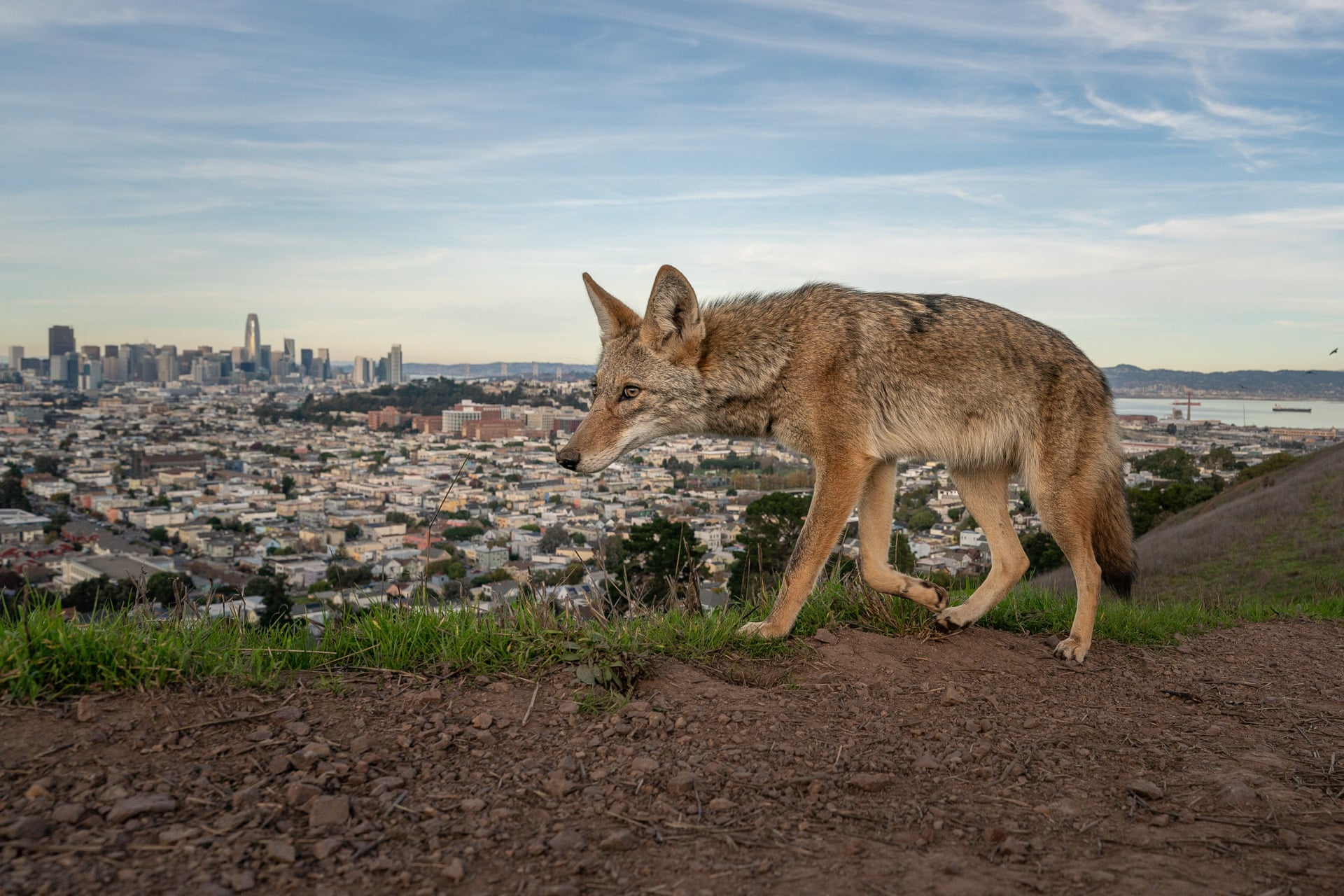
“On the Outskirts,” © Loren Elliott, Wildlife Photographer of the Year 2026
Seth Forestson won Urban Wildlife with a common water monitor in Bangkok’s Lumphini Park, carrying its catch against the city skyline. He got down in the mud to shoot it at lizard height. These monitors have adapted to cities across South and Southeast Asia and will happily eat whatever is on offer, including the catfish and koi in the park’s lakes.
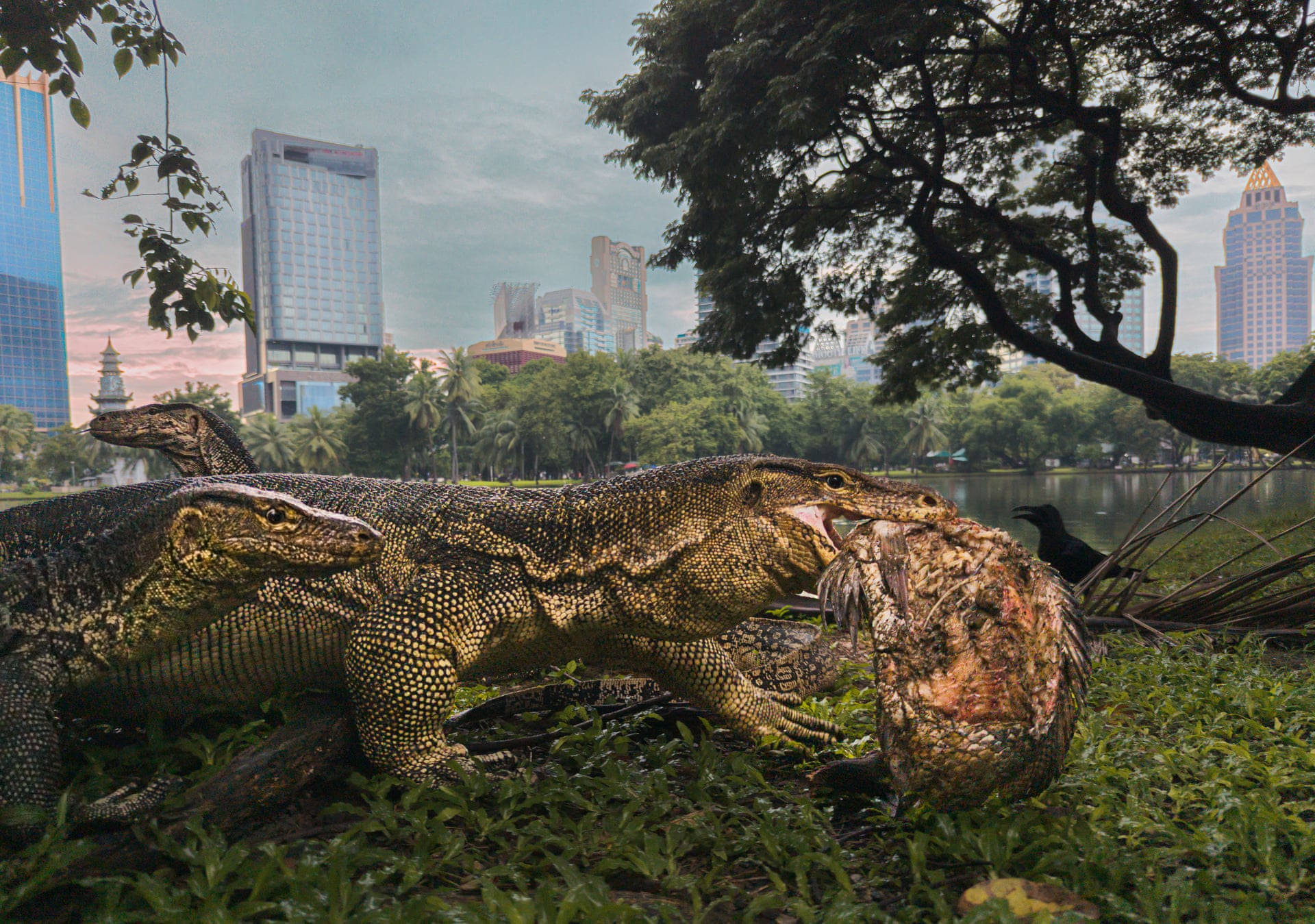
“Urban Jungle,” © Seth Forestson, Wildlife Photographer of the Year 2026
The one that stings
Francisco Negroni won Photojournalism with “Warning Sign,” a dead puma tied to a fence in Argentine Patagonia and displayed like a hunting trophy. Santa Cruz banned puma hunting in 2025, but illegal killing continues.
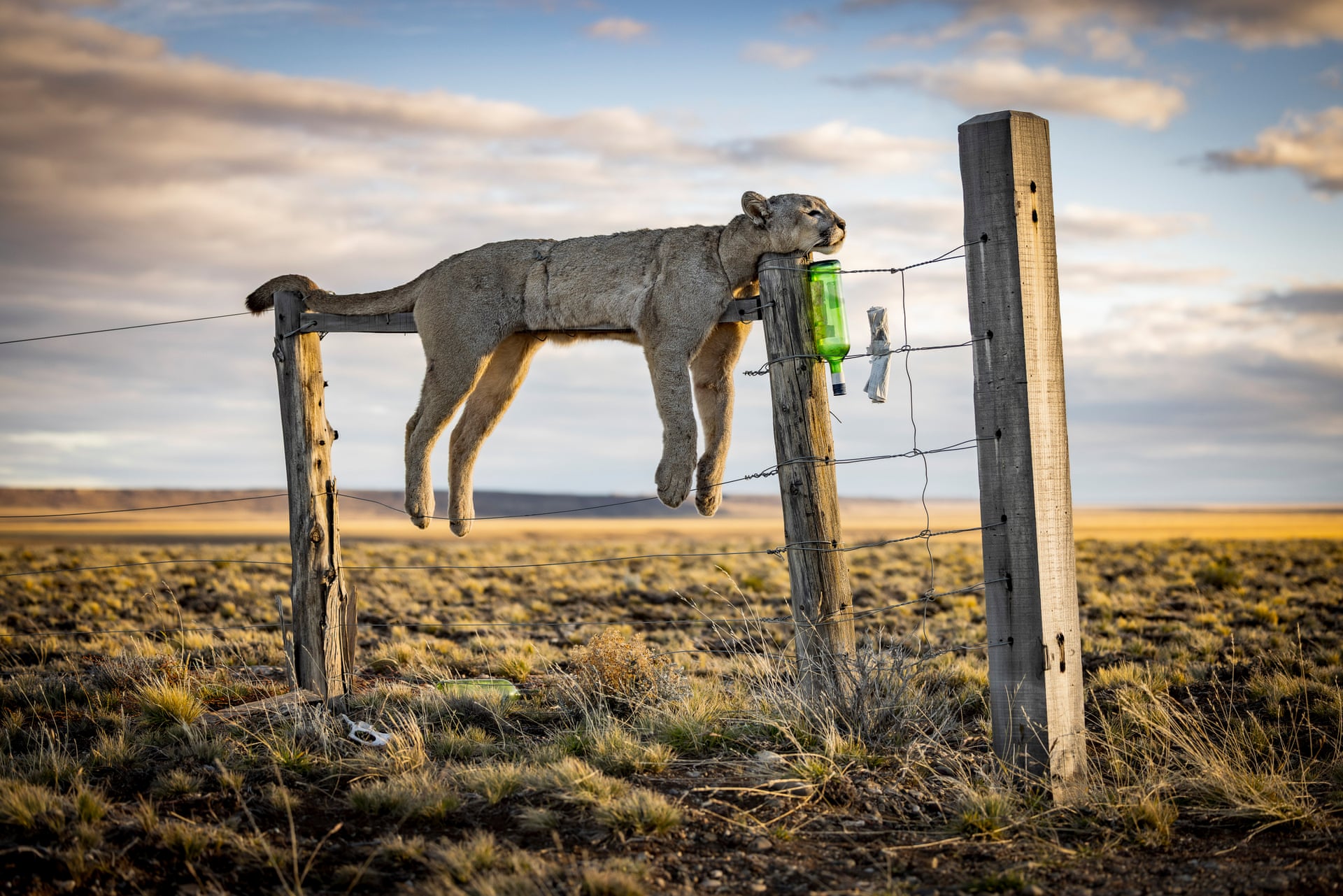
“Warning Sign,” © Francisco Negroni, Wildlife Photographer of the Year 2026
The caption points to a practical fix that dog people will like: penning sheep at night and using guard dogs can cut livestock losses without hunting. In southern Chile, some owners have swapped sheep farming for puma tourism.
Birds, bees, and a very small newt
Isak Pretorius won Behaviour: Birds with two elusive shoebills pulling up and dropping vegetation in a Ugandan swamp, photographed from a narrow canoe. It’s probably a breeding pair gathering nesting material. Despite the “shoebill stork” nickname, they are closer kin to pelicans, herons, and ibises. Fewer than 5,300 mature birds remain, and the number is falling.
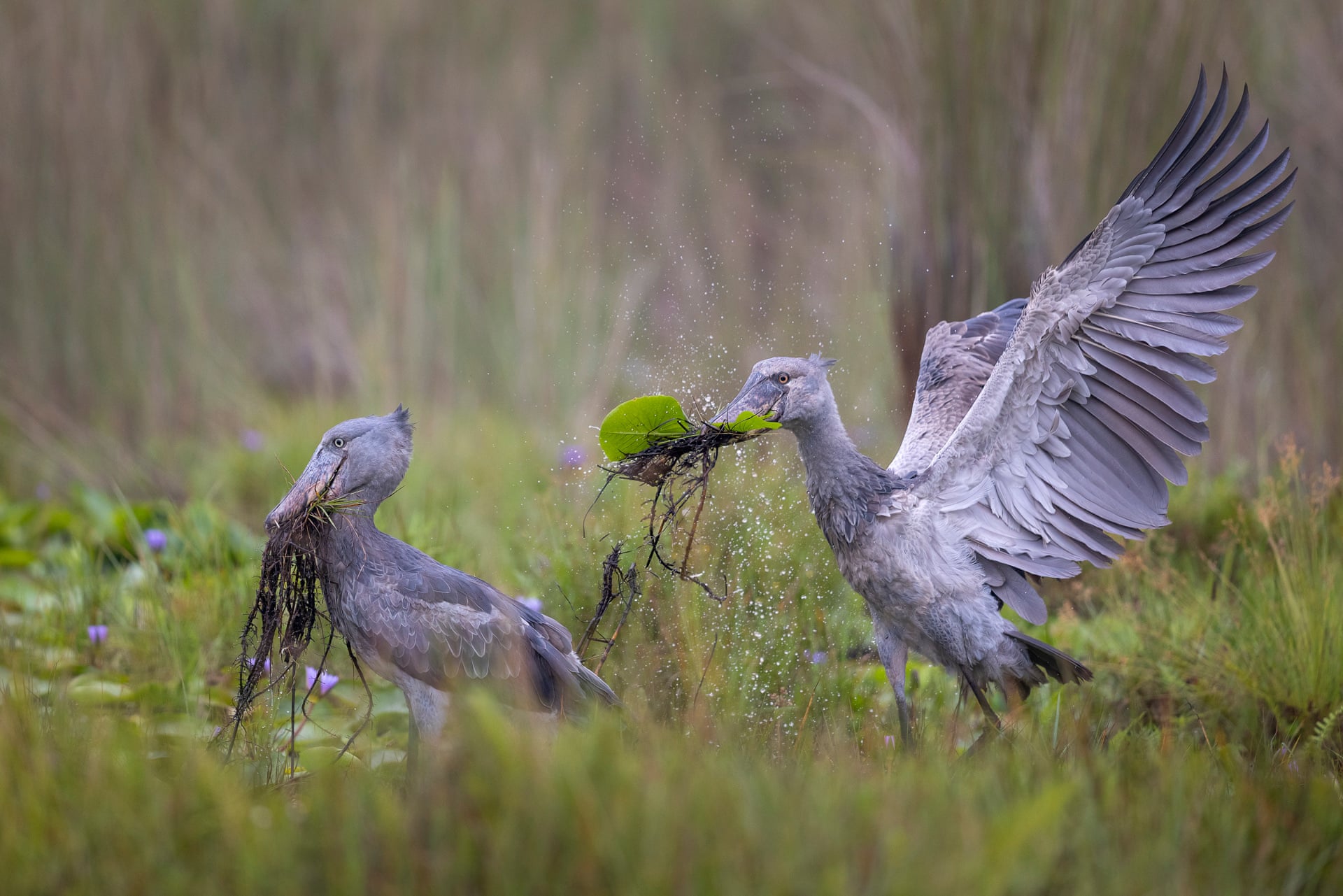
“Scenes from the Swamp,” © Isak Pretorius, Wildlife Photographer of the Year 2026
Michał Michalski, from Poland, won Natural Artistry with a mixed flock of goldfinches and bramblings lifting off from a field of sunflowers, a picture that looks more like a painting.
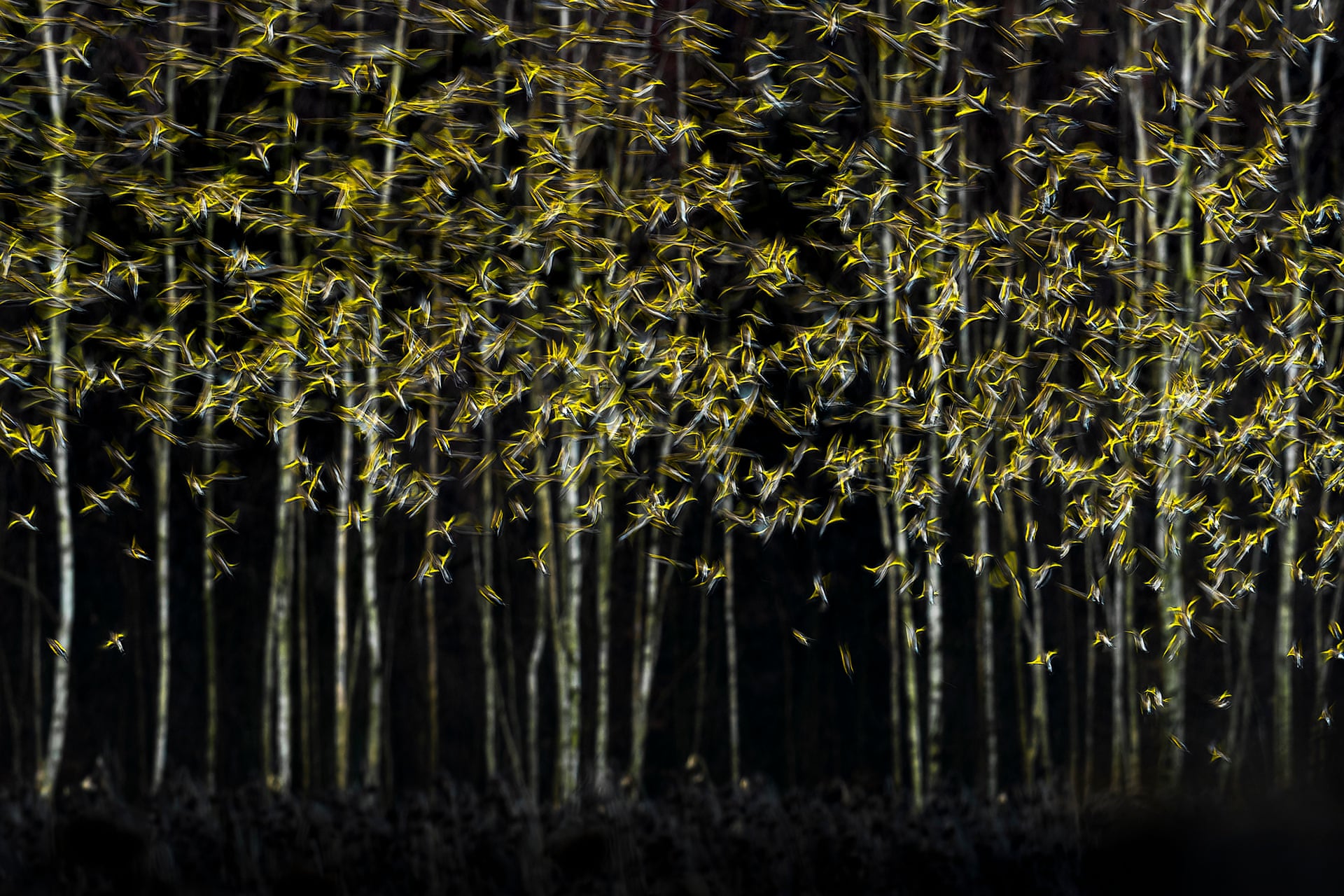
“Escape Artistry,” © Michał Michalski, Wildlife Photographer of the Year 2026
Anton Sorokin, from the USA, won Behaviour: Amphibians and Reptiles with a California newt that seems to be hugging its egg clutch as it clasps the vegetation around it.
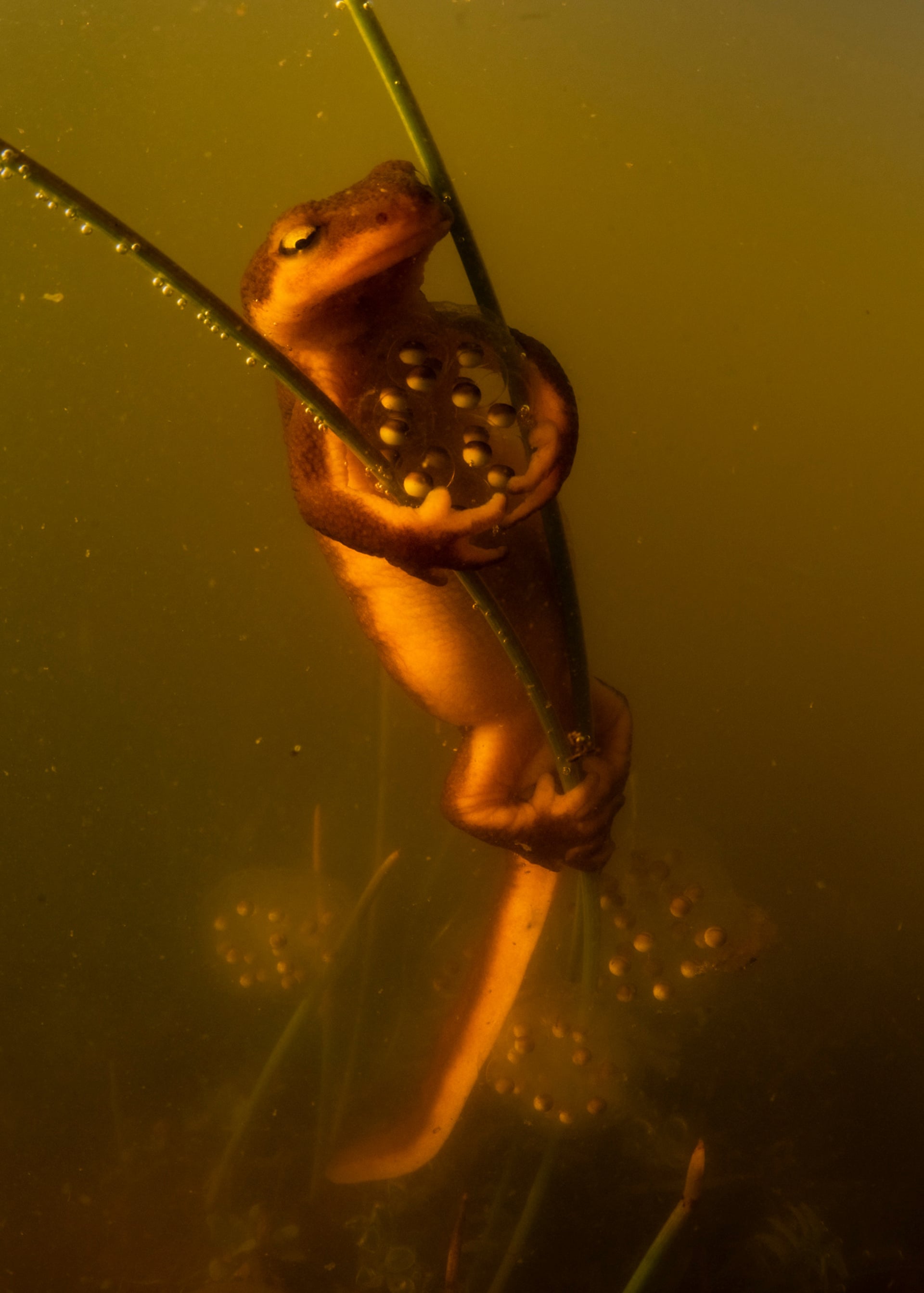
“Protective Pose,” © Anton Sorokin, Wildlife Photographer of the Year 2026
Small worlds
Alexis Tinker-Tsavalas, from Germany, took the Rising Star Award with “Afternoon Snack,” a robber fly with a flesh fly impaled on its needle-like mouthparts. The bubbles in the victim’s eyes show the robber fly has injected enzymes that liquefy its insides. Not for the squeamish, and a good reminder that the garden is busier than it looks.
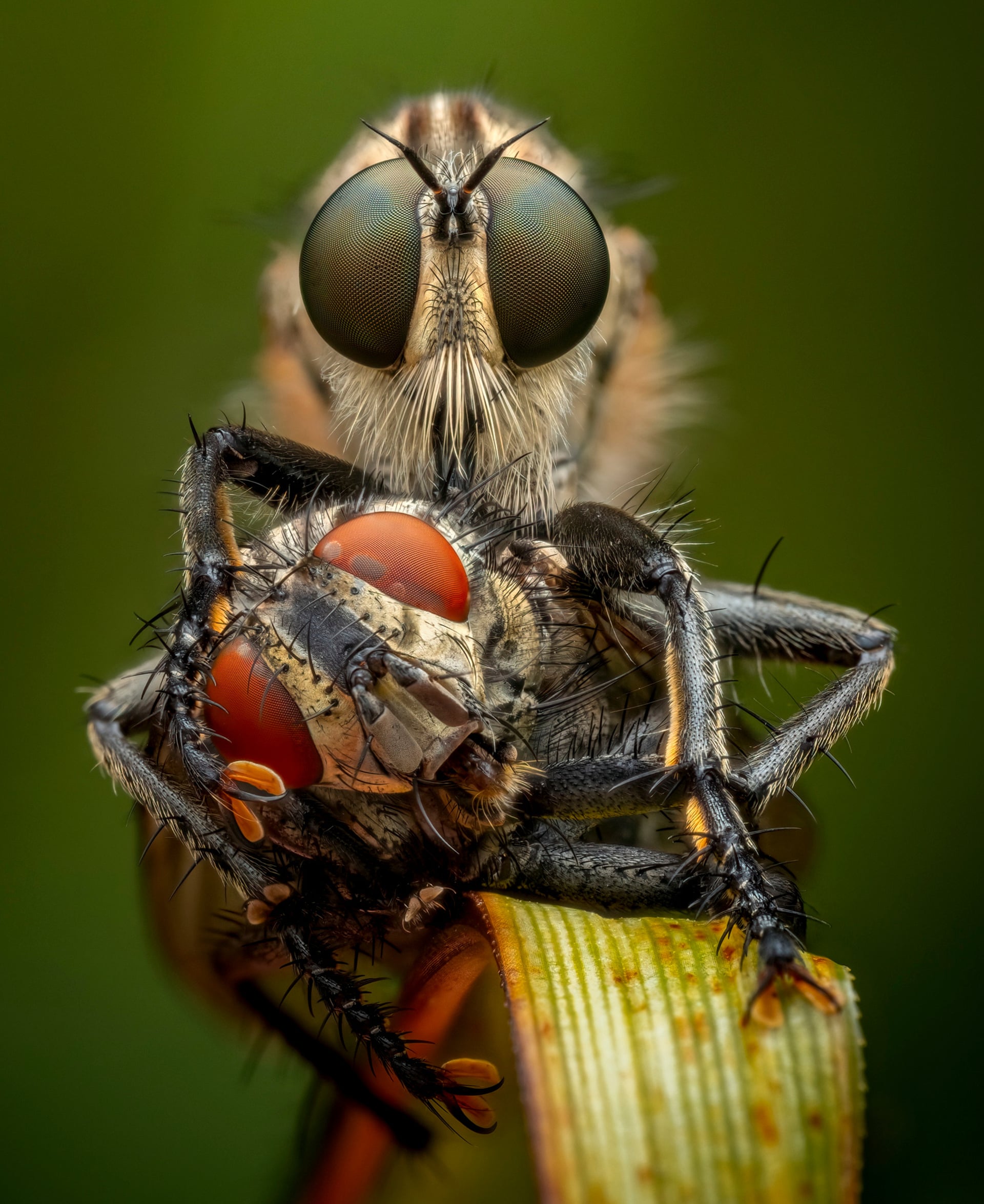
“Afternoon Snack,” © Alexis Tinker-Tsavalas, Wildlife Photographer of the Year 2026
Sitaram Raul, from India, won Behaviour: Invertebrates with a scorpion excavating its burrow in Rajasthan, tail and sting sticking up in the air as it digs.
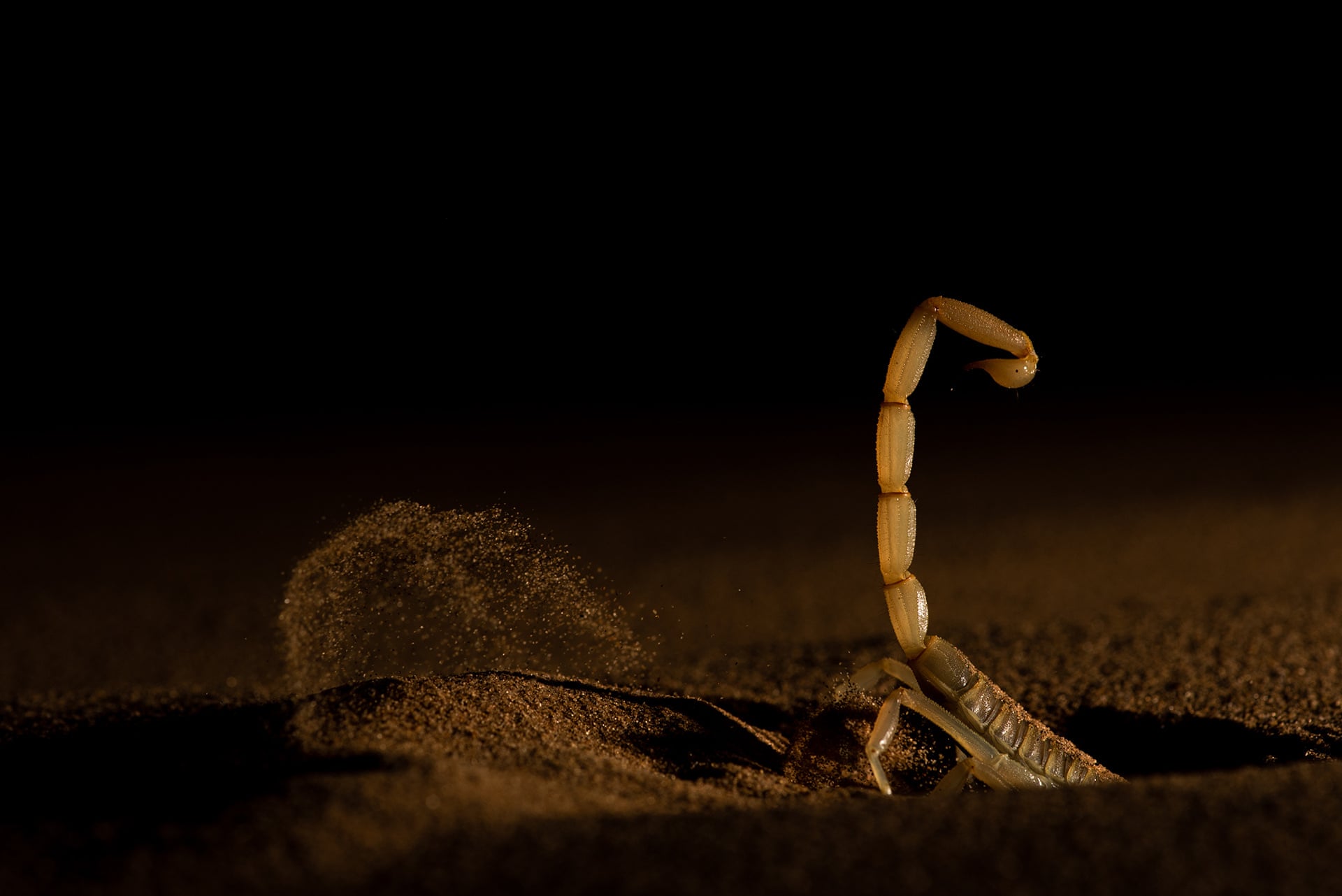
“Shifting Sand,” © Sitaram Raul, Wildlife Photographer of the Year 2026
Agorastos Papatsanis, from Greece, won Plants and Fungi with Mycena renati mushrooms photographed under ultraviolet light, which makes their stems glow yellow.
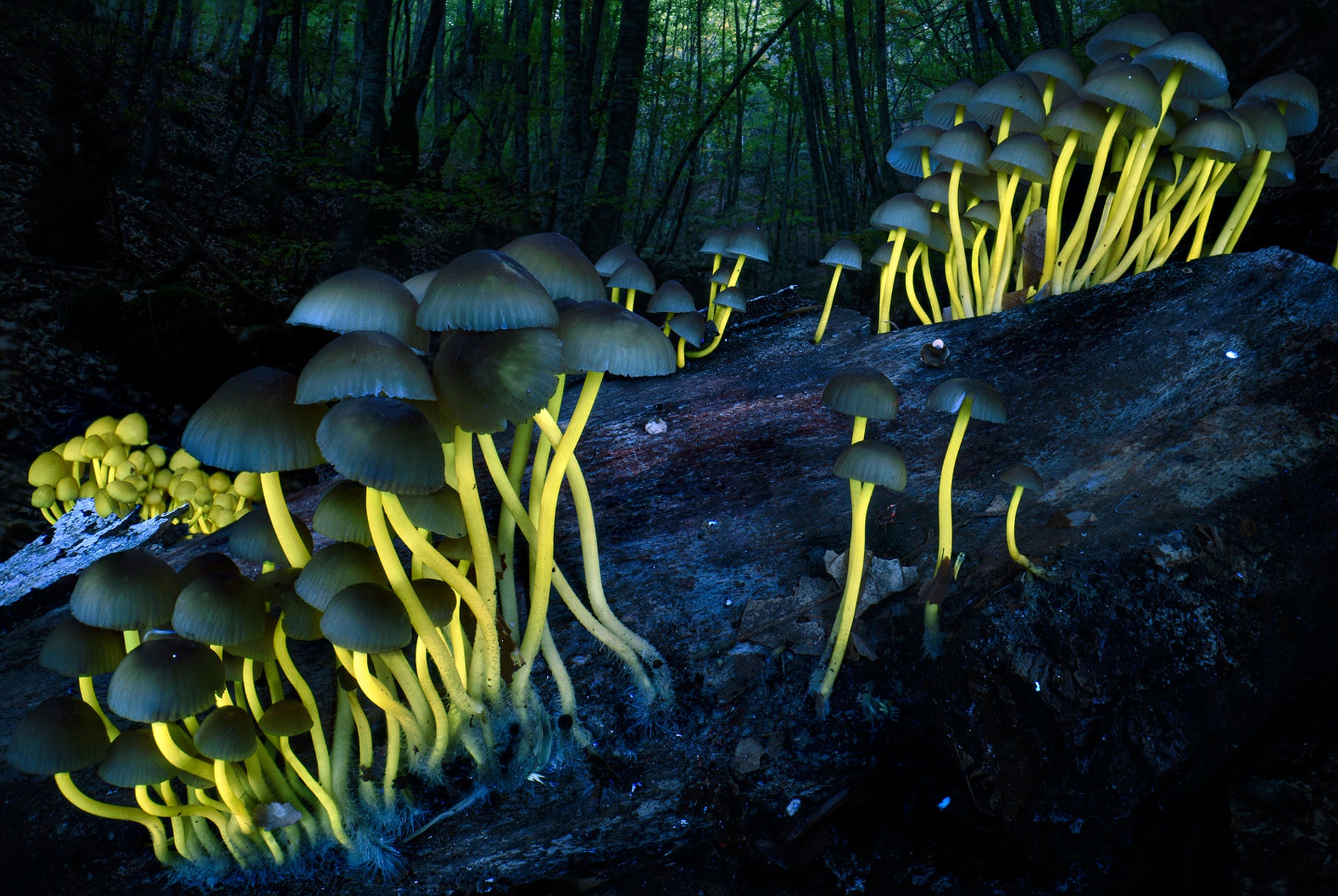
“Shedding Light,” © Agorastos Papatsanis, Wildlife Photographer of the Year 2026
Kutub Uddin, from Bangladesh and the UK, took the Portfolio Award, and this image, “Tiny Dancers,” shows slime mold threads topped with speckled yellow-green bodies. They look like aliens on tiptoe.
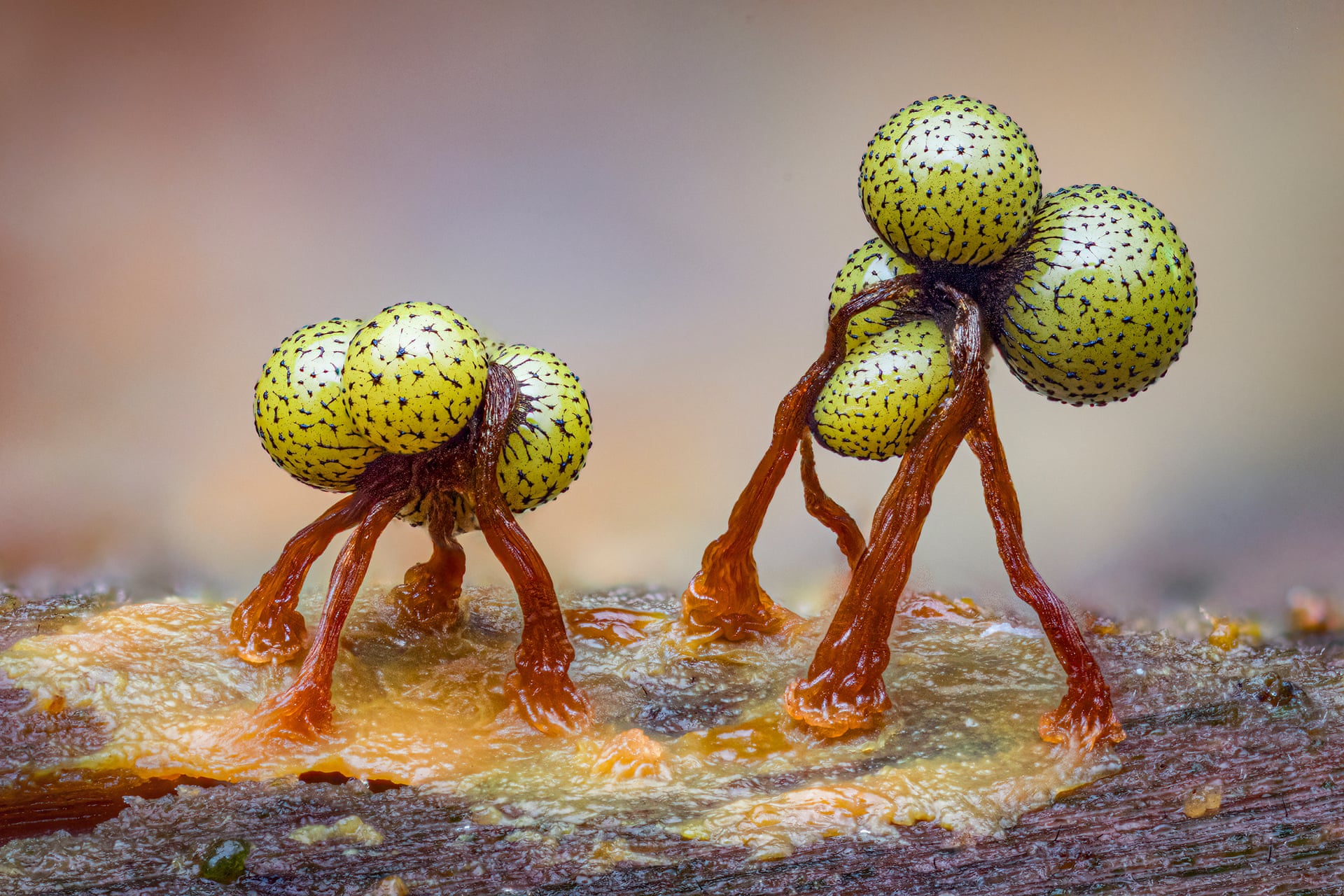
“Tiny Dancers,” © Kutub Uddin, Wildlife Photographer of the Year 2026
Under the water
Aaron Sanders, from the UK, won Animal Portraits with an octopus peering over blades of kelp, its suckers visible through the translucent leaves.
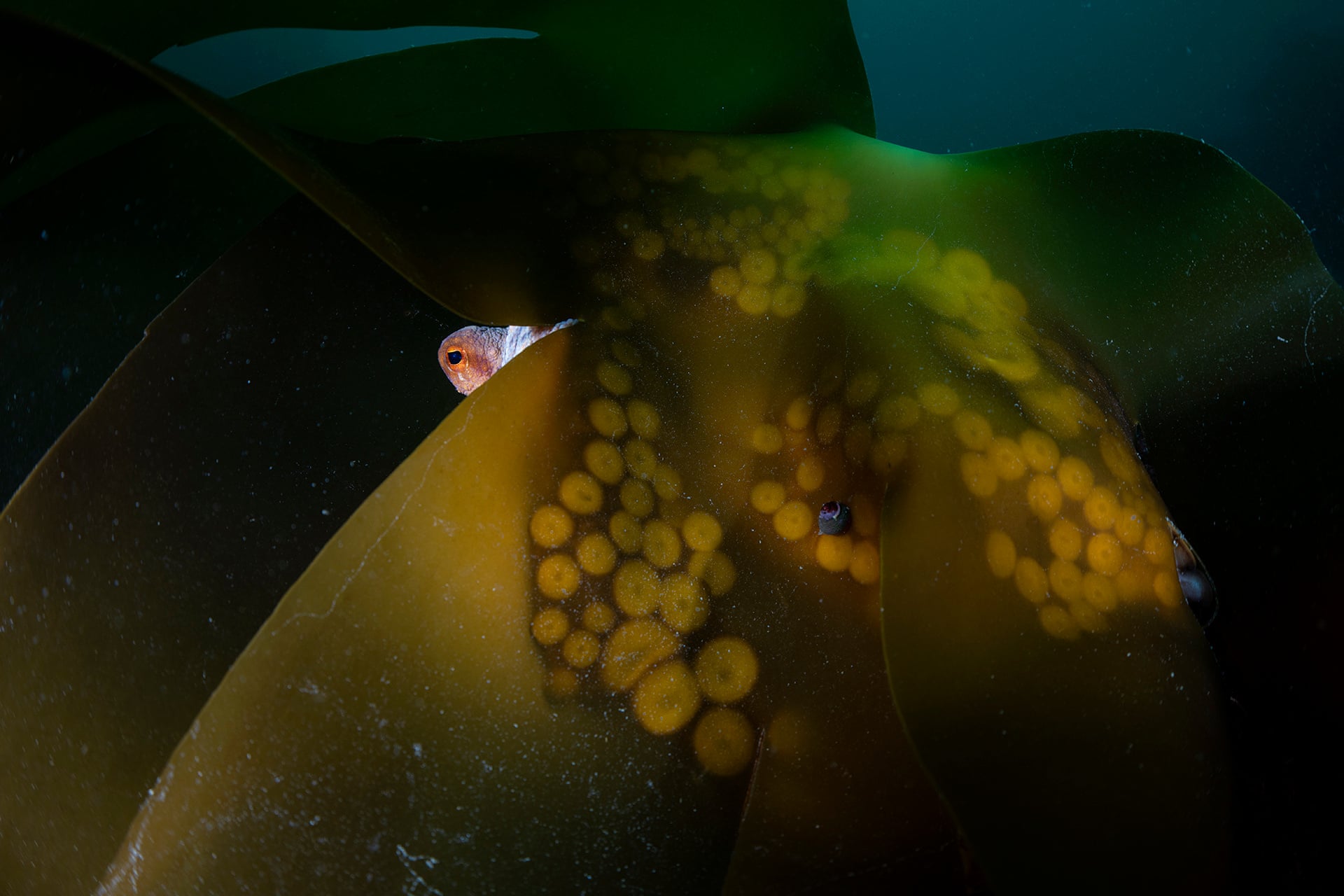
“A Watchful Eye,” © Aaron Sanders, Wildlife Photographer of the Year 2026
Tony Wu, from Japan and the USA, won Underwater with two Abbott’s moray eels facing each other during spawning, one releasing a cloudy stream.
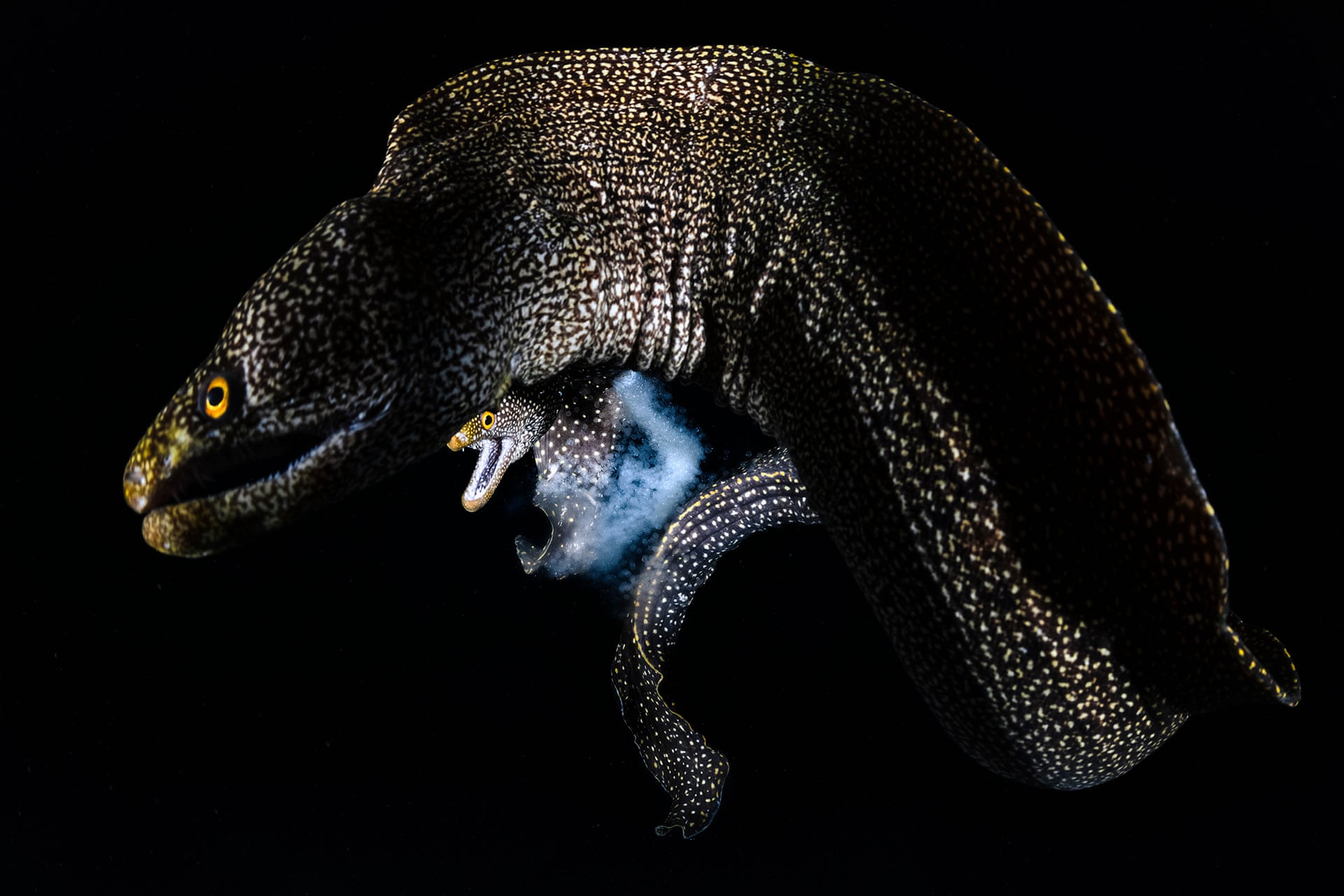
“Making Morays,” © Tony Wu, Wildlife Photographer of the Year 2026
Alex Lindbloom, from the USA, won Oceans: The Bigger Picture with a night-time shot from above of a whale shark investigating a fishing platform in Papua.
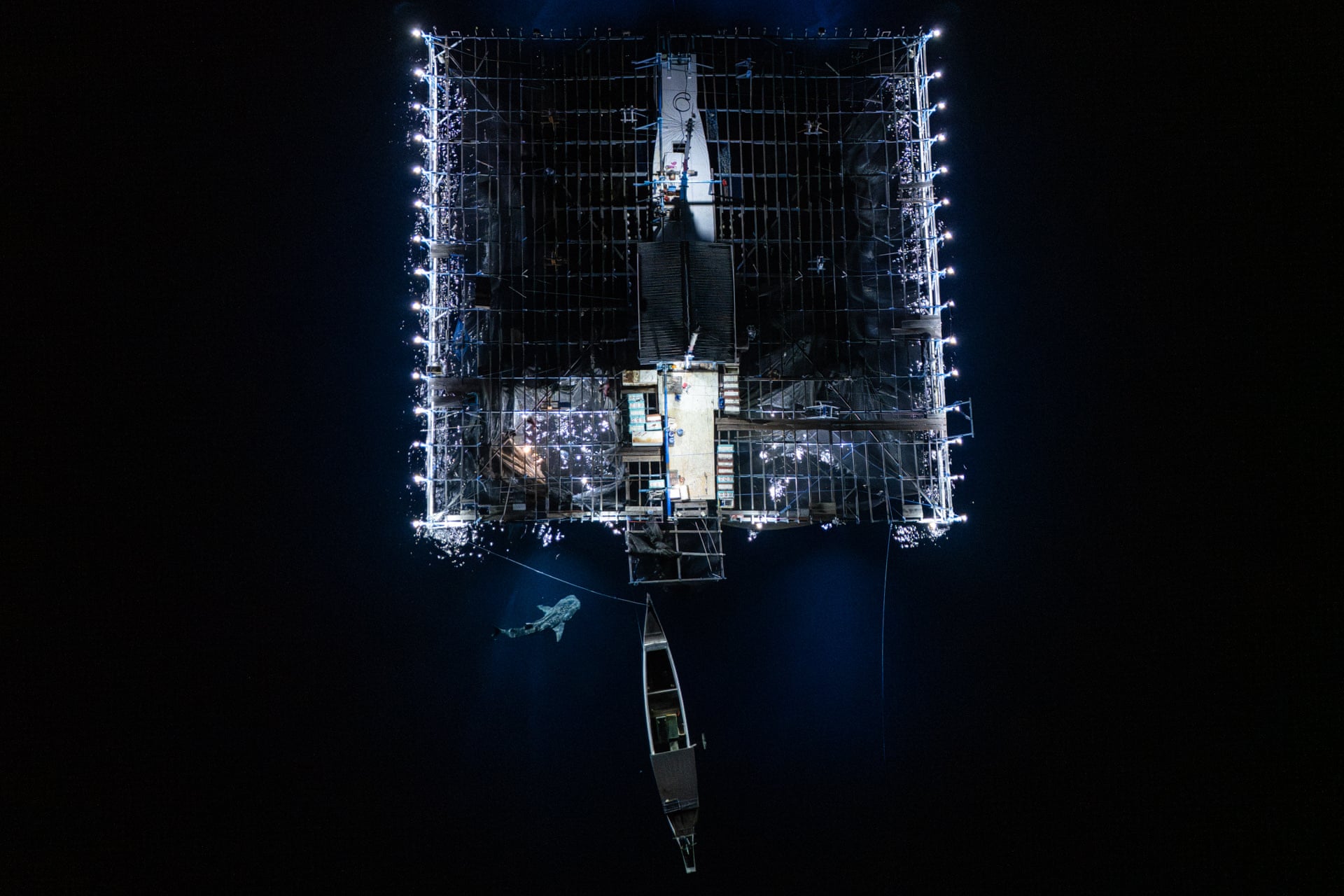
“Night-Time Catch,” © Alex Lindbloom, Wildlife Photographer of the Year 2026
The landscape winner
Alex Visbal, from Colombia, won Wetlands: The Bigger Picture with a split-screen-looking salt bay in Utah, one half pink from microbes and the other half pale, with mountains behind.
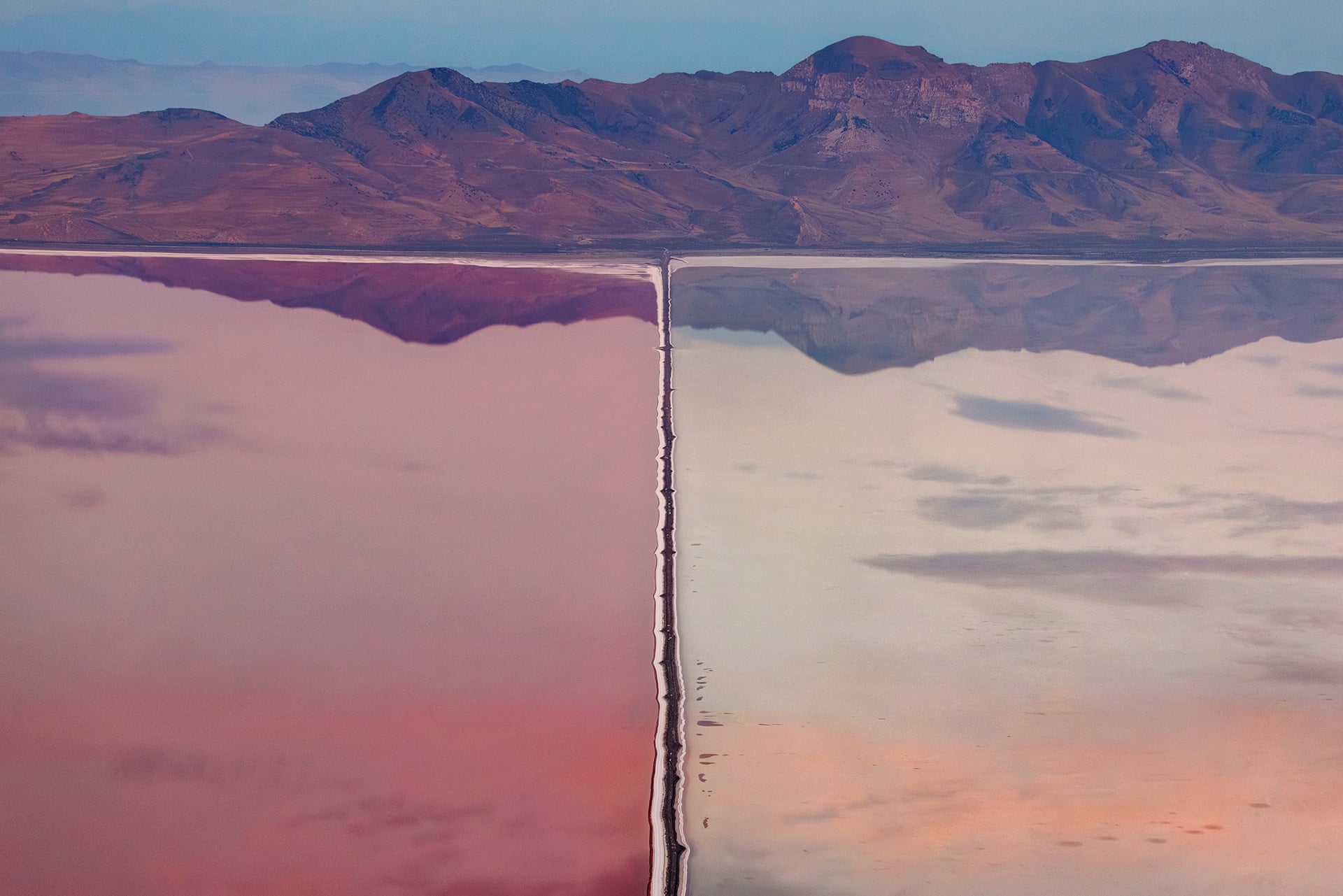
“The Great Divide,” © Alex Visbal, Wildlife Photographer of the Year 2026
See them for real
The winning photographs go on show at the Natural History Museum in London from October 16, 2026, until July 11, 2027, before a UK and international tour. Adult tickets start at £19.00. You can browse every winner, and past years, in the museum’s online gallery.
Entries for next year’s competition open October 19, 2026 and close December 3, 2026. If your phone is full of wildlife shots from walks with your dog, young photographers (17 and under) can enter up to ten images for free.
References
- Natural History Museum. Heartbreaking photograph of an elephant and deceased calf wins Wildlife Photographer of the Year 2026. October 13, 2026.
- Natural History Museum. Wildlife Photographer of the Year exhibition.
- Popular Science. Powerful image of a grieving elephant wins Wildlife Photographer of the Year. October 15, 2026.
- Discover Wildlife. Wildlife Photographer of the Year 2026 winners.
Jordan Ellis is a certified professional dog trainer with a decade of experience working with rescue organisations and private clients. They specialise in anxiety, reactivity, and positive reinforcement methods, and review all training and behaviour content at The Pet Times.
Meet our experts ↗Keep reading
 Living12 Black-Owned Pet Brands Worth Buying for the Product, Not the CauseJames Okafor · 8 min
 LivingHe Had No Connection to Ukraine. He Booked the Flight Anyway.James Okafor · 7 min
 LivingOne Fake Email Nearly Shut Down This Animal ShelterMarcus Webb · 5 min
 LivingThe Photographer Who Kept Finding Cats Inside Refugees' CoatsNina Vasquez · 6 min
 LivingBefore Beryl Made Landfall, 94 Shelter Pets Were Already on the Road OutNina Vasquez · 6 min
 LivingThe Barrier Between People and Their Pets Isn't the Animals. It's the SystemJames Okafor · 5 min