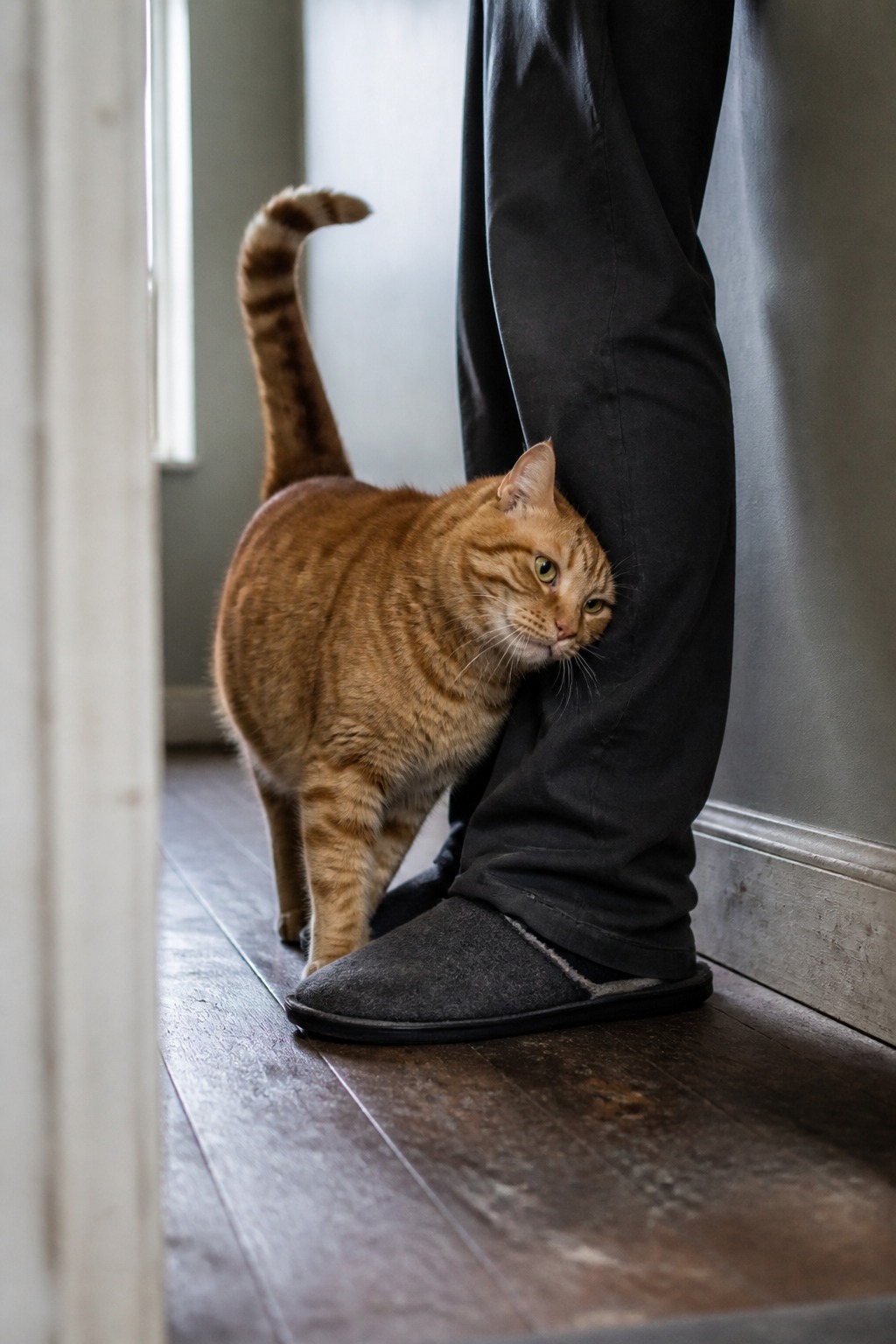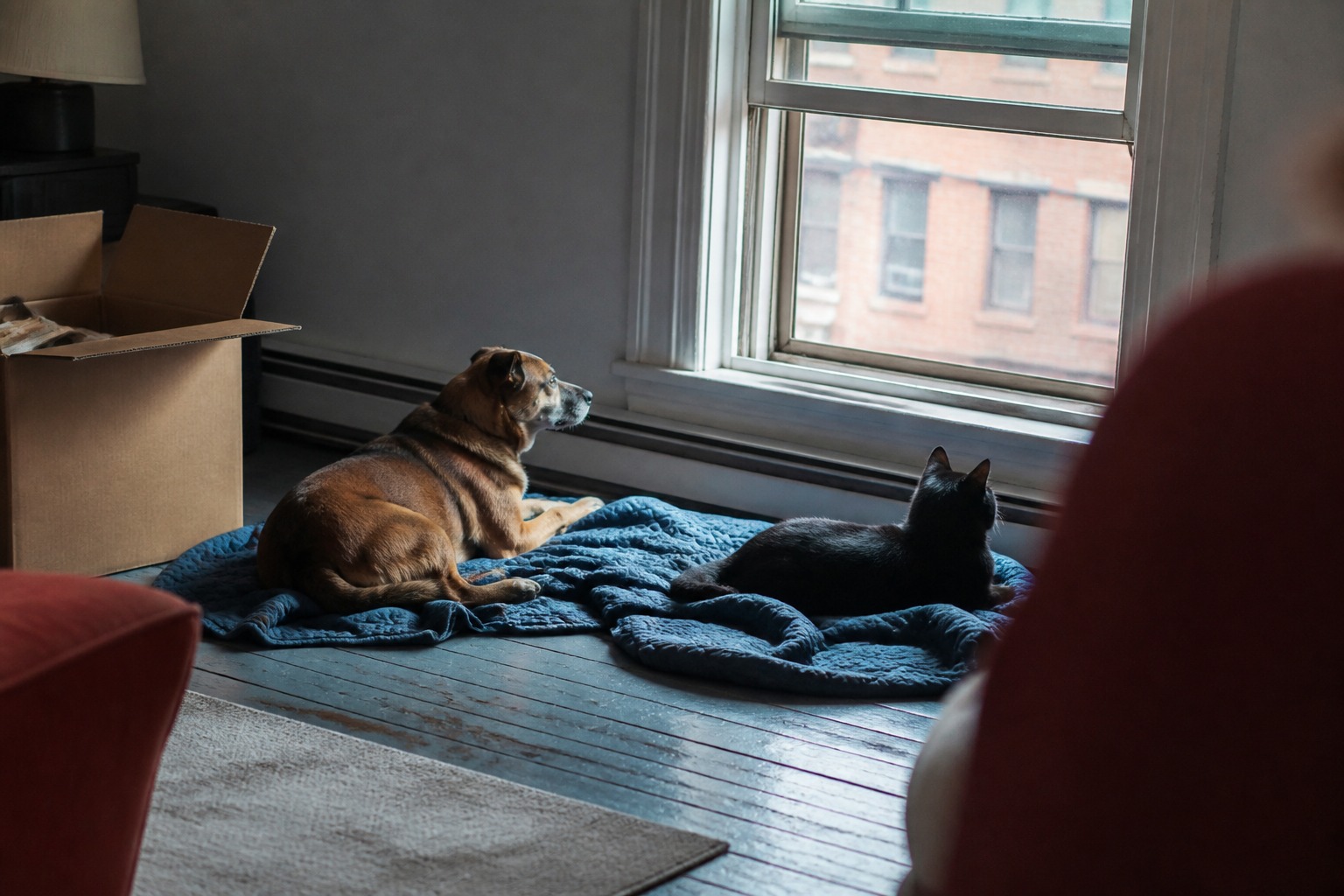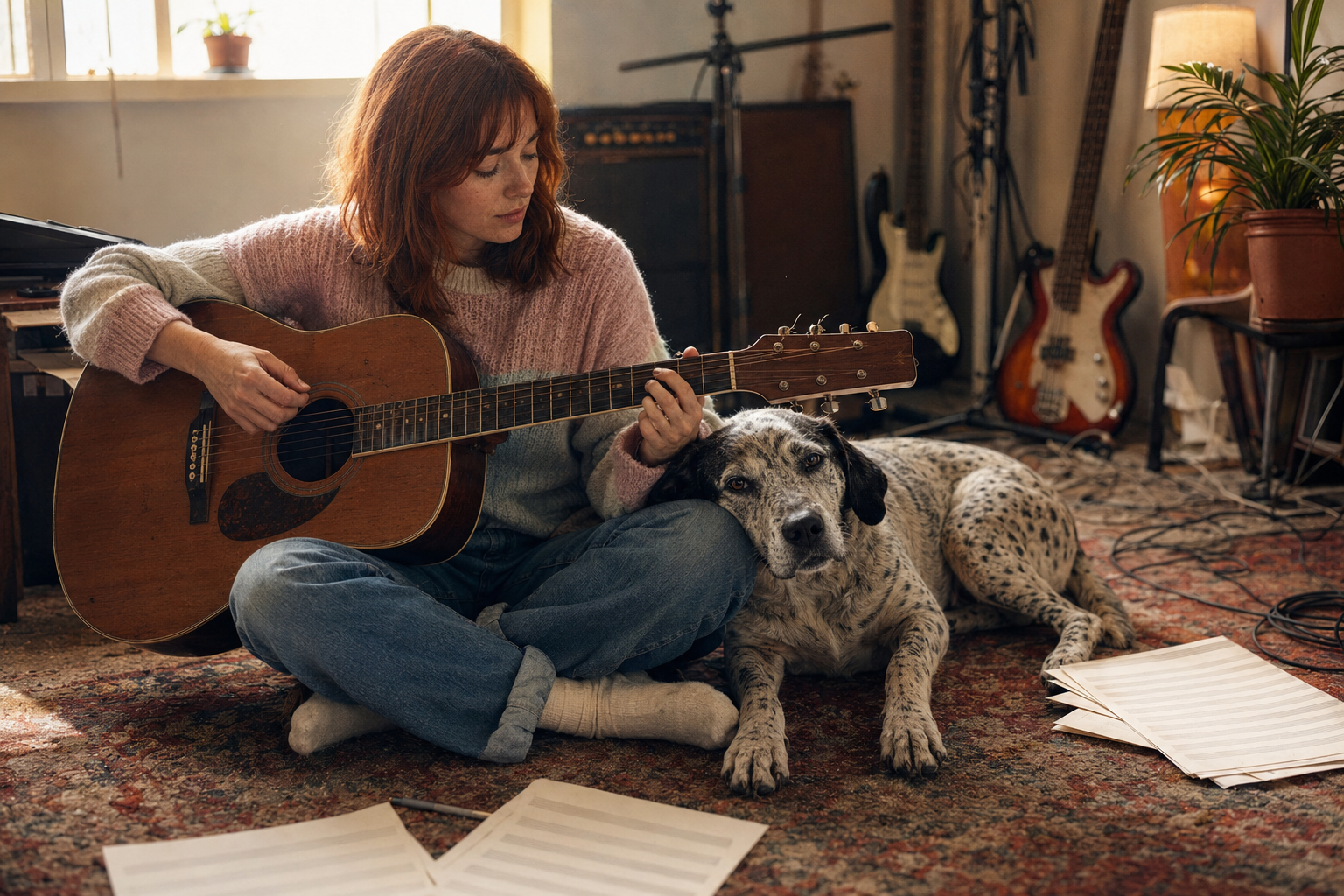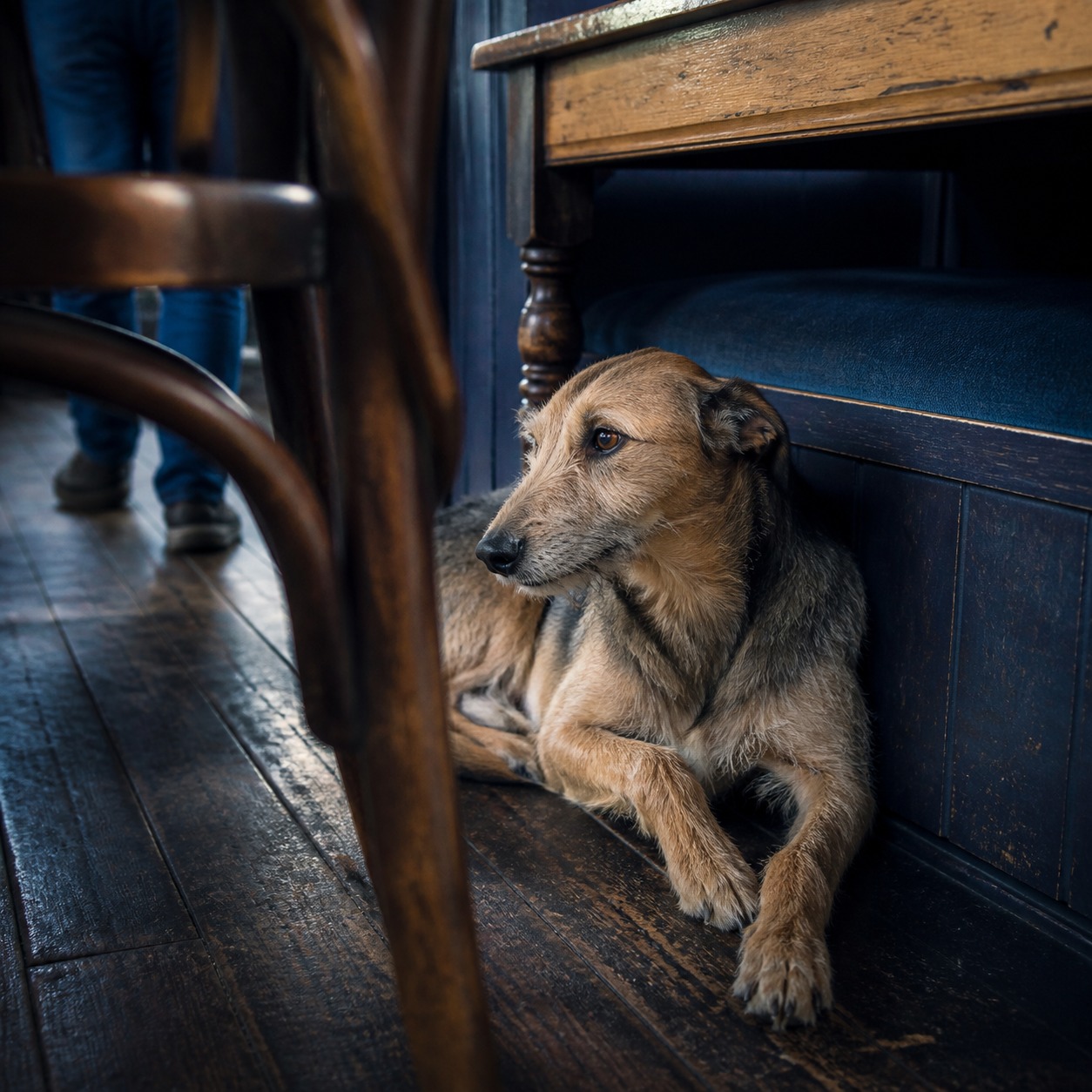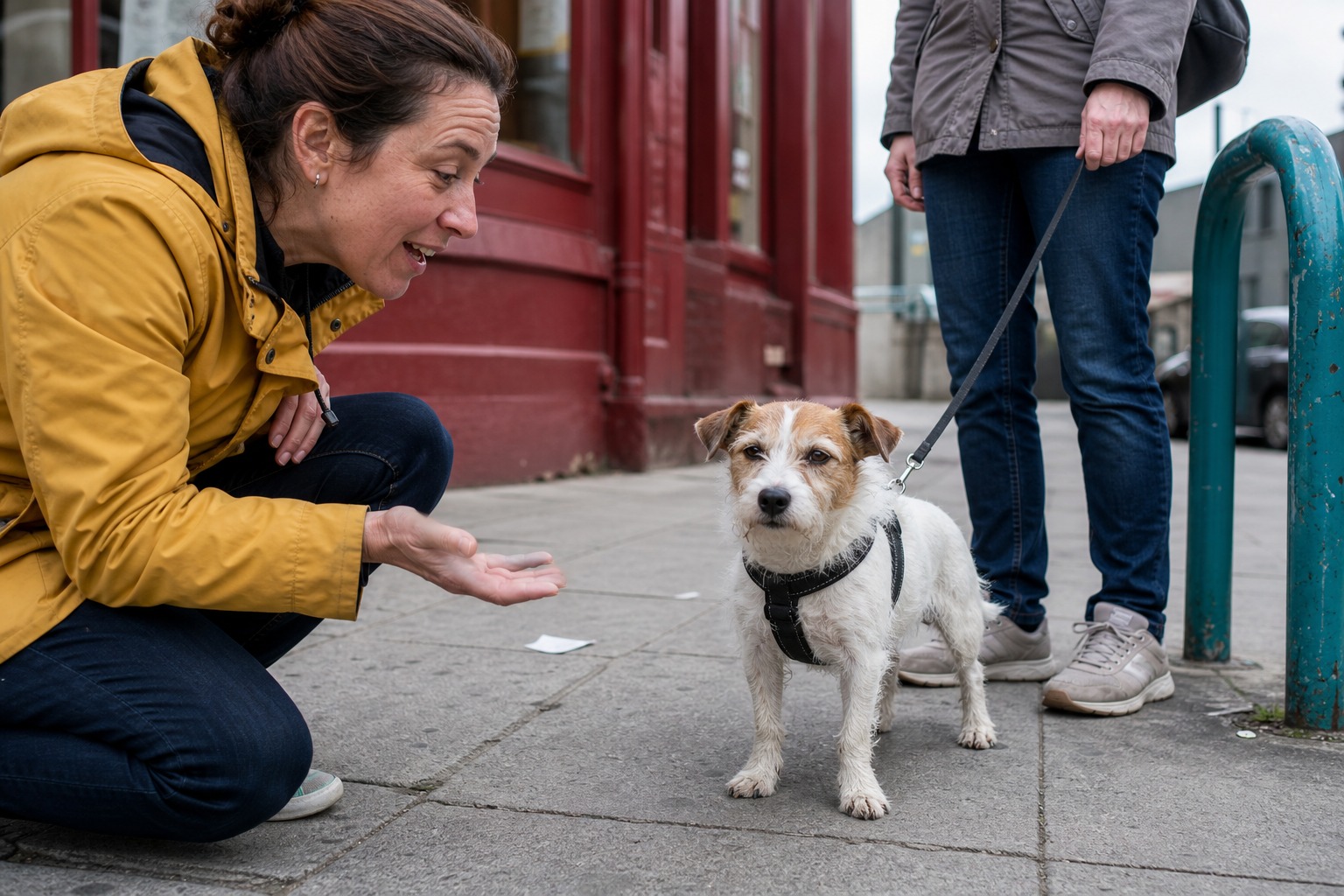
Your dog is a girl. She is wearing a pink harness. The leash is purple. A stranger crouches down, beams, and says: “Who’s a good boy?”
It happens constantly, to nearly every woman-dog in the world, and the interesting thing about it is that it is almost never a mistake in the ordinary sense. It is a default. And the default is not really about your dog at all.
Here is the argument, and the reason it is worth more than a shrug: the “good boy” reflex is a small, visible outcrop of a very large habit in how English speakers assign gender to anything unmarked. It runs in the language and in the culture. It is mostly harmless. And it is not entirely harmless, because the assumption does not travel alone. It brings expectations with it about what the dog is like, and those expectations reach your training, your vet visits, and what people think your dog is capable of.
The linguistic layer: he is the setting the language ships with
Start with grammar, because that is the least interesting part and it needs clearing out of the way.
English has, for centuries, used masculine pronouns as the stand-in for a subject whose gender is unknown or unimportant. He has done double duty as “this specific male” and as “a generic person.” Generations of style guides insisted on it. Whole legal and scientific literatures are written in it. It is the setting the language shipped with, and it takes deliberate effort to override.
An unfamiliar dog is exactly the case that setting was built for: an entity whose gender is unknown and cannot be politely checked. Out comes he.
But grammar is downstream of something bigger, and this is where the research is genuinely interesting.
The psychological layer: the unmarked case is male
Psychologists have a name for the broader pattern: androcentrism. The tendency to treat men as the neutral, default human, and women as a marked, gendered variant.
Work by April Bailey, Marianne LaFrance, and John Dovidio has documented this experimentally, and their summary of the finding is unnervingly clean: men are human, women are gendered. Ask people to picture a typical human and they are more likely to produce a man. Test the association implicitly and the same pattern shows up: humanity is associated more strongly with men than with women.
This is not a claim about anybody’s conscious beliefs. It is a claim about which category the mind reaches for when it has to fill a blank with something. And it has real consequences well outside the dog park: it is the same default that produced medical research conducted on male subjects and generalized to everyone, with results that have been measurably bad for women’s health.
Your dog is an unknown, and the mind fills the blank the way it always fills blanks.
The cultural layer: dogs got the masculine half of the pair
Then there is the specific coding of dogs, which comes from two directions.
The jobs. Dogs were historically bred and valued for protection, herding, and hunting: guarding the house, minding the livestock, going out with the hunters. Those were coded as men’s work in the societies doing the breeding, and the dogs inherited the coding. To this day, the job we most readily imagine a dog doing, barking at a stranger to keep them out of the house, is enforcement and boundary-keeping, which is about as masculine-coded a task as our culture has.
The pairing with cats. This is the sharper observation, and it comes from scholars who study how gender organizes categories. The gender binary has a habit of colonizing other binaries: sun and moon, public and private, hard and soft, dogs and cats. And these pairs are relational. Once one side gets feminized, the other gets masculinized more or less automatically.
Which means the masculine coding of dogs may be, in large part, a side effect of what we did to cats, rather than anything the dogs contributed. Neither animal earned its coding. They just happened to end up as a pair, and the culture did what it does to pairs.
Look at how differently we license the same emotion across that pair. A dog’s anger is read as protectiveness, a virtue: he’s guarding the house. A cat’s anger is trivialized: she’s having a hissy fit. Same emotion, two animals, two verdicts, and the verdicts line up precisely with how our culture has traditionally treated anger in men and in women.
Pop culture did the rest
Do a quick inventory of the famous dogs. Scooby-Doo. Clifford. Marley. Bolt. Tramp. Old Yeller. Beethoven. Hachikō. Rin Tin Tin.
Now the famous female dogs. Lady, whose entire characterization is femininity. Perdita, a mother. And then it gets thin very fast.
Male-coded dogs dominate the cultural stock, while female dogs are rare and, when they appear, are usually hyper-feminized into the role of mate or mother. And then the language reinforces it from the other side: “man’s best friend” is a phrase that puts both parties in the masculine, and it has been in circulation for so long that nobody hears it any more.
Why any of this matters, beyond the pronoun
You could reasonably say: so what, it is a stranger on a sidewalk, my dog does not speak English.
Here is the so what. The gender you assign to a dog does not sit there quietly. It brings a prediction.
People expect male dogs to be bolder, stronger, more assertive, more of a handful. They expect female dogs to be calmer, gentler, more biddable. Trainers who work with a lot of dogs will tell you these expectations are, at best, unreliable, and often precisely backwards. Plenty of male dogs are enormous goofballs. Plenty of female dogs are serious, focused, and intense.
And the expectation shapes behavior on the human end. If you have decided your dog is a boy, you may read a bark as boldness rather than fear. If you have decided your dog is a girl, you may excuse a training gap as sweetness. The label does not change the dog. It changes what you notice.
What sex actually predicts in a dog is narrower than people think, and it is mostly reproductive. Intact males may roam and mark more. Intact females shift behaviorally around their cycles. Beyond that, the individual dog matters far more than their reproductive organs, and personality is built out of genetics, early socialization, training, environment, and experience. If you are choosing a dog, choosing by sex is a poor proxy for almost anything you actually care about.
Can you unlearn it?
Yes, and it is not a moral emergency.
The best framing on this comes from the people who study these biases: they live in shared cultural assumptions, not in individual character. It is in the air more than it is in you. Nobody needs to feel guilty for saying “good boy,” and guilt is a useless engine for changing a habit anyway.
The move is smaller than guilt: notice the reflex, and interrupt it. The researchers who study this describe catching themselves doing it, being curious rather than ashamed about it, and then simply beginning to interrupt the automatic response.
And in the meantime, there is a two-word solution sitting right there, requiring no information about the dog at all, offending nobody, and working every time.
“Who’s a good dog?”
References
- Bailey, A. H., LaFrance, M., & Dovidio, J. F. (2019). Is Man the Measure of All Things? A Social Cognitive Account of Androcentrism. Personality and Social Psychology Review.
- Bailey, A. H., LaFrance, M., & Dovidio, J. F. (2020). Implicit androcentrism: Men are human, women are gendered. Journal of Experimental Social Psychology.
- Gastil, J. (1990). Generic pronouns and sexist language: The oxymoronic character of masculine generics. Sex Roles.
- Borgi, M., & Cirulli, F. (2015). Attitudes toward animals among kindergarten children: species preferences. Anthrozoös.
- Herzog, H. A. (2007). Gender differences in human-animal interactions: A review. Anthrozoös.