Here is a number that should annoy you.
In 2025, according to Shelter Animals Count’s decade-marking national report, adoptions of juvenile dogs rose 6%. In the same year, adoptions of adult dogs fell 6%, and senior dogs fell 2%.
Shelters got better at almost everything last year. Intakes dropped. Dogs got out faster. And the grey-muzzled ones still went backwards.
Which is strange, because by nearly every practical measure the senior dog is the easier adoption. They usually arrive house-trained. They frequently arrive with a documented history around children and other animals. Their personality is finished, so what you meet in the kennel is what you take home, with no fourteen-month wait to find out whether the cute puppy grew into a dog you can live with. And a great many people are explicitly looking for a lower-energy dog, which is exactly what a senior dog is.
The assumption doing the damage is that an old dog is a sick dog. It is not reliably true. Senior rescues report a genuine mix, plenty of them healthy, and “old” is not a synonym for “expensive.”
So this is not a persuasion piece. You are already interested. This is a map: four routes into a senior dog, and where each one is worth your time.
Route 1: The search tools, when you want to see everything at once
The widest net, and the right place to start if you have no fixed idea of what you want.
Adopt a Pet is the workhorse. It has a mobile app, and you can narrow by location, by age, and by breed. If you have children or other animals at home, use the “Good With” filters, which are genuinely the most under-used feature on the site. Set an alert and let matches come to you rather than refreshing the page every night.
The limitation of the search-tool route is that you are reading a listing rather than talking to someone who knows the dog. For a senior dog, that context is often the most valuable thing available.
Route 2: The national organizations that point you at the right local group
If working the apps is not getting you anywhere, some national nonprofits exist specifically to route you somewhere better.
Susie’s Senior Dogs showcases senior dogs from across the country who need homes, and has been doing it long enough to have real reach. It is a spotlight, not a shelter, and its job is to get a specific old dog in front of the person who will take them.
The Senior Dogs Project started in 1997 and has assembled the most useful set of resources in the space: lists of senior dog rescues by state, plus breed-specific rescues that commit to helping seniors, and a map of senior-friendly rescue organizations. If you want to know what exists near you, this is the fastest way to find out, and it will surface small local groups that never appear in a national search.
The Grey Muzzle Organization works differently, and it is worth understanding what it is and is not. Grey Muzzle does not adopt dogs out itself. It is a national nonprofit that funds senior dog programs at shelters and rescues around the country: hospice care, medical treatment, adoption support. Its value to you is as a directory of who is actually doing serious senior work, because those are the groups it funds.
Route 3: Foster-based rescues, when you want to know who the dog really is
This is the route most people underestimate, and for a senior dog it is often the best one.
A foster-based rescue keeps its dogs in homes, not kennels. Which means someone has watched this dog navigate stairs, meet a delivery driver, sleep through a thunderstorm, and share a kitchen with a cat. That is a completely different quality of information than “good with kids, probably.”
A shelter puts you in a room with a great many dogs in a single afternoon and lets you watch, in person, how each of them reads you. That is a real advantage of its own. A sanctuary keeps a whole population of old dogs together under one roof, and although plenty of them are lifers, a number of sanctuaries will let you take one home.
Pick the route by what you need to know. If you are nervous about how an old dog will fit into a specific household, foster-based is the one that can actually answer you.
Here are the groups, and what each one is genuinely good at.
Taffy’s Touch Senior Dog Rescue — Greenwood, Indiana
Nikki Sanders started it in 2021, after fostering a blind 14-year-old Pomeranian named Taffy and concluding that the old ones and the disabled ones were the dogs a shelter walks straight past. There is no building. Everything runs through foster homes, with volunteers scattered the length of Indiana. Sanders puts the running total at somewhere near 500 senior dogs, counting both adoptions and hospice placements.
Notably, they offer trial adoptions, so a family can take a dog home for a few weeks and find out whether it actually works. For a first senior adoption, that is a meaningful safety net.
Senior Hearts Rescue & Renewal — Bradfordwoods, Pennsylvania
A foster network working the Pittsburgh area since 2016, with more than 900 older dogs out the other side. Their Permanent Paws scheme picks up the medical bill for life on dogs whose care needs are extraordinary, while a foster family keeps a close eye on whether the dog is still enjoying being alive. If you want to take on a dog with real problems and not do it alone, start here.
Senior Dog Rescue of Oregon — Corvallis, Oregon
Foster-based and going since 1997, taking in, caring for, and rehoming any dog from six years old upwards, with over 1,000 rescued to date. They also run courtesy listings on their website for dogs belonging to other groups and to private owners, which quietly turns them into a regional noticeboard on top of being a rescue.
Touch of Grey Rescue — Melbourne Beach, Florida
Founder Wendy Johnson had been fostering dogs on her own since 2005 and has personally housed more than 100. She and her husband began focusing on seniors after moving to Florida in 2015, and formally founded Touch of Grey in 2019. It saved 86 senior dogs in its first year and now rescues more than 100 a year. Its “Fospice” program supports dogs with terminal conditions.
Miri’s Haven Senior Dog Rescue — Washington, DC metro area
Named for a three-pound Yorkie who had spent her life abused and neglected. Founded in 2021, volunteer-run and foster-based. Most dogs are adopted out, and some stay on as sanctuary dogs.
Tails of Gray — Livermore, California
Stephanie Meissner set this up in 2014. It functions as a sanctuary and a treatment center at once, keeping old dogs safe and medically cared for while hunting for permanent homes for them. The mission it states for itself is ending unnecessary euthanasia for homeless senior dogs.
Route 4: The senior-to-senior programs, if you are an older adopter
This is the route almost nobody knows exists, and it is designed to solve a real problem: older adopters and older dogs are frequently a perfect match, and the barrier is money.
North Shore Animal League — Seniors for Seniors — Port Washington, New York
The League itself takes in animals at every stage of life, but Seniors for Seniors exists to match its older animals with adopters who are 60 or over. Sign up and the fee drops, you get two $15 grooming appointments a year, and the annual core vaccinations are free, along with other benefits. The money is the whole design: it dismantles the exact objection that kills most of these adoptions before they start.
Almost Home Dog Rescue of Ohio — Senior to Senior — Dublin, Ohio
One for the Lassie devotees, since Almost Home takes Collies and nothing else. Their Senior to Senior scheme starts from the honest premise that a retired person may simply not be able to fund a dog, and so lets anyone over 50 take an old collie as a foster while the rescue picks up the tab for the vet visits, the prescriptions, and the food. If a Collie is the dog you have always wanted and the budget is the thing standing in the way, this is a route that was built for you.
And the sanctuaries, where some dogs stay
Two worth knowing, because they occupy a particular niche.
Shep’s Place — Kansas City, Missouri
The name comes from Shep, an eight-year-old hound taken in by founders Russell and Ann Clothier. It operates as a sanctuary, which means no dog there is ever under any pressure to leave. They can also be adopted, by anyone willing to fill in the paperwork and have their home looked over first. The dogs listed as long-term residents look, it has to be said, thoroughly content with how things have worked out.
Rusty’s Angels Sanctuary — Phoenix, Arizona
Most of Rusty’s dogs arrive after their owner has died or moved into a nursing home, which is one of the quieter and sadder pipelines in rescue. The goal is a safe environment, adoption where possible, and public education about senior dogs. Dogs not healthy enough for a new home stay in the sanctuary. (They also run a Farm of Hope housing ducks, goats, burros, and chickens, though it appears to be the dogs who are adoptable.)
The application should be an interrogation
Nobody enjoys being vetted with an old dog waiting on the other side of it. Get vetted anyway, and be glad when it happens.
Background checks, reference requests, and home visits are the sign you want. A rescue that runs them is a rescue that is trying hard not to send a dog back to square one because the fit was wrong, and that is precisely the outcome that a senior dog can least afford. An organization that will hand you a dog with no questions asked is telling you exactly how carefully it handled everything that came before, including the medical history it just gave you.
“The rescue that grills you is the one you want,” says Dr. Amara Solis. “A senior dog does not have another failed placement in them. Every question they ask you is a question they also asked about the dog.”
The thing the numbers do not say
One more finding from the 2025 data, and it reframes the whole picture: senior animals have the highest return-to-owner rates of any age group. When an old dog turns up as a stray, they are the most likely to be claimed.
Which tells you something worth holding onto. These are not, on the whole, dogs nobody wanted. They are dogs who were wanted very much, right up until an owner died, or moved into care, or lost their housing, or ran out of money.
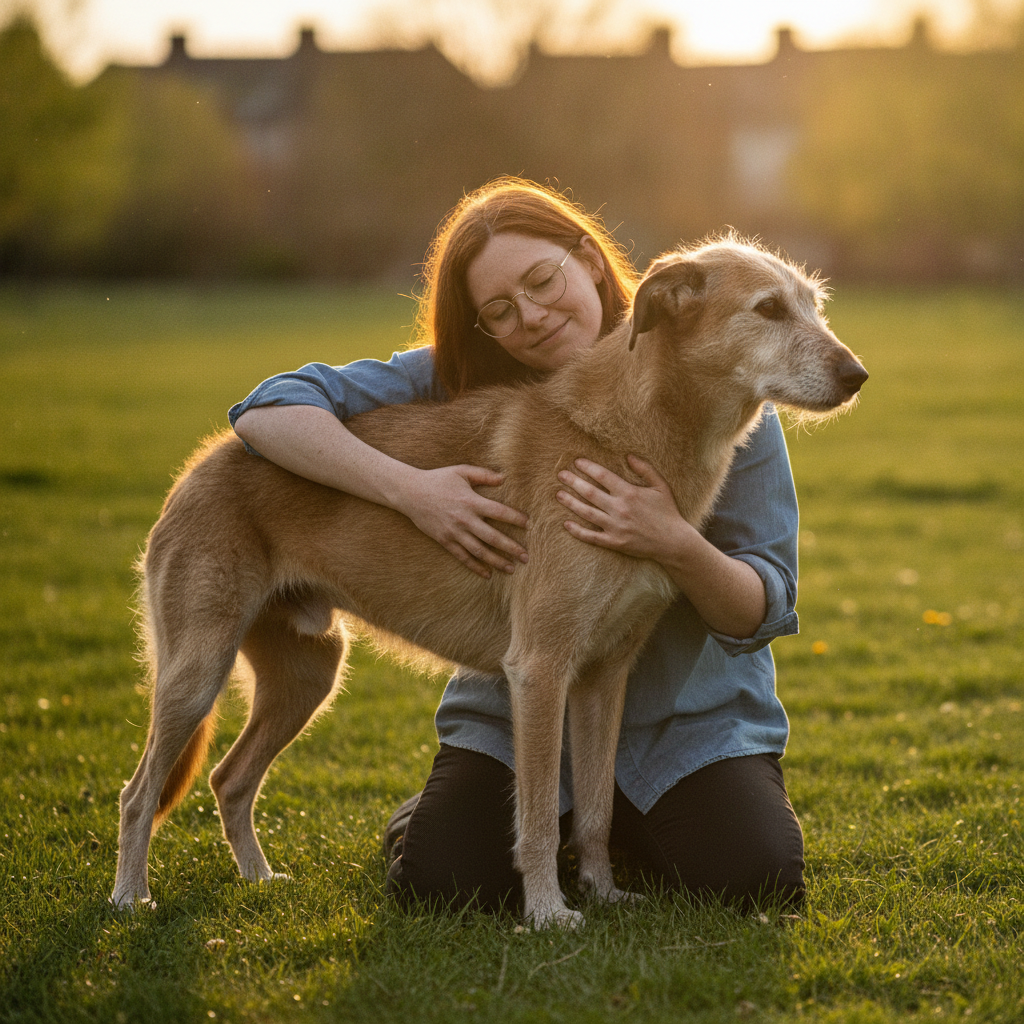
The dog on the other side of that is usually somebody’s beloved old dog, sitting in a kennel, wondering where everybody went. And the adoption numbers say fewer people came for them last year than the year before.
References
- Shelter Animals Count. “2025 Annual Data Report.” https://www.shelteranimalscount.org/2025-report/
- Shelter Animals Count. “Data Drop: A Closer Look at Age and Reunification Trends for Lost and Found Pets.” https://www.shelteranimalscount.org/data-drop-a-closer-look-at-age-and-reunification-trends-for-lost-and-found-pets/
- ASPCA. “Shelter Animals Count Releases 2025 Annual Data Report, Marking 10 Years of National Sheltering Data.” https://www.aspca.org/about-us/press-releases/shelter-animals-count-releases-2025-annual-data-report-marking-10-years
- The Grey Muzzle Organization. https://www.greymuzzle.org/
- The Senior Dogs Project. https://srdogs.com/
- Adopt a Pet. http://www.adoptapet.com/