


The Bath Mistake That Ends in a Vet Bill: Letting Your Dog Stay Damp
The shake-off isn't the finish line. Leaving moisture trapped in a coat or ear can trigger a hot spot overnight, and hot spots move fast. A vet on drying right and when to worry.

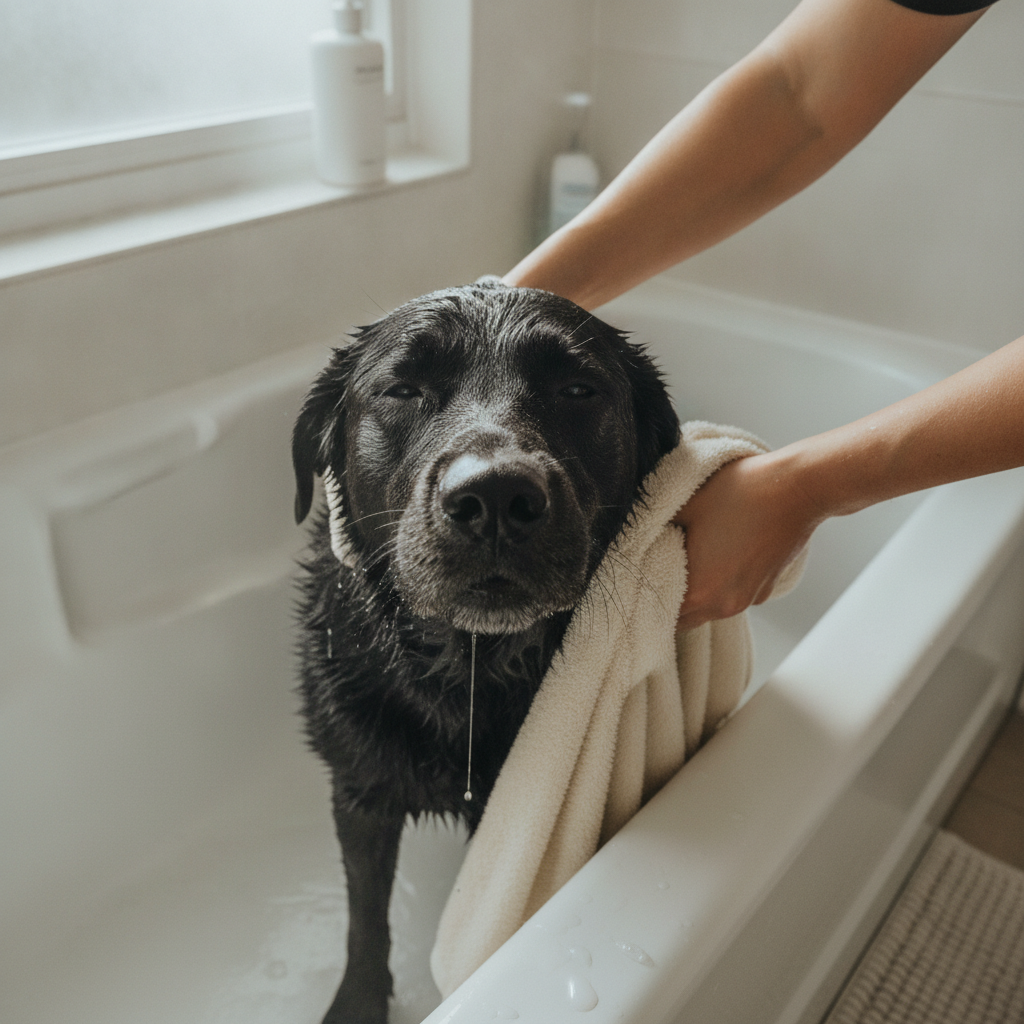
Dog baths are a whole event: the wrangling, the water temperature, the endless rinsing, and the inevitable moment your dog shakes and soaks you instead of the tub. By then it’s tempting to call it done and let your dog air-dry on the rug. That last shortcut is the one worth rethinking. The single most useful thing you can do at the end of a bath is actually dry your dog off.
It’s not about the wet-dog smell. Trapped moisture, whether it’s water sitting under a mat or lingering in an ear canal, sets up the exact conditions for irritation. The dog scratches, and a scratch is all it takes.
How a damp coat becomes a hot spot
When something itches or hurts, a dog doesn’t leave it alone and wait it out. It scratches, chews, and worries at the spot, and that self-trauma creates an inflamed, weeping patch of skin, a hot spot. The medical names are acute moist dermatitis or pyotraumatic dermatitis, and while a hot spot isn’t an infection to begin with, it can turn into one quickly and spread while you’re not looking.
The speed is the part owners underestimate. A lesion that was nothing at bedtime can be a raw, painful mess by morning; plenty of people first notice at 1 a.m. when the scratching and jingling collar wake them up. If a hot spot gets infected and goes untreated, bacteria like staph can take hold, which is a problem for the dog and, occasionally, for the people around it.
A wet dog isn’t a doomed dog, most dogs get damp and are totally fine. What tips it over is moisture with nowhere to go, packed under a mat or sitting in an ear, on skin that’s already a little irritated. That’s the combination I see turn into a hot spot overnight.
Which dogs are most at risk
Coat is the biggest factor. Dogs with long, thick, or double coats trap moisture most easily, so hot spots show up more in breeds like Golden Retrievers, German Shepherds, Collies, Cocker and other Spaniels, and Saint Bernards. Double-coated dogs that mat, Poodles and the various doodles among them, are especially prone, because a mat presses damp fur flat against the skin and seals it in.
Moisture isn’t the only trigger, either. Allergies, flea or tick bites, anal-gland trouble, and even sore muscles or joints can start the scratch-chew cycle. If your dog reliably flares at certain times of year, that pattern is a clue worth tracking and mentioning to your vet.
Drying the right way
You don’t need your dog bone-dry, the way you wouldn’t blow-dry your own hair to a crisp. The goal is to get moisture out of the places it likes to hide.
Towels do most of the work; a more absorbent towel just does it faster, which matters on a big, thick-coated dog. From there, let your dog finish drying in a warm spot. For heavy coats, or for dogs with a history of hot spots, allergies, or other skin issues, a dog-friendly dryer on forced cool air is the safest way to speed things along. The one hard rule is the ears: don’t blast a dryer at them, because that can force water deeper into the canal and set up an ear infection. If your dog is prone to ear trouble, gently dry the ears with a cotton ball instead.
When to stop toweling and call the vet
Most bath days end fine. Get help promptly if you see:
- A red, moist, or oozing patch that appeared fast, especially if your dog won’t leave it alone.
- A spot that’s visibly growing over hours, not days. Hot spots expand quickly.
- A foul smell, discharge, or redness inside an ear, or constant scratching at the neck and throat.
- Any lesion your dog is actively chewing raw. An e-collar (the cone) and a same-day appointment beat waiting to see if it settles.
In the clinic, treatment is usually straightforward: clip the hair over the area, clean it with an antimicrobial solution, and apply a topical steroid, sometimes with a short course of oral steroids to calm the inflammation. Any infection in the skin or ear gets addressed at the same time. Caught early and kept from further scratching, a hot spot often heals in just a few days.
About that apple cider vinegar hack
Home remedies for hot spots circulate constantly, and diluted apple cider vinegar is the perennial favorite because it’s a mild antiseptic. Skip it. The acetic acid in vinegar can irritate skin that’s already raw and drive the problem in the wrong direction. A hot spot festers if you let it, so the better instinct is to get it seen rather than to experiment.
The habit that prevents most of this
The cheapest prevention is a routine, not a product. Keep your dog well brushed and mat-free, especially in humid weather or after swimming. Every so often, part the coat and actually look at the skin, and peek in the ears to check they’re not red. You know your dog’s normal smell, look, and behavior better than anyone; if something’s off, there’s usually a reason. Drying properly after every bath is simply the easiest place to start.
Common questions
Does a wet coat automatically cause a skin infection?
No. A healthy, briefly damp dog is usually fine. The risk climbs when moisture stays trapped, especially under a mat or deep in a double coat, or when the skin is already compromised by allergies, a bite, or a scratch.
Should I use apple cider vinegar on a hot spot?
It's better to skip it. Apple cider vinegar contains acetic acid, which can irritate already-inflamed skin and make things worse. A hot spot is best seen by a vet, sooner rather than later.
Not a substitute for your vet. Our guidance is educational. For urgent symptoms, contact a vet or emergency clinic right away. Editorial standards
Dr. Park is a board-certified emergency and critical care specialist. She reviews our health and safety content for clinical accuracy and contributes guides on recognising urgent conditions. Her focus is helping owners act quickly and correctly when it matters most.
Meet our experts ↗Keep reading
 Health & WellnessYour Dog's Skin Is a Third as Thick as Yours. Wash Accordingly.Dr. Priya Nair · 9 min
 Health & WellnessFifteen Seconds Is Grooming. A Minute Is a Symptom.Dr. Mara Chen · 7 min
 Health & WellnessMost Home Remedies for Dog Skin Do Nothing. Three Are Worth Keeping in the House.Dr. Nina Kohl · 11 min
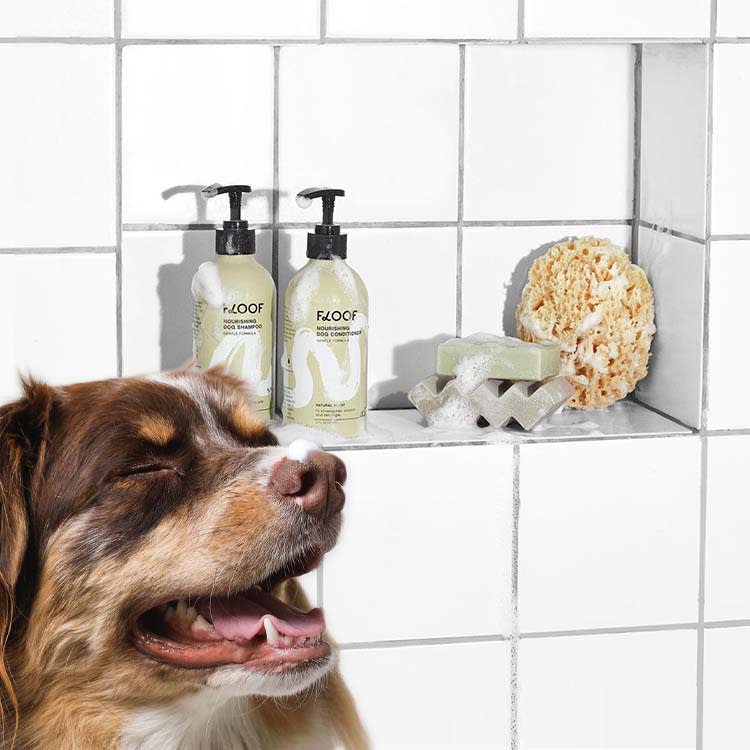 Health & WellnessOne Frenchie's Miserable, Itchy Skin Built an Entire Dog-Skincare BrandDr. Mara Chen · 6 min
 Health & WellnessYour Dog's Cracked Paws Are Trying to Tell You SomethingDr. Lena Park · 8 min
 Health & WellnessYour Puppy's Coat Is Going to Change. Here's When to Shrug and When to WorryDr. Mara Chen · 6 min