


Not All Tulip Trouble Is Equal: A Cat Owner's Risk Map
Tulips are toxic to cats, but a vase on the table and a bag of bulbs are two very different emergencies. Here is how to rank the real risk and act fast.

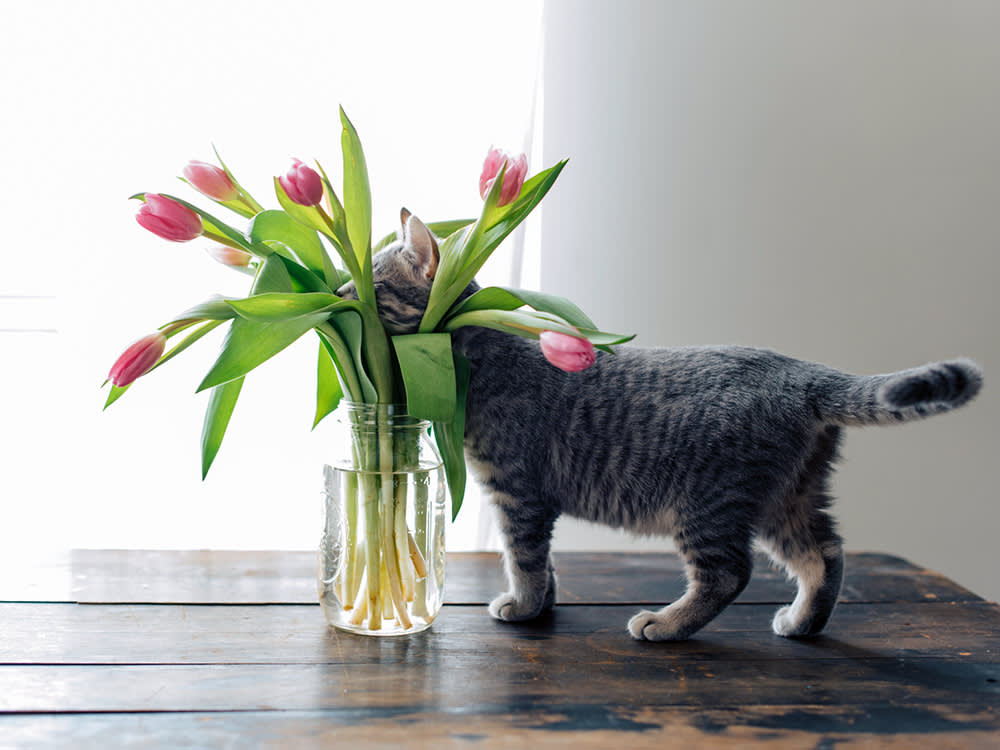
A tulip on your kitchen table and a tulip bulb in your garden bed are, to a cat, two completely different levels of danger, and almost no one explains it that way. Most advice flattens “tulips are toxic to cats” into a single warning, which leaves you equally panicked over a licked petal and a dug-up bulb when only one of those is a genuine emergency.
The toxin is the same in both cases. The dose is not. So instead of a generic warning, here is a risk map: the three ways a cat actually encounters tulips, ranked from “watch and probably relax” to “call poison control now.” Knowing which situation you are in is the difference between a stressful evening and a fast, correct response.
What makes tulips toxic, and why dose is everything
Every part of the tulip plant contains toxic compounds, chiefly the glycosides tulipalin A and tulipalin B, along with calcium oxalate. The tulipalins can trigger allergic-type irritation, and the calcium oxalate crystals are microscopic, jagged shards that abrade whatever tissue they touch, the mouth, throat, stomach, and intestines.
Here is the part that drives the whole risk map: these compounds are not spread evenly through the plant. They are heavily concentrated in the bulb. The petals and leaves contain enough to irritate a cat’s mouth and gut, which is unpleasant but usually self-limiting. The bulb contains enough to cause serious, occasionally dangerous illness. Same plant, very different stakes depending on which part your cat reaches.
Tier 1: the bouquet on the table (lowest risk)
This is how most cats meet a tulip, and it is the most manageable scenario. A cat investigates a vase, licks or bites a petal or leaf, and finds it bitter and irritating. The plant essentially defends itself; most cats stop after one taste.
What you will typically see: drooling, pawing at the mouth, maybe a single vomit, perhaps a bit of loose stool. This is mild oral and gastrointestinal irritation, and it usually clears within a few hours.
What to do: remove the bouquet, rinse any plant material from your cat’s mouth if they will allow it, and offer water. Watch them for the rest of the day. You do not necessarily need an emergency visit for a single nibble of petal, but a quick call to your vet or poison control is never wrong, especially if your cat has any existing health issues.
The one upgrade to watch for: the vase water. Toxins can leach into standing water, so a cat who drinks from the vase gets a more concentrated dose than one who licks a petal. Keep arrangements covered or out of reach, and never let a cat use a flower vase as a water bowl.
Tier 2: the spring garden bed (moderate risk)
Move the tulips outdoors and the risk profile changes. A planted bed gives a cat access to leaves, flowers, and, critically, the chance to dig. Outdoor cats and indoor-outdoor cats can encounter tulips during the exact season they are most tempting, and a bored or curious cat may chew more than they would indoors.
The danger climbs because of access to the bulb. A cat scratching in soft, freshly planted soil can unearth a bulb, and that is when a Tier 2 situation becomes a Tier 3 one. Outdoor garden ingestions are also harder to witness, so you are often working backward from symptoms rather than catching the cat in the act.
What to do: the cleanest prevention is keeping cats out of tulip beds and, ideally, keeping cats indoors during planting and bloom season. If that is not realistic, fence or cover the bed densely enough that a determined digger cannot get to the soil. If your outdoor cat is suddenly drooling, vomiting repeatedly, or off their food and you have tulips planted, tell your vet about the garden access; it is a crucial clue.
Tier 3: the bag of bulbs (highest risk, true emergency)
This is the scenario that earns the genuine alarm, and it is the one casual warnings bury at the bottom of a symptom list. A stored sack of tulip bulbs, the kind you keep in a garage or closet between planting seasons, is the most concentrated source of toxin in the entire plant, sitting in a chewable, ball-shaped package that some cats find interesting.
A cat who chews or eats bulb material can develop the severe end of the symptom spectrum:
- Profuse or bloody vomiting and diarrhea
- Abdominal pain
- Weakness or collapse
- Elevated heart rate and dropping blood pressure
- Tremors or seizures
- Difficulty breathing from swelling of the mouth and throat
What to do: treat this as an emergency. Call your veterinarian, the nearest emergency hospital, or ASPCA Animal Poison Control (888-426-4435) immediately, and do not wait for symptoms to appear. Bring or describe what was eaten. Treatment may include inducing vomiting early, IV fluids, anti-nausea medication, and hospitalization for monitoring. The sooner you act, the better the outcome.
Store bulbs the way you would store medication: sealed, labeled, and somewhere a cat physically cannot reach.
The single rule that covers all three tiers
If you remember nothing else: the part matters more than the plant. A petal is a nuisance. A bulb is an emergency. When you call your vet or poison control, the first thing they will want to know is which part your cat got into and roughly how much, because that, not the word “tulip,” determines what happens next.
Owners often apologize for calling about a single chewed petal, then sound calm when they mention the cat got into the bulb bag, which is exactly backward. If you can tell me the cat ate bulb, we move fast. If it’s a petal, we usually just watch. The part of the plant is the most useful thing you can tell me.
Cat-safe flowers for a worry-free vase
If you love fresh flowers but not the vigilance, these are non-toxic to cats per the ASPCA, so a curious nibble is no cause for alarm:
- Roses (mind the thorns, not the petals)
- Orchids
- Sunflowers
- Gerbera daisies
- Snapdragons
The other spring bulbs that deserve the same caution
Tulips are not the only bulb that turns a flower bed into a hazard. Apply the same “bulb is worst” logic to:
- Daffodils: bulbs are especially toxic, causing vomiting, drooling, and in large amounts heart and breathing problems.
- Hyacinths: same bulb-concentrated toxins, with intense drooling and GI upset.
- Lilies: a category of their own and the most dangerous of all for cats; any part, even pollen, can cause fatal kidney failure. These belong nowhere near a cat.
References
- ASPCA Animal Poison Control Center, Toxic and Non-Toxic Plants Database (Tulip, Tulipa spp.)
- Pet Poison Helpline, Tulip and Hyacinth Toxicity in Dogs and Cats
- National Capital Poison Center, Tulip and Daffodil Bulb Toxicity
- Cornell University College of Veterinary Medicine, Plants Poisonous to Livestock and Pets
Common questions
What part of the tulip is most dangerous to cats?
The bulb, by a wide margin. It holds the highest concentration of toxic compounds. A cat who digs up and chews a planted bulb, or gets into a stored bag of bulbs, is at much higher risk than one who licks a flower in a vase.
My cat nibbled a tulip petal. Do I need a vet?
Probably not an emergency, but call to be safe. A small bite of petal or leaf usually causes drooling, maybe a vomit, and then nothing. Watch for repeated vomiting, diarrhea, weakness, or trouble breathing, and call your vet or ASPCA Animal Poison Control (888-426-4435) if you see any of those, or if you know a bulb was involved.
Not a substitute for your vet. Our guidance is educational. For urgent symptoms, contact a vet or emergency clinic right away. Editorial standards
Dr. Solis is a board-certified veterinary dermatologist with over twelve years of clinical experience. She advises on skin conditions, allergies, and grooming practices that affect coat and skin health. All dermatology and allergy content at The Pet Times is reviewed by her team before publication.
Meet our experts ↗Keep reading
 Health & WellnessThe Tuna Recall Your Cat's Snack Habit Just Made PersonalDr. Amara Solis · 6 min
 Health & WellnessLavender Won't Hurt Your Cat. The Essential Oil Will.Dr. Ravi Mehta · 7 min
 Health & WellnessA Cat Turned On a Stove and Started a Deadly Fire. How to Prevent ItDr. Amara Solis · 4 min
 Health & WellnessFoxtails Aren't Just a Dog Problem. For Cats They Can Be Deadly.Dr. Amara Solis · 5 min
 FoodThe 'Natural' Raw Diet Is Failing Cats on Two FrontsDr. Amara Solis · 7 min
 Health & WellnessThe Farm-Cat Deaths Were the Warning. Raw Food Is How House Cats Now Catch Bird FluDr. Mara Chen · 5 min