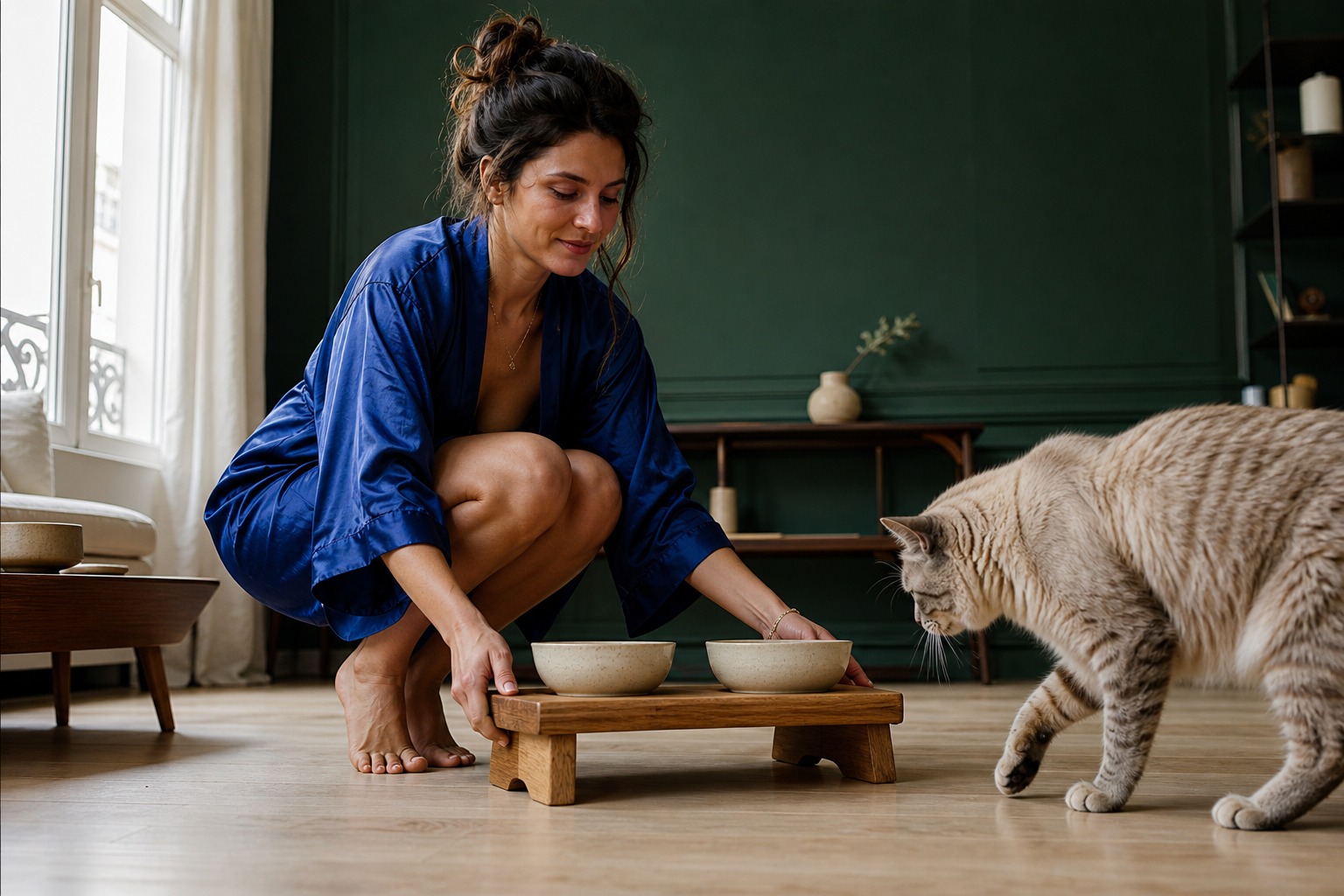
People love to dunk on Emily in Paris, but Sylvie Grateau, Emily’s exquisitely unimpressed boss, is the best reason to keep watching. She’s sharp, she’s stylish, she calls Emily on her nonsense, and, as it turns out, she’s a cat person. Blink during her morning routine and you’ll miss it: a slim, slightly rumpled grey shorthair getting fed from the sleekest little setup in the whole show.
Naturally, viewers went looking for the bowl. Here’s the good news and the bad news.
The stand is easy. The bowls are the whole point.
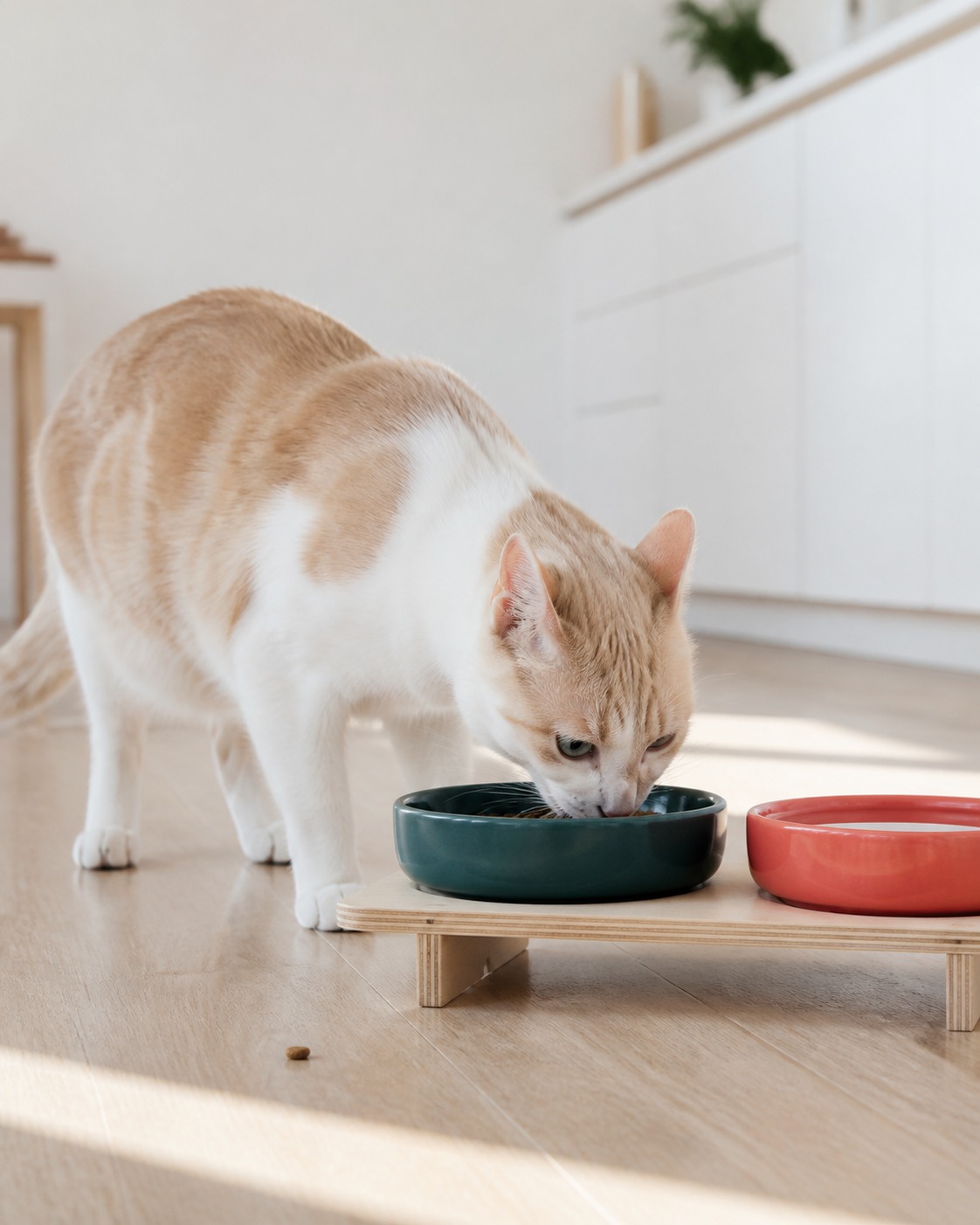
The wooden feeding stand under Sylvie’s bowls is not the hard part. Similar low, minimalist wood-and-bowl setups turn up all over the internet for roughly $15 to $35, and the price mostly rides on the brand and on whether you want a single station or a double like hers.
What makes her version look expensive is the bowls themselves, and those almost certainly did not come with the stand. The bowls that ship with these wooden bases tend to be uniform in shape and color, with straight sides about two inches high. Sylvie’s are different: shallower, with a slightly irregular, organic shape that reads as handmade.
Look closely and there’s a brownish lip around the rim under a white glaze, which points to stoneware rather than pure white ceramic or porcelain. And given how hard she smacks a spoon into one while un-tinning the cat’s food, they’re clearly sturdier than they look, another vote for stoneware.
How to fake it, on any budget
Where the actual bowls came from is anyone’s guess. Prop stylists are professional-grade shoppers, so they were probably plucked from a tiny Paris shop or borrowed from a Paris prop house that stocked them ages ago. Good luck tracking that down.
You don’t need to. Recreate the look by shopping for the qualities, not the exact object:
- Material: stoneware, not glossy white ceramic. You want a little warmth and weight.
- Shape: shallow and slightly organic, so it looks thrown by hand rather than machine-made.
- Glaze: an off-white or cream with a hint of an earthy rim, not a stark bright white.
- Size: about five inches in diameter, which drops neatly into most wooden feeder stands.
Similarly shaped stoneware bowls turn up at Petco and Walmart, and if you want to keep the French theme, the Paris concept store Merci sells lovely ones. Pair any of them with a simple low wooden trivet and you’ve got Sylvie’s setup for a fraction of the drama. Getting your apartment to look like hers, though? That one’s on you.
What’s new since this was written
Emily in Paris has kept rolling through several more seasons since Sylvie’s cat first appeared, and the show’s set design is still a reliable engine for home and lifestyle shopping trends. The feeding-station look has only gotten easier to copy, too: low wooden feeder stands and handmade-style stoneware pet bowls have become a standard category at pet retailers and home stores, so you no longer have to freeze-frame a French drama to find one.