


Baked Sourdough Is a Fine Dog Snack. Raw Dough Is a 911 Call.
A crumb of finished sourdough won't hurt your dog. Raw sourdough starter or rising dough is a genuine emergency, and the gap between those two is the thing most bakers never hear about.

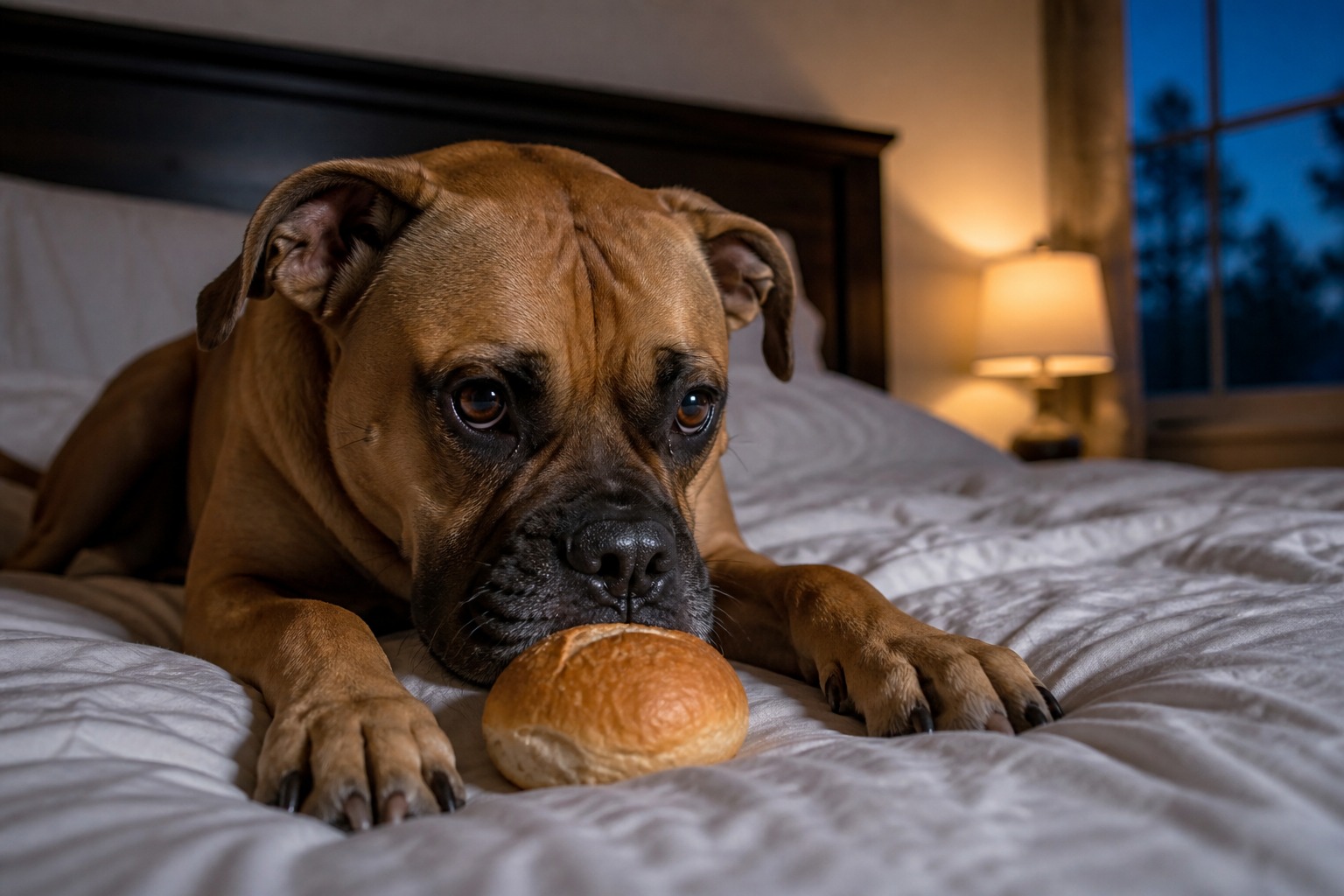
Sourdough baking has a way of taking over a kitchen, and once you have a bubbling starter and a dog watching your every move, the question is inevitable: can the dog have some? The answer splits cleanly in two, and the split is the whole point of this article. A bite of finished, baked sourdough is a harmless treat. Raw sourdough dough or active starter is a veterinary emergency. Most enthusiastic bakers know the first half and have never been told the second, which is exactly backwards from what keeps a dog safe.
Baked sourdough: fine, just not a health food
Once it is baked, sourdough is safe for most dogs in small amounts, the same way plain bread is, assuming your dog has no wheat allergy. It is not going to hurt them and it is not going to help them much either; bread is mostly starch, low on the nutrients a dog actually needs. So treat it like any low-value treat: an occasional small piece, folded into the ten percent of daily calories reserved for treats, and never a loaf studded with something toxic like raisins, garlic, onion, or heavy seasoning.
That is the boring, reassuring half. If a crust hits the floor and your dog inhales it, there is nothing to panic about. The danger lives entirely in the stage before the oven.
Raw dough and starter: the part nobody warns you about
Here is what makes uncooked dough genuinely dangerous, and why “raw bread dough is bad for dogs” deserves more than a footnote. Yeast does not stop working when a dog swallows it. A dog’s stomach is warm and moist, which is precisely the environment yeast loves, so raw dough or active starter keeps right on fermenting inside the animal. That creates two separate emergencies at once.
The first is mechanical. Fermenting dough produces carbon dioxide, and the dough rises inside the stomach just as it would on your counter, but with nowhere to go. The stomach can distend painfully and, in bad cases, bloat to the point of twisting or cutting off blood supply, a life-threatening situation. The second is chemical. Fermentation also produces ethanol, actual alcohol, which the stomach absorbs into the bloodstream. That can cause alcohol poisoning, with wobbliness, disorientation, dangerously low blood sugar and body temperature, and, in severe cases, collapse. A dog can be dealing with a swelling stomach and alcohol toxicity simultaneously.
The thing I wish every home baker knew is that raw dough isn’t like other counter-surfing mistakes, where you watch and wait. It’s actively getting worse by the minute inside the dog, on two fronts at once. If a dog gets into dough or starter, I want that call immediately, not after they’ve slept on it.
Signs to act on include a swollen or tight belly, unproductive retching or attempts to vomit, drooling, weakness, stumbling, disorientation, or collapse. Any of those after a dough incident means calling your vet or an emergency clinic right away rather than monitoring at home. Keep rising dough and jars of starter where a dog cannot reach them, which for a determined dog means higher and more sealed than you think.
The safe way to share the sourdough hobby
The happy resolution is that baking neutralizes the whole problem. The oven kills the yeast’s activity and burns off the alcohol, so fully baked treats made from starter or discard are completely safe. If you hate throwing out discard as much as most bakers do, turning it into dog biscuits is a genuinely good use for it.
The recipe in the how-to above leans on ingredients that are actually good for dogs. Oat flour brings phosphorus, magnesium, and B vitamins, and depending on the oats you start with it can be gluten-free. Pumpkin adds fiber that is easy on digestion along with potassium and vitamins. The seeds add a little extra nutrition and crunch. It is a forgiving recipe you can adjust to what is in your pantry, as long as you keep it to dog-safe ingredients and bake it all the way through. The rule underneath all of it is simple: baked is a treat, raw is a hazard.
What’s new since this was written
The core science on raw dough has not changed, but veterinary poison centers have kept flagging it, and two adjacent updates are worth adding for anyone baking with a dog underfoot. First, uncooked yeast dough consistently appears on lists of common household and holiday hazards for dogs, alongside chocolate and grapes, a reminder that this is a well-documented emergency and not an overcautious warning.
Second, watch the mix-ins as baking-from-scratch has boomed. Some “healthier” or low-sugar baked goods now use xylitol, a sweetener often labeled “birch sugar,” which is toxic to dogs even in small amounts, and raisin or currant loaves remain a serious risk because grapes and raisins can cause kidney failure. So the safe-sharing rule has two parts now: only give your dog fully baked sourdough, and check that the recipe contains no xylitol, raisins, garlic, onion, or heavy salt before any of it reaches the dog.
References
- Merck Veterinary Manual: Bread Dough Toxicosis in Animals
- ASPCA Animal Poison Control: People Foods to Avoid Feeding Your Pets
- Pet Poison Helpline: Bread Dough
- U.S. Food and Drug Administration: Paws Off Xylitol; It’s Dangerous for Dogs
This article covers a true emergency. If your dog has eaten raw dough or active sourdough starter, contact your veterinarian or an emergency clinic immediately rather than waiting for symptoms.
Common questions
Is raw sourdough dough or starter dangerous for dogs?
Yes, seriously. Raw yeast dough and active starter keep fermenting in a dog's warm stomach, producing gas that can dangerously expand the stomach and alcohol that can cause alcohol poisoning. This is an emergency, not a wait-and-see.
What are the signs a dog ate raw dough?
Watch for a swollen or painful belly, unproductive retching, drooling, vomiting, weakness, wobbliness, disorientation, or collapse. If you see any of these after your dog got into dough or starter, call your vet or an emergency clinic immediately.
Can I bake treats with sourdough discard for my dog?
Yes. Fully baked discard treats are fine, since baking kills the yeast activity and burns off the alcohol. The danger is only in the raw, unbaked stage, so keep rising dough and starter well out of reach.
Not a substitute for your vet. Our guidance is educational. For urgent symptoms, contact a vet or emergency clinic right away. Editorial standards
Dr. Solis is a board-certified veterinary dermatologist with over twelve years of clinical experience. She advises on skin conditions, allergies, and grooming practices that affect coat and skin health. All dermatology and allergy content at The Pet Times is reviewed by her team before publication.
Meet our experts ↗Keep reading
 FoodSkittles Aren't the Candy That'll Send Your Dog to the ERDr. Lena Park · 6 min
 FoodOne Slim Jim Has as Much Saturated Fat as a Whole Serving of FriesDr. Priya Nair · 6 min
 Food"Dogs Are Basically Wolves" Is How Raw Chicken Gets Fed. Here's the Catch.Dr. Lena Park · 7 min
 FoodThe Persimmon Rule for Dogs: Flesh Yes, Everything Else NoDr. Priya Nair · 7 min
 Food10 Human Superfoods for Dogs: The Prep Matters More Than the ProduceDr. Ravi Mehta · 8 min
 FoodOne Tater Tot Won't Kill Your Dog. The Fifth One Might Ruin Your Night.Dr. Ravi Mehta · 5 min