


Every Sign of a Smart Dog Is Also a Complaint About Them
Opens doors. Ignores you. Raids the trash. Quits a trick out of boredom. The seven behaviors owners drag to trainers are the same seven researchers call intelligence, and the fix is never more obedience.

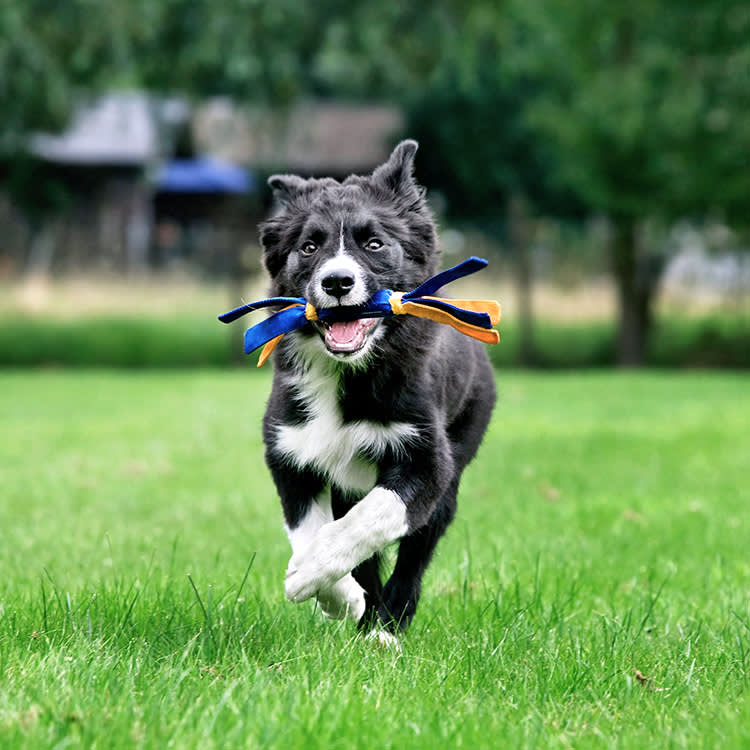
Here is a list of things dog owners complain about to trainers.
He opens the pantry door. He knows exactly which pocket the treats are in. He only comes when he feels like it. He gets into the trash the second we leave. He escapes the yard. He does the trick twice and then gets bored and walks away. He rings the potty bell just to make us get up.
And here is a list of things researchers describe as canine intelligence: independent problem solving, reading human micro-signals, pattern recognition, adaptability, memory, self-directed play, and the judgment to weigh whether a request is worth complying with.
Those are the same list.
That is not a cute observation. It is the most useful thing you can know about a clever dog, because it means the strategy most people reach for, more obedience, tighter control, sterner corrections, is aimed at the wrong target. You cannot train a dog out of being smart. You can only decide what their intelligence is going to be pointed at, and if you do not decide, they will.
Seven signs, ordered by how much trouble they cause you
Tricks are close to irrelevant here. What veterinarians and cognition researchers actually mean by canine intelligence is a bundle of capacities: solving novel problems, remembering, adjusting to change, and above all decoding the humans in the household.
So rather than run these in the order a proud owner would brag about them, here they are in the order they tend to arrive in a trainer’s inbox, worst first.
1. The one that gets dogs punished: they seem stubborn
This is the most misread behavior in dogs, and the most consequential.
A “stubborn” dog is usually not confused. They are unimpressed. They know precisely what you want. They have simply weighed your offer against the squirrel, run the arithmetic, and declined. That is not a comprehension failure. That is an opinion.
The cost: you feel disrespected by an animal who is, in a backhanded way, complimenting you. And because it reads as defiance rather than as a bad wage, people escalate to force. What that teaches a smart dog is that you have become unpredictable, and unpredictable things are worth avoiding.
The fix: raise the pay, add variety, or hand them some say in the matter. Intelligent dogs stay in the game when there is something in it for them. That is not spoiling. That is negotiating with someone who can count.
2. The one that gets dogs killed: they are too smart for their own good
The trash raiders. The door openers. The yard escapees. These are not badly behaved dogs. They are dogs with surplus processing power and nothing assigned to it, and the mischief is simply what the surplus condenses into.
It gets its own entry because it is the sign with a body count. Your rug is one possible outcome. A dog loose on a road is another, and it deserves to be treated as a safety problem rather than filed away as a personality quirk.
The cost: the highest on this list, and the one people find funniest right up until it is not.
3. They solve things you never taught them
The purest marker of a clever dog is working something out unassisted: defeating a latch, absorbing a new routine in a day, testing an object to see what it does. These dogs run experiments. Try a solution, watch the result, try a better one.
The cost: the latch works in both directions. A dog who can open the pantry has effectively granted themselves an unlimited food budget.
4. They study you like a job
A clever dog builds a working model of you: your routines, the way you carry yourself, the register of your voice, the small involuntary signals you have no idea you are broadcasting. The observation is close to forensic. They have logged that a hand moving toward the shoes predicts one outcome and a hand moving toward the keys predicts another, and they have called it before your arm finishes the motion.
Then they turn predictive. They bring you the leash. They post themselves at the door. They are at the window five minutes before you pull in, every single day, because they have your schedule to the minute.
The cost: you now share a home with something that knows you are leaving before you do, and that has begun lodging objections during the part of the day you assumed was still yours.
5. They invent their own games
A dog who manufactures their own entertainment is showing you cognitive horsepower plus curiosity. It is a genuinely good sign. A bored, capable brain will always produce a project.
The cost: you do not get to approve the project. Left unsupervised, the game is usually called Unstuff the Sofa, or De-shoe the Hallway.
6. They learn fast, including the things you did not mean to teach
Some breeds were shaped for work that requires fast independent decisions, and Border Collies, Poodles, and Shepherds tend to pick things up quickly as a result. But quickness is not a purebred trait. Mixed breeds and rescues are routinely as sharp as anything with papers, and how engaged you are matters more than what the dog is.
The cost: the speed is neutral. A dog who learns fast has already learned that barking works, if barking has ever worked.
7. The one that is pure gift: they keep learning into old age
A dog who has spent a life thinking tends to keep thinking, and the habit appears to protect them. A new trick at eleven, a scent game, a short walk somewhere they have never been: each hands an aging brain a problem to chew on, and that kind of work is among the few things known to slow cognitive decline.
The cost: none, which is why it closes the list. Pair it with regular vet visits, so that the early signs of aging or of behavior change get caught before they set.
Underneath all seven is the same requirement: a dog who is under-challenged does not stay quietly under-challenged. Puzzle feeders, scent work, varied walks, and short training sessions are not enrichment extras for this kind of animal. They are maintenance, and skipping the maintenance does not put the intelligence to sleep. It reroutes it, usually into your belongings.
The reframe that actually helps
Once you notice the pattern, the whole training question inverts. The goal is not a dog who does less. It is a dog whose cleverness has somewhere legitimate to go.
Almost every ‘behavior problem’ I see in a smart dog is really an employment problem. Nobody gave them a job, so they invented one, and they are extremely good at the job they invented.
Practically, that means three things.
Give the problem-solving somewhere to land. Feed at least one meal a day out of something that has to be solved. Hide things and make them find them. Teach a trick that requires the dog to figure out a step rather than just hold a position.
Pay properly for the boring stuff. A dog who can do arithmetic on your offer needs the offer to be good. Recall, in particular, should pay like a jackpot for the entire life of the dog, not just during puppy class.
Let them choose sometimes. Which route to walk. Which toy. Whether to keep going. A dog who has agency somewhere is far less interested in taking it from you everywhere else.
Intelligence looks different on every dog
Some dogs are engineers. Some are social readers who cannot find a ball in an open field but can tell your mood from the sound of your footsteps. Neither is smarter, and neither is easier.
What holds across all of them is that breed is only one input, and not the largest. Who the dog is, where they live, and how much you hand them to think about do at least as much of the work. Give a dog more to solve and more of the dog arrives.
So the next time your dog does something that makes you say “you little con artist,” recognize what you are looking at. That is the same trait, on a different day, that people brag about. The only variable is whether you gave it something to do.
What newer research adds
The evidence keeps pointing away from “some dogs are geniuses” and toward “dogs in general are doing more cognitive work than we credit.”
A 2024 study in Current Biology from Eötvös Loránd University used EEG to show that dogs hearing a familiar word activate a mental representation of the object it refers to. The striking part was that this was not restricted to the celebrated word-learning prodigies who know hundreds of toy names. It appeared broadly, suggesting the capacity is general to dogs rather than the property of a gifted few.
Meanwhile, work on scent activities has found that dogs trained in nose work show improved inhibitory control, meaning the ability to pause and assess rather than react, along with greater cognitive flexibility and more persistence on hard problems. That is a direct answer to the “too smart for their own good” dog: the intervention that improves impulse control is not more discipline. It is more thinking.
Which is a strange and useful conclusion. The dog who keeps outwitting you does not need a firmer hand. They need a harder puzzle.
References
- Boros, M., et al. “Dogs Build Semantic Expectations Between Spoken Words and Objects.” Current Biology, 2024. cell.com/current-biology/fulltext/S0960-9822(24)00385-3
- “The Value of Sniffing: A Scoping Review of Scent Activities for Canines.” Applied Animal Behaviour Science, 2024. sciencedirect.com/science/article/pii/S0168159124003332
- Duranton, C., and A. Horowitz. “Let Me Sniff! Nosework Induces Positive Judgment Bias in Pet Dogs.” Applied Animal Behaviour Science, vol. 211, 2019. doi.org/10.1016/j.applanim.2018.12.009
- American Veterinary Society of Animal Behavior. “Position Statement on Humane Dog Training,” 2021. avsab.org/resources/position-statements/
- Fugazza, C., et al. “Acquisition and Long-Term Memory of Object Names in a Sample of Gifted Word Learner Dogs.” Royal Society Open Science, vol. 8, no. 10, 2021. royalsocietypublishing.org/rsos/article/8/10/210976/
Common questions
Is my dog stubborn or is my dog dumb?
Usually neither. A dog who understands the cue and declines it has made a cost-benefit judgment you lost. That is a motivation problem, not a comprehension problem, and the two look identical from the outside.
Are some breeds smarter than others?
Some breeds were developed for jobs requiring quick independent decisions, so they tend to learn fast. But mixed breeds and rescues are routinely as sharp as any purebred, and how much you engage your dog matters more than what they are.
My dog isn't a problem solver. Does that mean they're not smart?
It means they express intelligence differently. Social intelligence, reading you, is its own axis, and a dog who can predict your day to the minute is doing something cognitively demanding even if they never open a door.
Does mental enrichment really slow cognitive decline?
Keeping a senior dog learning, through new tricks, scent games, and short walks in unfamiliar places, is one of the few tools we have for supporting aging brains. Pair it with regular vet checks so changes get caught early.
Dr. Kohl is a board-certified veterinary dentist with a particular interest in preventive oral care. She reviews all dental health content at The Pet Times and contributes practical guides on home dental routines, professional cleaning, and oral disease prevention.
Meet our experts ↗Keep reading
 TrainingThat Repeated Bark Isn't Random. Your Dog Is Saying One Specific Thing.Dr. Ravi Mehta · 7 min
 TrainingToy Theft Is Normal. What Happens in the Next Two Seconds Isn't Always.Dr. Amara Solis · 6 min
 TrainingYour Dog Didn't Shred the Bed to Punish You. They Ran Out of Ideas.Dr. Nina Kohl · 8 min
 TrainingYour Dog's Behavior Problem Probably Isn't Your FaultDr. Nina Kohl · 6 min
 TrainingMarking Isn't a Potty Accident. Punishing It Backfires.Dr. Nina Kohl · 6 min
 TrainingThe Algorithm Rewards Bad Dog Training. Here Are 10 Tells.Dr. Mara Chen · 7 min