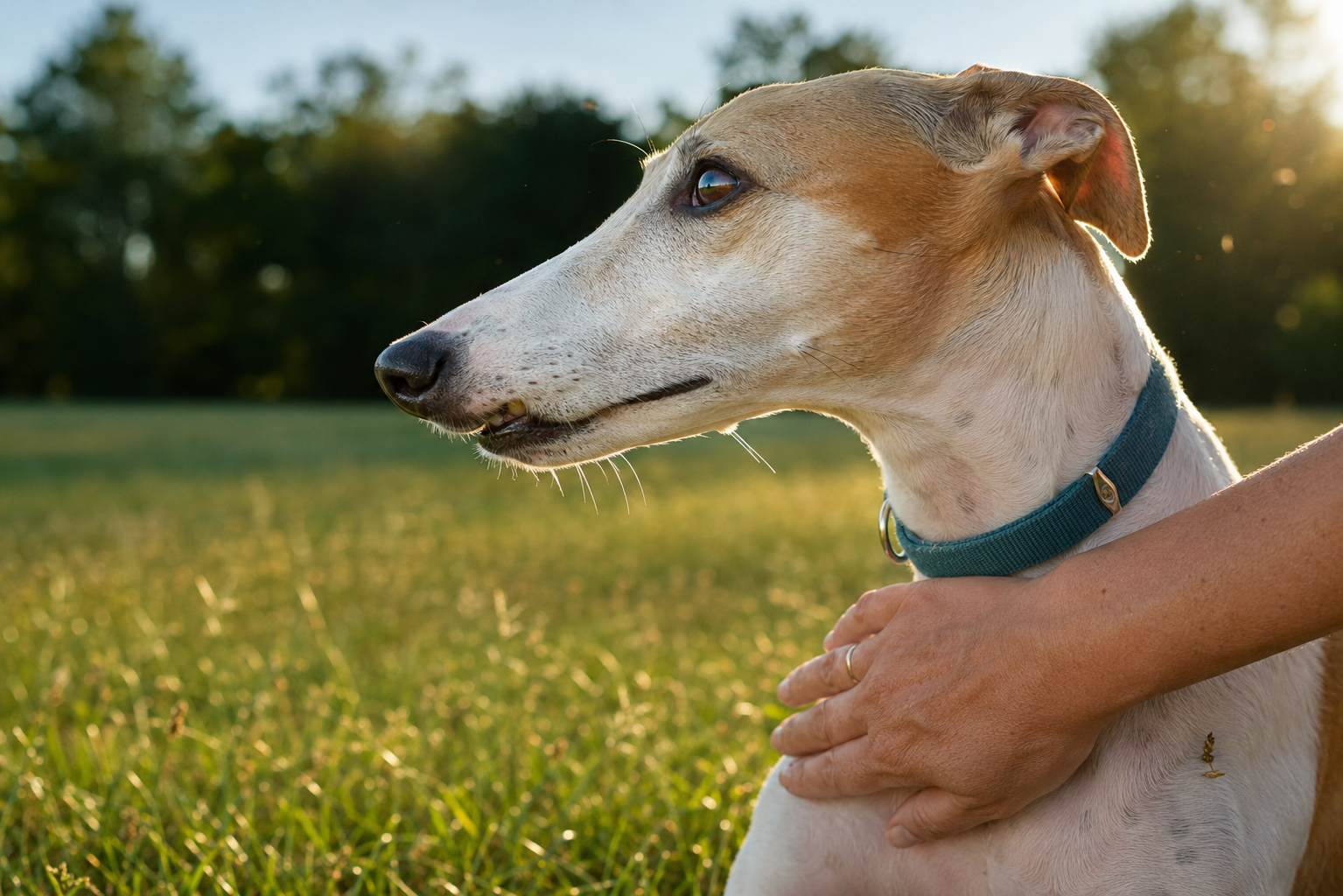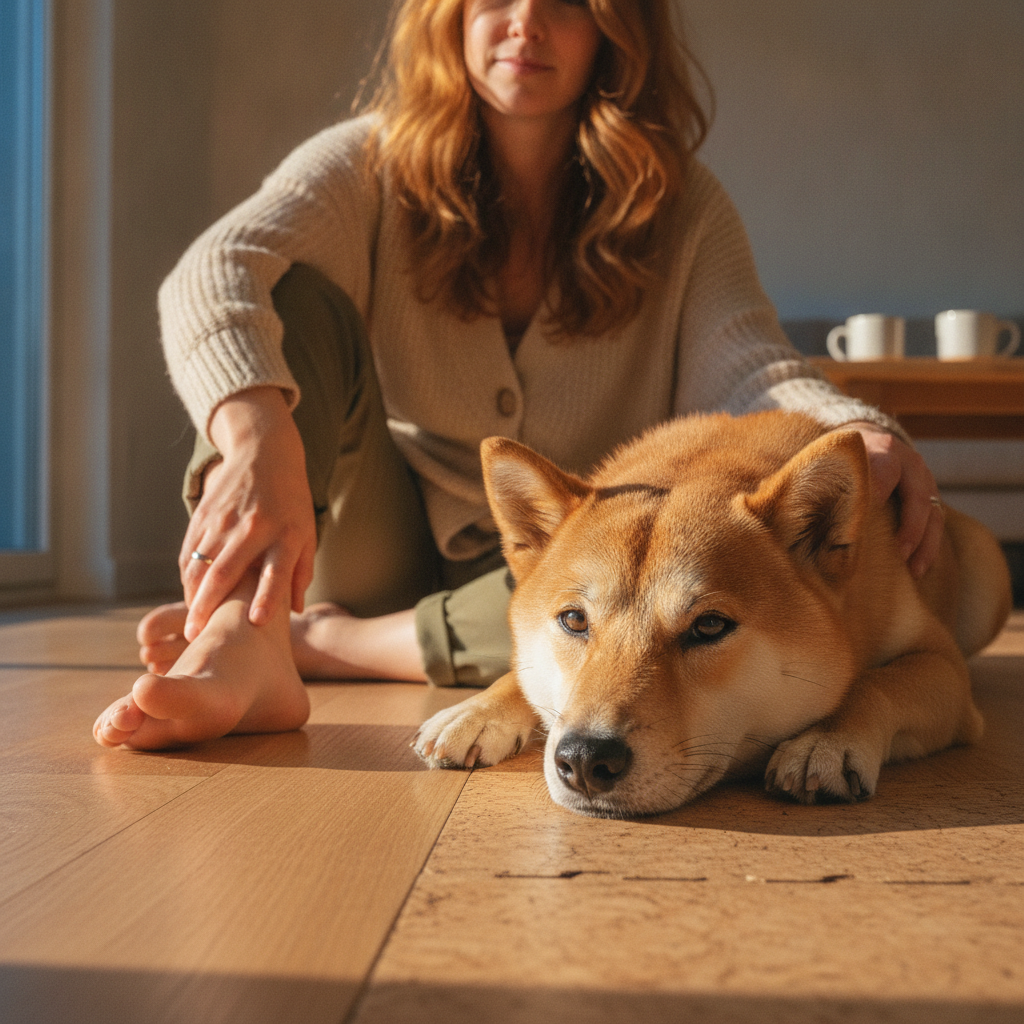
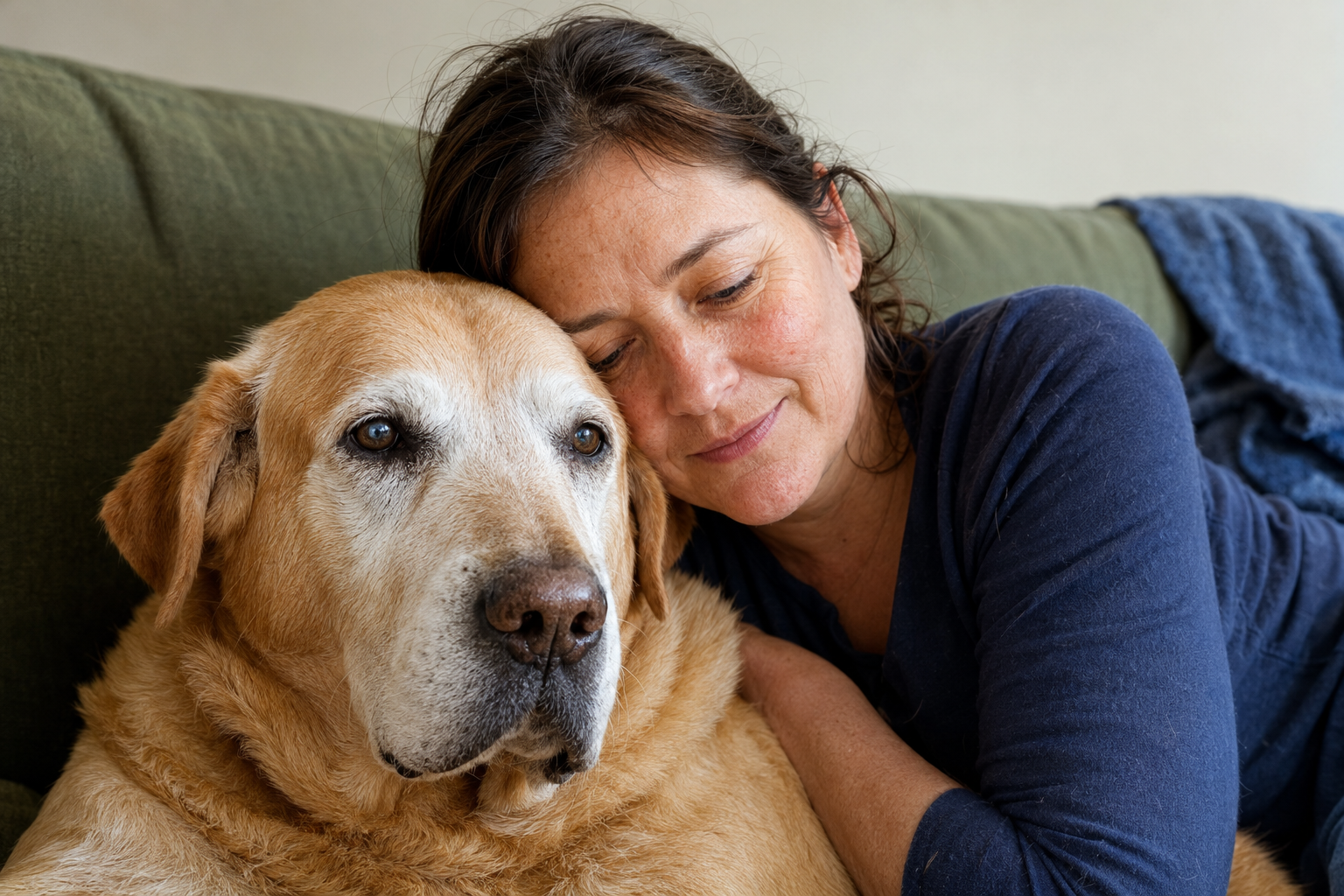
There’s a moment most dog people recognize. Your dog can’t hear you call anymore. Their back legs are stiff getting up. They’ve grown afraid of thunderstorms they used to sleep straight through, and their muzzle went gray a while ago without you quite noticing when. Aging in dogs isn’t a single event; it’s an accumulation, and one day the accumulation is impossible to ignore.
This is a hard stretch, but it doesn’t have to be a helpless one. Most of what an old dog needs isn’t heroic. It’s a series of small, daily adjustments to food, footing, and comfort that add up to dignity. Below is how to make those adjustments, plus an honest look at the decisions that come at the very end.
Keep them eating and drinking
A senior dog’s sense of smell usually outlasts their sight and hearing, so smell is your best lever for appetite. Warm food slightly to release its aroma, and stir in something flavorful if they need convincing. Offer small portions across the day rather than one or two big meals, since reluctant eaters often do better grazing. If worn or sore teeth are the problem, switching from dry food to canned can help, and the stronger scent doesn’t hurt.
A few tricks that sound odd but work: set out several different foods in separate little mounds on a wide dish and let your dog graze through what appeals to them, then roll the rest into a ball and offer it by hand if needed. Some dogs will eat off one of your dinner plates when they’ll refuse the same food from a bowl. And if your dog struggles to lower their head, an elevated feeder or even a low bench brings the food up to them.
Hydration matters just as much and is easier to overlook. An old dog who loses track of the water dish, or can’t get to it, depends on you to bring water to them. Wetting their mouth can give them the idea, and dissolving sodium-free chicken bouillon in the water tempts many dogs to drink more. Adding water to both dry and canned food helps too; most dogs don’t mind the soupiness.
“The instinct is to overhaul everything at once, but with an old dog it’s the small, boring adjustments that actually change their day,” says Dr. Lena Park. “Raise the bowl, warm the food, put water where they already lie down. And please don’t reach for a bag labeled ‘senior’ as a fix. That word isn’t regulated, and the right diet for your dog depends on what’s actually going on with their body, so it’s a vet conversation, not a marketing one.”
Help them get around
Don’t retire your dog from walks just because they’ve slowed down. They still need the movement, the mental stimulation, and the sense of belonging a walk provides. Just recalibrate what “a walk” means. A short amble to the end of the block and back can absolutely count. Stop when they slow in warm weather, and dress them in a snug sweater or coat when it’s cold.
At home, the biggest enemy is slick flooring. Improve traction by tacking outdoor carpet to slippery stairs and laying non-slip rugs on hard floors. A forgotten yoga mat works well here and cuts to size easily. Rearrange furniture to open up clear paths, keep the floor free of clutter that could trip an arthritic dog, and block off spots where they might get stuck. Ramps and pet stairs help with couches and cars, but introduce them gently, since many older dogs distrust new equipment and should never be forced onto it. For a smaller dog, a towel becomes a carry-wrap; for a larger one, a towel slung under the belly becomes a support sling.
Keep them clean and comfortable
Accidents come with the territory, so make cleanup easy on both of you. Keep rags on hand, and pick up a few thick drying towels, since an old dog can’t shake off water the way they used to. If your dog soils themselves, rinse them off but dry and warm them quickly afterward, because seniors are far more sensitive to temperature swings.
Doggie diapers exist and are worth trying if incontinence sets in. Washable waterproof pads, the kind sold for human medical use, make a comfortable, launderable bed for a dog having accidents in their sleep; buy several so a clean one is always ready. A good enzymatic odor remover keeps the house livable through all of it.
When to call the vet, and how to think about the end
Some changes deserve a same-day call: a sudden refusal of food and water, difficulty breathing, collapse, disorientation that appears overnight, or signs of real pain. Cognitive decline, sometimes called canine cognitive dysfunction or “doggie dementia,” is common in seniors and shows up as nighttime pacing, getting stuck in corners, staring at walls, and reversed sleep cycles. It’s manageable, so it’s worth raising with your vet rather than writing off as “just old age.”
For the hardest question, a quality-of-life scale gives you something steadier than raw emotion. The widely used HHHHHMM scale asks you to score seven things: hurt, hunger, hydration, hygiene, happiness, mobility, and whether good days still outnumber bad ones. No tool makes the decision for you, but tracking it honestly over weeks, together with your vet, turns a fog of guilt into something you can actually see.
What newer research adds
Aging in dogs is now a real field of study, not an afterthought. Researchers with efforts like the Dog Aging Project are tracking tens of thousands of dogs to understand what actually shapes canine healthspan. And a company called Loyal has been working through the FDA’s veterinary approval pathway for LOY-002, a daily tablet aimed at extending healthy lifespan in older dogs; by early 2026 it had cleared major effectiveness and safety milestones and enrolled one of the largest clinical trials in veterinary history. None of this is a cure for old age, and none of it replaces the daily care above. But it’s a sign that “just getting old” is finally being treated as something worth studying, and possibly slowing.
Caring for a dog at the end of their life is draining, and it is also a gift. It’s a final, unhurried stretch to make sure the best dog you’ve ever known understands what they meant to you.
References
- Dodman, Nicholas. Good Old Dog: Expert Advice for Keeping Your Aging Dog Happy, Healthy, and Comfortable.
- American Animal Hospital Association — Senior Care Guidelines for Dogs and Cats
- Villalobos, Alice. Quality of Life Scale (HHHHHMM) — Journal of the AVMA / VeterinaryPartner
- Dog Aging Project
- Loyal Receives FDA Acceptance of Safety Package for Senior Dog Lifespan Extension Drug (Jan 2026)