


That Guilt About a Second Dog Is Data. Here's How to Read It.
Second-dog guilt is one of the most common feelings in dog ownership, and it is not a sign you're making a mistake. It's a signal worth listening to. Here's what the guilt is actually telling you, and a transition plan that makes room for two dogs to thrive.

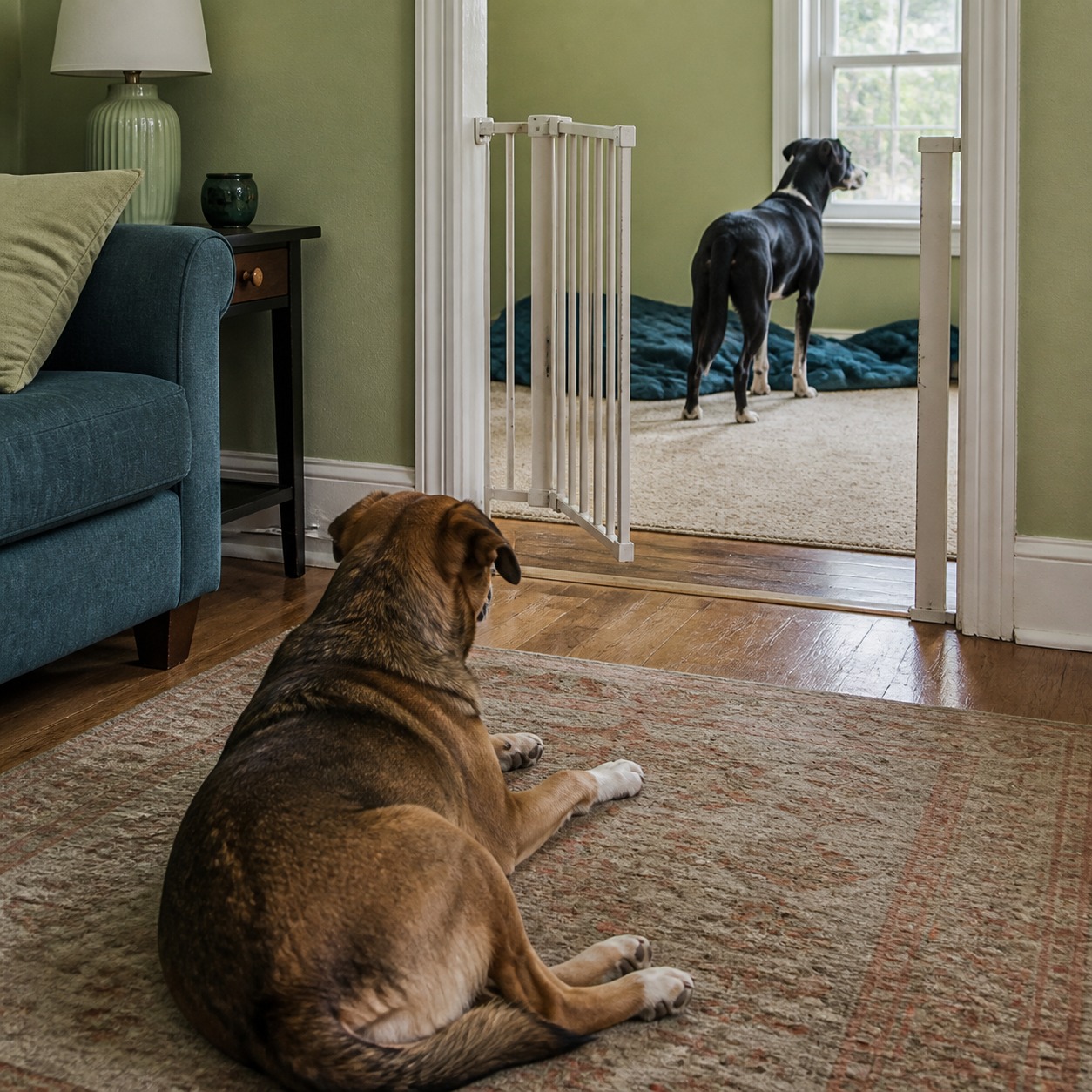
You remember getting your first dog. The anticipation, the giddiness, maybe one of the better stretches of your life. So it can be genuinely confusing when the thought of a second dog brings a very different feeling: guilt. Not excitement. Guilt.
The worry usually sounds like a set of questions. What if my dog gets jealous? What if they don’t like the new dog? What if, somewhere in their loyal little heart, they don’t forgive me? If that is where your head is, you are in enormous company. There is an entire quiet internet of people typing “second-dog guilt” into a search bar at midnight.
I want to reframe the feeling instead of just talking you out of it. The guilt is information. It means you are treating your resident dog as someone with an inner life, someone whose routine and comfort you don’t want to steamroll. That is exactly the mindset that makes a two-dog household work. The goal is not to bury the guilt but to convert it into a plan, so the feeling has somewhere useful to go.
When people tell me they feel guilty about a second dog, I usually tell them that’s the right dog owner having the wrong reaction. The concern is healthy. What we do with it is turn it into structure, because a resident dog isn’t soothed by our guilt, they’re soothed by their world staying predictable.
Start with a match, not a rescue-fantasy
The single biggest lever on your guilt is choosing well before anyone comes home. Some dogs are genuinely happiest as the only dog in the house. A frail senior or a dog who guards their space is not going to be thrilled by a bouncy puppy with no manners and no off switch. Be honest about who your current dog is, what they like, what they avoid, and what temperament would actually complement them.
The reason this matters for guilt is simple. It is much harder to feel like you have wronged your first dog when the second dog is a companion they would have chosen for themselves.
Expect an adjustment period, and plan around it
Even a perfect match comes with a wobble. Behaviorists often describe new dogs settling on a rough arc, sometimes called the 3-3-3 pattern: the first few days are overwhelm, the first few weeks are learning the routine, and it can take a few months for a dog to truly feel at home. During that window the household vibe feels off, and that is precisely when the guilt tries to move back in.
If you see your resident dog wedging between you and the newcomer, or muscling in whenever you pet the other dog, that is not spite. It reads as a dog checking whether they still matter. A plan answers that question for them. Here is the one I give clients.
Set up management before you need it. Baby gates and an exercise pen let you separate the two dogs on purpose, so nobody is forced into constant contact and stress has an off-ramp. Management is not failure, it is the thing that prevents the fights that make dogs distrust each other.
Do the introduction slowly and on neutral ground. Meet somewhere neither dog owns, keep leashes loose, and watch the bodies. Soft, loose, curious postures are green lights. Stiffness, hard eye contact, or a frozen stillness means back up and add distance before trying again.
Pick up the good stuff at first. The long-term goal is dogs who share toys and chews easily. Early on, though, put away your resident dog’s most prized possessions until you know how the two handle proximity around resources. Preventing that first squabble over a bully stick is worth more than any lesson you could teach after one.
Protect the existing routine. Feeding times, walk times, the evening wind-down: keep your first dog’s schedule as close to normal as you can in the beginning. Routines will naturally merge and shift later. In week one, sameness is medicine.
Build in one-on-one time with each dog. Separate walks, solo training sessions, individual play in the yard. Both dogs need to know they still have you to themselves sometimes. This is also the most direct antidote to the jealousy you were worried about.
Then let them just be together. When you are all hanging around the house, aim for the two dogs to share that downtime in the same space. Calm coexistence, side by side and boring, is the foundation the whole relationship is built on.
What newer research adds
If you want reassurance that your instincts are pointed the right way, the science on dogs and jealousy has gotten more concrete. Controlled studies have found that dogs show jealous-type behavior, pushing between their owner and a rival, when their person gives affection to what looks like another dog, even a realistic stuffed one. In other words, the social friction you are bracing for is real, not something you are imagining, and it is normal for it to surface early.
The encouraging half of that finding is that it is about access to you, not a permanent verdict on the new dog. When each dog gets guaranteed one-on-one time and a stable routine, the rivalry has far less to feed on. Structure, not guilt, is what shrinks it.
Follow the plan and you end up with the outcome the guilt was quietly hoping for all along: two settled dogs, and a person who gets to stop apologizing to the first one.
References
- Harris, C.R. and Prouvost, C., Jealousy in Dogs, PLOS ONE
- American Society for the Prevention of Cruelty to Animals, Introducing Your New Dog to Other Dogs
- American Veterinary Medical Association, Selecting a Pet Dog
Common questions
Is it normal to feel guilty about getting a second dog?
Extremely. Search 'second-dog guilt' and you'll find a crowd of people feeling exactly the same way. The guilt usually means you're taking your first dog's emotional life seriously, which is a good instinct, not a red flag.
How should I introduce two dogs?
Meet in a neutral spot, not inside the resident dog's home, keep both on loose leashes, and read their body language. Loose, wiggly, curious is good. Stiffness, hard stares, or freezing means slow down.
Should I give the dogs equal attention right away?
Give each dog dedicated one-on-one time, and in the early weeks protect your resident dog's existing routine. Sameness and structure reduce stress more than a perfectly even split of attention does.
Dr. Kohl is a board-certified veterinary dentist with a particular interest in preventive oral care. She reviews all dental health content at The Pet Times and contributes practical guides on home dental routines, professional cleaning, and oral disease prevention.
Meet our experts ↗Keep reading
 First DaysIf Your Dog Needed Emergency Surgery Tomorrow, Could Your Sitter Say Yes?Claire Sutton · 7 min
 LivingCat or Dog? Stop Asking Which Is Better and Ask This InsteadClaire Sutton · 7 min
 First DaysOne Bad Meeting Can Undo Everything: How to Introduce a Nervous Cat to a DogDr. Lena Park · 9 min
 LivingMale-Female Is the 'Safe' Second-Pet Combo. The Experts Disagree.Dr. Nina Kohl · 5 min
 First DaysThe 3-3-3 Rule Is Two-Thirds Made UpDr. Mara Chen · 10 min
 LivingThe Victorians Didn't Invent Dog Breeds. The Stone Age Did.Marcus Webb · 4 min