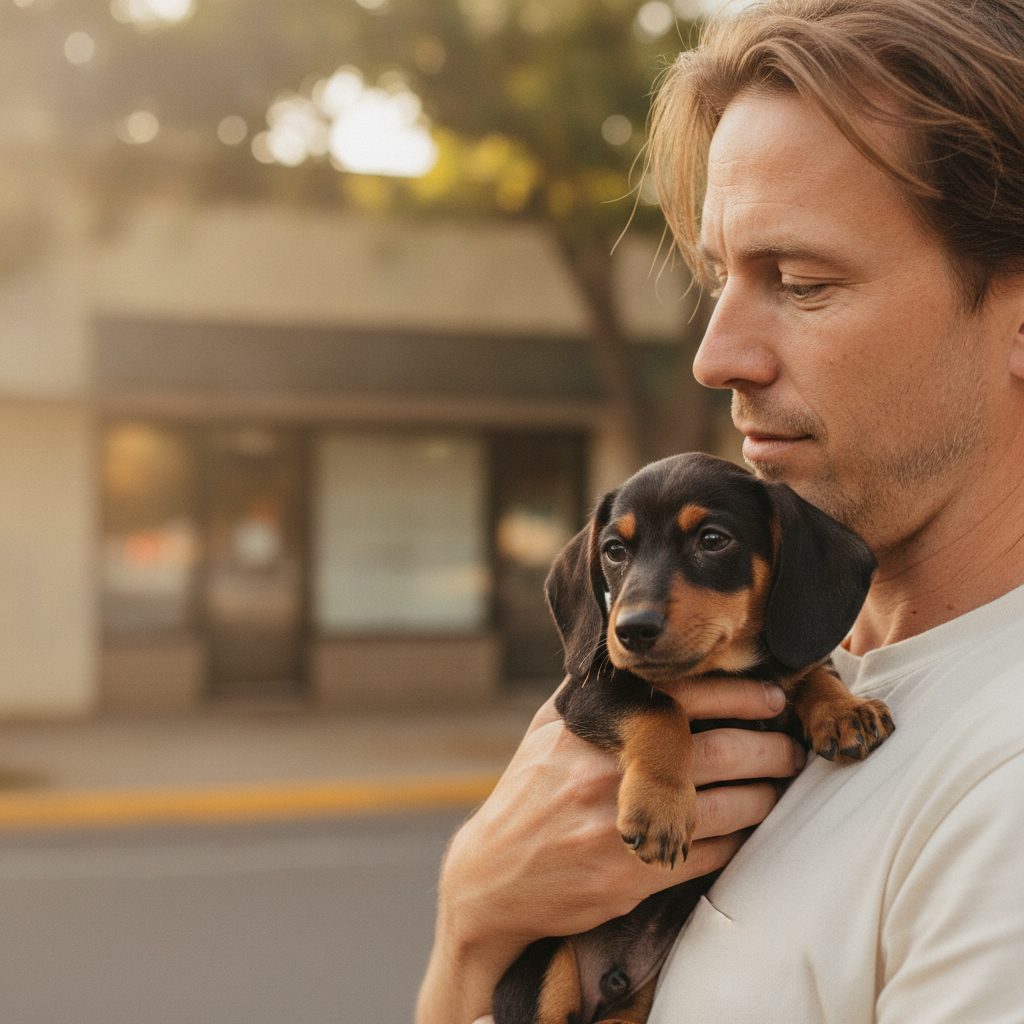
Rabies has a fixed place in the cultural imagination, the snarling, foaming dog, the person who can’t bear the sight of water, the raccoon staggering around in daylight. What most people don’t picture is the quiet biology that makes the rabies vaccine schedule so specific. Your puppy’s first shot lands in a narrow window, roughly 12 to 16 weeks, and that timing is not a shrug or a tradition. It is engineered around an invisible handoff happening inside your puppy: the moment their mother’s borrowed protection runs out, and the moment their own immune system is finally mature enough to build protection of its own. Give the shot too early and mom’s antibodies neutralize it before it can work. Too late, and there is a dangerous gap where your puppy has no protection at all. The window threads that needle.
What rabies actually does
Rabies comes from the rabies virus, and it can take hold in any mammal. Once it does, it makes its way to the brain and produces a shifting set of symptoms depending on the stage of disease. In dogs, those can include personality shifts, a creeping paralysis, facial asymmetry, trouble swallowing (the source of the classic drooling and foaming), appetite loss, aggression, seizures, coma, and finally death.
Dogs sit at moderate susceptibility, and worldwide they remain one of the leading sources of human rabies infection. The reason that is not true where you likely live is public-health infrastructure, programs that keep roaming dog populations in check and require pet vaccination have made dog-to-human transmission very rare across much of the developed world. Keeping your own dog current on their rabies shots is a small act that protects them, your family, and your community all at once.
How dogs are exposed
A dog picks up rabies by coming into contact with a rabid animal, usually a wild one. The usual suspects are bats, foxes, raccoons, skunks, and coyotes. Infection typically comes from a bite, though less commonly it can also pass through a sick animal’s saliva or nerve tissue if that reaches mucous membranes like the gums, or gets into an open wound.
What happens next explains the urgency of prevention. Once an unprotected animal is bitten, the virus travels along the nerves at roughly a centimeter a day, slow enough to leave a window, but once it arrives at the brain or spinal cord it speeds up, triggering a brain inflammation that is fatal in essentially every case within days. Puppies are not born immune. They do borrow a few weeks of cover from a vaccinated mother, but that inherited protection fades and cannot be trusted to keep them safe for long, which is precisely the gap the vaccine is timed to close.
Why staying current is about more than the disease
Beyond the obvious protection, keeping your dog’s rabies vaccine up to date spares you a bureaucratic nightmare if things go sideways. If an unvaccinated dog gets into a scuffle and picks up a bite wound of unknown origin, they often face months of quarantine to rule out rabies. A vaccinated dog in the same situation usually just needs a booster and a couple of weeks of observation. Same incident, wildly different consequences.
The schedule, step by step
Your puppy’s first rabies shot is part of their broader puppy vaccine series, and that stretch of life can feel like a blur of vet visits every few weeks for stool checks, deworming, shots, and weigh-ins. Your vet will steer you through what’s appropriate at each checkup, often with a handout so you can track it.
The rabies shot itself is cleared for puppies from three months old, timed to the point where a puppy’s immune system is finally mature enough to respond and build antibodies. Vets generally aim for as close to 12 weeks as possible, with the exact day shaped by the timing of other vaccines, your puppy’s health, and local law. To build lasting immunity, your puppy will need a second rabies vaccination within a year of the first.
After that, frequency is a legal question as much as a medical one. Rabies vaccines are approved as either one-year or three-year products, but state and community laws vary, and your area may require boosters more often than a vaccine’s stated duration. Your vet keeps track of the local rules and your dog’s next due date.
Where to get it, at any budget
The best option is your regular veterinarian, since rabies vaccination folds into the overall preventive care they provide, alongside other vaccines, deworming, microchipping, bloodwork, exams, heartworm and flea-and-tick prevention, and spay/neuter.
If routine vet care is out of reach, your dog can still be protected. Common lower-cost alternatives include vaccine drives at local animal shelters or schools, vaccine clinics at pet stores, mobile clinics, and community health practices often run by veterinary colleges. Cost varies by region and clinic, but shelters are frequently the cheapest route, some cities offer the rabies shot for free and others charge only a nominal fee of $5 to $10. Keeping an eye on local news for vaccination drives is a good way to get it done affordably.
Side effects: rare, mostly mild, occasionally urgent
If you worry about vaccine reactions, the numbers should reassure you. Rabies vaccines are very safe. A 2023 study examined the records of more than 4.5 million dogs across over 16 million office visits over five years and found that just about 25 of every 10,000 vaccinated dogs had any adverse event at all.
When reactions do happen, they are usually the immune system’s normal, mild response: soreness at the injection site, a low fever, a puffy face or eyes, hives, itchiness, lethargy, or a small local swelling or lump. Rarely, a dog has a severe anaphylactic reaction, and these are what your vet is guarding against by asking you to wait around a few minutes once the shot is done. Anaphylaxis comes on within minutes and looks like weakness, pale gums, vomiting, diarrhea, collapse, a racing heart, or low blood pressure. If you suspect any reaction, flag it to your vet right away, even a minor one is worth reporting, because your vet can pass the details to the FDA and the manufacturer to help track vaccine safety.
“Parents sometimes want to delay the rabies shot to ‘let the puppy get bigger,’ and I understand the instinct, but the timing exists for a reason,” says Dr. Lena Park. “We are trying to catch your puppy in the short window after mom’s protection wears off. Waiting doesn’t make it gentler. It just leaves them exposed longer.”
What’s new since this was written
The global public-health picture has a clear target now. The World Health Organization and its partners are pursuing “Zero by 30,” a goal to eliminate human deaths from dog-mediated rabies by 2030, largely through mass dog vaccination in the regions where the disease still kills people. The United States eliminated its own canine rabies virus variant back in 2007 and works to keep it out.
That last point is why importing dogs got stricter. As of August 1, 2024, the CDC requires all dogs entering the country to be at least six months old, microchipped, and healthy on arrival, with rabies documentation that depends on where the dog has been, and foreign-vaccinated dogs from higher-risk countries needing a valid rabies titer to skip quarantine. If you are adopting a rescue from abroad or traveling with your dog, those rules now shape the timeline as much as the vaccine schedule does.
References
- Centers for Disease Control and Prevention. “Animals and Rabies.” CDC Rabies.
- American Animal Hospital Association. “2022 AAHA Canine Vaccination Guidelines.” AAHA.
- Moore, G. E., et al. “Adverse Events Following Vaccine Administration in Dogs, 2023.” Journal of the American Veterinary Medical Association. AVMA Journals.
- World Health Organization. “Zero by 30: The Global Strategic Plan to End Human Deaths from Dog-Mediated Rabies by 2030.” WHO.
- Centers for Disease Control and Prevention. “Bringing a Dog into the United States.” CDC Importation.