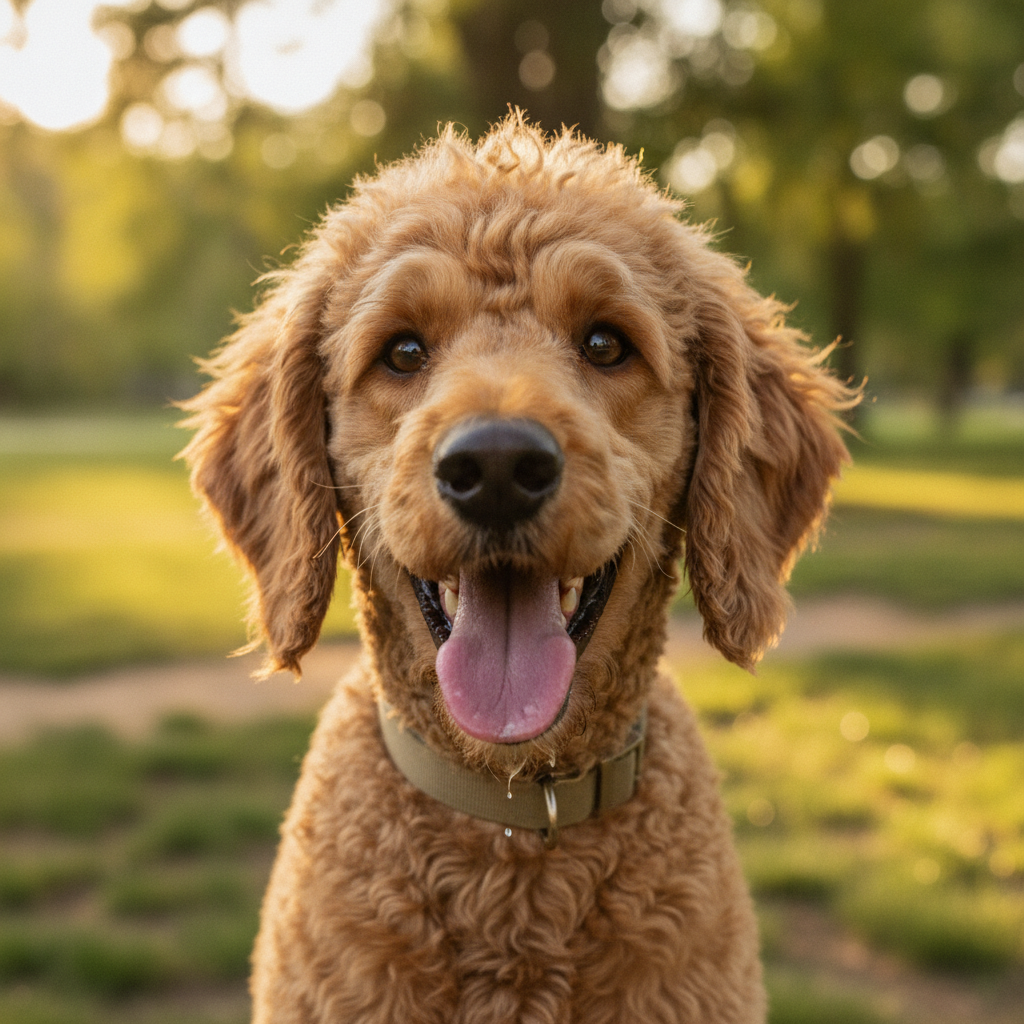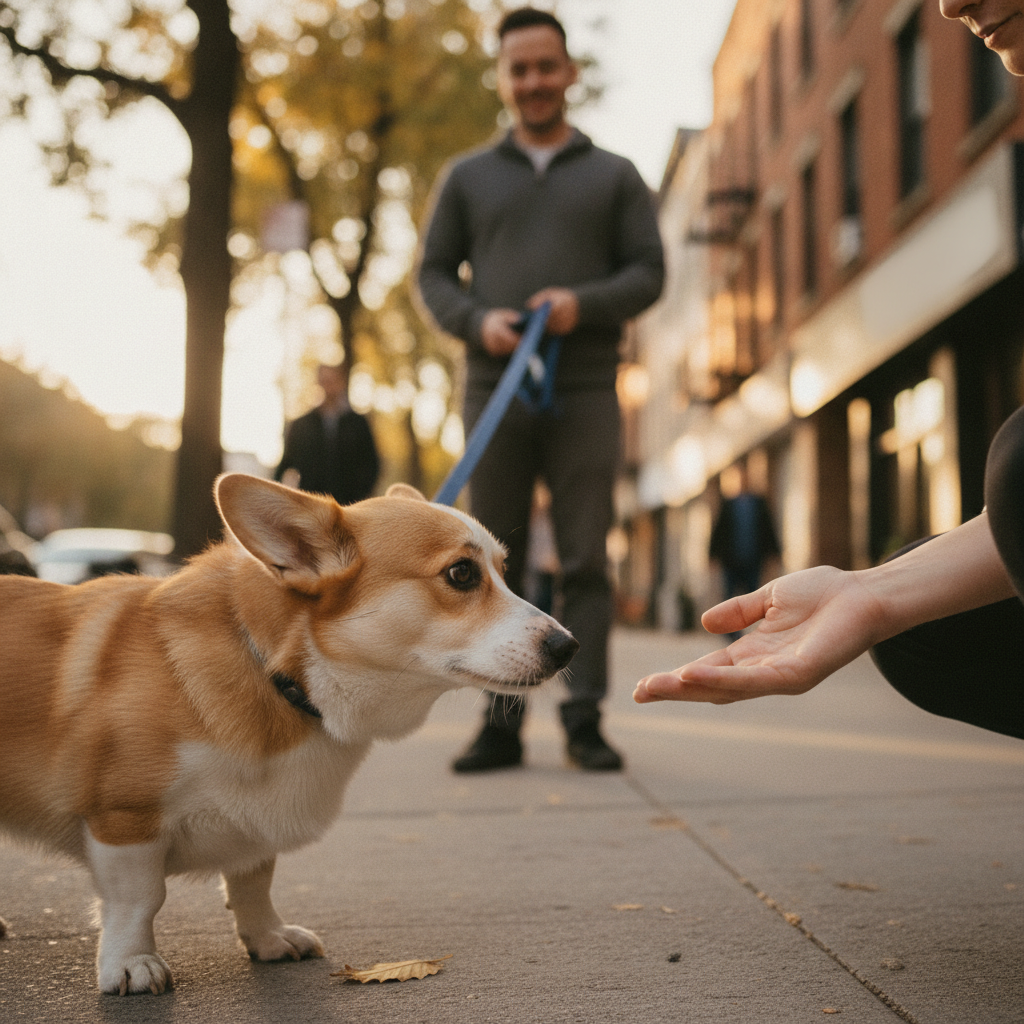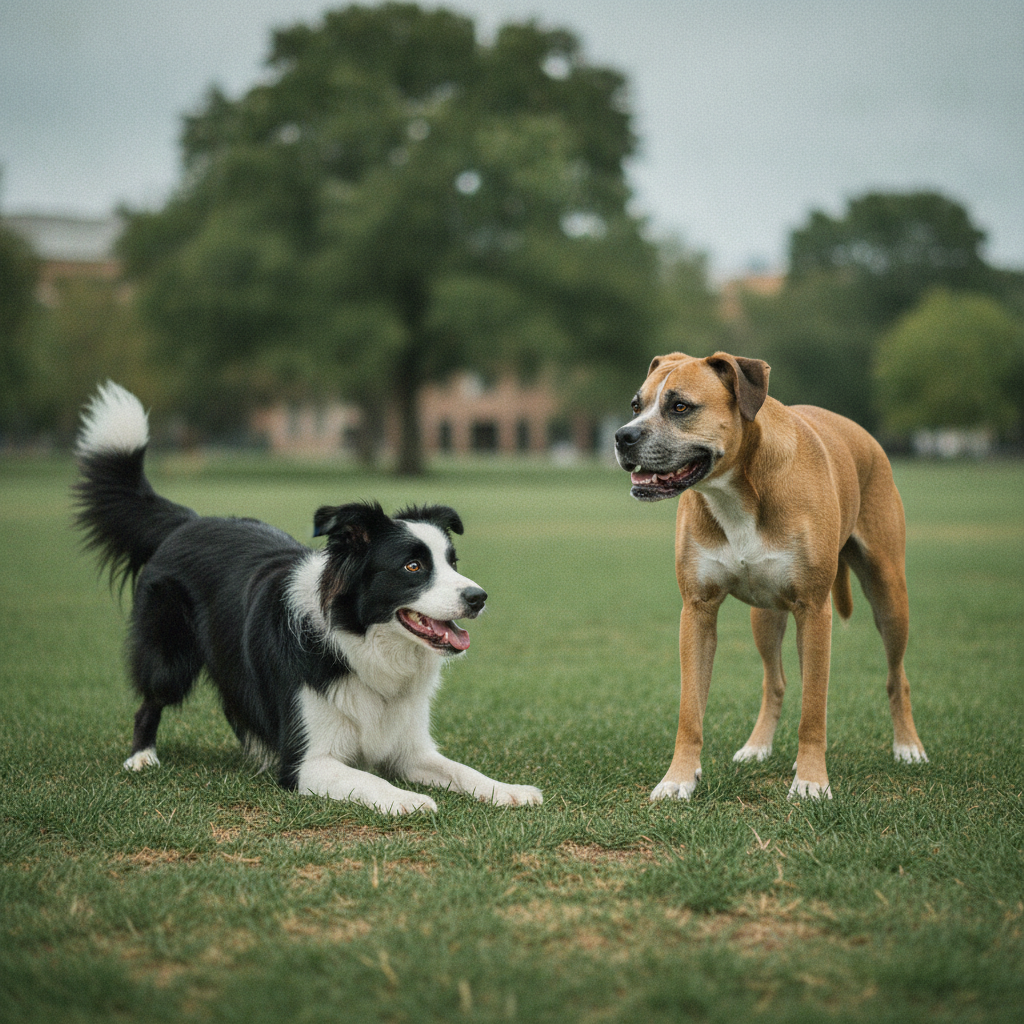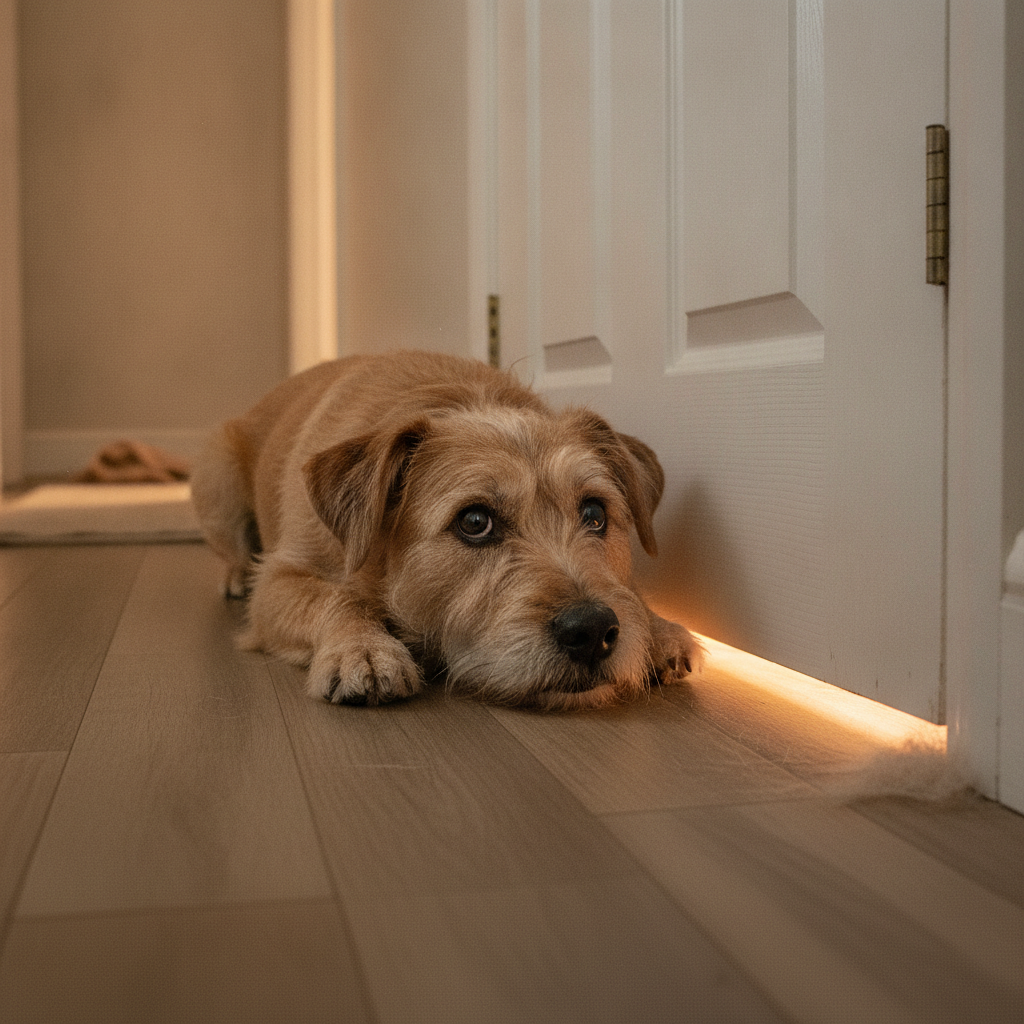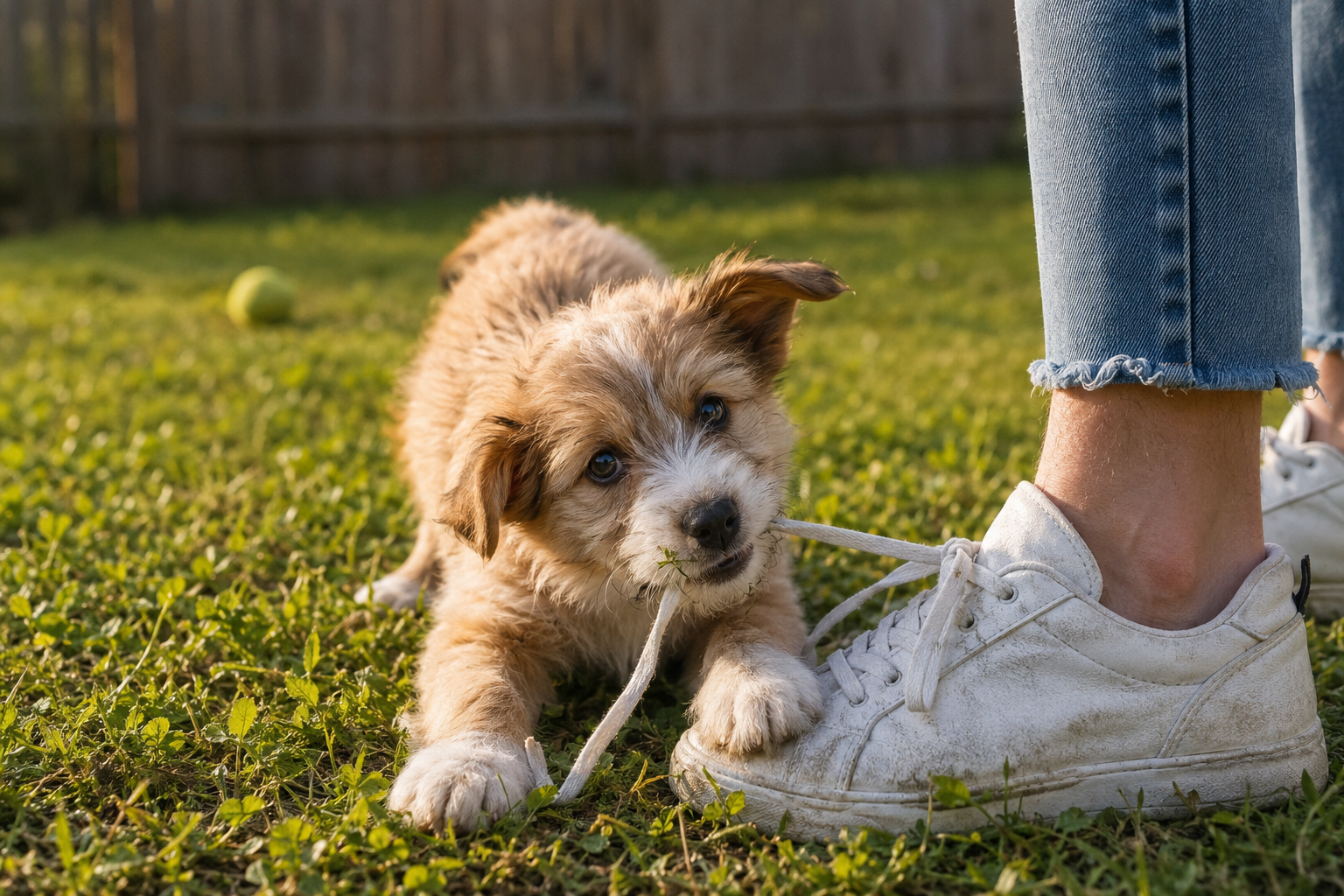
Your ankles have become a chew toy, and it feels a little personal. It isn’t. A puppy who bites at your heels is not being aggressive, dominant, or bad. They are being bored, and they have discovered that your ankles are the single most reliable way to make something interesting happen. Understanding that one fact changes the entire approach, because it tells you the nip is not the problem to attack. It is a symptom of an unmet need, and it’s being fueled by the best reward in the house: you.
The nip is a lever, and it’s paying out
Picture it from the puppy’s side. The toys on the floor are old news. You, on the other hand, move, react, make noise, and sometimes even chase. When a puppy sinks little teeth into your ankle and you spin around, gasp, or nudge them off, you have just handed them exactly what they wanted: a reaction. Here is the part that trips people up. To a bored puppy, negative attention is still attention. Scolding, pushing away, saying “no”, all of it counts as the party turning back on. It works just like it does with a toddler acting out for a rise. So the nip is a lever the puppy pulls because it reliably pays out, and stuffing a squeaky toy in their mouth won’t fix it, because the moment you look away, they’ll nip again to bring you back.
That means the fix has two parts, and the order matters. First you drain the boredom that creates the urge. Only then do you make the lever stop paying.
Part one: fill the tank before you empty the behavior
A puppy nipping ankles is almost always a puppy whose physical, mental, and environmental needs are running low. Top up all three and the urge to nip drops on its own, before you correct anything.
Physical exercise. An age-appropriate amount of real movement burns off the fizzing energy that has to go somewhere, and if you don’t give it a target, your heels become the target.
Mental work through training. Your puppy should be learning the basics, come, sit, stay, down, but you don’t need a big block of time. Five minutes woven into your day does more than one long session. My favorite window is around mealtimes, when a hungry puppy is naturally motivated and you were going to feed them anyway. You’re not adding a chore; you’re upgrading one you already do.
Environmental enrichment. This is the piece people skip, and it’s the most powerful. Toys scattered on the floor go stale fast. Interactive, food-dispensing toys don’t. Feed a good portion of your puppy’s meals out of Kongs, lick mats, and treat balls, some take dry food, some take wet. Suddenly breakfast is 30 or 40 minutes of using the mouth and the brain, instead of a 90-second inhale. A puppy who just spent half an hour working a food puzzle has very little left in the tank for your ankles.
“People come to me convinced they have an aggression problem, and nine times out of ten they have an under-stimulated puppy with an idle mouth,” says Marcus Webb. “Once we route that energy into food puzzles and a few minutes of training a day, the ankle-biting mostly evaporates before we ever address it directly.”
Part two: make the lever do nothing
Now, and only now, you deal with the nip itself. If your puppy’s needs are genuinely being met and they still come for your heels, a time-out is fair. And it’s important that this is the sequence, because a time-out for a puppy whose needs aren’t met is just unfair.
The time-out is simple: the instant the teeth land, the fun ends. Put your puppy in a separate space, or remove yourself from them. What they lose is access to you and to the social scene, and that loss is the whole consequence. Notice what this method is not: it adds no fear, no intimidation, no yelling. It just takes away the thing the puppy was fishing for. Teach your puppy that teeth on your ankle make you and all the fun vanish through a doorway, and over time they’ll start choosing not to do it, because it has stopped working.
Two guardrails. Time-outs can never be your whole plan; if that’s all you’re doing, you’ve skipped part one and you’ll be running time-outs forever. And keep them calm and brief, this is a light switch flicking off, not a punishment ritual.
Why this beats the alternatives
The instinct to grab the muzzle, yelp dramatically, or physically correct a nipping puppy backfires for the same reason the behavior started: it’s a reaction, and reactions are the currency the puppy is trading in. The needs-first, time-out-second approach works because it addresses cause before symptom. You remove the boredom that generates the urge, then you quietly bankrupt the one strategy the puppy was using to get your attention. Done consistently for a few weeks, most puppies simply age out of it, having learned there are far better ways to get you to play.
What newer research reinforces
Modern training science keeps landing on the same point this method rests on: for young dogs, enrichment isn’t a luxury add-on, it’s a behavioral necessity. Studies on canine welfare consistently show that dogs given real outlets for natural behaviors, chewing, foraging, problem-solving, are calmer and less prone to the nuisance behaviors that come from frustration. Feeding from puzzle toys instead of a bowl, in particular, taps a dog’s natural drive to work for food and stretches a meal into meaningful mental exercise. The ankle-biting puppy isn’t misbehaving so much as asking, in the only way they know, for a job. Give them one.
References
- Duranton, C., and A. Horowitz. “Let Me Sniff! Nosework Induces Positive Judgment Bias in Pet Dogs.” Applied Animal Behaviour Science, vol. 211, 2019, pp. 61-66.
- American Veterinary Society of Animal Behavior. “Position Statement on Puppy Socialization.”