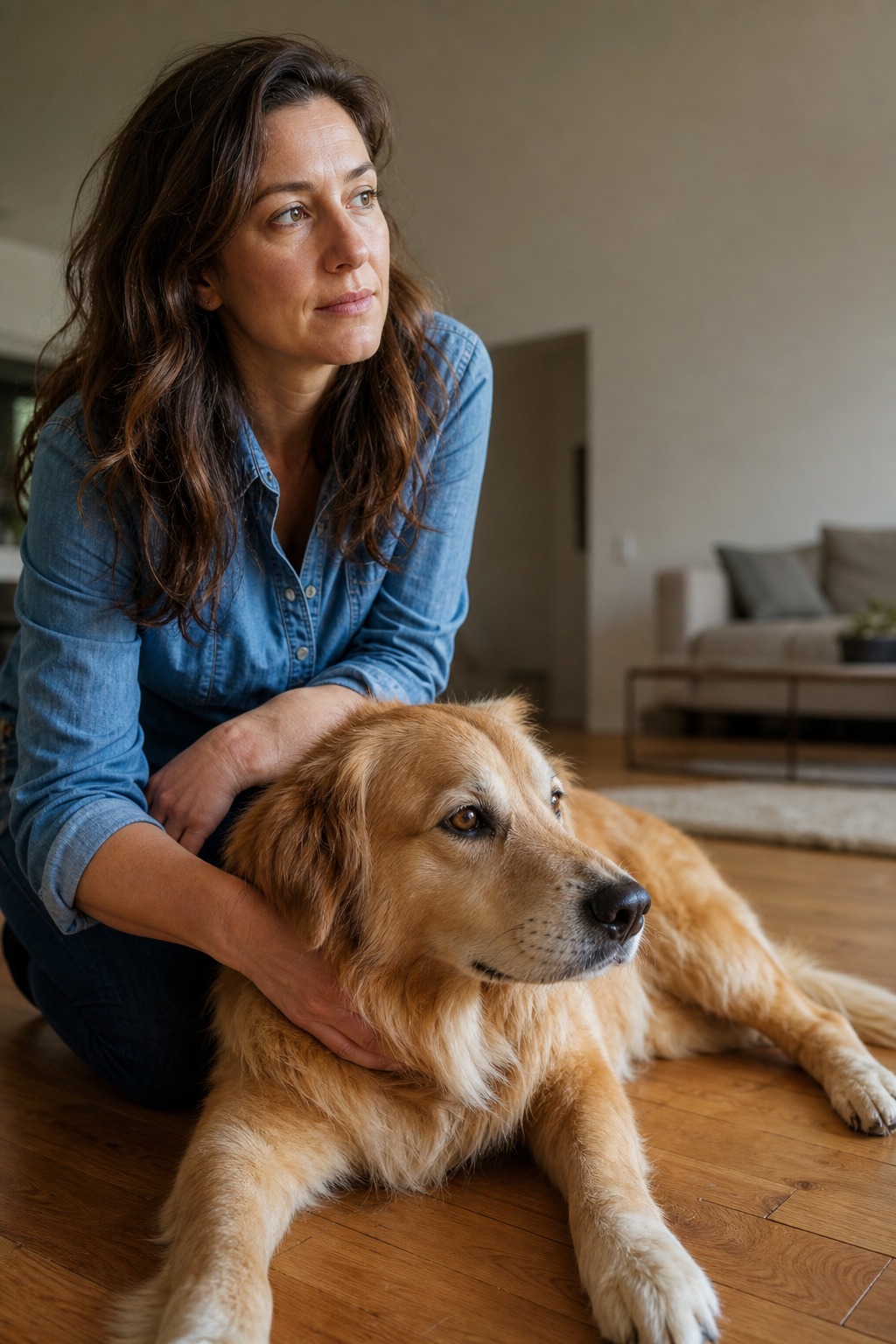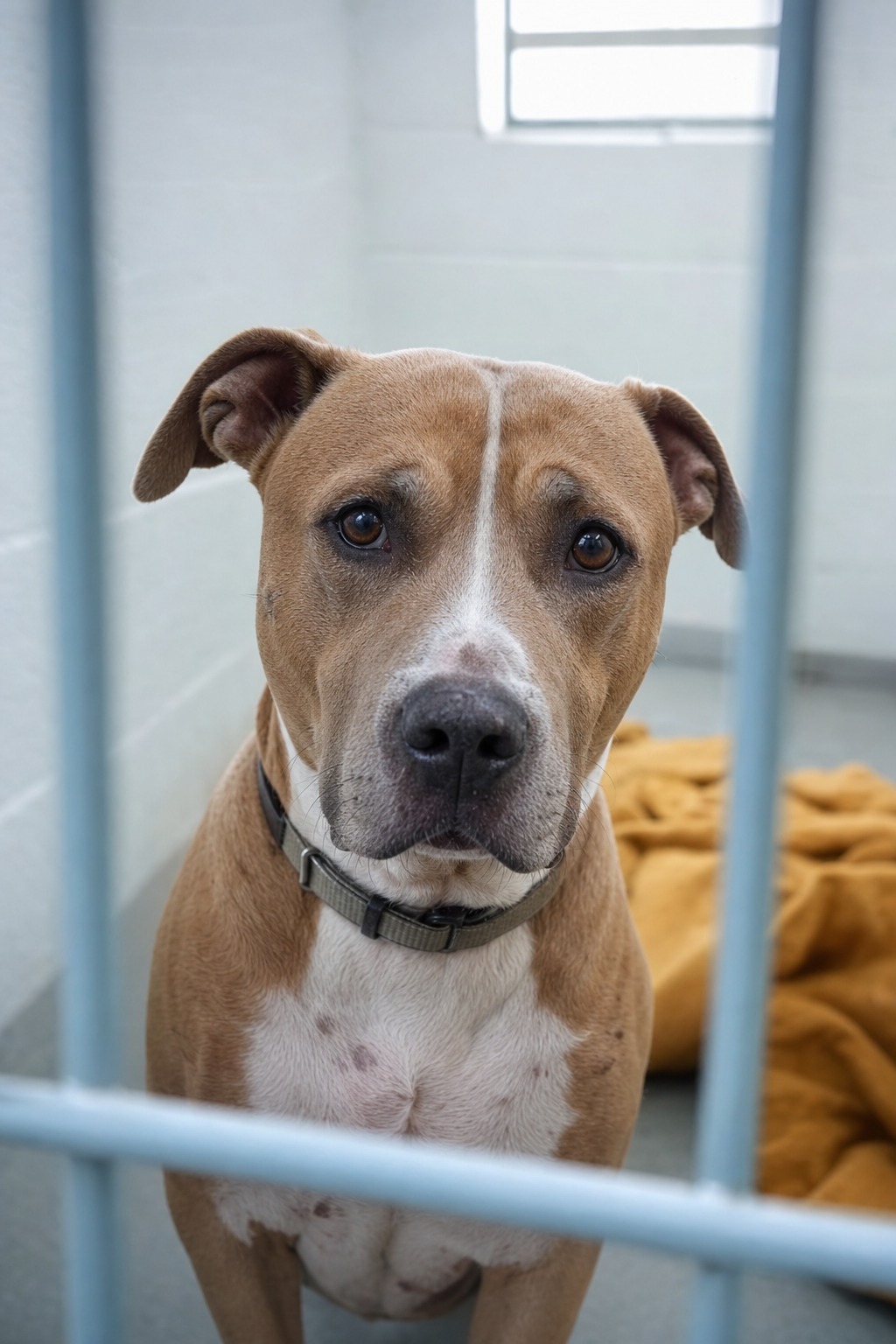
You have almost certainly seen her work without knowing her name. The photographs of pit bulls sitting with startling calm beneath crowns of real flowers, dignified, soft, impossible to square with the breed’s fearsome reputation, are the creation of Sophie Gamand, a French-born, Los Angeles-based artist whose series Pit Bull Flower Power has grown from a personal project into a book, a following hundreds of thousands strong, and one of the most quietly effective adoption campaigns the breed has ever had.
What makes it remarkable isn’t just the images. It’s that Gamand made them while working through her own fear.
A crown as an act of trust
Gamand grew up in France, where, she has said, the cultural script around pit bulls was simple and menacing: this is the dangerous dog. A mauling by a large dog when she was around twelve, not a pit bull, left her with lingering trauma. When she began spending time in American shelters, she found herself face to face with pit bulls constantly, and had to decide what to do with that fear.
Her answer was to make something that contradicted the story she’d inherited. If she could photograph these dogs as gentle, adorned, worthy of a crown, she reasoned, the image might force viewers, and herself, to reassess. The idea sounds whimsical until you consider the logistics. As she has joked, she eventually realized she’d have to place the flower crowns on the dogs herself: unfamiliar shelter dogs she’d only just met.
The first dog set the tone for everything that followed. A sweet, family-friendly dog who had lingered in the shelter because she showed poorly in her kennel, hiding in the corner where no one connected with her, sat quietly while Gamand crowned her and looked back at the camera with a calm that felt like a mutual agreement to trust each other. Since 2014, Gamand has photographed more than 450 dogs this way: survivors of dog-fighting rings, dogs recovering from amputations, dogs so frightened she let them set the pace and never forced the crown.
The unlikely path to a life in rescue
Gamand did not arrive at animal advocacy by an obvious route. She holds a master’s degree in law and once expected to become an attorney; for a few years afterward, she sang opera. Photography started as a hobby, and rescue as a passion, and the two fused in 2010 when she began photographing rescue dogs, which is also how, in Puerto Rico, she met her own dog, MacLovin.
That blend of instincts, a photographer’s eye and an activist’s mission, is really the engine of her career. She has described herself as a photojournalist-activist, capturing the full emotional range of dogs nobody was lining up to save, some of the images funny, some quietly devastating.
Pictures that emptied kennels
The advocacy stopped being abstract almost immediately. As the flower-crown portraits racked up millions of views on social media, shelters started reporting a concrete effect: people were walking in and asking specifically to meet the dog from the photos. The more the series spread online, the more requests poured in from shelters, until Gamand had a waiting list stretching around the world.
She has been candid about what she gave up to keep it going. Private commissions, photographing people’s own dogs for pay, she found draining and largely turned away, because her focus was homeless dogs. She never charged the shelters. Money from calendars and other merchandise went straight back into funding more shelter shoots, and the work built her deep networks of rescuers across the country.
The hardest assignments
Not all of Gamand’s projects are gentle. She has photographed dogs rescued from the dog-meat trade in South Korea, work she agreed to only because the effort was led by Humane Society International, which negotiates legally binding contracts with meat farmers who want out, shuts the farms down, and moves the dogs toward adoption abroad. What she appreciated about that model, she has said, is that it treats everyone involved with dignity rather than simply villainizing the farmers.
She is also careful about the ethics of her own presence. Reflecting on the dog-meat industry, she has pushed back on easy outrage, pointing out that the way those dogs are treated is arguably no worse than how many other animals are raised for food, or how shelter dogs live and die in cages elsewhere. And as a white American photographer traveling into other countries to document “rescue,” she has said she tries to stay mindful of how fraught that dynamic can be, especially as she has been drawn into crises like the mass roundups and killings of street dogs abroad.
Carrying the weight
Years of this work, rows of barking kennels, animals in genuine distress, take a toll, and Gamand has been honest that she didn’t always notice it landing. In the moment, she says, she wears blinders, staying focused on what’s in front of the lens and dealing with the emotions later, a coping style she’s compared to a doctor’s. It took her a while to understand why she’d feel wrung out for weeks after a trip to Puerto Rico: that exhaustion was the delayed processing of everything she’d absorbed and witnessed, finally catching up.
That tension, between the beauty she manufactures in a portrait and the hardship behind it, is arguably what gives her work its charge. A flower crown is a small, deliberate act of tenderness aimed at a dog the world has decided to fear. Multiply it by hundreds of dogs, and it starts to look less like a photo project and more like an argument about who deserves our compassion.
What’s new since this profile
Gamand’s mission has only widened. Pit Bull Flower Power is now a 250-page book collecting the portraits along with outtakes and the dogs’ own adoption stories, and the series has drawn a following of more than 200,000 on Instagram alone, extending its reach far beyond any single shelter. Her work has continued to move into galleries and museums, including a major group exhibition of pet photography that ran into 2025 and featured both her flower-crowned pit bulls and her earlier, viral series of shelter dogs mid-bath. More than a decade in, she remains both hopeful and clear-eyed: she believes the portraits have shifted the culture around pit bulls, and she is equally frank that the discrimination against the breed hasn’t gone nearly far enough away.
References
- Gamand, Sophie. Pit Bull Flower Power. https://www.amazon.com/dp/1590565827?tag=tpt281408-20
- Sophie Gamand, official site, “Flower Power.” https://www.sophiegamand.com/flowerpower
- Humane Society International. “Ending the Dog Meat Trade.” https://www.hsi.org/issues/dog-meat-trade/