


You Can Break Up With a Partner. You Can't Break Up With Your Dog.
Pet tattoos have quietly become the most regret-proof ink there is. A celebrity tattoo artist explains why people are getting their animals inked while they're still alive.
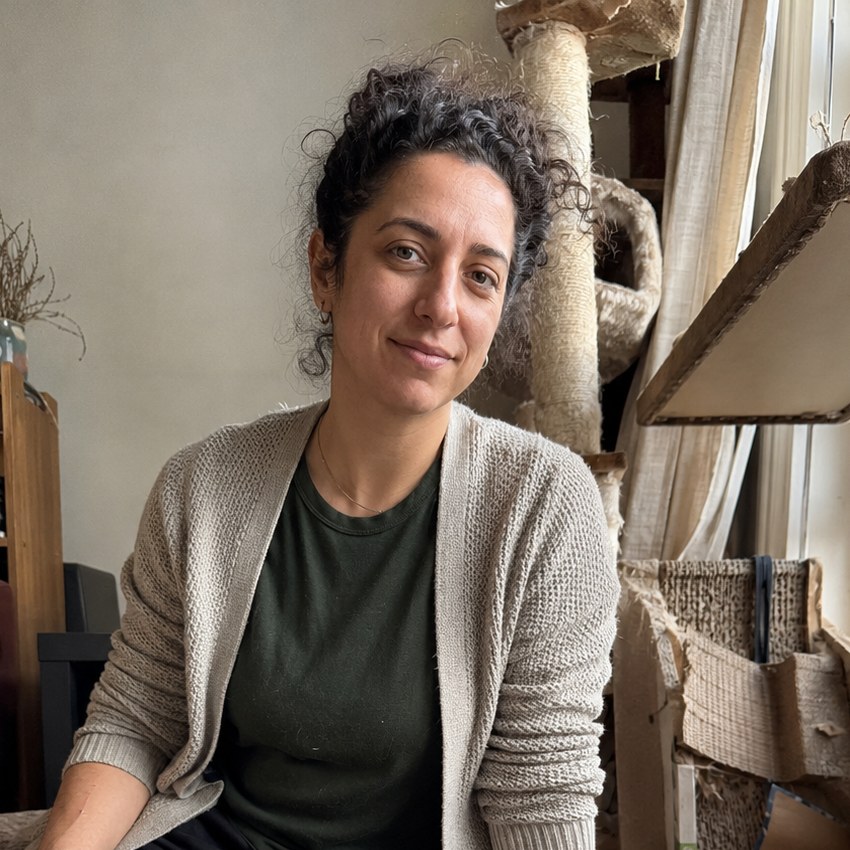
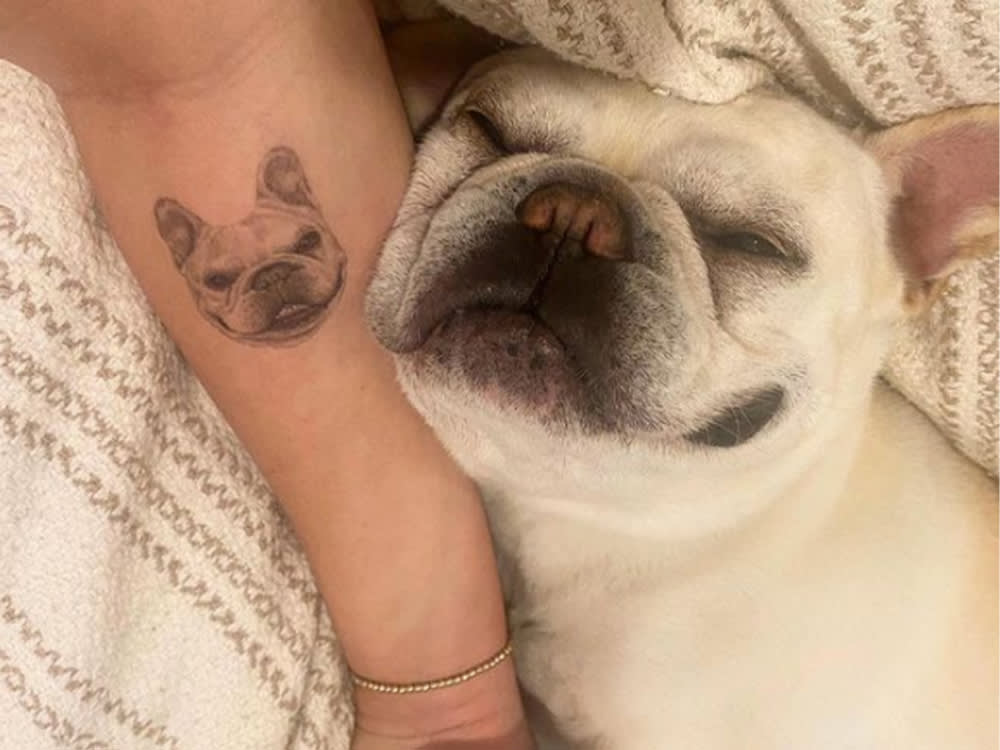
There is an old rule of tattoo wisdom: never get your partner’s name. Relationships end, and lasers are expensive. But there is one portrait nobody seems to regret, one face that never becomes an ex, and it belongs to the animal asleep at the foot of your bed. Pet tattoos have become the safest bet in ink, precisely because the bond they commemorate is the one you are least likely to walk away from.
Scroll the hashtag “cattoo” and you will fall into a bottomless gallery: a green-eyed cat against a rainbow, a fine-line feline slurping ramen, a trio of manga cats folded into a banana peel, a tabby in a top hat and monocle. Dogs get the same treatment by the millions. What started as a niche has hardened into a genuine subculture, and it is worth asking why this particular tattoo has become so beloved.
The famous are covered in their pets
If tattoos mark you as part of a tribe, pet-tattoo people form an especially devoted chapter, and the celebrity roster proves the point. Demi Lovato has her dog Buddy inked on an ankle. Lena Dunham carries her cat Gia on a shoulder. Miley Cyrus, Pink, and Ariana Grande have each collected more than one dog tribute. Over his heart, Orlando Bloom keeps the name of his late dog, Mighty. Two couples went matching: Sophie Turner with Joe Jonas, and Howard Stern with his wife, Beth. And Jennifer Aniston’s only known tattoo is a single word on her foot, Norman, for the corgi she lost.
The through-line is not vanity. It is permanence chosen on purpose. These are people who could commemorate their animals a hundred quieter ways and instead picked the one that stays on the skin for life.
An artist on why the requests keep coming
To understand the surge, it helps to talk to someone holding the needle. Evan Kim, who has tattooed the likes of Brooklyn Beckham, Zosia Mamet, and Kaia Gerber, inks animals often, and he has watched demand climb, driven in particular by a wave of devoted cat owners. For his clients, he says, choosing to wear a pet on the body is simply a form of affection, one option among many for expressing love, and more and more people are reaching for it.
Kim draws a clear line between two kinds of pet tattoo. The living tribute is joyful. The commemorative one, made after a pet has died, is something else entirely. He describes approaching that work more carefully and feeling the weight of it himself, sitting with clients who arrive carrying a story of loss, some of whom smile when the piece is finished and some of whom cry. The emotion, he admits, lands on him too.
The subjects run well past dogs and cats. Kim has inked goats, squirrels, chickens, snakes, rabbits, and fish. He has his own menagerie, including a Toy Poodle named Coco who grew far larger than any toy, plus fish and a couple of turtles, though he has not yet tattooed any of them on himself. His advice for anyone considering their first pet tattoo is refreshingly low-pressure: bring a good, clear photo, come with a strong memory, and let the artist build a style around your specific animal and your specific bond. Size and placement matter less than the relationship behind it.
The tattoo you actually can’t regret
Kim’s sharpest observation is also the funniest. Ask him how inking a pet compares to inking a romantic partner’s name, and his answer is that a pet is not someone you can break up with. That is the whole thesis in a sentence. The reason pet tattoos never join the ranks of regretted ink is structural: the relationship does not have an exit. Your dog will not cheat, ghost, or move out. The love is uncomplicated in a way human love rarely manages, and a tattoo is only a mistake when the feeling behind it curdles.
There is also a timing shift worth naming. Pet tattoos were long treated as memorials, something you got after a loss. Increasingly, people are getting them while the animal is still very much alive, snoring on the couch. It is a small act of noticing, a decision to honor the relationship in the present tense rather than waiting for grief to force the issue.
How to get a pet tattoo you’ll love for decades
Because this is ink you intend to keep, a little strategy pays off. Choose an artist whose existing work actually resembles the style you want, whether that is hyperrealism, fine-line, or bold traditional, rather than hoping a generalist nails it. Hand over the best-lit, highest-resolution photo you have, ideally one that captures the expression you most associate with your pet, since a portrait is only as good as its reference.
Think, too, about longevity: very fine, delicate linework can blur and fade faster over the years, so if you want a tiny, intricate portrait, ask the artist how it will age and where on the body it will hold up best. And decide honestly whether you want a literal likeness or something more symbolic, a paw print, a single line drawing, a name, since the most meaningful pet tattoos are often the simplest. The goal is not the most impressive piece. It is the one that still makes you smile in twenty years.
References
- Association of Professional Piercers and tattoo aftercare guidance. “Caring for a new tattoo.” aad.org
Sasha Ford is a certified cat behaviour consultant who has worked with shelters, catteries, and private clients across the country. They review all feline behaviour content at The Pet Times, with expertise in multi-cat households, indoor enrichment, and stress-related disorders.
Meet our experts ↗Keep reading
 LivingNearly Half of Us Have Bailed on Friends to Stay Home With the Dog. The Survey Isn't JudgingNina Vasquez · 4 min
 LivingThere Is No Right Way to Grieve a Pet. This Book Is Proof.Claire Sutton · 6 min
 LivingWhy Your Late Pet Keeps Showing Up in Your DreamsNina Vasquez · 7 min
 LivingThe Photographer Who Kept Finding Cats Inside Refugees' CoatsNina Vasquez · 6 min
 LivingThe Unlikely Shelter Marketing That Works: Kids With PaintbrushesLeila Torres · 5 min
 LivingIf You Died Tomorrow, Who Feeds the Dog? Put It in Writing.Leila Torres · 6 min