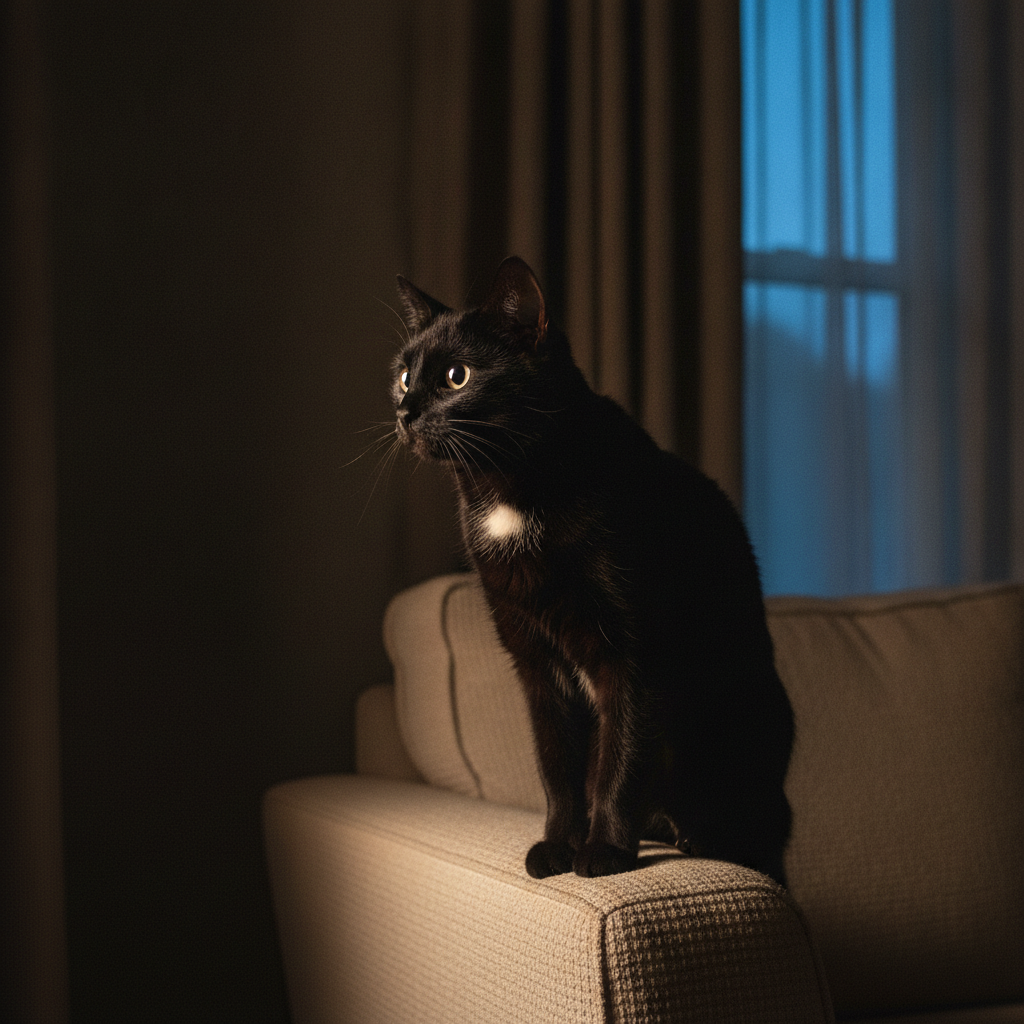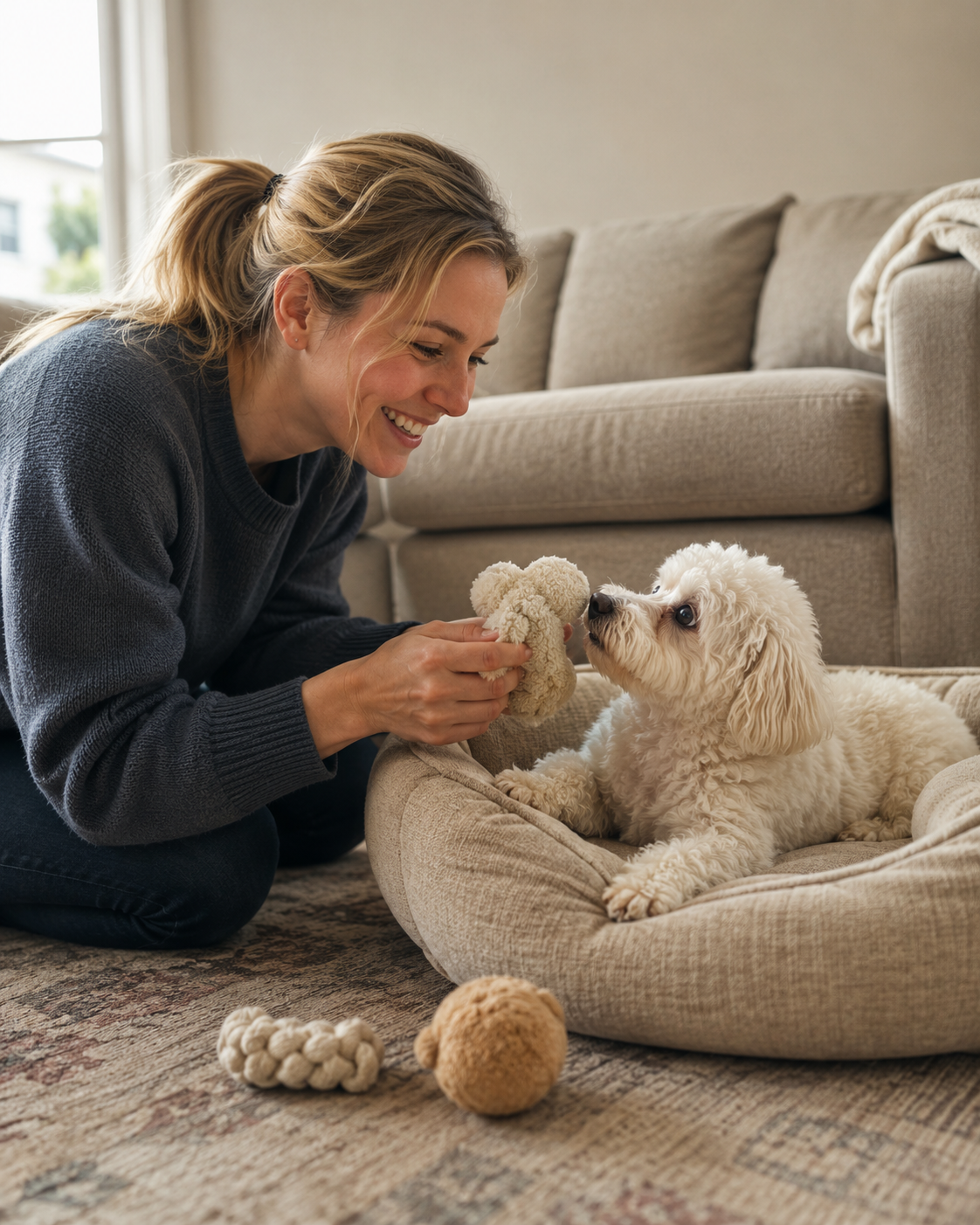
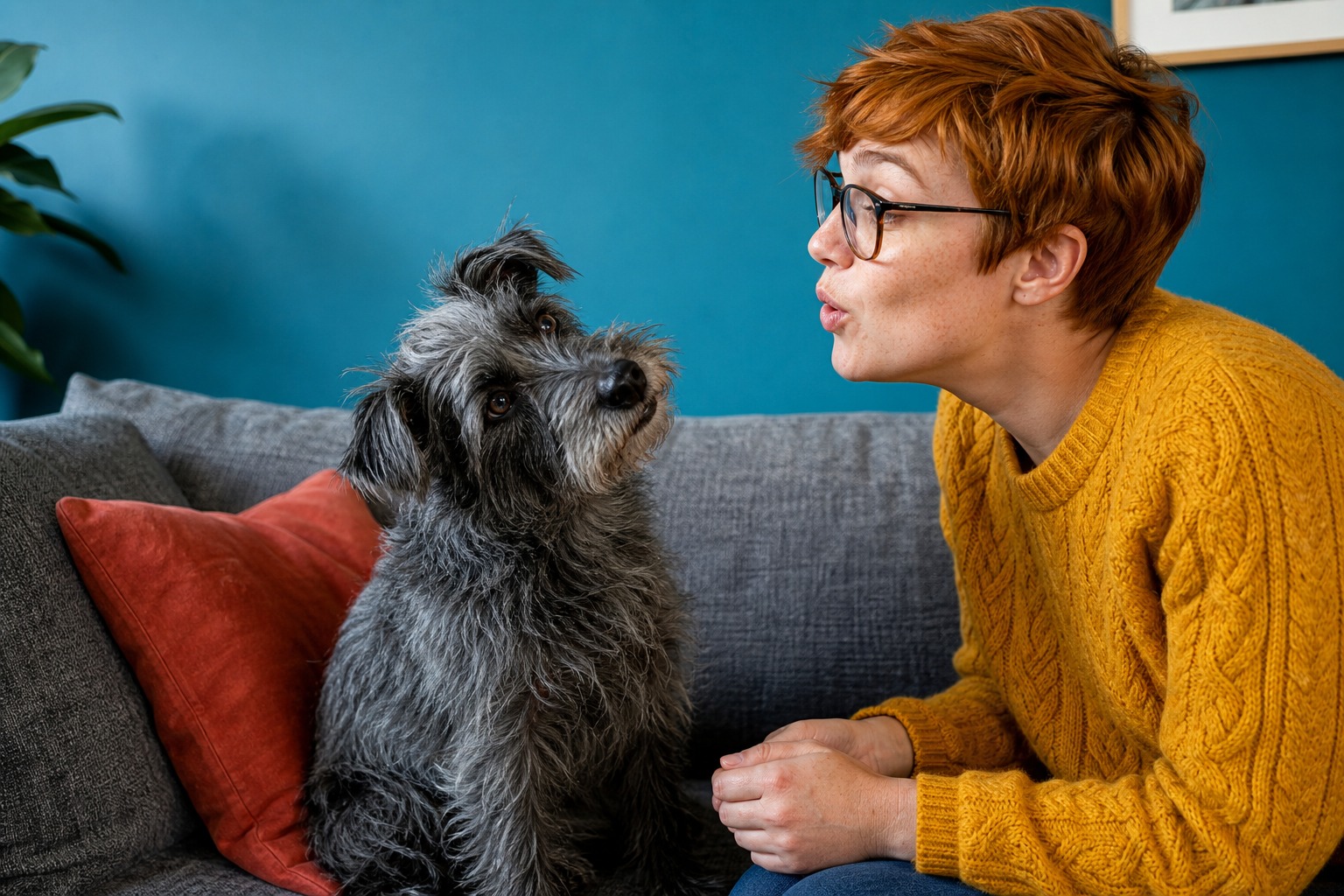
Almost everyone has one. A second voice, an octave off from your normal one, that comes out only in the presence of an animal. You do not decide to use it. It simply arrives, higher and softer, drawing out vowels that have no business being drawn out, turning ordinary words into little songs. Most people have no idea they are doing it until someone points it out, and then they are mortified, because it is impossible to un-hear your own pet voice once you know it exists.
Which is what makes it such a strange, revealing thing when you meet someone new. You can curate almost everything on a first date. Your outfit, your stories, the version of your job that sounds interesting. But the moment their cat wanders in, or you meet their dog at the door, the curated version cracks and the pet voice slips out. And it turns out that little slip carries an unreasonable amount of information.
The voice is a tell
There is a reason “I couldn’t stand the way he talked to his cat” is a real, if slightly embarrassing, reason people have ended things. It sounds petty. It is not, entirely.
The pet voice is unguarded in a way almost nothing else is. It shows you how tender someone is willing to be when they think it does not count. It shows whether their instinct toward a small, dependent creature is warmth or performance or, occasionally, a faint condescension they would never cop to. You can hear a lot in it: playfulness, patience, a streak of theatricality, a tendency to make everything about themselves. The words are nonsense. The tone is the whole message.
And here is the uncomfortable part. Even when there is no silly accent at all, no baby talk, nothing overtly goofy, the tone still leaks. A voice that is subtly belittling toward an animal, dismissive, impatient, faintly annoyed, tells you something about how this person handles things that cannot argue back. Pets do not understand the words. They understand, with alarming accuracy, the tone, and so, it turns out, do you.
Why hating it can be a dealbreaker (and why that’s allowed)
The thing about a voice is that you cannot negotiate it away. It is not a habit like leaving dishes in the sink. It is closer to a person’s fundamental frequency. If the sound of how your partner addresses their dog makes you wince every single time, that is not a small logistical problem. It is a compatibility signal, and it is worth taking seriously rather than shaming yourself for noticing.
The flip side is the real prize. When you find someone whose pet voice you can not only tolerate but genuinely like, someone whose ridiculous cooing register slots neatly next to your own ridiculous cooing register, you have found a very specific kind of match. Two people murmuring absolute gibberish at the same animal, in weirdly complementary tones, is not annoying to either of them. It is a tiny, private duet that nobody else has to hear. That is not nothing. That might be the whole thing.
What the science actually says about the voice
If it makes anyone feel less silly: the pet voice is real, studied, and apparently useful. Researchers call it pet-directed speech, and it closely resembles the sing-song, higher-pitched way adults instinctively talk to babies, known as infant-directed speech. Both share a raised pitch and exaggerated, musical cadence.
The interesting finding is that animals are not just tolerating it, they respond to it. Studies out of the University of York found that adult dogs paid more attention to, and preferred to spend time with, people who used dog-directed speech paired with dog-relevant content, and researchers concluded this style of talking helps build the social bond between people and their pets. More recent neuroscience has shown that dogs’ brains are actually more responsive to the exaggerated, affectionate prosody of infant- and dog-directed speech than to flat adult speech, especially when the speaker is a woman.
So the mortifying voice is doing something. It is a bonding tool, roughly the same one we use on infants, deployed on a creature that cannot talk back but is very much listening to how we sound. Which reframes the whole question. The point is not whether your partner’s pet voice is embarrassing, everyone’s is. The point is whether, underneath the embarrassment, the tone is kind. If it is, let them coo. If it is not, believe the wince. The dog already does.
References
- Benjamin A, Slocombe K. “‘Who’s a good boy?!’ Dogs prefer naturalistic dog-directed speech.” Animal Cognition, 2018. https://link.springer.com/article/10.1007/s10071-018-1172-4
- University of York. “‘Dog-speak’ important for social bonding between pet and owner.” https://www.york.ac.uk/news-and-events/news/2018/research/dog-speak-important-for-social-bonding/
- Gábor A, et al. “Dog brains are sensitive to infant- and dog-directed prosody.” Communications Biology, 2023. https://www.nature.com/articles/s42003-023-05217-y