


"You Can't Teach an Old Dog New Tricks"? They're Teaching Themselves.
Older dogs pick up strange new habits all the time, burrowing, mailbox obsessions, sudden fears. It isn't random, and the difference between a charming quirk and a warning sign is worth learning to spot.

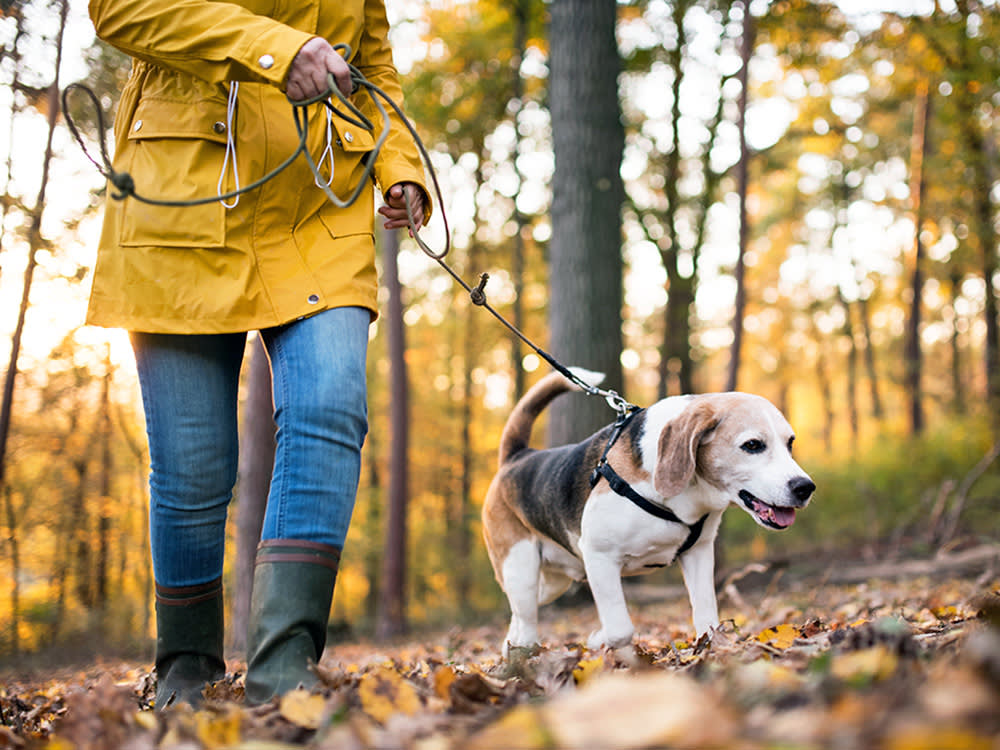
If you’ve loved an older dog, you already know the oldest myth about them is wrong. They change constantly. One month your dog develops an ironclad nightly need to tunnel under the blankets, something they’d never once done. The next, the bottom stair has become the scariest spot in the house and you’re ferrying them down it. Or they develop a deep, unexplained relationship with the neighbor’s mailbox that must be honored on every single walk.
The saying goes that you can’t teach an old dog new tricks. Senior dogs disprove that every day, and here’s the part people miss: they don’t just learn the tricks you teach them. They invent their own habits and hobbies, no lesson plan required. Understanding why is the key to knowing which new quirks to enjoy and which to worry about.
Dogs are learning every minute, at every age
Dogs never stop learning, whether or not you’re actively training them. If anything, older dogs often learn faster than puppies, because they’ve built up a long history of what pays off and they’re not being yanked in ten directions by every smell and sound the way a young dog is.
The mechanism is simple. Dogs are excellent at connecting the dots: they notice what works, then repeat it. Think about teaching a dog to sit. They sit, they get a treat, and soon they’re offering sits you never asked for, testing whether that lever still produces snacks. That’s reinforcement quietly at work, and it doesn’t switch off with age. Every experience shapes how a dog reads their surroundings, and a fresh habit can take hold fast, especially when it feels good or slots neatly into the daily rhythm. It might be tiny, like checking one specific window every morning, or loud, like a fresh habit of barking at a new noise outside.
Why the habits show up when they do
Dogs, much like people, keep changing as they get older, and their needs travel along with them. A senior often adopts a new habit precisely because something underneath, their hearing, their nerve, or their mobility, has shifted. A dog whose hearing is fading may start reacting to vibrations instead of sounds. One whose joints ache may suddenly refuse the stairs they’ve used for a decade. Younger dogs, by contrast, tend to acquire habits by exploring and discovering what gets attention or feels rewarding.
Environment matters too. A new house, a new baby, or even a small tweak to the daily routine can all trigger new behaviors as a dog adjusts. Sometimes the new habit is lovely: a dog who mellows with age and stops barking at everyone who passes the window. Sometimes it’s not. A dog who has never shown interest in picking things up off the ground might abruptly start eating rocks, which is genuinely dangerous and, to an owner, genuinely baffling.
The senior-brain possibility worth knowing about
There’s one cause of sudden new habits in older dogs that deserves its own mention: canine cognitive dysfunction, the dog version of age-related cognitive decline. In a senior dog, new nighttime pacing, getting “stuck” in corners, staring at walls, disrupted sleep, or fresh anxiety and disorientation can be early signs, not just cute new eccentricities. It’s common and often under-recognized, and while it isn’t curable, there’s a lot that can help, from diet and enrichment to medication, when it’s caught early. If a new habit in an older dog looks less like a hobby and more like confusion, that’s a conversation to have with your vet rather than something to wait out.
Owners tend to sort new senior habits into ‘adorable’ and ‘annoying,’ but the category I care about is ‘new and out of character.’ A sudden fear, a compulsive new routine, pacing at 3 a.m., those aren’t personality; they’re often the body or the brain reporting a change. Get it checked, and if it’s nothing, wonderful. If it’s something, you caught it while you could still do the most about it.
Curiosity before correction
When a new habit isn’t dangerous, it’s usually a good sign. Dogs who feel emotionally safe have more room to let their personalities show, and that’s often when fresh hobbies appear, an old dog who abruptly takes up digging, or hauls a toy around like a security blanket, or, after years of demanding brisk walks, suddenly adores slow sniffing games. Learning and delight don’t switch off in old age. They simply take a different shape.
When some unwelcome habit appears, extra barking, fresh chewing, attention-seeking, hold off on correcting it first. Ask why it’s happening. Dogs don’t build habits for no reason; there’s usually an unmet need driving it: boredom, stress, too few outlets, sometimes pain. Pin down that root cause and you can steer the behavior toward an outlet that actually fits, rather than just muffling the symptom. (The rock-eating, for the record, is a “call the vet” habit, not a redirect-it-at-home one. Pica can signal a medical issue and carries a real risk of dangerous blockages.)
Meet the dog you have now
The practical move with an aging dog is to fit their activities to the life stage they’re actually in now, instead of chasing whatever they loved twelve months ago. As joints, hearing, eyesight, stamina, and interests change, lean into lower-impact enrichment. Hide food around the house for a scavenger hunt. Try gentle nosework or scatter feeding. Teach a low-effort trick like targeting or “paint.” Work on cooperative-care skills for vet and grooming handling, which older dogs need more of anyway. A dog whose nose still works has a nearly bottomless well of enrichment available even when their legs slow down.
Through all of it, whether the new habit is delightful or worrying, stay calm, consistent, and kind. Approaching your dog’s changes with curiosity instead of frustration doesn’t just adjust their behavior; it deepens the trust between you. Picking up fresh habits is a completely normal part of getting older for a dog. Your job is to tell the joyful ones from the medical ones, and to keep showing up for the dog in front of you.
Dr. Kohl is a board-certified veterinary dentist with a particular interest in preventive oral care. She reviews all dental health content at The Pet Times and contributes practical guides on home dental routines, professional cleaning, and oral disease prevention.
Meet our experts ↗Keep reading
 Health & WellnessPaw Chewing Is a Loop, Not a Habit. Breaking It Takes Two Moves.Dr. Amara Solis · 8 min
 Health & WellnessDo Dogs Really Cry Happy Tears? The Truth Is MessierDr. Mara Chen · 5 min
 Health & WellnessYour Dog's Squint Isn't a Smile. Count the Eyes.Dr. Mara Chen · 7 min
 TrainingBooping the Snoot Feels Great. You're Poking Your Dog's Most Powerful Organ.Dr. Lena Park · 5 min
 Health & WellnessYour Dog Sleeps 14 Hours a Day. That's Not Lazy, It's Wiring.Dr. Lena Park · 8 min
 TrainingThe Most Dangerous Dog Isn't a Breed. It's the One Nobody's Reading.Dr. Mara Chen · 7 min