


New-Pet Chaos Isn't Bad Behavior. It's a Conversation You're Both Losing.
The accidents, the chewing, the 3 a.m. crying: it looks like a misbehaving pet. It's almost always an unmet need and a missed signal. Here's how to survive the first few weeks.


It is called pet “parenthood” for a reason. Bring home a puppy or kitten and you inherit the full weight of the job, feeding decisions, training decisions, a schedule that is suddenly not your own, and behavior that can turn a calm household into bedlam overnight. The first few weeks feel chaotic because they are, and the chaos is easy to read as a pet who is bad, stubborn, or broken.
That reading is almost always wrong, and it is the single most important thing to unlearn. When a new pet chews, cries, or has accidents, they are not defying you. They are telling you that a need is unmet, or trying to communicate something and failing. Reframe the chaos as a conversation you are both temporarily losing, and everything you do next gets more effective.
Prepare for the predictable problems
You cannot prevent every rough patch, but you can defang the common ones by anticipating them. The most frequent early issue is a simple upset stomach. Between the stress of a new environment and a change in food, a lot of new pets get some gastrointestinal upset in the first days. Starting a newcomer on a probiotic or digestive enzyme alongside their meals can head much of it off.
Two more preemptive moves matter just as much. Get to the vet quickly, and bring a stool sample: a fecal test catches intestinal parasites early, which spares you a household decontamination and, if you already have another pet, keeps the newcomer from infecting them. And look into pet insurance before you bring the animal home, not after. Some policies have waiting periods and specific activation steps, so starting early means coverage is actually in place if a medical problem crops up in those first weeks.
Beyond stomachs and paperwork, most of the turbulence is behavioral, and it varies with the pet’s age and background.
Puppies and kittens: treat them like the infants they are
The biggest mistake new puppy owners make is underestimating that a puppy is, functionally, a human infant. We would never expect a baby to adapt to our home, we baby-proof the outlets and pad the table corners because we know an infant will do things we do not want. A puppy is no different: you adjust your environment to fit them, not the reverse, at least at first.
And while the environment is controllable, the puppy is not, mostly because the two of you cannot yet talk to each other. Enormous amounts of “misbehavior” happen in the gap where a puppy is trying to communicate a need and the human is not catching it, or vice versa. When a puppy chews the furniture or has an accident, it is usually because a need went unmet. The fix is a routine that meets those needs before the puppy has to go looking, scheduled potty breaks, enough play, enough rest, so they are not forced to satisfy themselves in ways you dislike.
None of that communication gap is shameful; humans are not born able to talk to animals. But plenty of experts have spent careers learning how, and leaning on a trainer or behavior consultant early is a smart move, not a defeat. One underrated tip: give young puppies time in clean, natural outdoor settings where it is safe to do so. Puppies who get that tend to sleep better, mouth less, and develop better social skills.
When a new pet is ‘acting out,’ my first question is never ‘how do we punish this,’ it’s ‘what does this animal need that it isn’t getting.’ Nine times out of ten the chewing or the accidents resolve when the routine finally meets the need. And to the exhausted new owner cleaning up another mess at midnight: the puppy blues are real, they are common, and they pass. Trust the process and go easy on yourself.
If you have tried all of it and the accidents and the chewing keep coming, ease off the perfectionism and ride it out. Setbacks are normal, and so is the low, weepy feeling many new owners get, often called the “puppy blues.” It gets better. Even trainers whose dogs are now flawlessly house-trained cleaned up a mountain of accidents first.
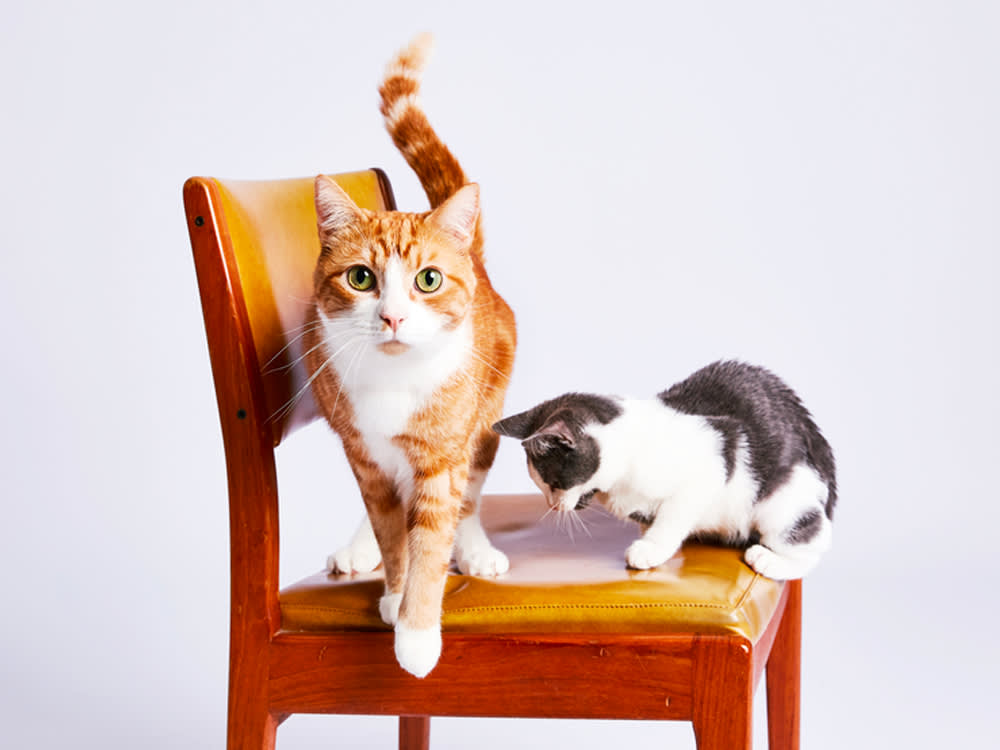
Kittens run on a slightly different logic. Many experts suggest adopting two rather than one to avoid “single-kitten syndrome,” a sibling provides the physical play, mental exercise, socialization, and company that keeps a lone kitten out of trouble. If a second kitten is not possible, make sure the one you have gets real enrichment: socialization (critical while they are young), daily play, and yes, training, because you absolutely can train a cat.
Rescue pets: the first gift is space
Adopting an adolescent or adult rescue brings a different adjustment curve, and the opening move is identical for all of them: give the animal room. Cats especially benefit from their own retreat, a private hideout where they can slowly absorb the smells, sights, and sounds of an unfamiliar home, and that acclimation can take days or weeks. Let the cat approach on their own, and reward that curiosity with a treat when it happens.
Dogs typically need a decompression period too, often summarized as the “rule of threes”: roughly three days to adjust to the surroundings, three weeks to start settling in, and three months to build real trust and bonding. For some dogs it stretches to six months, because even dogs without a capital-T traumatic history can be affected when their needs went chronically unmet. Expect the behavior you see on day one to keep changing.
In the meantime, shield a new pet from doing and seeing too much. Our instinct is to introduce a rescue to everything at once, the parks, the friends, the whole life, but the first days and weeks are not the time. Think of yourself as a safe landing place rather than a source of fun or a way to meet your own needs; the animal comes first for a while, and you take it slow.
There is a line, though, between normal acclimation and genuine aggression, and safety comes first, for everyone in the home, and especially around children and other dogs. Introduce a new pet cautiously, keep interactions supervised, and do not leave a new animal unsupervised early on. If a rescue keeps showing intense lunging, barking, extreme fear responses, shaking, or howling, it is worth bringing in a trainer or behavior consultant. When you feel overwhelmed, the best move is often to get external eyes on the situation, someone who has steered this exact ship many times and can see the forest you are lost in.
What newer research adds
That low, guilty exhaustion so many new owners feel now has a name and a number behind it. A 2024 University of Helsinki study of 1,801 dog owners developed and validated a “puppy blues” scale and found that just under half of owners reported significant negative feelings, anxiety, frustration, and weariness, during their dog’s puppyhood, with about a tenth hitting the most severe levels. Strikingly, the researchers noted that prevalence lines up with the prevalence of postnatal depression in new human parents. The best news in the data is that these feelings faded substantially as the dog matured. So if the first weeks have you questioning everything, you are not weak and you are not alone, you are experiencing something common, measurable, and temporary.
This article covers new-pet health and behavior. It is general information, not a substitute for veterinary care, if your pet shows signs of illness, aggression, or severe distress, contact your veterinarian or a qualified behavior professional.
References
- Sinkko, A., et al. “Development and Validation of the Puppy Blues Scale Measuring Temporary Affective Disturbance Resembling Baby Blues.” PLOS ONE, 2024. pubmed.ncbi.nlm.nih.gov
- American Society for the Prevention of Cruelty to Animals. “Cat and Dog Behavior Resources.” www.aspca.org
- American Animal Hospital Association. “Bringing Home a New Pet.” www.aaha.org
Dr. Mehta is a board-certified veterinary nutritionist who evaluates pet food formulations, ingredient quality, and the science behind dietary trends. He writes and reviews all nutrition content at The Pet Times, including our food rankings and feeding guides.
Meet our experts ↗Keep reading
 First Days'Fighting Like Cats and Dogs' Is a Myth. Bad Introductions Aren'tDr. Amara Solis · 6 min
 Health & WellnessSpaying Is One of the Best Things You'll Do for Your Pet. Insurance Mostly Won't Pay for It.Jordan Ellis · 7 min
 First Days8 New-Pet To-Dos That Only Matter at 2 A.M.Dr. Nina Kohl · 8 min
 First DaysKittens Litter-Train Themselves. Here's How Not to Ruin It.Dr. Amara Solis · 5 min
 First DaysThe 3-3-3 Rule Is Two-Thirds Made UpDr. Mara Chen · 10 min
 First DaysBringing a Cat Into a Dog's House? The Dog Is Your Real Project.Dr. Nina Kohl · 7 min