


'Natural' Pet Care Is a Word Nobody Checks. Read the Back of the Bottle.
Most pet products are made in white-label factories that also make human cosmetics, then relabeled. A brand built by two siblings who left law and marketing to fix that is a useful lens on what a label can and cannot promise.
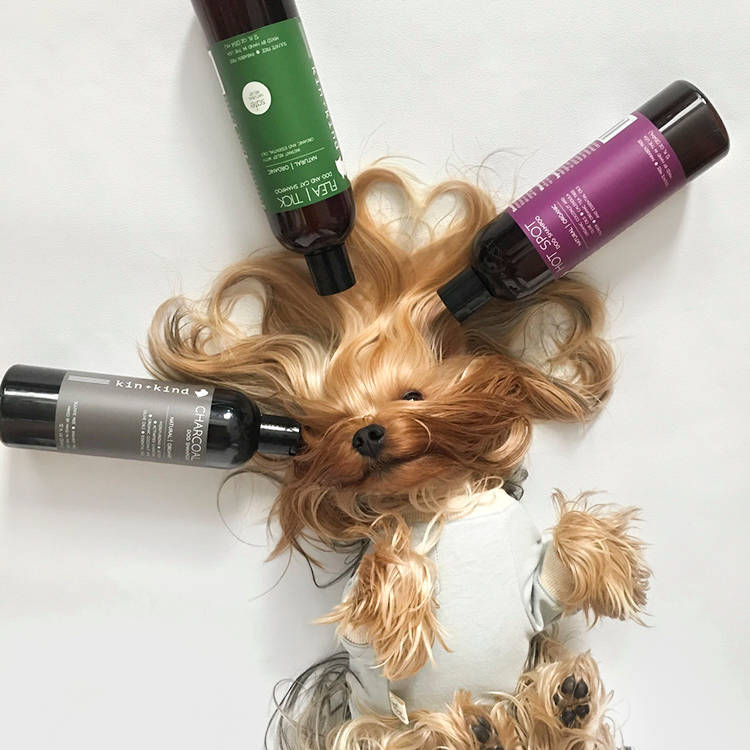
Pick up a bottle of “natural” pet shampoo and ask yourself a simple question: who checked?
The honest answer, in most cases, is nobody. There is no federal pre-market approval for pet cosmetics. “Natural” is not a defined term. The picture of a leaf is a picture of a leaf. And a large share of what sits on the shelf was not designed for pets at all, it was produced in a contract factory that also makes human cosmetics and supplements, then relabeled with a dog on the front.
That is the actual claim underneath kin+kind, the natural pet-care company siblings Thomas and Janine started as a side project in 2015. Their stated mission, to end greenwashing and demand transparency, sounds like every wellness brand’s about page until you understand what they are pointing at: brand owners who genuinely do not know their own ingredients, sourcing, labor practices, or whether the formula was ever suited to an animal.
You do not have to buy their products to use the frame. You just have to know what the label is legally allowed to leave out.
The regulatory map, briefly, because it explains everything
Three different systems govern the bottles in your bathroom, and they have wildly different teeth.
Grooming products (shampoos, conditioners, wipes, sprays). Effectively cosmetics. No pre-market approval, no required safety review, no legal definition of “natural,” “gentle,” or “clean.” Manufacturers are responsible for their own safety. Some are excellent at it. Nobody is checking the ones that are not.
Flea and tick products. These are pesticides, and they fall to the EPA. But there is a large carve-out: under Section 25(b) of FIFRA, “minimum risk” pesticides built from a pre-approved list of botanical actives, cedarwood, peppermint, geraniol, lemongrass, and similar, are exempt from EPA registration entirely. That exemption is why an essential-oil flea spray can be sold without EPA review of whether it actually works. It is not a loophole exactly. It is a deliberate policy choice to reduce burden on low-risk products. But an exempt product is one no agency evaluated for efficacy, and a flea infestation is not a low-stakes problem.
Supplements. Not drugs, not quite food. The one meaningful voluntary signal here is the National Animal Supplement Council seal, which requires adverse-event reporting and quality controls. It is not FDA approval, but it is more than nothing, and it is the fastest thing to look for on a label.
People read ‘natural’ as a safety claim, and it is not one. Tea tree oil is natural, and concentrated tea tree oil will put a cat in my hospital. The useful question isn’t whether an ingredient came from a plant. It’s whether anyone tested the dose on the species that’s about to wear it.
The essential-oil problem, which nobody puts on the front label
This is the single biggest safety gap in the “natural pet care” aisle, and it is species-specific.
Cats lack the liver enzyme pathway (glucuronidation) that mammals use to clear a lot of phenolic compounds efficiently. Tea tree, pennyroyal, wintergreen, pine, citrus, and eucalyptus oils have all been associated with toxicity in cats, from drooling and tremors up to liver damage, especially at concentration. Dogs handle these better but are not immune, and small dogs and puppies are the ones who get into trouble.
A “botanical” flea spray with an essential-oil active is precisely the sort of product that qualifies for the EPA’s minimum-risk exemption. That means the botanical formulation on the shelf next to the vet-prescribed product was reviewed by fewer people, not more.
None of this means you must use conventional chemistry. It means the word “natural” on the front tells you nothing about whether the formula is right for the animal you own.
The brand story, and why it is actually relevant
Thomas and Janine grew up in a house overrun with animals: dogs, cats, and 21 rabbits, plus birds, rodents, and lizards accumulated over their parents’ objections. Thomas describes himself as a childhood pet-store hanger-on who stuck around long enough that they eventually hired him to play with the animals.
He then spent a decade as a corporate lawyer. In 2015, he and his sister launched kin+kind as a side project, a “jobby,” as he has put it, with the goal of making natural, sustainable pet products that were designed for pets specifically and manufactured in the United States. It grew from flea and tick solutions into supplements, household cleaners, an itch-relief kit, and a pet-safe CBD line. Their company dog, Burke, was pulled from one of their own photo shoots, which they staff with rescue dogs from local rescues so the dogs get seen and adopted. He is, in their telling, the chief product reviewer.
kin+kind is LGBTQIA+-owned, and Thomas has been candid about what Pride means to someone who grew up closeted, in an era when discrimination was written into the law and hostility was voiced openly. His read on the last few decades: real strides, and a long way still to run before everyone in the community is safe, respected, and loved.
The reason the origin story matters commercially is that it is the whole differentiator. When there is no regulator verifying the label, the only thing left is a company willing to tell you exactly what is in the bottle, who made it, and where. Founder transparency is a weak substitute for oversight. It is also, right now, most of what you have.
What to actually read on a label
- A full ingredient list, in descending order. If the back of the bottle says “natural cleansers and botanical extracts,” put it down. That is not an ingredient list.
- The active, named, with a percentage. Especially on anything sold to kill fleas or soothe skin.
- Species on the label, explicitly. “Safe for dogs and cats” is meaningfully different from “for pets,” and if it contains essential oils, a cat-specific clearance is not a nice-to-have.
- Who made it. A named facility or country of manufacture is a real disclosure. Silence is a choice.
- The NASC seal, on supplements. Cheap signal, easy to check.
- What the claim is doing. “Supports skin health” is marketing. “Kills fleas” is a pesticide claim, and it obligates the maker to something.
What’s new since this was written
The gap between what a bottle claims and what anybody verified has been narrowing on one front only: enforcement of environmental claims. The FTC has gone after unqualified “biodegradable” marketing in the pet category before, and its Green Guides remain the standard that a vague eco claim can be measured against.
Everywhere else, the picture is the same as it was. There is still no pre-market review of pet grooming products, minimum-risk botanical pesticides still skip EPA registration, and “natural” still means whatever the marketing team wants it to mean. Which leaves the reader doing the regulator’s job, one ingredient list at a time.
References
- US Environmental Protection Agency. “Minimum Risk Pesticides Exempted from FIFRA Registration.” https://www.epa.gov/minimum-risk-pesticides
- US Environmental Protection Agency. “EPA’s Regulation of Flea and Tick Products.” https://www.epa.gov/pets/epas-regulation-flea-and-tick-products
- National Animal Supplement Council. “NASC Quality Seal.” https://nasc.cc/quality-seal/
- Pet Poison Helpline. “Essential Oils and Cats.” https://www.petpoisonhelpline.com/poison/essential-oils/
- Federal Trade Commission. “Green Guides.” https://www.ftc.gov/news-events/topics/truth-advertising/green-guides
Dr. Solis is a board-certified veterinary dermatologist with over twelve years of clinical experience. She advises on skin conditions, allergies, and grooming practices that affect coat and skin health. All dermatology and allergy content at The Pet Times is reviewed by her team before publication.
Meet our experts ↗Keep reading
 Product PicksStop Shopping for an Itch Shampoo. Start Shopping for the CauseDr. Ravi Mehta · 10 min
 Product Picks'Eco-Friendly' Pet Grooming Is Mostly a Marketing Word. This Line Actually Earns It.Sara Lim · 4 min
 Product PicksCamamu Builds Dog Skincare Like It's Human Skincare. That's the Whole TrickLeila Torres · 6 min
 Living'Pet-Safe' Is a Marketing Word. Read the Label Instead.Dr. Nina Kohl · 7 min
 Product Picks'Pet-Safe' Bug Spray Isn't Pet Spray. Read That Before You Buy.Sara Lim · 7 min
 LivingHow to Spot a Genuinely Low-Waste Pet Brand, Using Boba&Vespa as the TestLeila Torres · 5 min