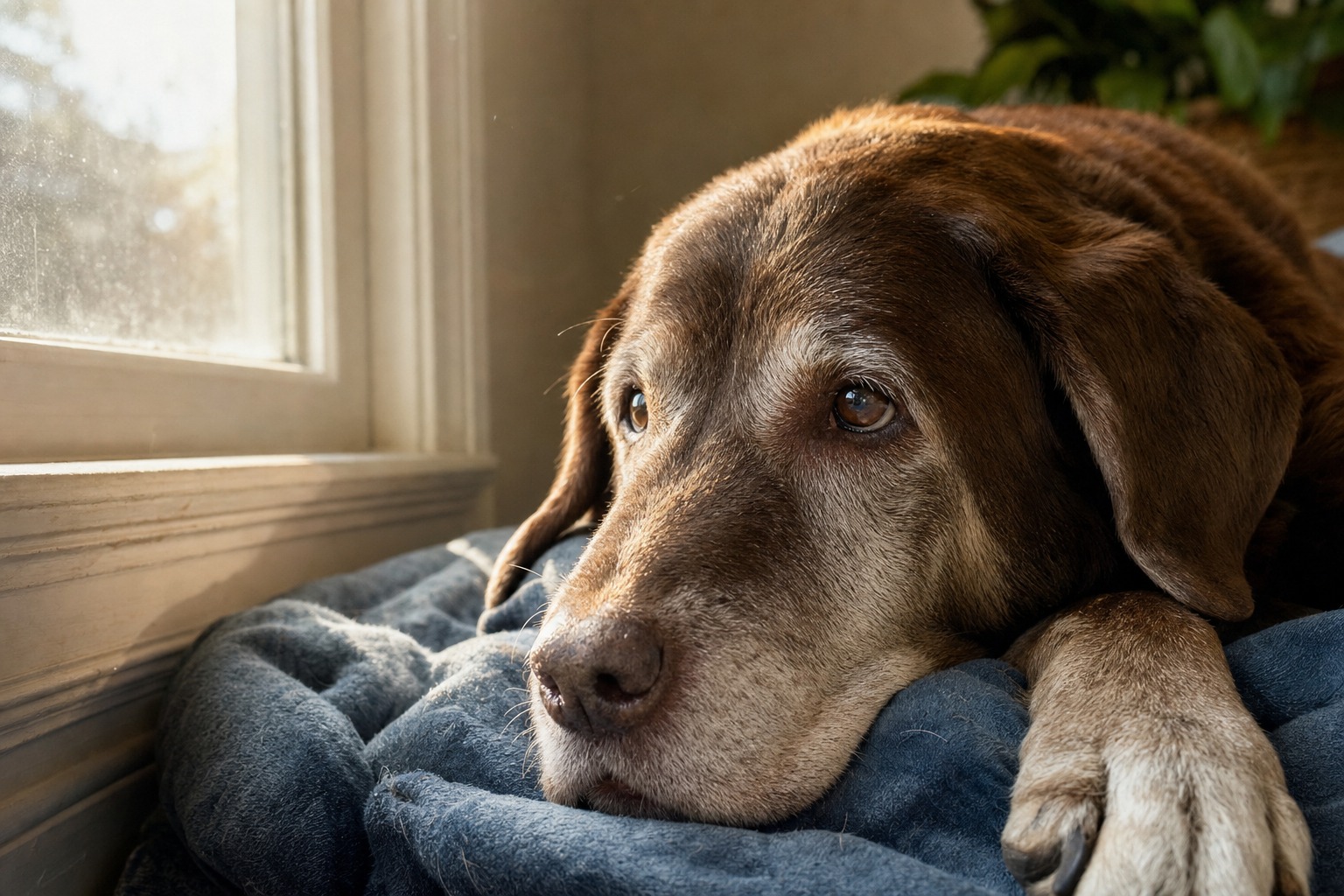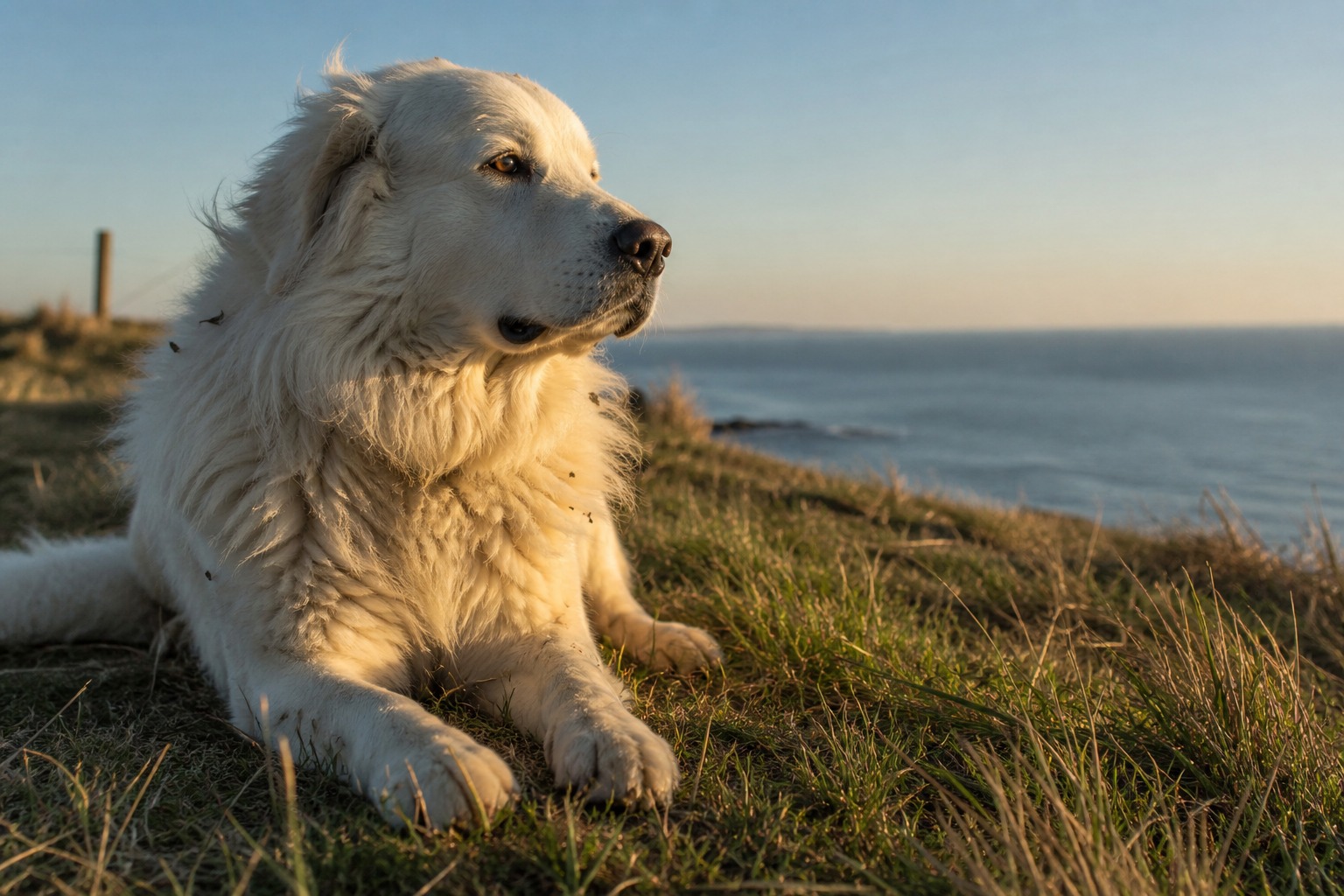
Most conservation success stories are told in the language of policy, permits, and fences. This one is told in the language of a large, calm, faintly bored dog lying in the grass, keeping watch over birds it has decided are its own. Off the coast of Warrnambool in southern Australia sits Middle Island, and the reason it still has penguins on it at all is a breed of Italian sheepdog that had never seen a penguin until someone asked it to guard one.
An island that was quietly emptying out
Little penguins, the smallest penguin species in the world, were once a common sight up and down the southern Australian coastline. Then came the foxes. Red foxes were brought to Australia in the 19th century for sport hunting, and they did to mainland penguin colonies exactly what you’d expect a clever predator with no natural check to do. The colonies that survived did so on islands, where the water kept the foxes out.
Middle Island’s water stopped keeping them out. Shifting tides and building sedimentation slowly created a walkable path from the shore, and the foxes followed it. A colony that once held around 800 penguins collapsed to fewer than ten by 2005. In conservation terms, that’s not a decline. That’s the last chapter.
Enter a chicken farmer and a dog named Ben
The turnaround started with a local free-range chicken farmer known as Swampy Marsh, who had his own fox problem and had solved it the old-fashioned way, with a Maremma sheepdog named Ben. Maremmas are livestock guardians by breeding, dogs built to be left alone with a flock and to treat anything that threatens it as a personal insult. Ben kept the foxes off the chickens. When Marsh heard the penguins were losing the same fight, he figured a dog like Ben could change the odds.
Getting from “good idea” to “dog on the island” took longer than the penguins could really afford. One of Marsh’s farmhands, a university student named David Williams, wrote up a formal proposal to the state environmental agency to put livestock guardian dogs on Middle Island. The approval process dragged while the colony kept shrinking, and there was a real fear the birds would be gone before the paperwork cleared.
It cleared in 2006. The first dog put to work was Ben’s daughter, fittingly named Oddball. Not a single penguin was lost to a fox on her watch, and the colony began to climb back toward the triple digits. Oddball’s story later became an Australian feature film named after her.
Why a sheepdog is weirdly perfect for this
The genius of using a Maremma is that the job plays directly to instincts the breed already has. These are dogs bred to be self-reliant, to hold territory for long stretches without a handler standing over them, and to bond with whatever they’re set to protect. Handlers train them onto the penguins partly through the birds’ distinctive fishy smell, and over time the dog files penguins under the same mental category as sheep: mine, and not to be touched.
They even ration themselves. Left with a supply of food and water, a working Maremma paces it out rather than gorging, because losing focus on the flock isn’t in the temperament. It’s less that the dogs were taught a new trick and more that they were pointed at a new flock.
Oddball eventually retired to live with Marsh, and successors named Eudy and Tula carried the work forward. To keep the pipeline going, local groups pooled over $18,000 to purchase and train the next generation of guardians. Tula and Eudy retired in 2019 and 2020. In June 2021, Eudy died at age 12 of an aggressive cancer, the longest-serving Maremma the project had.
What’s new: the colony held, and the dogs took on more
Two decades in, the experiment has held. The little penguin population has rebuilt to well over 100 birds, and the project now runs a small team of Maremmas, working dogs who go out to the island during the breeding season alongside “ambassador” dogs who do public education on the mainland.
The one brutal reminder of why the dogs matter came in 2017, when high tides and rough weather made it impossible to get the guardians onto the island. Foxes killed as many as 140 penguins in that gap. It was a hard lesson in a simple truth: the fence here has fur and a heartbeat, and the protection only works when the dog is actually out there.
The Maremmas have also quietly expanded their portfolio. Beyond the penguins that get all the attention, the same dogs help protect the island’s short-tailed shearwater colony, a less photogenic but ecologically important seabird that would otherwise be on the fox menu too.
“What makes a livestock guardian dog work isn’t obedience, it’s ownership,” says Marcus Webb. “You’re not commanding the dog to defend the birds. You’re convincing the dog the birds belong to it, and then getting out of the way. Once a Maremma decides something is part of its flock, it will stand between that thing and the world without being asked.”
The legacy of a very good idea
It’s easy to file this under “heartwarming animal story” and move on, but the Middle Island project is genuinely one of the more elegant conservation interventions of its era. No poison, no culling, no permanent barrier. Just a breed doing what it was built to do, redirected at a species it had no reason to care about until people gave it one. An endangered colony is still standing because a chicken farmer looked at his fox problem, then at the penguins’, and saw the same solution lying in his own yard.