


Long Hair Is the Least Important Thing About a Long-Haired Cat
You've been told these cats shed more, groom harder, and wreck allergies. Two of those are wrong and the third is about the wrong variable. Eight gorgeous long-coats, and the things that actually matter about each one.

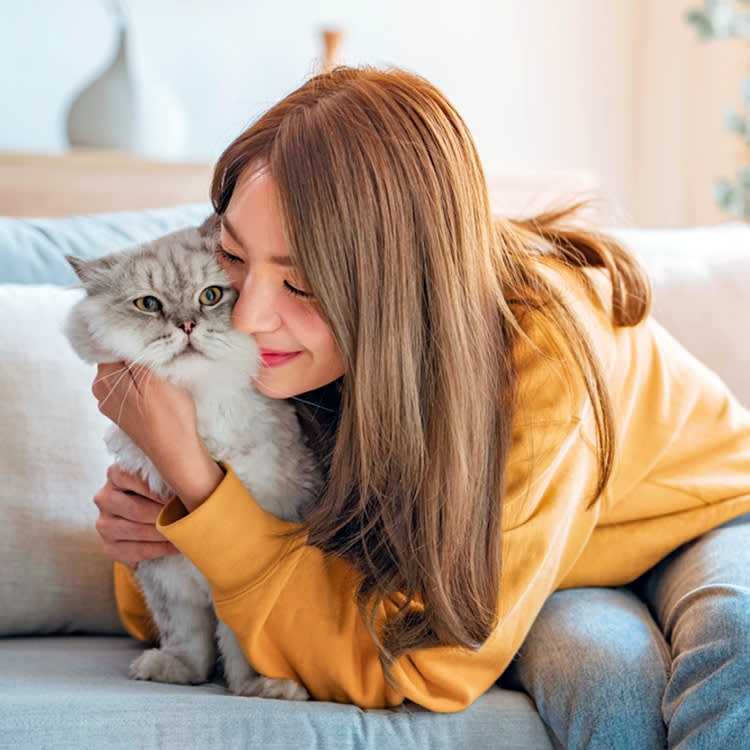
Coat length is the most visible thing about a cat and one of the least consequential.
It is the variable people shop on, and it is the variable that predicts almost nothing you actually care about. Not allergies. Not shedding, necessarily. Not even grooming workload, which varies more between two Maine Coons than it does between a Maine Coon and a shorthair.
So here is a different framing. There are three things that genuinely matter when you choose one of these cats, and only one of them has anything to do with hair:
- Fel d 1, the allergen, which is unrelated to coat length and enormously variable between individuals.
- Face shape, which in one popular breed on this list determines whether the cat can breathe properly.
- Mat and pelt risk, which is a real welfare issue and the one legitimate hair-related concern.
Get those right and you can pick on beauty, which is what you wanted to do anyway.
The allergy thing, corrected
You will read, constantly, that some long-haired cats are hypoallergenic. Siberians get named most often.
No cat is hypoallergenic. Not one. Not the hairless ones.
Cat allergy is not a reaction to hair. It is mostly a reaction to Fel d 1, a protein produced in the salivary and sebaceous glands. Cats groom, coat the fur in saliva, the saliva dries, the protein rides the dander into the air. Hair is a delivery vehicle. It is not the allergen.
That is why coat length does not track with allergy severity, and why the source of the “long-haired cats are worse” folklore was always wrong.
Here is the part worth knowing. Fel d 1 production varies enormously between individual cats, far more than it varies between breeds. Roughly 15 percent of cats in the general population are naturally low producers. In Siberians, the proportion of low-producers appears to be considerably higher, with reported figures around half. That is a real and interesting finding, and it is also a probability, not a promise: a given Siberian can be a high producer, and a random shorthaired shelter tabby can be a very low one.
So the correct move for an allergic person is not to buy a breed. It is to spend a meaningful amount of time with the specific animal, ideally more than once, before committing. The individual is the variable.
“I have watched people spend thousands on a breed sold to them as hypoallergenic, react badly to the actual cat, and then feel they cannot rehome it because of what it cost,” says Dr. Priya Nair. “Test the cat, not the breed. If you cannot test the cat, do not take the cat.”
The face thing
Persians and their variants are gorgeous, and they are also the one entry on this list with a built-in welfare problem, so it goes early rather than buried.
Selective breeding for a flatter and flatter face has, in the extreme, produced cats that cannot breathe well, cannot drain their eyes properly, and have teeth that do not fit the jaw. The flattest cats are the most compromised.
The practical guidance, which the community is increasingly honest about: if you are getting a Persian, get one with a longer muzzle. The “doll-face” or traditional type. It is better for the cat, straightforwardly, and there is no aesthetic loss worth the cost of an animal that struggles for air.
Persians also carry an elevated risk of polycystic kidney disease, which is genetically testable. Any breeder worth buying from will have tested. Ask, and ask for the result.
The mat thing, which is the real hair issue
Here is the one legitimate coat-length concern, and it is more serious than “you’ll have to brush them.”
A long coat that goes un-groomed does not simply look bad. It mats, and mats tighten, and tight mats pull on the skin, trap moisture, cause sores, and hide wounds and parasites. At the extreme, a cat becomes pelted: the mats fuse into a single sheet, effectively a suit of matted hair, and the only remedy is full sedation and a shave-down.
That is a genuinely painful, expensive, avoidable outcome, and it is the actual reason grooming matters. Not aesthetics.
The good news is that the workload is much lower than the folklore suggests, and it is front-loaded: a cat taught to enjoy being brushed as a kitten is a ten-minute job for life. A cat that learns at four that brushing is an ambush is a fight forever.
Counterintuitively, many long-haired cats shed less than shorthairs. Each hair stays in its growth phase for longer before it is released, so there is more hair on the cat and less of it on your sofa.
Eight long-coats, ranked by how much brushing they actually need
Every other list of these cats sorts them by fame. Fame will not be waiting for you on a Tuesday night with a comb. So they are ranked here from the least grooming to the most, which is the number that will determine whether you and this cat are happy in three years.
1. LaPerm — twice a week
Exactly what the name suggests: a cat that appears to have had a perm. A Rex breed with a curly coat, though, oddly, not related to any of the other Rex varieties. The mutation arose independently.
The coat is waves and ringlets rather than a dense pile, and that structure is why it needs less brushing than anything else here. Twice a week does it. Very affectionate cats.
If you want a long-coat and you are being honest with yourself about how much grooming you will genuinely do, this is the pick, and it is not close.
2. Maine Coon — two or three times a week
The fact people underestimate: they are enormous. A male commonly runs 13 to 18 pounds and can reach 20.
The coat is dense, built for genuinely hostile Maine winters, and it wants brushing two or three times a week, which is far less than the size of the animal suggests. Temperamentally they are the easy answer: extremely sociable, sweet, and famously good family cats.
Watch for: the size is not free. Maine Coons carry breed-associated risk for hypertrophic cardiomyopathy and hip dysplasia. Both are testable. Ask.
3. Selkirk Rex — regular, but forgiving
The strangest-looking cat on this list, in the best way: wavy, plush, slightly chaotic hair, available in both longhair and shorthair.
The entire breed descends from a single kitten born in 1987 with an unusual curly coat. Not a legend, a documented origin.
Friendly, easygoing, sweet, and not especially demanding, though the curl will mat if you neglect it entirely.
4. Ragamuffin — most days, but easy days
Once considered a Ragdoll type, established as its own breed in 1994. Big cats, thick and beautiful coats, in an enormous range of colors. Silky fur that wants a brush most days.
The surprise, and the reason it earns a spot this high: it is far less work than it looks. Kept up with, the coat does not tangle readily, and owners consistently describe the grooming as quick. That is not a sentence anyone writes about a Persian.
5. Norwegian Forest Cat — daily, briefly
The Maine Coon’s Scandinavian analogue, and an ancient one. Thick, semi-long, weatherproof coat that sheds heavily in summer, when the winter undercoat comes out in earnest. Big, sweet-tempered, reliably good with people.
Daily brushing keeps it smooth. That sounds like a commitment; it is about five minutes.
6. Ragdoll — near-daily, and you will find hair everywhere
The one to choose if what you want is a companion rather than a housemate. Named for the way they go limp when picked up, and about as close to dog-like as cats get: they follow you from room to room, they want handling, they want in.
The coat is medium-long and it sheds, noticeably. Make peace with fur on your clothes. Near-daily brushing keeps it from tangling.
Watch for: HCM again. Reputable breeders test.
7. Siberian — daily, thick undercoat
The oldest breed here, out of Russia, and the one at the center of the allergy conversation above. Affectionate, robust, still comparatively rare outside Eastern Europe. That dense undercoat means daily attention.
The honest position on allergies: a higher-than-average chance of being a low Fel d 1 producer. Not a guarantee. Not hypoallergenic. Meet the individual cat.
8. Persian — the most work on this list, by a distance
The traditional long-coat, and the one where your choice of individual matters most. Round face, flat muzzle, thick and long coat, calm and sedentary temperament. Genuinely lovely animals.
The coat is dense enough that a skipped fortnight becomes a mat problem, so this is a near-daily job with no grace period.
Buy the longer muzzle. Ask about PKD testing.
And note that the Himalayan (or Colorpoint Persian) is a Persian carrying Siamese coloring. Some registries call it a separate breed and some do not. The coat, the workload, and the muzzle warning are all identical.
Friendly, easygoing, sweet-natured, and not especially high-maintenance, though it does need regular grooming to keep the curl from matting.
Care, honestly
Every one of these cats is different and the grooming ranges from twice a week to daily. What does not change:
- Start young. Brush a kitten before it needs brushing, so the tool is boring rather than frightening.
- Go under, not over. Mats form under the arms, behind the ears, on the belly, and around the britches. Surface-brushing a beautiful topcoat while a mat forms underneath is the most common failure.
- Do not cut a mat out with scissors. Cat skin is thin and pulls up into the mat, and lacerating a cat with kitchen scissors is one of the more common self-inflicted emergencies we see. Use a mat splitter or take them in.
- Check every week, brush on schedule. The check is the part people skip.
And check rescues and shelters before a breeder. Purebred cats end up in shelters constantly, including every breed on this list.
What’s new since this was written
The most useful development for allergic cat lovers is not a breed, it is a diet. Food coated with an egg-derived antibody that binds Fel d 1 in the cat’s saliva is now commercially available, and studies from the manufacturer report meaningful reductions in active allergen on the fur, in the range of a 47 percent reduction after three weeks of feeding. That is not a cure, the research base is largely industry-funded, and it will not rescue a severe allergy. But it is a real mechanism aimed at the real allergen, which is more than “get a Siberian” ever was.
The other shift is in the Persian conversation. Breed registries and welfare bodies have gotten far more explicit about the harms of extreme brachycephaly, and buyers are, slowly, moving back toward the traditional longer-muzzled type. If you want one of these cats, you are now buying into that argument whether you intend to or not. Buy the cat that can breathe.
References
- Satorina, J., et al. “Fel d 1 in cat allergy: the major allergen and its variability.” Allergy, review literature. pubmed.ncbi.nlm.nih.gov
- Satyaraj, E., Wedner, H.J., & Bousquet, J. “Keep the cat, change the care pathway: A transformational approach to managing Fel d 1, the major cat allergen.” Allergy, 2019. pubmed.ncbi.nlm.nih.gov
- International Cat Care. Brachycephalic Cats and Welfare. icatcare.org
- Cornell Feline Health Center. Polycystic Kidney Disease. vet.cornell.edu
- Cornell Feline Health Center. Hypertrophic Cardiomyopathy. vet.cornell.edu
- The Cat Fanciers’ Association. Breed Profiles. cfa.org
Dr. Solis is a board-certified veterinary dermatologist with over twelve years of clinical experience. She advises on skin conditions, allergies, and grooming practices that affect coat and skin health. All dermatology and allergy content at The Pet Times is reviewed by her team before publication.
Meet our experts ↗Keep reading
 Health & WellnessWhy the Cat Pee Smell Keeps Coming Back (and How to Actually Kill It)Sara Lim · 17 min
 Health & WellnessA Cat's Tongue Cannot Do This: When Grooming Stops Being OptionalLeila Torres · 6 min
 Health & WellnessYour Cat's Shedding Is Telling You Something. Learn to Read ItClaire Sutton · 5 min
 Product PicksYour Cat Grooms Themselves. These 6 Tools Are the Ones Worth Buying Anyway.Sasha Ford · 6 min
 Health & WellnessThe Secret to Bathing Your Cat: Almost Never Do ItLeila Torres · 7 min
 Health & WellnessYour Cat Grooms for Hours, and Cleaning Is the Smallest Reason WhyDr. Priya Nair · 7 min