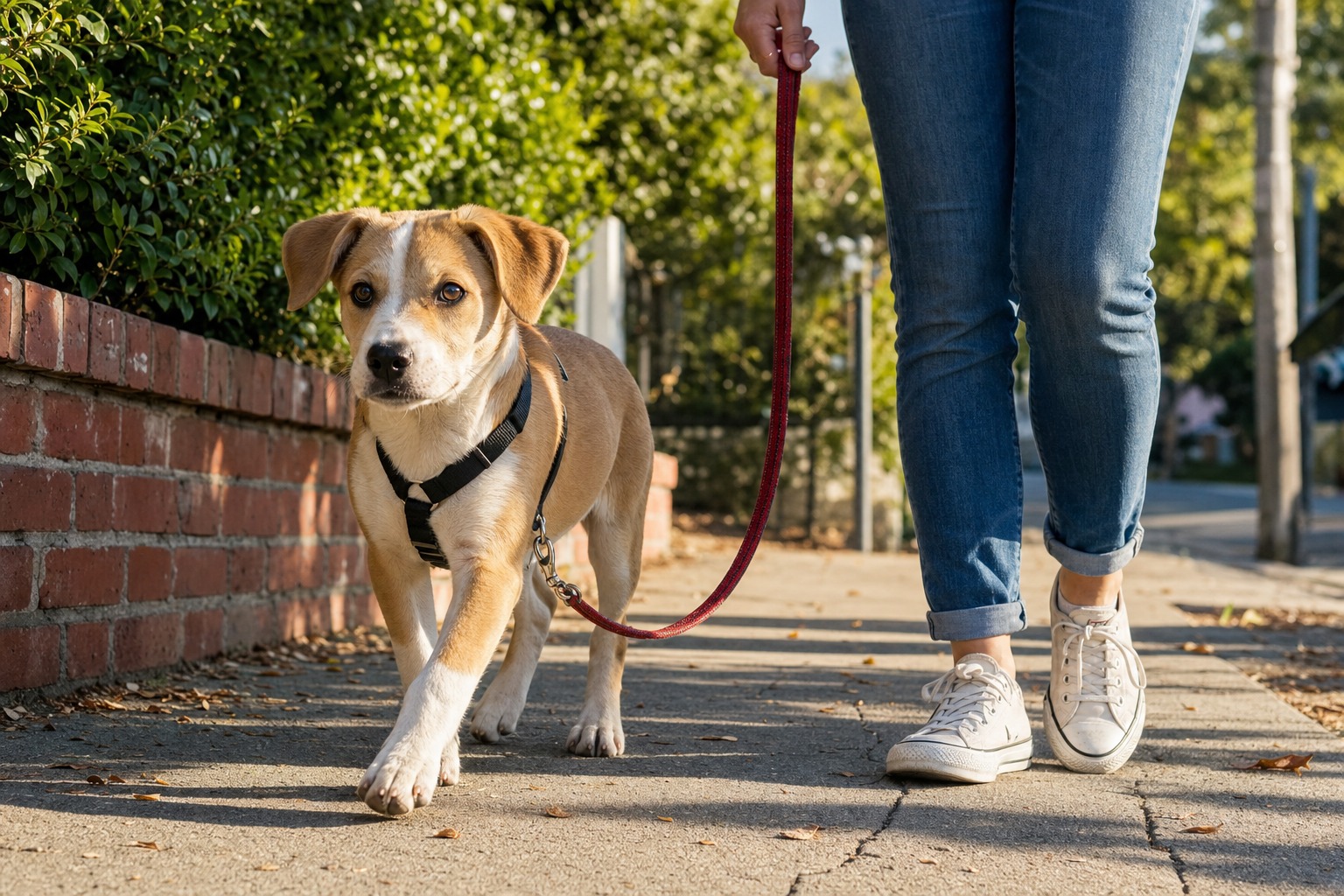
Picture the leash as a seatbelt. A seatbelt does not drive the car. It sits there, slack and forgotten, and only does anything in an emergency. That is the entire secret to a calm walk, and it is the opposite of how most people use a leash, which is as a steering wheel: yank left, yank right, drag the dog back, get dragged forward. If the leash is doing the steering, you have two frustrated animals on either end of a taut line. The fix is not a better grip. It is teaching your dog to want to be at your side so badly that the leash never has a job to do.
That reframe matters because walking politely is not something dogs come knowing. It looks like it should be instinctive, and it absolutely is not. A puppy who tugs, chews the line, and lunges at strangers is charming for about a week. The same behavior in a grown dog, even a small one, is a daily fight. So you start early, and you start with the right mental model.
Puppies are already trying to follow you
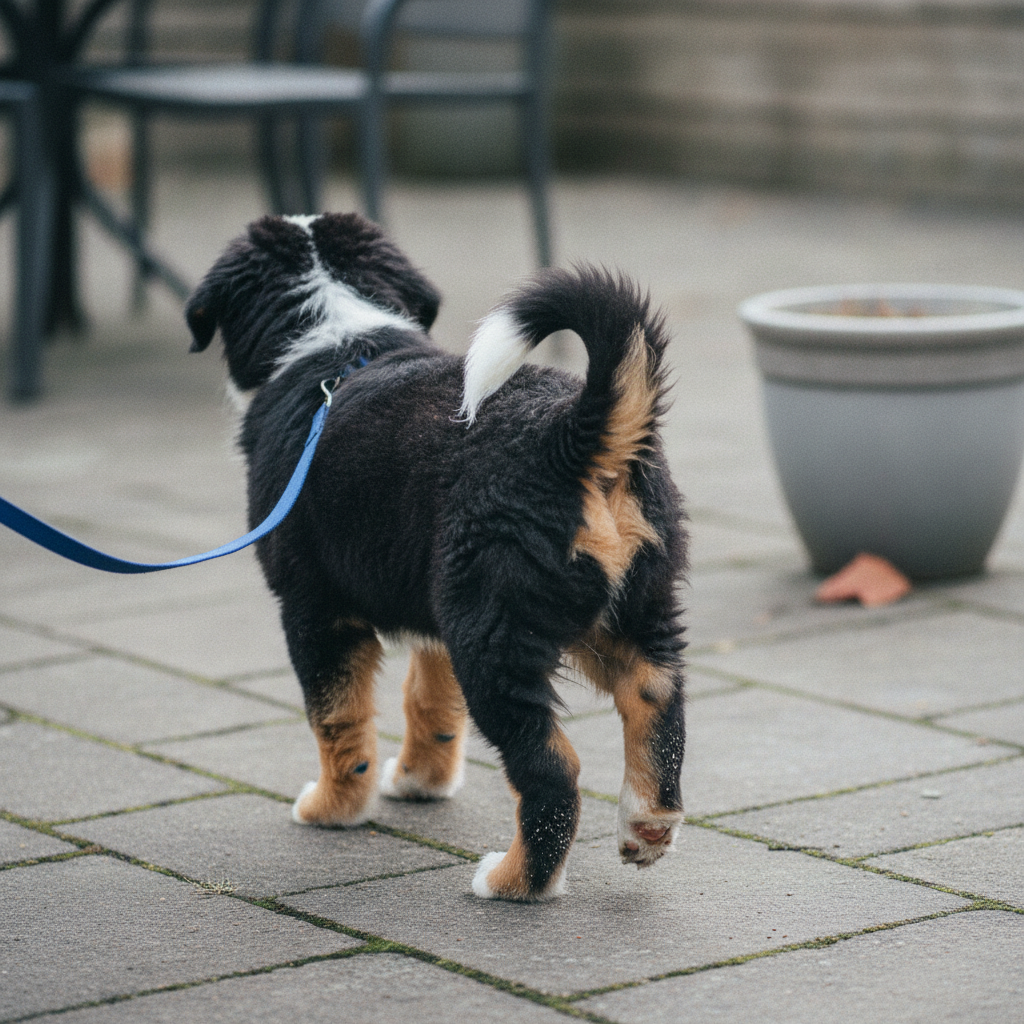
If the to-do list of raising a puppy feels endless, here is the encouraging part: young puppies naturally stay close and orbit their person, which means the raw material for good leash walking is already there the day you bring them home. You are not installing a foreign behavior. You are shaping one that already exists.
Strip it down and leash-training just means teaching your dog to move alongside you and check in before charging off toward whatever caught their eye. The obstacle is that you are competing for attention against a world stuffed with squirrels, dropped pizza, and more squirrels. You cannot make that world less interesting, so instead you make yourself worth checking in with, and you keep the lessons short.
“The mistake I see constantly is the marathon drill,” says Dr. Nina Kohl. “A puppy’s focus is measured in seconds, not minutes. Two minutes of walking, then a burst of play, then two more minutes. Little and often beats long and grinding every single time.”
One more thing to brace for: adolescence. Around nine months, a lot of dogs go through a phase where they act as though they never learned a thing. That is normal development, not defiance, and it is not a sign your training failed. Expect some boundary-pushing, keep reinforcing the fundamentals, and it passes.
The method: make your side the best place in the world
The core technique is almost embarrassingly simple. You teach your dog that the space right next to your leg is where good things happen.
Start in a low-stakes spot, indoors or a securely fenced yard, and, yes, off-leash if it is safe. This surprises people, but you do not need a leash to teach attention. Hold a treat down at your leg, exactly where your dog would be if they were walking beside you, and, without reaching toward them or patting your thigh, let them come find it. When they do, they have just discovered that your side pays. Take a step forward and reward at your leg again. Then two steps. Then several. You are building a magnetic zone at your knee.
Once your dog gets that being beside you equals treats, stop feeding constantly. Take a step and wait for them to follow before you pay. Stretch it to two steps, then ten, then more. Now clip on the leash, not as a tool to haul them around, but as the seatbelt: its only job is catching your dog if something overwhelming makes them lunge toward the street. The leash should never be the reason your dog is at your side. Their own choice should be.
The final stage is to physically loosen the line and let ordinary life become the paycheck. Add a release cue. If there is a bush your dog loves to sniff and they are walking loosely and glance up to check in with you, say “okay, go sniff,” and let them. What you are teaching, underneath all of it, is that the surest, quickest route to whatever they want runs right past your knee. Pulling should never, ever get them anywhere.
Gear that helps, and gear that quietly works against you
Equipment supports the training. It does not replace it. A few choices make a real difference.
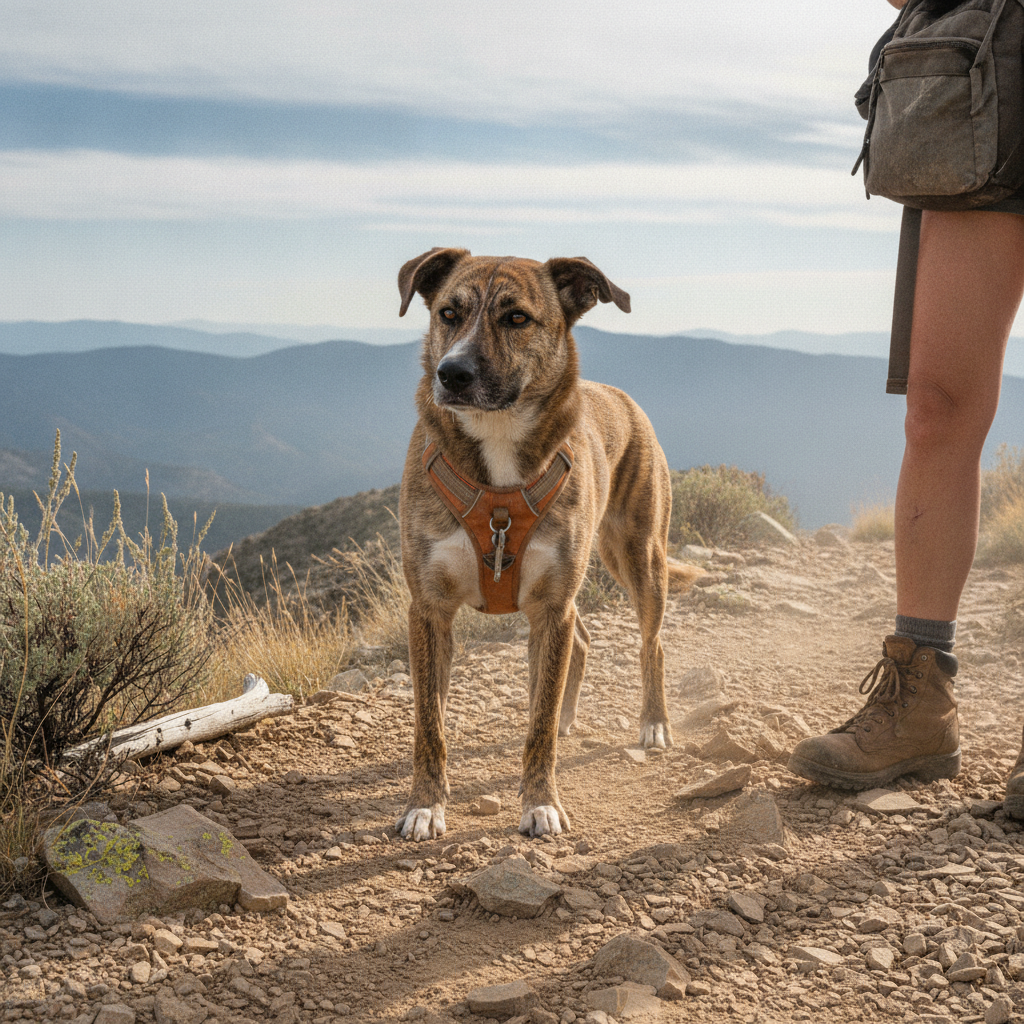
Harness over collar, in most cases. You can train on a flat collar, but a harness spares a growing puppy’s neck, and if your dog ever coughs while pulling, that is your cue to switch. For a dog who cannot stop scanning the environment, a head halter can gently turn their head back toward you when you need focus.
A fixed four-to-six-foot leash. This length gives you real control. A retractable leash does the opposite: it teaches pulling, because tension is exactly what feeds out more line, so your dog learns that leaning into the leash earns freedom. Retractables are also genuinely dangerous, since a dog can dart into traffic before you have any hope of reeling them in.
Small, high-value treats. People hand out treats the size of a cookie. Aim for something no bigger than a pea. You want your dog to swallow and keep moving, not stop to chew and lose the thread. Plain kibble does the job if your pup finds it exciting, and you can hand out part of their daily ration during a session with no extra calories, just trim breakfast or dinner a little to keep the math even. If kibble is too boring, level it up: tuck a few low-sodium hot dog pieces into the kibble bag and let the smell and flavor rub off, so ordinary kibble suddenly smells irresistible.
A treat tube for tough weather. In cold climates, a squeeze tube of something like peanut butter is far easier to use with gloved hands than fumbling for individual treats.
Troubleshooting the three problems that derail walks
Pulling
If your dog pulls, the worst thing you can do is follow them while the leash is tight, and the second worst is to pull back in a tug-of-war.
“When a dog pulls and you move forward anyway, you’ve just taught them that leaning into the collar makes the walk happen,” says Dr. Nina Kohl. “That taut leash becomes their gas pedal. Freeze the second it goes tight, and pulling stops buying them anything at all.”
A no-pull harness can help here. It clips at the chest, right in front of the dog’s center of gravity, so when they surge forward the design gently redirects them sideways instead of letting them tow you down the block.
Distractions
Do not wait for a chaotic environment to test a half-learned skill. Build distraction in gradually, starting from near-zero and adding one small challenge at a time, so your dog already knows what is expected before a squirrel enters the picture. Keep the treats flowing and reward the behavior you want to see more of.
Leash reactivity
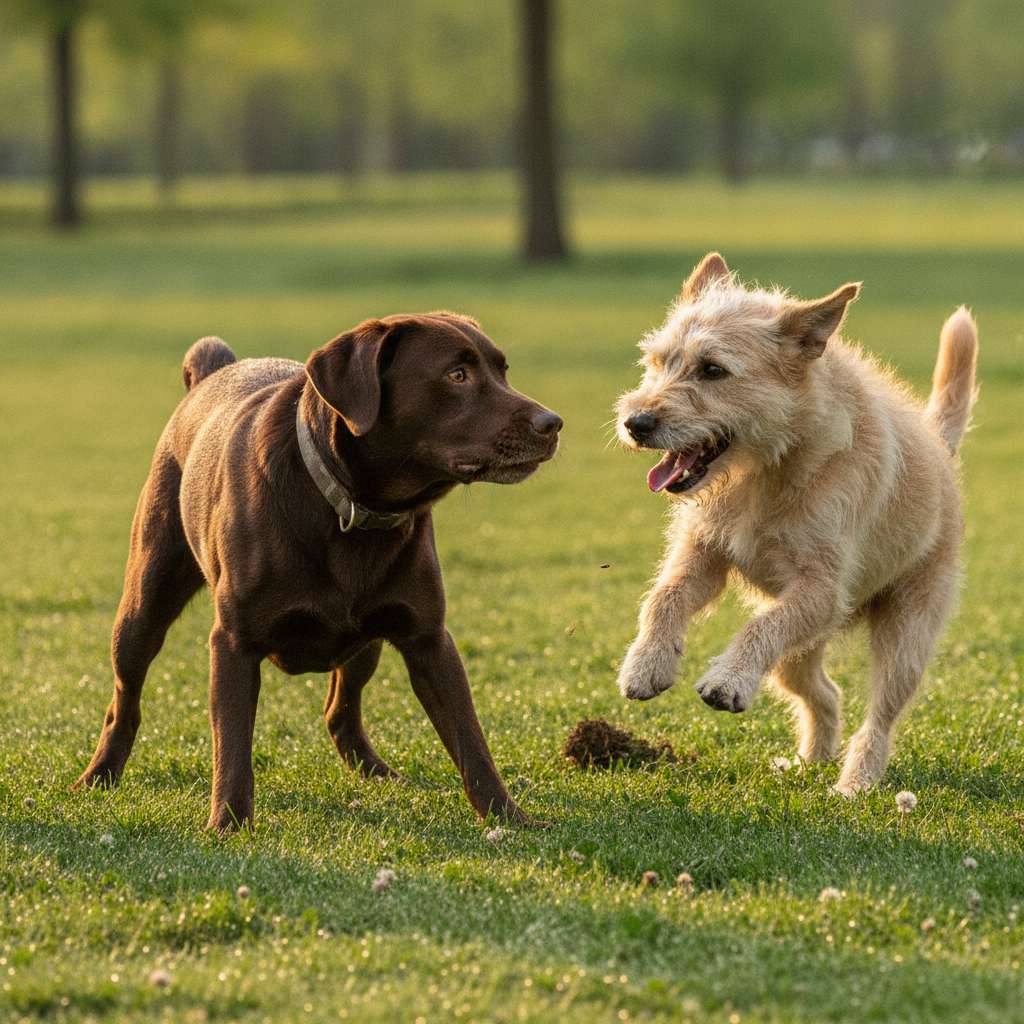
If your dog reacts, lunges, barks, or freezes, at other dogs or people, train well below their trigger point and raise the intensity slowly. Have a friend stroll their own dog along the opposite sidewalk. If your dog ignores them or stays calm, pay them. Move the friend’s dog a little closer next time. This is deliberately slow work, and rushing it backfires. Never punish a reactive dog for reacting; you will only teach them that the scary thing predicts bad stuff from you, too.
Puppies versus older dogs
Both can learn to walk beautifully, but they need different pacing.
Energy and attention. Puppies are high-energy and short-focus, so train in quick, upbeat bursts and pause often. An older dog is usually calmer and can sit through a longer session, but keep the tempo gentle to match their pace.
Old habits. Unlike a blank-slate puppy, an older dog may already have practiced years of pulling. That takes more patience and consistency to rewrite. Do not lose heart, and do not punish. Reward the behavior you want, and let the old habit fade from disuse.
And even though dogs should be leashed in public for their safety, it is genuinely worth teaching an off-leash version of “stay with me.” A dog who will hold position and respond to your cue without a leash is far safer if a leash ever fails or an off-leash situation comes up.
Why the payoff is bigger than a nice walk
Loose-leash walking is not just about aesthetics. When your dog stays close and relaxed, you can both stay aware of your surroundings and move through the world without stress. Calm walks build trust and deepen the bond between you. And easy walks get taken more often, which quietly improves the physical and mental health of the dog and the person on the other end of the leash. That is a lot of return on a skill that comes down to one idea: make your side the best place to be, and let the leash go slack.
References
- Behavioural Evaluation of a Leash Tension Meter Which Measures Pull Direction and Force during Human–Dog On-Leash Walks (Animals)
- Who Is Pulling the Leash? Effects of Human Gender and Dog Sex on Human–Dog Dyads When Walking On-Leash (Animals)
- Social Behaviour of Domestic Dogs in a Public Off-Leash Dog Park (Behavioural Processes)
- American Veterinary Society of Animal Behavior: Positive Reinforcement Training