 Medically reviewed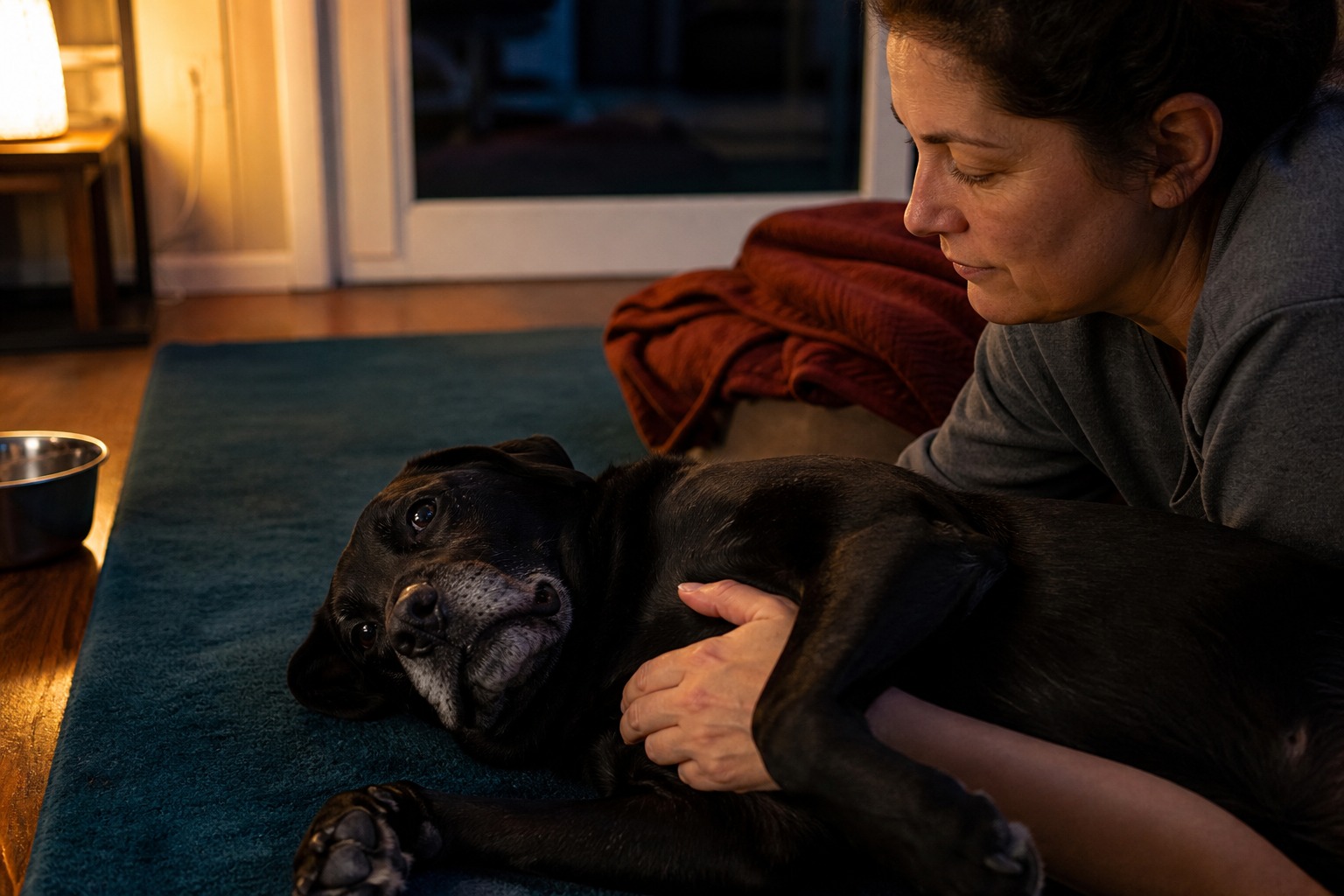
We’ll do almost anything to fix our dogs’ problems. Cold? Here’s a sweater. Hungry? Give me two minutes and some sweet potato. But the moment sickness enters the picture, most of us freeze and hand the whole thing to the professionals, as if our job ends at the vet’s door. Here’s the reframe that changes everything: the most valuable health skill you can build for your dog isn’t diagnosing what’s wrong. It’s knowing, in your hands and your gut, what “right” looks like on your specific dog. You catch problems by noticing a change from normal, and you can’t notice a change you never measured.
That’s the entire purpose of an at-home exam. It’s not a substitute for veterinary care, and it’s not about playing doctor. It’s about building a baseline while your dog is healthy so that a subtle shift, the kind that’s easy to miss and often matters most, doesn’t slip past you. Nobody has logged more hours watching this particular dog than you have. Put a handful of numbers behind all that watching and it turns into something a vet can actually use.
Start by doing nothing
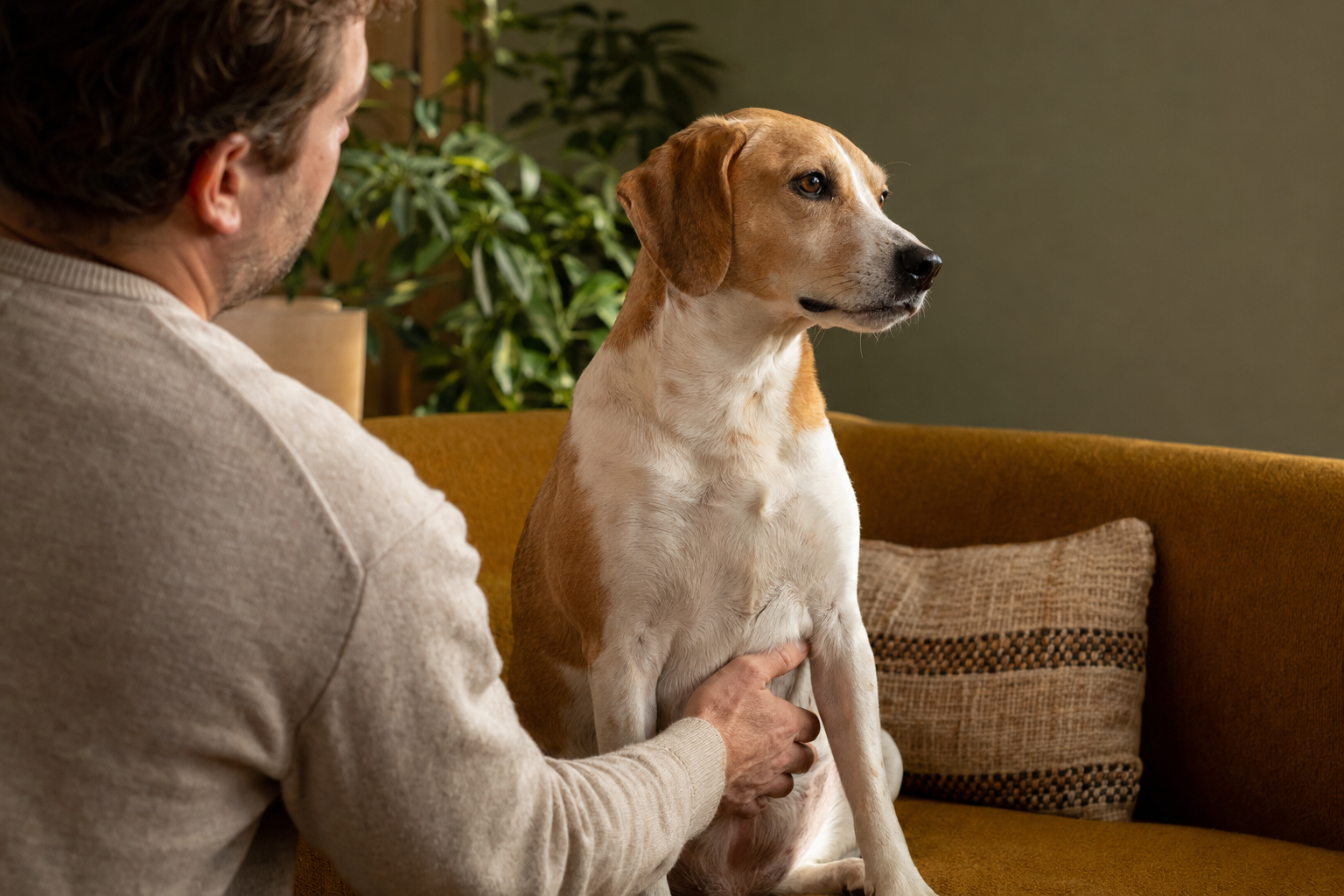
Before you lay a hand on your dog, just look. Stand back for a couple of minutes and take in posture, breathing, activity level, and overall appearance while your dog is relaxed at home. This sounds too simple to count, and it’s actually the most important step. A relaxed at-home picture is the real reference point, because a dog at the vet is stressed, and stress moves every number you’re about to measure. Get that mental snapshot of “normal” locked in first.
How to take your dog’s temperature
This is the one skill on the list worth practicing before you need it, and it takes about a minute. Reach for a digital thermometer meant to be used rectally. Skip the in-ear models, whose readings drift, and throw out any mercury thermometer you’ve inherited, because glass and a squirming dog are a bad pairing. Coat the tip in petroleum jelly. Then go in slowly, roughly an inch on a small dog and closer to two on a big one. Resistance means stop. So does any real chance your dog will bite you over it, in which case this becomes a job for the clinic and there is no shame in that.
Healthy sits in a narrow band: about 100 to 102.5°F. Push past 102.5°F and you have a fever; drop under 99°F and something is wrong in the other direction. Either way it earns a phone call. Give the thermometer a look on the way out, too. It should come away close to clean. Blood, loose stool, or a black tarry smear all count as findings, and the black tarry version is the one to move on, because digested blood means bleeding somewhere upstream in the gut.
How to find your dog’s pulse and heart rate
Learn this on a calm Tuesday, not during an emergency, because hunting for a pulse for the first time while panicking is miserable. The artery you want is the femoral, which runs up the inside of the hind leg near the groin. Cup your hand around the front of the thigh and travel up the leg until you feel your knuckles come to rest against the belly. Now walk your fingertips along the inner thigh. What you’re hunting for is a cord-like roll under the skin, and then the beat traveling through it. Once you have it, count for 15 seconds and multiply by four.
Rest is the key word for the number that follows: 60 to 160 beats a minute covers most healthy dogs, and where a given dog falls inside that spread says more about build than health. Big dogs, athletic dogs, and dogs who are simply mellow tend to idle at the low end. Small dogs and puppies run hot and fast. The span is enormous, which is the whole reason your dog’s personal resting number beats the textbook range. Whatever the count, the beat itself should be findable, strong, and evenly spaced. If it’s faint, erratic, or you can’t locate it at all, call your vet, and never treat the pulse as the single verdict on whether a dog is fine.
Add the one the old checklists skip: breathing rate
Temperature and pulse are the classics, but resting respiratory rate deserves a spot right beside them, and it’s arguably the easiest of the three to track over time. While your dog is calm and resting, watch the chest rise and fall, count for 30 seconds, and double it. A resting dog usually breathes about 10 to 30 times per minute. The reason this number earns its keep is that a climbing resting breathing rate can be one of the earliest signals of trouble, including heart and lung problems, often before a dog looks obviously sick. Jot it down now and then when your dog is asleep or lounging, and you’ll have something genuinely useful to report if it ever creeps up.
The owners who catch things early almost never come in saying ‘I diagnosed a problem.’ They come in saying ‘this isn’t her normal.’ A resting breathing rate you’ve tracked, a pulse you know the feel of, a temperature you’ve taken before, that’s what turns a vague worry into a specific one I can act on fast.
The point of all this
Once you’ve watched your dog, taken a temperature, found the pulse, and counted a resting breath rate, you’re not a veterinarian, and you don’t need to be. You’re something quietly valuable: an owner with a baseline. Practice these while nothing is wrong so they’re familiar when something might be, and always loop in your vet when a number falls outside the normal range or your dog just seems off. Early recognition is the thing that saves dogs, and it starts with knowing what your dog’s normal actually is.
Common questions
How do I find my dog's pulse?
The easiest spot is the femoral artery on the inside of the hind leg, up near the groin. Rest your fingers there until you feel the pulse, count for 15 seconds, and multiply by four for beats per minute.
How often should I do an at-home exam?
Occasionally, while your dog is healthy, so you learn what normal feels like. The goal isn't to catch illness on a schedule, it's to build a baseline you can compare against when something seems off.