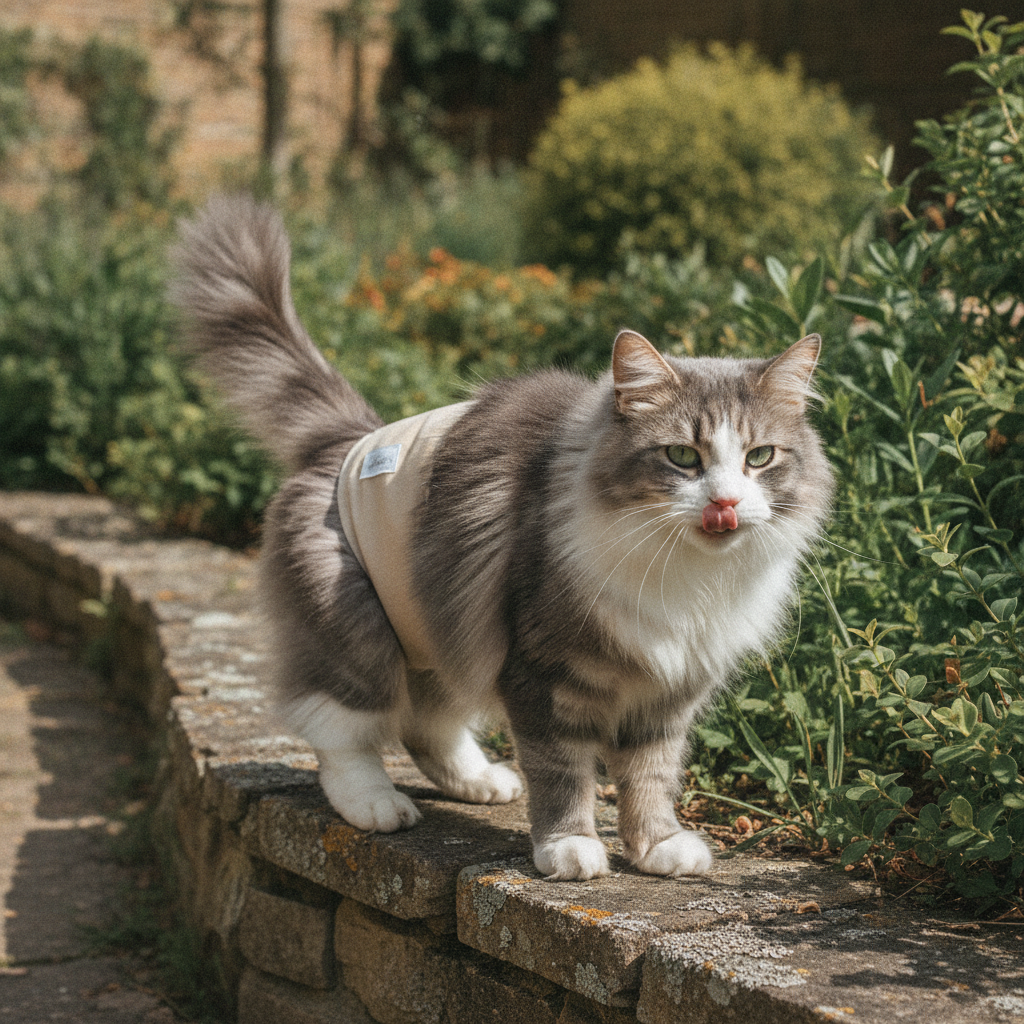
Let’s start where the vet would, not where the internet would. A tiny kitten in a diaper is undeniably adorable, and that is exactly the problem: the cuteness gets people reaching for a product their kitten does not need and can be harmed by. A kitten diaper is a medical device. It belongs on cats with a real, specific reason to wear one, and nowhere else.
Using diapers on kittens is not common practice, and it is not something to do without a medical need. If you are on this page, though, you probably have one. So this guide does two things: it draws the line on when a diaper is actually appropriate and how to avoid hurting your kitten with it, and then it walks through the reusable, disposable, and do-it-yourself options that fit a very small cat.
When a kitten actually needs a diaper
There are legitimate reasons. A kitten who is paralyzed or incontinent may need one. So might a kitten with severe diarrhea, or one recovering from illness or surgery, or, as a short-term measure, a kitten traveling with you. Those are the cases where a diaper solves a real problem.
“I only reach for a diaper when there’s a medical reason, incontinence, paralysis, a post-surgical situation, and even then it’s a short-term tool, not a lifestyle,” says Dr. Mara Chen. “Cats aren’t built to sit in a wet diaper. Left on too long, it traps urine against the skin and you trade one problem for a nasty dermatitis.”
That warning is the whole reason to take diapering seriously. Trapped urine against the skin leads to staining and dermatitis right where the diaper sits, and it can leave fur matted and soiled. A diaper is a bridge, used for as short a time as the medical situation requires, with frequent changes and skin checks, not a set-and-forget solution.
How to shop for one that fits a tiny cat
Fit is everything with a kitten, because most pet diapers are made for animals much larger. You need two numbers: the circumference of the belly for sizing, and the distance back to the tail base so the tail opening lines up. Look for a snug but not tight fit, soft materials, and an adjustable tail opening. And here is the reassuring part: kittens grow absurdly fast, sometimes looking bigger overnight, so whatever health issue put them in a diaper is often resolved before they outgrow the first pack.
Because a diaper here is a short-term bridge, this list runs from the fastest, lowest-commitment option to the more involved ones, ending with the frivolous pick, not starting with it.
Disposable options (usually the right call for a short need)
If the situation is temporary, which it almost always is, disposables spare you the washing. Just confirm the fit, since many are sized for bigger animals.
The Hartz Disposable Cat Diapers (around $26) come in extra small, which the brand’s chart says suits cats roughly three to seven pounds with eight-to-12-inch waists, right in kitten range.
The Pet Soft Disposable Cat Diapers (around $20 for two dozen) come in extra small with adjustable tabs and a tail hole, and hold a solid rating. The adjustable foam tail opening is the useful feature here: you can trim it to fit the base of your kitten’s tail so nothing leaks.
Reusable and washable options (if the need runs longer)
A reusable diaper is by definition washable, so do not get thrown by the labeling; the terms are used interchangeably. These make sense if a diaper is going to be part of life for more than a few days.
The SunGrow Reusable Female Cat & Dog Diapers (around $15) are an affordable, cheerfully colored choice. They run on the larger side for a truly tiny kitten, but for a bigger kitten or as a grow-into option, they work.
The house-brand Frisco Washable Diaper (around $15) is labeled for dogs and comes in extra-small, so depending on your kitten’s size it may fit. A microfiber interior layer handles absorption, and washable means less waste over a longer recovery period.
The DIY route: a sock diaper in five minutes
You can absolutely make a kitten diaper yourself. For a proper sewn one:
- Get your two measurements while they sleep: belly circumference for the size, plus how far back the tail sits, so you know where to cut.
- Gather two fabrics: an absorbent inner layer (flannel works well, as does an old soft cloth) and a waterproof outer layer.
- Pick up soft elastic for the leg openings so the fit is snug without pinching, plus Velcro or snaps to fasten it.
- Cut to your measurements, sew the layers together, and, crucially, leave a hole for the tail. Attach the elastic at the leg openings.
If that is more project than you signed up for, make a sock diaper instead. Take a small ankle sock roughly the width of your kitten, cut a hole for the tail, and line it with a sanitary pad. It is genuinely that simple.
Last, and least important: the cute one
Only after fit, function, and skin health are handled does looks get a vote. If you want a store-bought diaper that is nicer to look at, the Mews Rhapsody Reusable and Washable Dog and Cat Diapers (around $17 for a three-pack) come in bright colors and in extra small, so they fit a small cat while doing the decidedly less-than-cute job underneath. Just remember which end of this list it lives on.
References
- International Cat Care, “Incontinence in cats.” https://icatcare.org/advice/
- Cornell Feline Health Center, “Feline lower urinary tract disease.” https://www.vet.cornell.edu/departments-centers-and-institutes/cornell-feline-health-center
A kitten who needs a diaper usually has an underlying medical condition. Use a diaper only under, or in consultation with, veterinary guidance, and see your vet about the cause.