


Your Cat Doesn't Sweat Like You. Keeping Them Safe All Summer
Heatstroke, fleas, toxic plants, and pest poisons all spike in summer. A vet shares the essentials for keeping your cat safe through the hottest months.

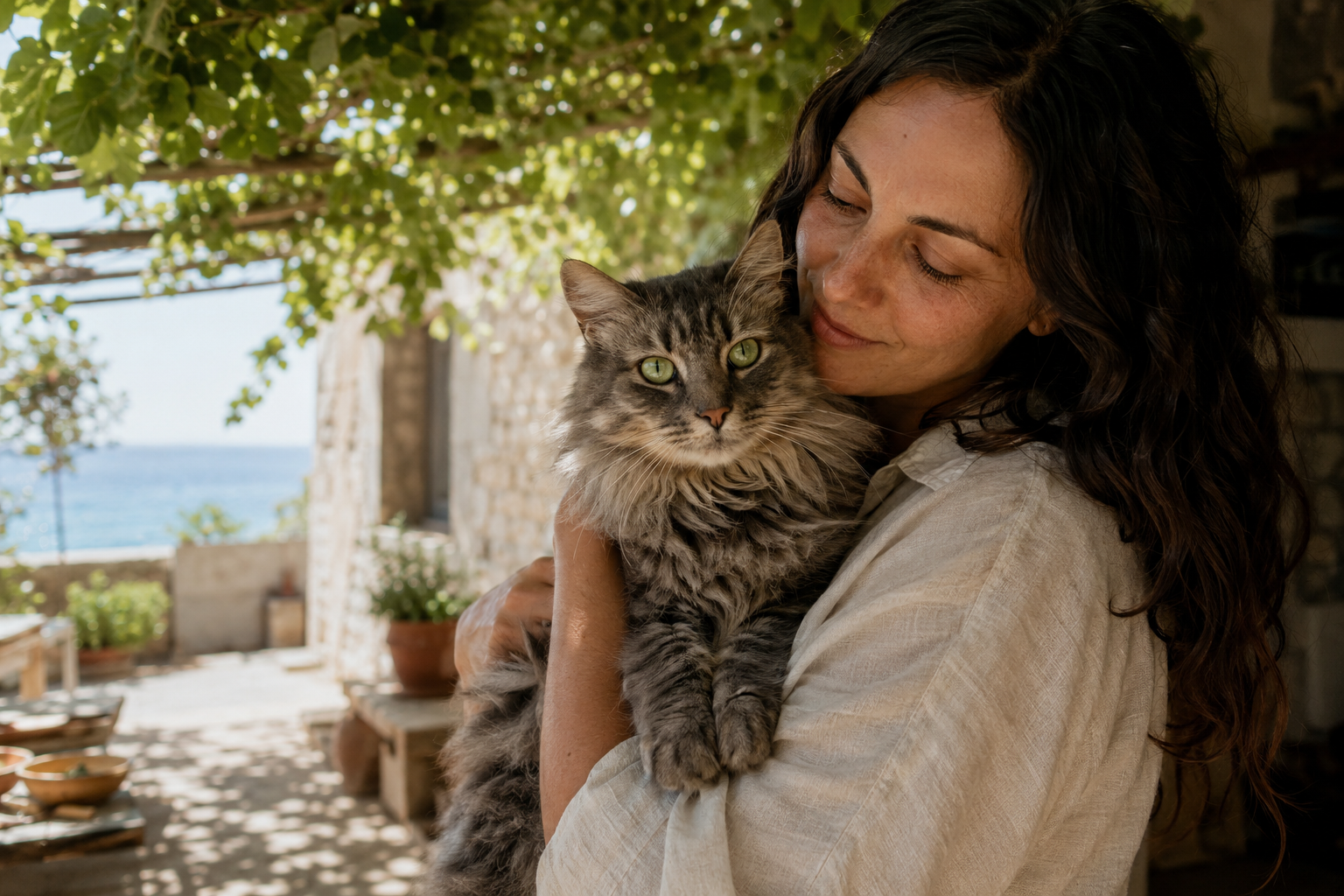
We are not the only ones itching to soak up some sun once the weather turns. Your cat has a full summer agenda too: prime time on the sunbaked windowsill, long lazy afternoons, and maybe even a harness walk if that is your cat’s thing. Before you green-light all that sunshine, here is what responsible cat care looks like in the hot months.
Heatstroke is the big one
The single most important summer worry is keeping your cat from overheating. Heatstroke is common in hot weather and can be life-threatening. Flat-faced breeds like Persians, Himalayans, and Burmese are especially vulnerable, because their smushed facial structure already makes breathing harder, and heat makes it worse.
Here is a crucial detail many owners miss: panting is normal for dogs, but not for cats.
Dogs pant to shed heat, and we expect it. Cats are obligate nasal breathers, so if you see your cat panting, that is not them cooling off, that is a red flag that they are genuinely overheated. Treat it as urgent.
Watch for these signs of heatstroke:
- Panting, which can progress to labored, distressed breathing
- Restlessness and pacing
- Frantically seeking shade or water
- Drooling
- Red gums or tongue
- A racing heart
- Vomiting or diarrhea
Lethargy, confusion, weakness, and seizures signal advanced heatstroke. If you see any of those, get your cat to a vet immediately.
Keep your cat cool and hydrated
Prevention is mostly about environment. Keep your home at a comfortable temperature and run the air conditioning on warm days. If you have an outdoor cat, a pet door lets them duck back inside when the heat climbs. Cool water and shady spots help too.
Hydration deserves its own attention. Keep the water bowl topped up with fresh water throughout the day. A lot of cats are drawn to moving water, so a pet fountain can encourage a reluctant drinker to take in more. Traveling? Pack a bowl and keep water available on the road.
Three more summer hazards to handle
Heat is not the only thing that ramps up when it gets warm.
Stay on top of fleas and ticks
You would not skip sunscreen in July, and your cat needs their own kind of protection, just not from the sun. Flea and tick preventives matter year-round for outdoor cats, but they are essential in summer when these parasites peak. Fleas spread disease, and the risk is not only to your cat. A cat with fleas can pass a bacterial infection known as cat-scratch fever to people, by scratching themselves and then scratching you. And once fleas jump from your cat to the carpet, couch, and bedding, an infestation is miserable to clear. Keeping your cat on a preventive protects everyone in the house.
Skip the rodent poisons
Summer brings out the chipmunks, mice, and snakes your cat would love to chase. It is tempting to set out rodent traps, but the same poisons that kill rodents can be just as fatal to your cat. Rodenticides can cause coughing, breathing trouble, diarrhea, vomiting, bleeding from the nose or rectum, and death. Humane, non-lethal options like live traps are far safer. Keep in mind that even if you avoid poisons, your neighbors may not, so if your cat shows any signs of illness, head to the emergency vet.
Watch the garden
Before you fill the yard with color, remember that many popular plants, including lilies, tulips, azaleas, and gladiolus, are toxic to cats. Reactions range from vomiting and seizures to kidney failure and heart trouble. Even if your cat seems uninterested in nibbling the garden, it is safest to skip the toxic varieties altogether. Cats can be surprisingly exploratory, and kittens especially are likely to get into something they should not.
What’s new since this was written
Lily toxicity in particular keeps getting more attention from veterinary groups, and the message has only sharpened: with true lilies, there is no safe amount for a cat. Even pollen brushed off onto fur and groomed away, or a sip of vase water, can trigger kidney failure. Pet poison hotlines now urge owners to treat any lily exposure as an emergency rather than a wait-and-see situation. If you receive a bouquet this summer, the safest move is to assume lilies are in it and keep the whole arrangement out of reach, or out of the house entirely.
References
- Royal Veterinary College. “Heatstroke in Cats and Dogs.”
- Ontario Veterinary Medical Association. “Summer Safety Tips for Cats.”
- Sacramento SPCA. “Hot Weather Safety Tips for Pets.”
- Pet Food Institute. “Summer Safety Tips for Your Pet.”
Common questions
Can I take my cat on car trips during the summer?
Yes, as long as you build up to it. Start with short rides to get your cat used to the car, always secure them in a carrier, and never leave them alone in a parked vehicle, which can turn deadly hot in minutes.
Not a substitute for your vet. Our guidance is educational. For urgent symptoms, contact a vet or emergency clinic right away. Editorial standards
Dr. Solis is a board-certified veterinary dermatologist with over twelve years of clinical experience. She advises on skin conditions, allergies, and grooming practices that affect coat and skin health. All dermatology and allergy content at The Pet Times is reviewed by her team before publication.
Meet our experts ↗Keep reading
 LivingA Five-Month-Old Kitten Turned On a Faucet, Blocked a Drain, and Closed a Cat CafeSara Lim · 6 min
 LivingA Robotaxi Killed a Beloved Bodega Cat. Five Weeks Later It Ran Over a Dog.Nina Vasquez · 4 min
 Health & WellnessHydrangeas and Cats: The Real Risk Is a Stomach Ache, Not CyanideDr. Nina Kohl · 6 min
 Health & Wellness"Keep Cats Indoors" Is Only Half the Bird Flu Advice. The Other Half Is the BowlDr. Nina Kohl · 4 min
 Health & WellnessThe Benadryl Trap: Why the Go-To Cat Remedy Usually Fails, and What WorksDr. Mara Chen · 9 min
 Health & WellnessCats Are America's Most Rabid Pet. The Indoor Ones Aren't Exempt.Dr. Ravi Mehta · 8 min