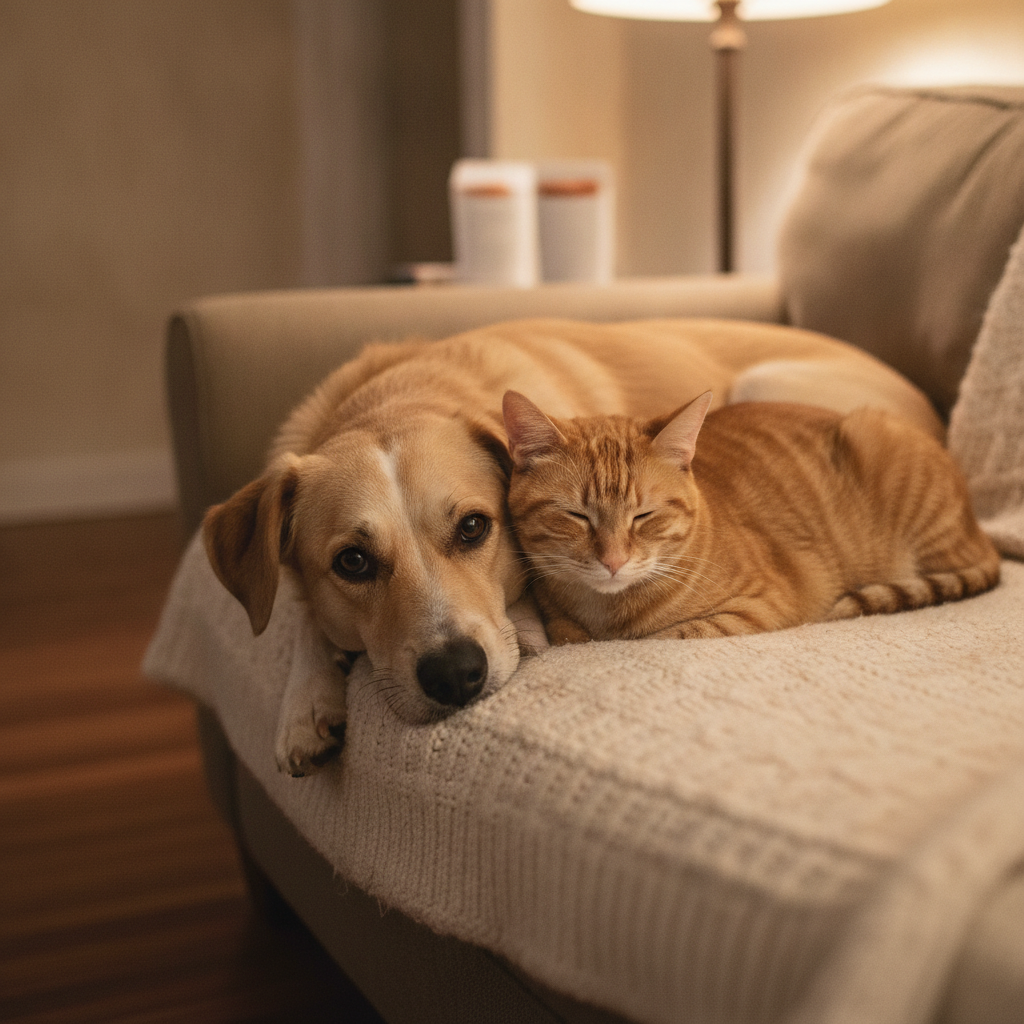
Before you declare war on your dog for colonizing the couch, it helps to see the situation from their side. From a dog’s point of view, the sofa is not a forbidden zone. It’s the single best-engineered resting spot in the entire house. It’s soft, it’s elevated, it holds warmth, it’s soaked in your scent, and it sits right where you spend your evenings. Of course they want it. A dog choosing the couch isn’t being defiant; they’re being sensible.
That reframe matters, because it changes the whole strategy. If you treat this as a discipline problem, you end up nagging a dog for making a completely reasonable choice, and it rarely sticks. If you treat it as a competition, one where the couch is the reigning champion and your job is to field a better option, it becomes solvable. Keeping a dog off the furniture is less about punishment and more about out-competing the couch, then removing the couch from play when you can’t supervise. Here’s how to do both, plus what to do about the digging that often comes with it.
First, why they dig at it
A lot of couch complaints aren’t really about lying on the sofa; they’re about the pawing and excavating that wrecks the cushions. Dogs dig at furniture for a handful of understandable reasons. Many are nesting, pawing a surface into a more comfortable shape before they settle, an instinct older than couches. Some are mining for crumbs, treats, and food that have vanished into the cushions. Others are digging for your attention, or simply out of boredom, which is a strong hint that they need more exercise and more to do. And on a hot day, a dog may be digging toward a cooler layer to lie against.
Notice that most of those causes point to the same fixes: a better resting spot, more enrichment, and less unsupervised opportunity. Keep them in mind as you go.
Move one: out-compete the couch
You can’t beat the couch by making it slightly less nice. You beat it by making somewhere else genuinely better and by rewarding your dog for choosing it.
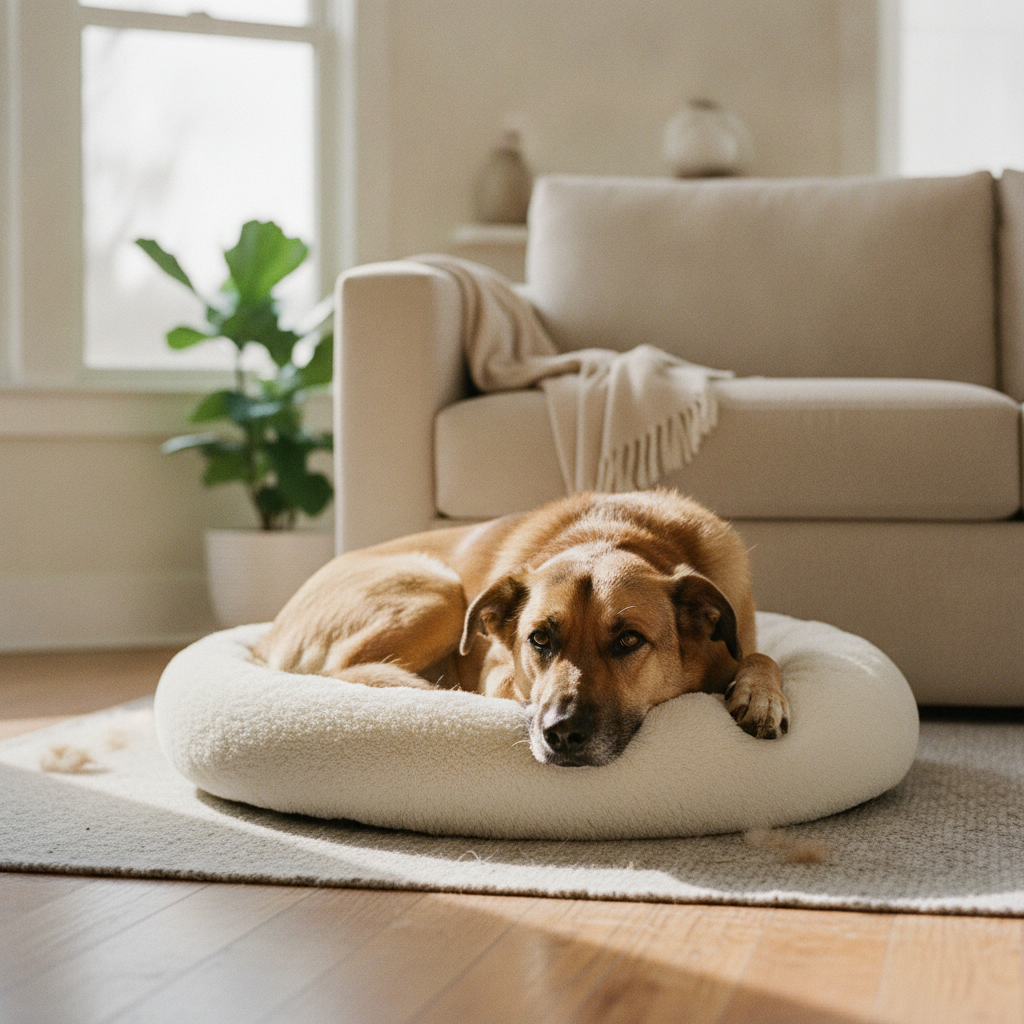
Start with the alternative. If you want a dog off the sofa, give them a resting place that competes on comfort and, crucially, on location. A plush bed big enough for them to stretch out on, dressed up with a blanket and a favorite toy, placed right where you hang out, not exiled to a back room, is the whole ballgame. Dogs want to be near you. Offer them a way to be near you that isn’t the couch.
Then reward the choice relentlessly. The fastest way to keep a dog off the places you don’t want them is to make the place you do want them pay off. Treats, praise, and calm attention whenever they settle on their bed teach them that the bed is where good things happen. Clicker training works well here if you use it. The principle is simple: catch them being right and make it worth their while, far more often than you correct them for being wrong.
For any of this to land, the rule has to be consistent. Decide whether the couch is off-limits and then hold that line the same way every time, with every piece of furniture and every member of the household, guests included. Dogs can’t learn a rule that’s enforced on Tuesdays and forgiven on the weekend, or one that bans the loveseat but allows the sofa. The cleanest version of all is to never allow furniture from day one, but a consistent household can teach an adult dog the new rule too.
Move two: remove the opportunity when you’re gone
Training happens when you’re there to reward the right choice. When you’re not, the couch quietly wins every time, because there’s no one to redirect the dog and the sofa is still the comfiest thing available.
So close the loophole. When you leave the house or step out of the room, take the couch out of play: crate-train your dog and use the crate while you’re out, or fence off the space around the sofa. You can even stand cushions on end as a physical barrier. A dog that finds it inconvenient to get onto the furniture is far less likely to try, and every un-rewarded couch nap that doesn’t happen is progress. Think of it as protecting your training from being undone in your absence.
Move three: deterrents, used lightly and kindly
If reward-and-manage isn’t quite enough, a few harmless deterrents can tip the balance, as long as you treat them as a supplement to training rather than the main event. The gentlest ones simply make the couch temporarily unappealing.
- Aluminum foil. A sheet of foil across the cushions when you’re out is oddly effective; the crinkle and the texture make the spot far less inviting, with no risk to the dog.
- Physical barriers. Closing a door, setting up baby gates, or arranging cushions to block access does the same job as management, no gadget required.
- Noise, with a caveat. Some people rattle a jar of coins when the dog jumps up. It can work, but think hard first: if your dog is already sound-sensitive or spooked by thunder or fireworks, you risk creating a new fear or worsening an existing one. For an anxious dog, skip it.
You’ll also find products marketed specifically for this, like couch defenders (small, foldable barriers in neutral colors that fence off furniture) and training mats that sit on the cushions. Some mats are covered in pointy, uncomfortable nubs; others are “high-tech” versions that emit a noise or a static shock when touched. The barrier-style products and the plain nub mats are fine as passive deterrents. The static-shock versions, though, I’d steer away from. Startling or shocking a dog off the couch can add fear and stress without teaching them anything about where they should go, and you can get the same result, more reliably and more kindly, by combining a great alternative bed with consistent management. Save the aversive tools; they’re solving a problem that reward and a closed door already solve.
Or: consider a compromise
If you’ve genuinely tried the alternative bed, the consistency, and the management and your dog still treats the couch as theirs, it’s worth asking whether the couch really has to be off-limits at all. Plenty of households simply let the dog on the furniture and protect it with a washable, waterproof pet blanket or a couch cover. That’s a completely legitimate outcome, and often a happier one for everyone than an endless standoff.
“Owners frame this as the dog being stubborn, but the dog is just making a good decision about where to rest,” says Dr. Nina Kohl. “If you want a different decision, you have to give them a better option and make it rewarding, then not leave the couch available when you can’t reinforce that. Punishing the sofa never tells the dog where to go instead. Rewarding the bed does.”
References
- “Digging in Dogs,” UC Davis School of Veterinary Medicine, Animal Health Topics
- “5 Tips for Successful Dog Training,” Virginia-Maryland College of Veterinary Medicine
- “Training Tips for Dogs,” Texas A&M School of Veterinary Medicine & Biomedical Sciences
- Companion Animal Psychology (Zazie Todd, PhD): The Best Way to Train Your Dog