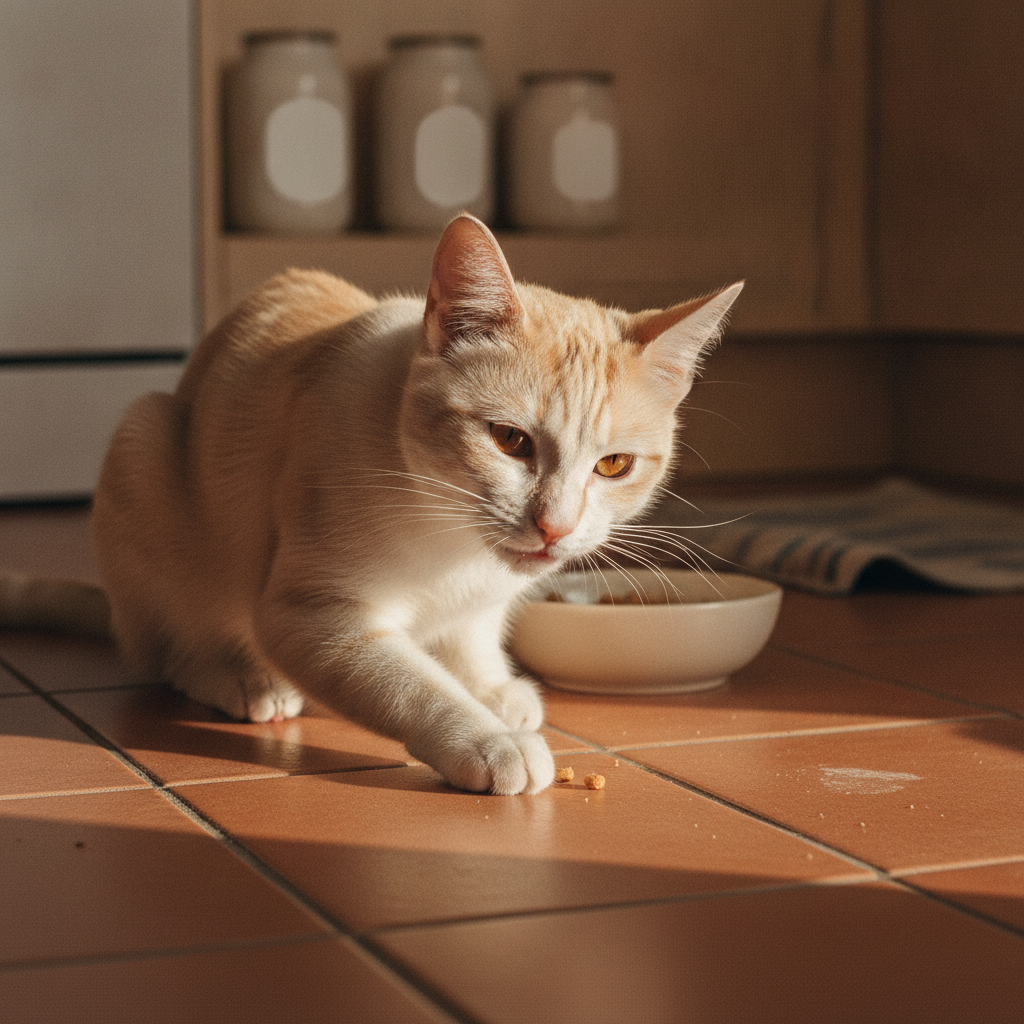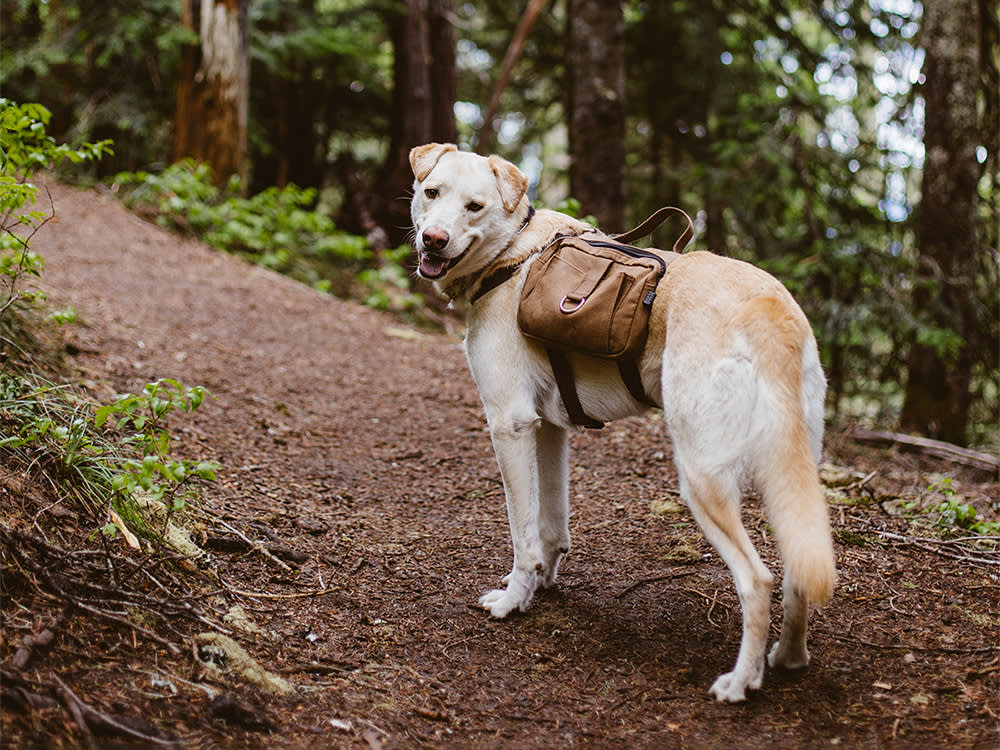
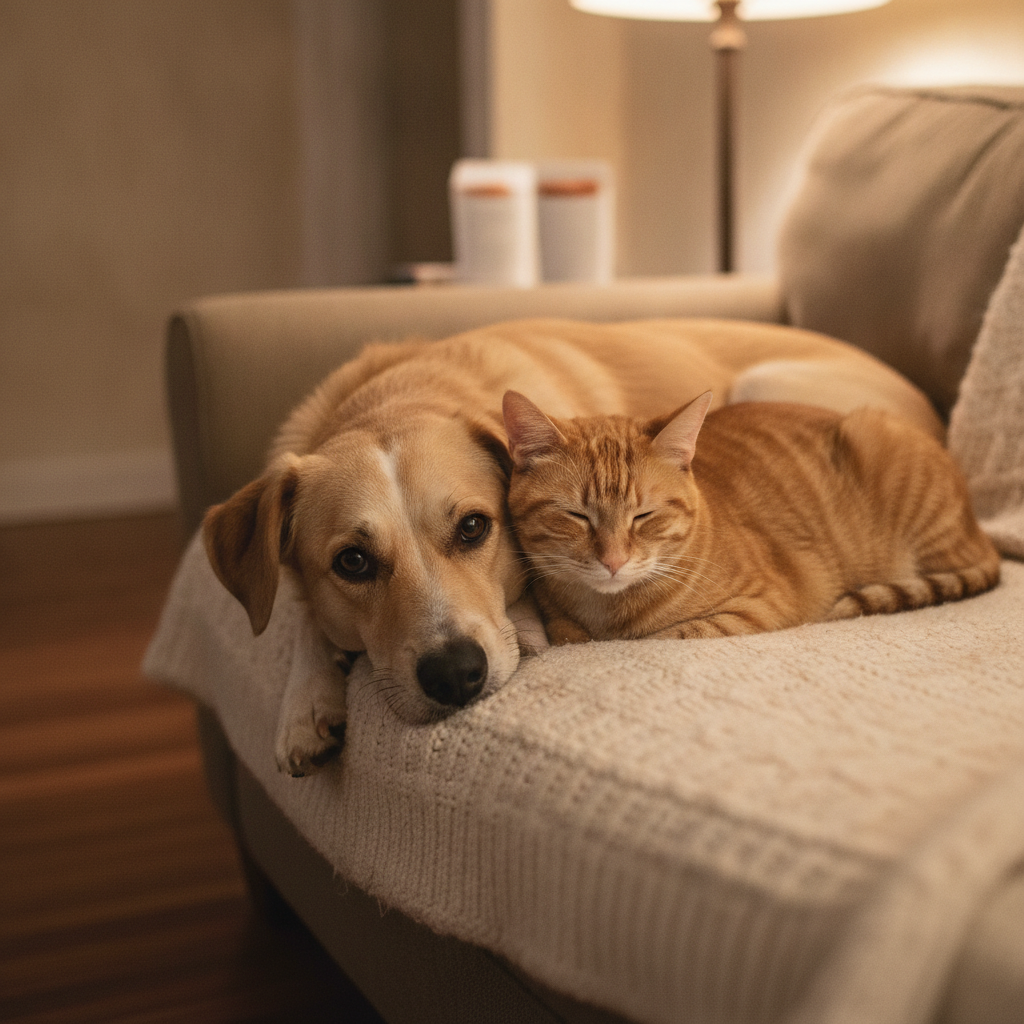
If there is one thing that unites the dog people and the cat people of the internet, it is a video of a dog acting suspiciously like a cat. They are everywhere right now: a Pit Bull folded into a perfect loaf, a Golden Retriever perched on the highest cushion of the couch surveying his kingdom, a dog rubbing his flank against his owner’s legs in that unmistakably feline way. The caption is always some version of “this is what a dog raised by cats looks like.” One commenter summed up the whole genre perfectly: “I think your dog is bilingual.”
It is adorable. It is also, mostly, a story we are telling ourselves. Which does not make it worthless, because underneath the myth there is a real and genuinely interesting thing happening between animals who share a home. It is just not the thing the captions claim.
The behaviors we call “cat-like” are usually just dog
Start with the buzzkill. Almost none of the “cat-like” moves in these videos are actually borrowed from cats. Dogs loaf. Dogs stalk, freeze, and watch, because they are predators with hunting instincts of their own. Dogs rub against things and against us. Perch on the sofa back? Plenty of dogs do that with no cat in sight.
“The habits people point to as proof, the loafing, the stalking, the side-rub, are all squarely within the normal range of dog behavior,” says Dr. Nina Kohl. “We are pattern-matching machines, and when we see our dog do something that reminds us of the cat asleep three feet away, it is deeply satisfying to connect the dots. But two animals doing a similar thing in the same house is usually coincidence dressed up as a bond.”
In other words, the dog was probably always going to loaf. The cat just gave you a story for it.
Animals barely “teach” each other at all
Here is the part that surprises people. In animal-behavior research, “teaching” is not a loose, feel-good word. It has strict criteria. For it to count as teaching, the teacher has to change their own behavior specifically to benefit a learner, and the learner has to come away knowing something they would not have figured out otherwise. By that standard, cats make especially unlikely teachers. In the wild, a cat stops caring for its own kittens after a few months, and a spayed or neutered house cat has no biological reason to extend parenting behavior to another cat, let alone to a completely different species. The image of a wise old cat deliberately schooling the family dog is charming and almost certainly not real.
What is actually happening: social learning
So if it is not teaching, why do pets who live together so often end up alike? Because animals are constantly influenced by the company they keep, without anyone intending to instruct anyone. Behaviorists call it social learning: an animal’s behavior shifts simply because another animal is around and doing things. In one Royal Society Open Science paper, researchers documented dogs spontaneously copying the facial expressions and movements of other dogs they encountered, with no lessons involved. Living side by side, sharing routines, and bonding is enough for habits to rub off in both directions.
That is the honest version of the viral trend. Your dog is not being tutored by your cat. But if the two of them are genuinely bonded, spend their days together, and watch each other constantly, it is entirely plausible your dog has absorbed a few of the cat’s rhythms by osmosis, and that the cat has picked up a few of the dog’s. Nobody is teaching. Everybody is copying a little.
What this means for your household
The practical takeaway is nicer than the myth. If your pets like each other, that mutual influence is a tool you can gently steer. A calm, confident resident animal tends to have a settling effect on a newcomer, which is one reason a nervous new dog often relaxes faster in a home with a mellow older pet. The flip side is also true: stress and reactivity can spread between housemates too. So if you want the good habits to be the ones that transfer, the move is to keep your existing pet’s world calm and predictable, and let the new arrival learn, by watching, that this is a safe place to be.
And if your dog is out here loafing next to the cat and rubbing your shins? Take the compliment. Whether it is imitation or coincidence, a dog who wants to do everything the cat does is a dog who feels at home. That is the real headline.
What newer research adds
Interest in cross-species social learning has only grown, and the current consensus lands right where the behaviorists do: pets absolutely influence each other’s behavior through proximity and bonding, but “influence” is a long way from “instruction.” Researchers studying dogs continue to document how sensitive they are to the emotional states of the animals and people around them, essentially catching moods and habits from their housemates. It is a good reminder that the calmest, best-adjusted animal in your home is quietly setting the tone for everyone else, so it is worth making sure that animal is well supported. If a new pet’s behavior changes sharply or the household dynamic sours, that is a conversation for your vet or a certified behaviorist, not the comments section.
References
- Palagi, E., et al. “Rapid mimicry and emotional contagion in domestic dogs.” Royal Society Open Science.
- American Veterinary Medical Association. “Animal behavior and the human-animal bond.” AVMA.