


7 Ways to Help the Stray Cats on Your Street Survive Winter
Community cats are built for the cold, but a few cheap, low-effort moves can be the difference between surviving a hard freeze and not. Here's what actually helps.

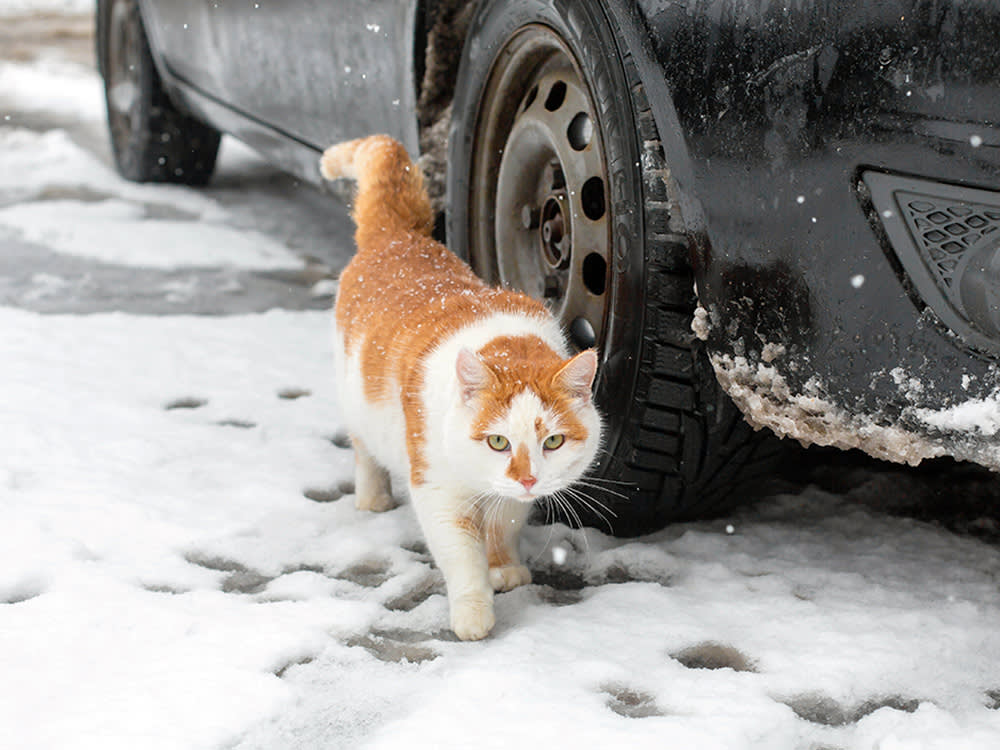
The stray tabby who patrols your block is tougher than she looks. Community cats are genuinely built for outdoor life, and most of them make it through winter on instincts you will never fully appreciate. So let’s be clear up front: you are not rescuing a helpless animal. You are giving a capable survivor a small edge during the few weeks a year when the cold turns dangerous.
That edge is worth giving, because “usually fine” is not “always fine.”
Even the most street-smart outdoor cat can lose the fight against a hard freeze. Frostbite on the ears and paws, dehydration when every water source is iced over, and slow-burning hypothermia are the real winter threats. None of them take a dramatic storm. A run of freezing nights is enough.
The good news is that helping is cheap, low-effort, and does not require befriending a cat who has no interest in being your friend. Here are seven things that actually move the needle, roughly in order of impact.
1. Give them somewhere dry to get out of the wind
Shelter is the single highest-value thing you can provide, because wet and wind are what kill, not cold air alone. A cat who can duck into a dry, enclosed space holds its body heat far better. You do not need a woodworking project. A plastic storage tote with a small doorway cut in the side, lined with foam board and packed with dry straw, works beautifully. Keep it small so a cat’s own body heat fills it, tuck the entrance against a wall and away from the wind, and raise it off the ground on bricks so snowmelt does not seep in.
2. Use straw, never blankets
This is the mistake with the best intentions behind it. Blankets, towels, and folded fleece feel warm to us, but outdoors they soak up moisture, freeze into a cold slab, and actively draw heat out of a cat. Dry straw, the yellow stalky kind sold at feed and garden stores, does the opposite: it repels water and traps warm air, and cats can burrow down into it. If you remember one thing from this piece, make it this one.
3. Feed a little more, on a schedule
Staying warm burns calories, so winter cats need more food than they do in summer, and a predictable feeding time helps them budget their energy instead of wandering to find a meal. Dry food is the practical winter default because it does not freeze solid the way wet food does. If you do put out wet food, serve it in a plastic container and take it back before it turns to ice. Set food out once or twice a day at the same times and clear the dishes so you are not also feeding raccoons.
4. Keep the water from freezing
Dehydration is an underrated winter danger, because a cat surrounded by snow still cannot drink it efficiently. A few tricks slow the freeze: place bowls in the sunniest spot you have, spray-foam the underside of plastic dishes for insulation, use deep bowls rather than shallow ones, and, if you can, invest in an inexpensive heated water bowl. Even swapping still water for a small solar or battery fountain helps, since moving water freezes slower.
5. Knock on the hood before you drive
Cats seeking warmth will climb into wheel wells or up against a still-warm engine block, and the results when the car starts are horrific. In winter, get in the habit of banging on the hood and giving the tires a look before you turn the key. It costs two seconds and it saves lives, including cats who are not “yours.”
6. Watch for trouble, and know when to step in
Keep a casual eye on the regulars for signs something is wrong: limping, crusted or blackened ear tips from frostbite, sneezing, discharge, or a cat who suddenly seems lethargic. If a cat looks genuinely sick or injured and you can safely trap it, most veterinarians will treat a stray, though it is only polite to call ahead and be ready to cover the bill. And if a friendly, clearly-lost cat turns up who seems to want to be indoors, an adoption group may be a better ending than another winter outside.
7. Think past this winter: get them fixed
Every tip above helps a cat survive the season. Getting the neighborhood cats spayed and neutered helps the whole colony survive every season after. Trap-Neuter-Return, or TNR, is the humane, evidence-supported way to stabilize a community-cat population: cats are humanely trapped, sterilized, ear-tipped so they are easy to identify, and returned to their territory. A fixed colony stops multiplying, fights less, roams less, and is healthier heading into winter. Most areas have a low-cost TNR group that will lend traps and cover surgery. It is the one item on this list that shrinks the problem instead of just softening it.
“The most powerful thing an ordinary person can do for street cats is not heroic,” Dr. Nair adds. “It is boring and repeatable: dry shelter, steady food and water, and getting them fixed. Do those and you change a colony’s whole winter.”
What’s new since this was written: skip the raw meat, and mind the birds
Two developments have changed the winter-feeding advice a little. First, avian influenza (H5N1) has been circulating widely in wild birds and, in 2024 and 2025, sickened and killed domestic cats, in several cases traced to raw meat and unpasteurized milk in pet food. The clear guidance from the American Veterinary Medical Association is to avoid feeding raw meat-based diets to cats, community cats included. Stick to dry or cooked commercial food. Second, because outdoor cats can encounter sick or dead birds, this is one more reason TNR and, where possible, moving friendly cats indoors matter more than they used to. You do not need to panic about the strays on your block, but you should feed them commercially prepared food rather than raw scraps, and keep any cat of your own away from wildlife.
None of this requires running a rescue. A tote full of straw, a heated water bowl, a bag of kibble, and a call to your local TNR group is a real winter lifeline for the cats who already share your street.
References
- American Veterinary Medical Association. “Avian Influenza A (H5N1) in Cats.” https://www.avma.org/resources-tools/animal-health-and-welfare/animal-health/avian-influenza/avian-influenza-h5n1-cats
- Cornell Feline Health Center. “H5N1 Avian Influenza and Your Cat.” https://www.vet.cornell.edu/departments-centers-and-institutes/cornell-feline-health-center/health-information/h5n1-avian-influenza-and-your-cat
- Alley Cat Allies. “Feral and Community Cats: Winter Weather Tips.” https://www.alleycat.org/resources/feral-cats-and-the-cold-baby-its-cold-outside/
Common questions
Should I give a stray cat a blanket?
No. Blankets and towels absorb moisture, freeze, and pull heat away from a cat's body. Use dry straw instead, which repels water and traps warmth.
How long does it take a stray cat to trust me?
It varies enormously and may never fully happen. Rather than chasing trust, focus on reliably providing food, water, and shelter. That help matters whether or not the cat ever lets you close.
Not a substitute for your vet. Our guidance is educational. For urgent symptoms, contact a vet or emergency clinic right away. Editorial standards
Dr. Nair is a veterinarian focused on diet and feeding. She covers everyday nutrition, treats, and the many "can they eat this?" questions owners ask, grounding each answer in what is actually safe and sensible for dogs and cats.
Meet our experts ↗Keep reading
 Health & WellnessThe Cutest Cat Breeds Are Often the Sickest. The Look Is the Problem.Dr. Amara Solis · 8 min
 LivingKitten Season Never Ends Anymore. Blame the Vet Bill, Not the Weather.Leila Torres · 8 min
 Health & WellnessThe Wobbly Cat Looks Like a Tragedy. It's One of the Easiest Special Needs There Is.Dr. Lena Park · 8 min
 Health & WellnessGetting Your Cat Fixed Can Cost $0 or $500Dr. Priya Nair · 6 min
 LivingHe Fostered Six Kittens. Two Died in His Hands. He Kept Fostering.Dr. Amara Solis · 8 min
 LivingThe Best Thing in Your Cat's Life Is Also the Most DangerousDr. Priya Nair · 8 min