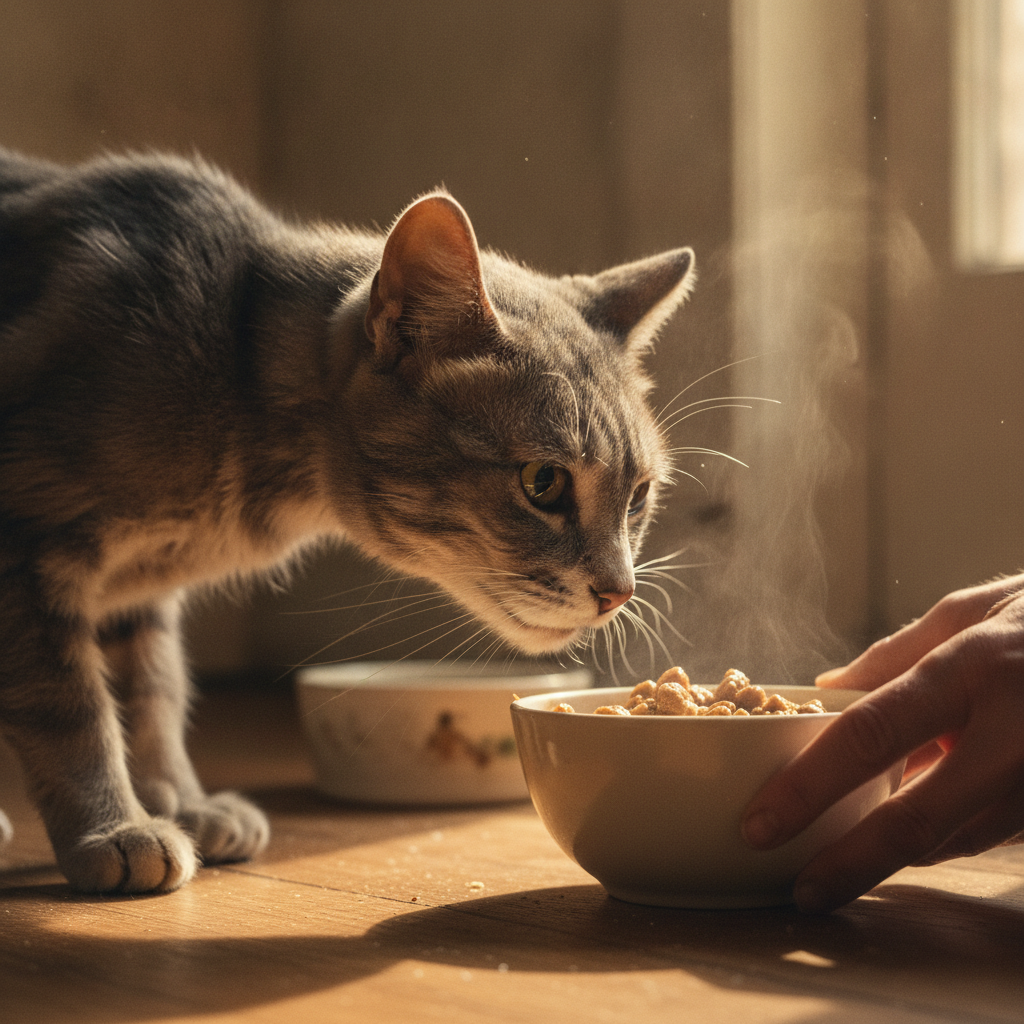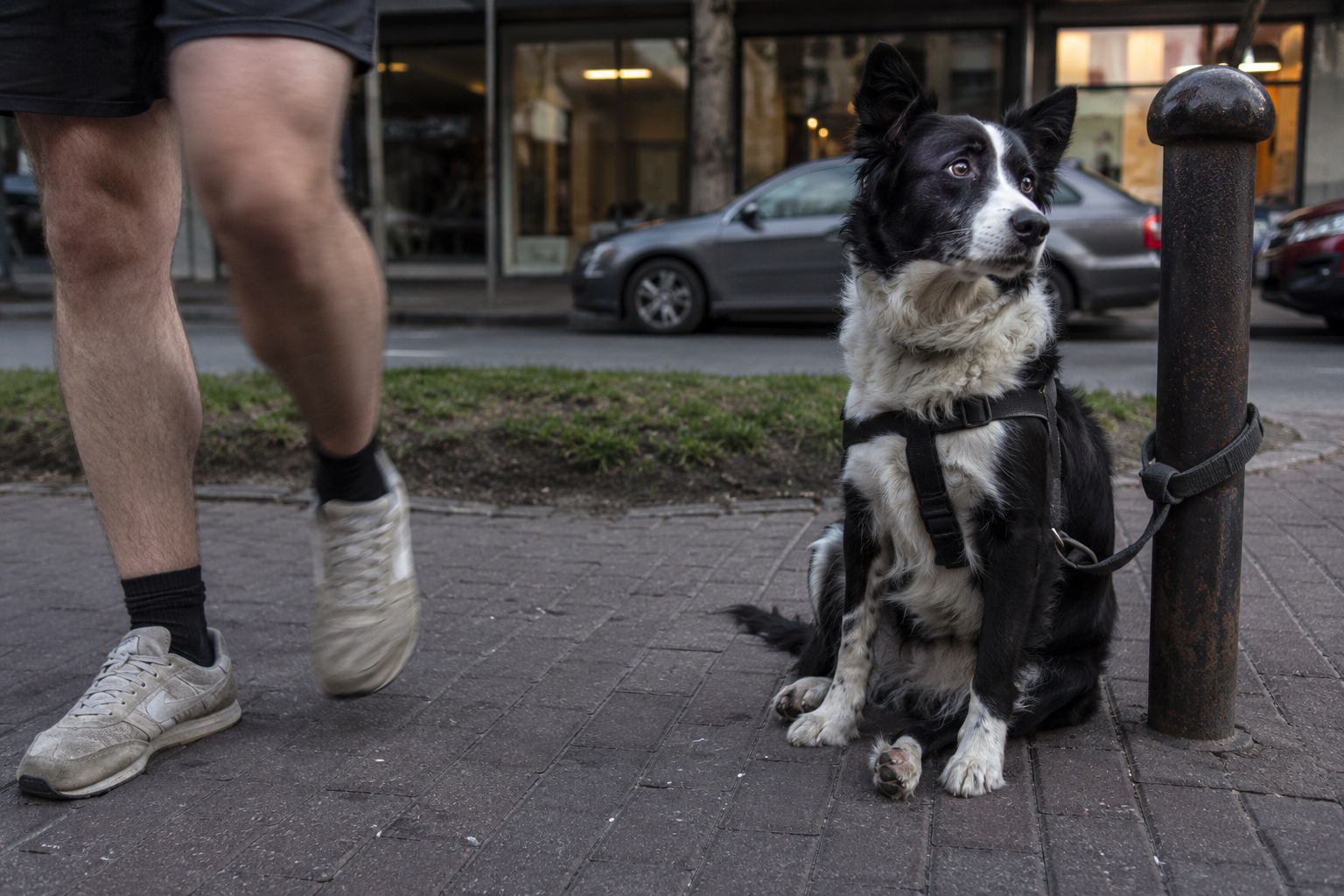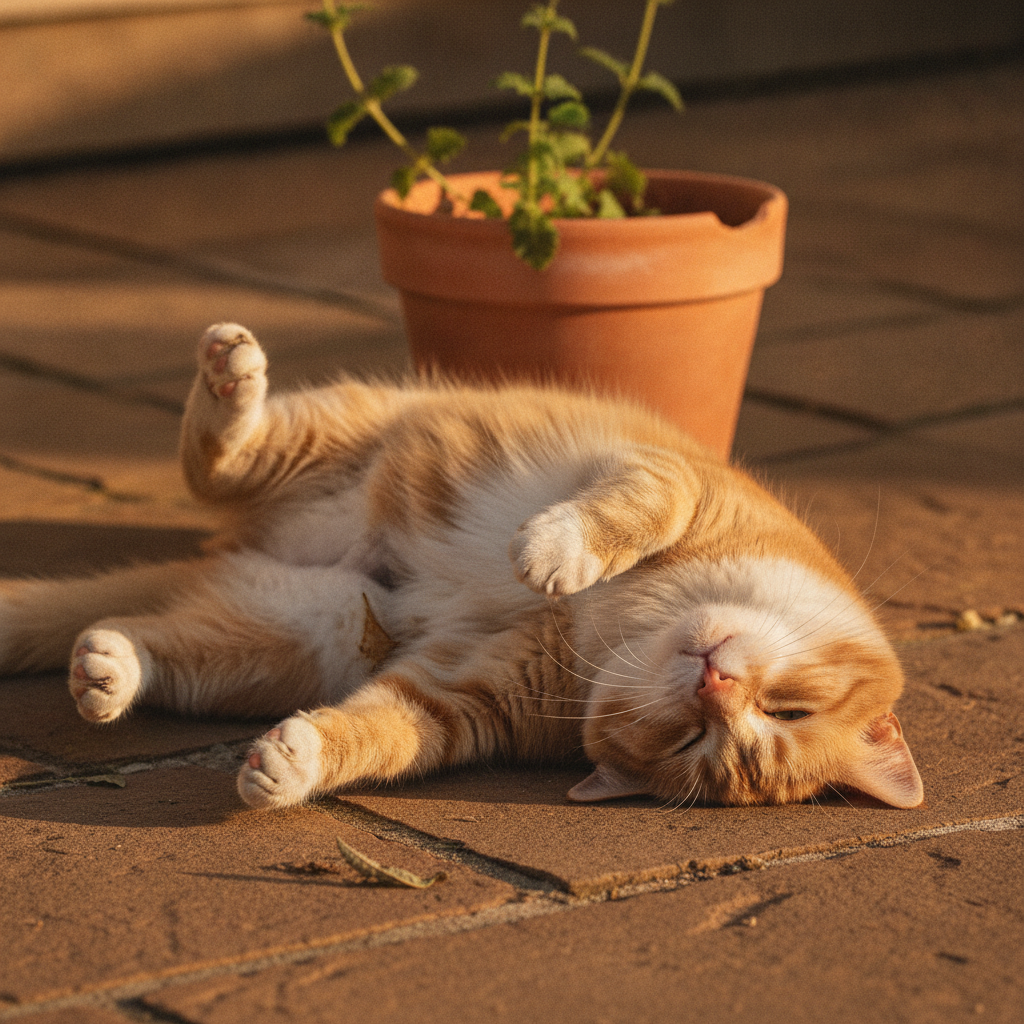
The signs sneak up disguised as personality. Your playful dog gets a little withdrawn. Your aloof cat suddenly wants your lap every night. The cat who used to treat the apartment like a parkour course stops making the leap to the bookshelf. The dog who used to gallop upstairs the moment you stirred now waits at the bottom. It is easy to file all of this under “getting older” or “just their quirks” and move on.
Here is the reframe that matters: those quirks are usually physical, not personal. And the age when they first appear is not old age. It is middle age, which is precisely the window when you can still do something about how the next chapter goes.
Midlife arrives earlier than you think
Most of us mentally sort pets into two buckets, baby and elderly, with nothing in between. But there is a whole middle stretch, and it starts sooner than owners expect.
For cats, midlife lands around seven years old, and they are generally considered seniors by nine. So the “young” eight-year-old cat dozing on your desk is actually well into middle age. For dogs, it depends heavily on size. Small dogs under 50 pounds tend to reach their “human 50s” around age 10, while large dogs over 50 pounds can get there as early as six or seven. A big dog ages into midlife while they still look and act like a youngster.
There is a timing wrinkle worth naming: a huge number of pets came home during the pandemic, which means a whole cohort of dogs and cats is hitting this stage around the same time. If your pandemic puppy or kitten suddenly seems to be slowing down or acting out of character, you are not imagining it.
What middle age actually looks like
The changes show up in two columns, behavioral and physical, and they blur together.
On the behavioral side: a once-energetic pet turning quiet and withdrawn, or the opposite, a formerly independent one becoming velcro-clingy. Less interest in play. On the physical side: hesitating or refusing to jump, trouble with stairs, limping after even mild activity, weight gain, more sleeping, and sometimes going to the bathroom outside the litter box.
“Owners tell me their cat got ‘lazy’ or their dog got ‘stubborn about the stairs,’ and my job is to translate,” says Dr. Mara Chen. “A pet doesn’t decide to stop jumping. Something makes jumping hurt or feel unsafe. Those small changes are the body’s early-warning system for pain, joint disease, or cognitive decline, and they’re easy to miss because they look like a mood.”
The takeaway is not to panic at every nap. It is to stop dismissing the pattern. A cluster of these changes is worth a conversation with your vet, not a shrug.
Why the annual visit stops being optional
Only your vet can actually tell you whether a change is ordinary aging or the first sign of something treatable. And the case for not skipping visits gets stronger with every year, because pets age on a compressed clock.
Cats are the extreme example. A single year between checkups for a cat is roughly like a person going five to seven years without seeing a doctor. In that gap, a lot can develop quietly, and cats are exceptionally good at hiding illness until it is advanced.
That is why, once a pet crosses into midlife, a physical exam is often not enough on its own. For cats seven and older, bloodwork, a complete blood count, a chemistry panel, and a thyroid test, becomes genuinely important. Bloodwork can catch problems with organ function, diabetes, anemia, and thyroid disease long before you would notice a symptom at home, and it becomes more valuable with each passing year.
The three things that actually help
If your pet is middle-aged, keeping them thriving comes down to three levers: movement, mental stimulation, and nutrition.
Movement. The goal is strength and mobility, not just tiring them out. Gentle strength and balance work, “sit-to-stand” reps for dogs, low agility games, wand play and balance-style toys for cats, helps them hold onto the muscle and coordination that keep them mobile.
Mental stimulation. A middle-aged brain needs exercise as much as the body. Puzzle feeders, new toys, food-finding games, and novelty keep a pet sharp and engaged.
Nutrition. This is the one owners most often overlook, and it is arguably the most important, because midlife is when muscle loss starts to accelerate. Shifting toward more nutrient-dense food, using a topper to reawaken a fading appetite, and supporting muscle directly can make a real difference. Small, early adjustments beat waiting for visible decline.
And that is the real message about midlife. Do not wait until your pet is clearly struggling to act. Supporting joints, muscle, and cognition now, while they are still basically well, buys them a stronger, more comfortable senior stretch. Slowing down a little does not mean the fun is over.
What newer research adds
The advice to “protect muscle in midlife” now has more science behind it than it used to. Age-related muscle loss, the same process called sarcopenia in people, is increasingly recognized in aging pets, and researchers have been testing whether it can be slowed.
One area drawing attention is a supplement ingredient called Fortetropin, a freeze-dried fertilized egg-yolk product that appears to work by tamping down myostatin, the protein that puts the brakes on muscle growth. In a randomized, placebo-controlled trial, senior dogs given it showed small but statistically significant gains in mobility scores over 6 to 12 weeks. In a separate study, supplemented dogs held onto thigh muscle and boosted muscle protein synthesis, while the placebo group lost muscle. There is even early work in cats with chronic kidney disease, a group that classically wastes away, showing lean muscle gains without harm to kidney function.
None of this is a cure for aging, and no supplement replaces exercise, good food, and regular vet care. But it points at the same conclusion from a different angle: muscle in a middle-aged pet is not a lost cause, and the earlier you defend it, the more you keep. Talk to your vet before adding any supplement, especially for a pet with an existing condition.
References
- American Association of Feline Practitioners. “Feline Life Stage Guidelines.” catvets.com
- American Animal Hospital Association. “AAHA Senior Care Guidelines for Dogs and Cats.” aaha.org
- Sanderson, R.O., et al. “Evaluation of Fortetropin in geriatric and senior dogs with reduced mobility.” Frontiers in Veterinary Science. ncbi.nlm.nih.gov