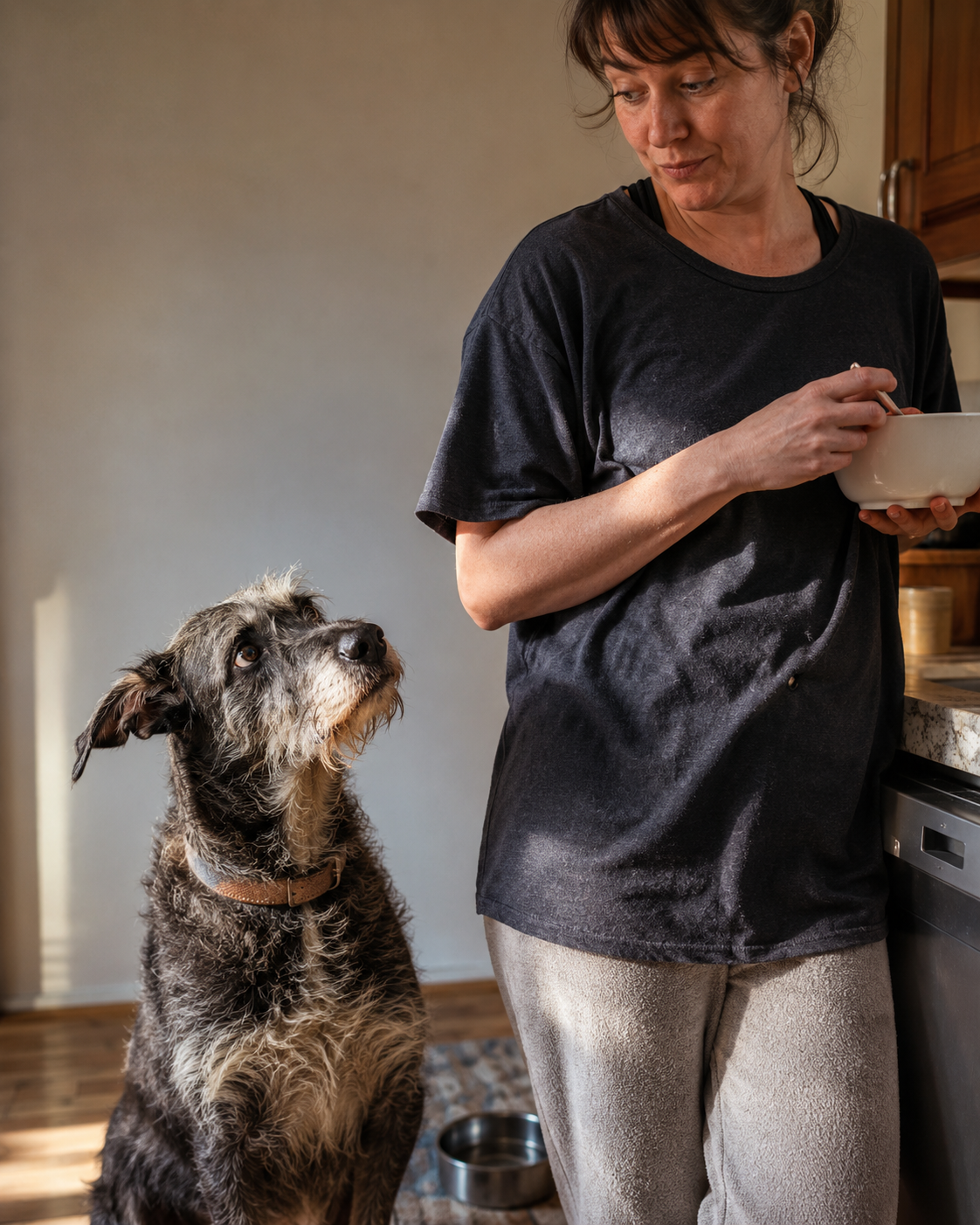
Your dog sees you sit down with a bowl of cereal and suddenly they’re acting like they haven’t eaten in a week. It is tempting to accuse them of putting on a show. But the honest answer to “is my dog faking it” is more interesting than a simple yes or no, and getting it wrong can cost your dog real harm. So let’s draw the line exactly where it belongs: dogs cannot fake an illness, but they are exceptional at learning which performances pay.
The difference between lying and learning
Deliberate deception, the kind where you invent a false story to fool someone, takes a lot of cognitive horsepower. It requires understanding what another mind believes and then setting out to plant something false in it. That is a tall order, and there is no good evidence dogs manufacture fake illnesses that way.
What dogs are extraordinary at is something else entirely: noticing which of their behaviors produce good outcomes, and doing more of them.
“Dogs aren’t con artists, they’re outstanding students of consequences,” says Dr. Mara Chen. “If limping to the door once got a flood of worried attention, a smart dog files that away and may try it again. It isn’t a lie. It’s a behavior that got reinforced, and reinforcement is the most powerful training tool there is, whether or not we meant to use it.”
There is a well-known 2017 study in Animal Cognition showing dogs will use tactical behavior to get what they want, including misleading an uncooperative person to reach a treat. That is real, and it’s fascinating. But even there, the dogs aren’t being malicious. They are perceptive learners repeating what works.
What “fake” behavior actually looks like
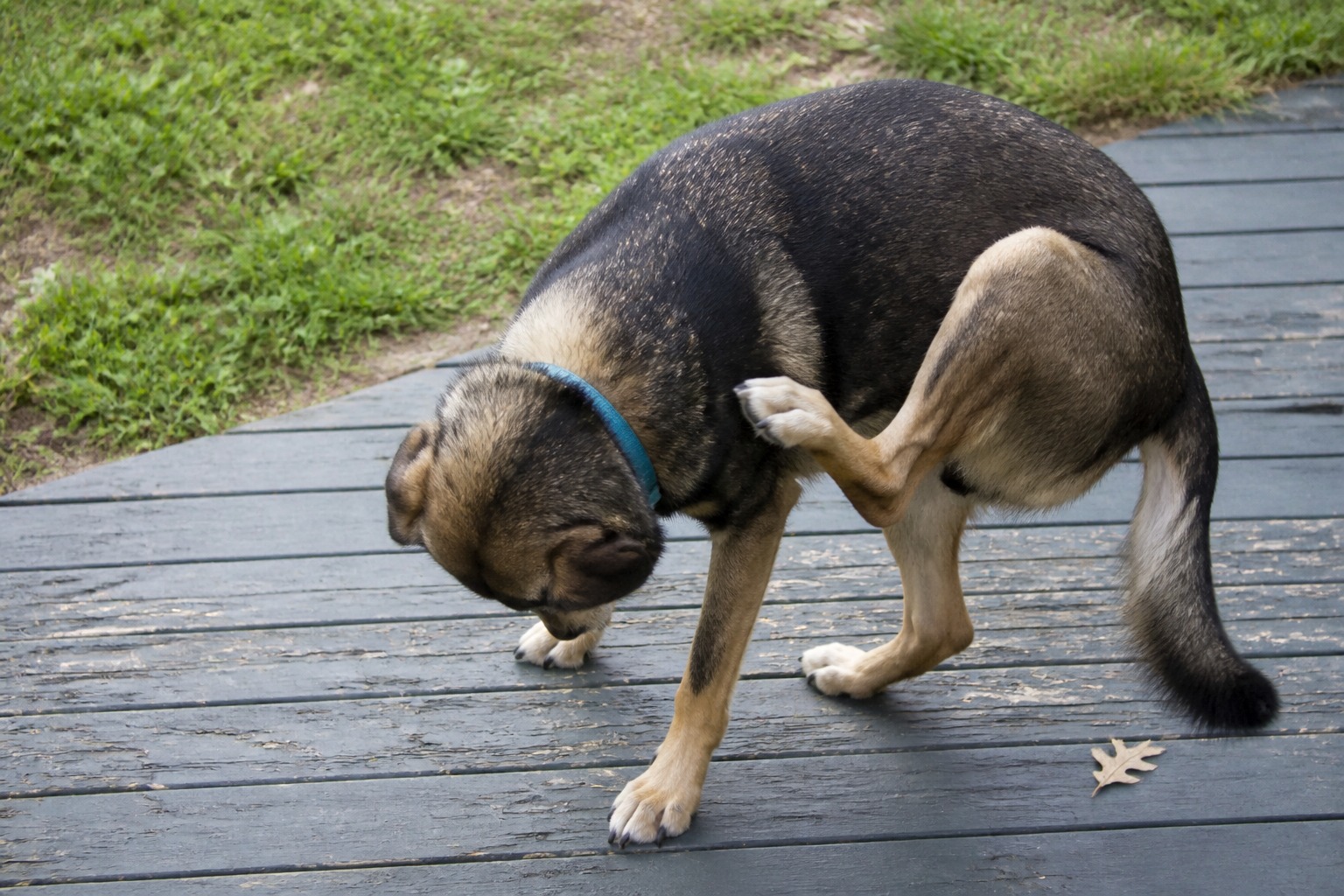
The small stuff is common and mostly harmless. The dog who insists they were never fed. The dog who suddenly needs to go out the moment you settle in with dinner. The classic trickster who limps only when their favorite person walks in, then trots off perfectly sound the second something more interesting happens.
The tell in every case is context. A learned, attention-driven behavior tends to switch on in a specific situation and switch off when the payoff disappears or something better comes along. A real symptom does not care whether you’re watching.
The honest test (and its one hard rule)
If your dog seems bright, comfortable, and in no distress, and you suspect a behavior is attention-seeking, you can run a gentle experiment. For a few days, stop rewarding the specific behavior with the attention it’s fishing for. Not coldness, just neutrality: don’t fuss, don’t soothe, don’t hand over the snack. If the behavior fades, you’ve learned something. If it persists or escalates, that’s your cue to stop experimenting and get a vet involved.
And here is the hard rule that overrides everything above: if your dog genuinely appears sick or hurt, assume it is real.
“The dangerous mistake isn’t believing a faker, it’s dismissing a real one,” Dr. Chen says. “Acute pain floods the brain with stress hormones, which actually makes it harder for a dog to learn from the experience, so the idea of a dog cynically staging an injury doesn’t hold up. When there’s any doubt, we treat it as genuine and we look.”
This is the part people get exactly wrong. The research consistently shows that humans do not over-detect illness in dogs. We under-detect it. We miss and misread the quiet signs of real pain, injury, and disease all the time. A dog who has learned that limping earns comfort is a curiosity. A dog whose limp is real and ignored is a welfare problem.
A quick field guide
Lean toward “learned behavior” when the sign is mild, appears only in attention-rich moments, disappears with distraction, and your dog is otherwise thriving.
Lean toward “real and get it checked” when the behavior is consistent, shows up when no one is around, is paired with other changes like appetite loss, lethargy, or hiding, or represents any sudden shift in an adult or senior dog. When those boxes are checked, skip the experiment and call your vet.
What newer research adds
The broader picture from recent behavior science is that dogs are far more socially and cognitively tuned to us than we used to assume, which is exactly why they pick up on what earns a reaction. Work on dog-human bonding shows their behavior is deeply shaped by responding to and reading their people. That same sensitivity that lets a dog learn a “look pitiful, get a treat” routine is also what makes them such good companions.
But the same body of research keeps underscoring the welfare point: our bigger failing is not being fooled, it’s being oblivious. Studies on canine pain recognition find owners routinely miss subtle indicators of discomfort. So the safest posture is the humble one. Enjoy the occasional Oscar-worthy performance, stay skeptical of the convenient limp, and when your gut says something is actually wrong, believe it and act.
References
- Heberlein, M. T. E., et al. “Deceptive-like behaviour in dogs.” Animal Cognition, 2017. https://link.springer.com/article/10.1007/s10071-017-1078-6
- Mills, D. S., et al. “Pain and Problem Behavior in Cats and Dogs.” Animals, 2020. https://www.mdpi.com/2076-2615/10/2/318
- “How to Tell if a Dog Is in Pain.” American Kennel Club. https://www.akc.org/expert-advice/health/signs-your-dog-is-in-pain/