Every dog owner eventually hits the same wall. The vacation days run out, the office starts expecting you five days a week, and suddenly there’s a dog at home with nine empty hours to fill. Daycare looks like the obvious answer, and often it’s a good one. But the way daycares sell themselves and the way you should actually judge them point in almost opposite directions. The industry leads with “all-day play.” The professionals who run the best rooms will tell you that all-day play, taken literally, is a warning sign.
That’s the lens for this whole piece. Daycare done well is one of the better things you can give a social dog: exercise, companionship, and supervision on the days you can’t be home. Daycare done badly is a loud, crowded room where an overwhelmed dog gets more wound up, not less. The difference is almost never visible on the website. It lives in the rest schedule, the staff-to-dog ratio, and whether the place is willing to tell you your dog isn’t a fit. So instead of asking “is daycare good?”, the better question is “is this daycare good, and is it good for my dog?”
Why “all-day play” gets it backwards
Start with the biology, because it explains everything else. Dogs were not shaped by domestication for a life of solitude, which is exactly why leaving one home alone for ten hours can be hard on them. But they were not built for ten straight hours of play either. Both extremes miss what a dog actually needs, which is a day with variety and choice in it.
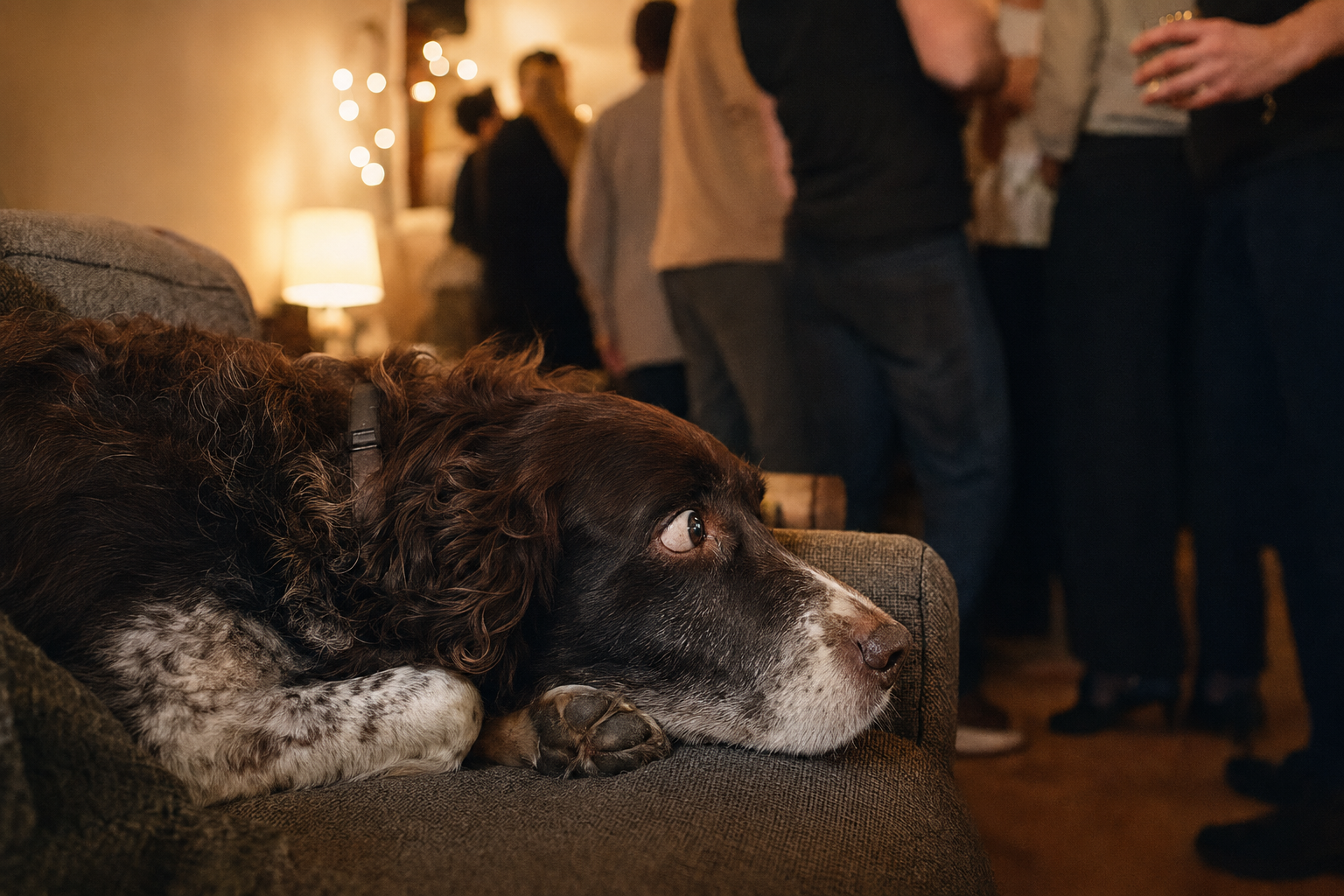
Watch what real dogs do when you give them a room and some company. Some play, some watch, some sniff around the floor, some flop down for a nap, some park themselves next to a person. Their interests shift minute to minute. A good daycare is built around that reality. A bad one treats “play” as the product and keeps the intensity cranked up all day, which produces a specific and familiar problem: the dog who comes home not happily tired but strung out, jumpier and mouthier than when they left. Owners tend to read exhaustion as happiness. An exhausted dog can just as easily be an irritated one.
There’s a second wrinkle most owners never consider. Dogs are learning the entire time they’re at daycare, whether or not anyone is teaching them. A day of unsupervised chaos teaches a dog that chaos is normal. A well-run day, with breaks and structure and handlers who redirect the over-the-top moments, teaches the opposite. Your dog doesn’t leave their brain at the door.
What good play actually looks like
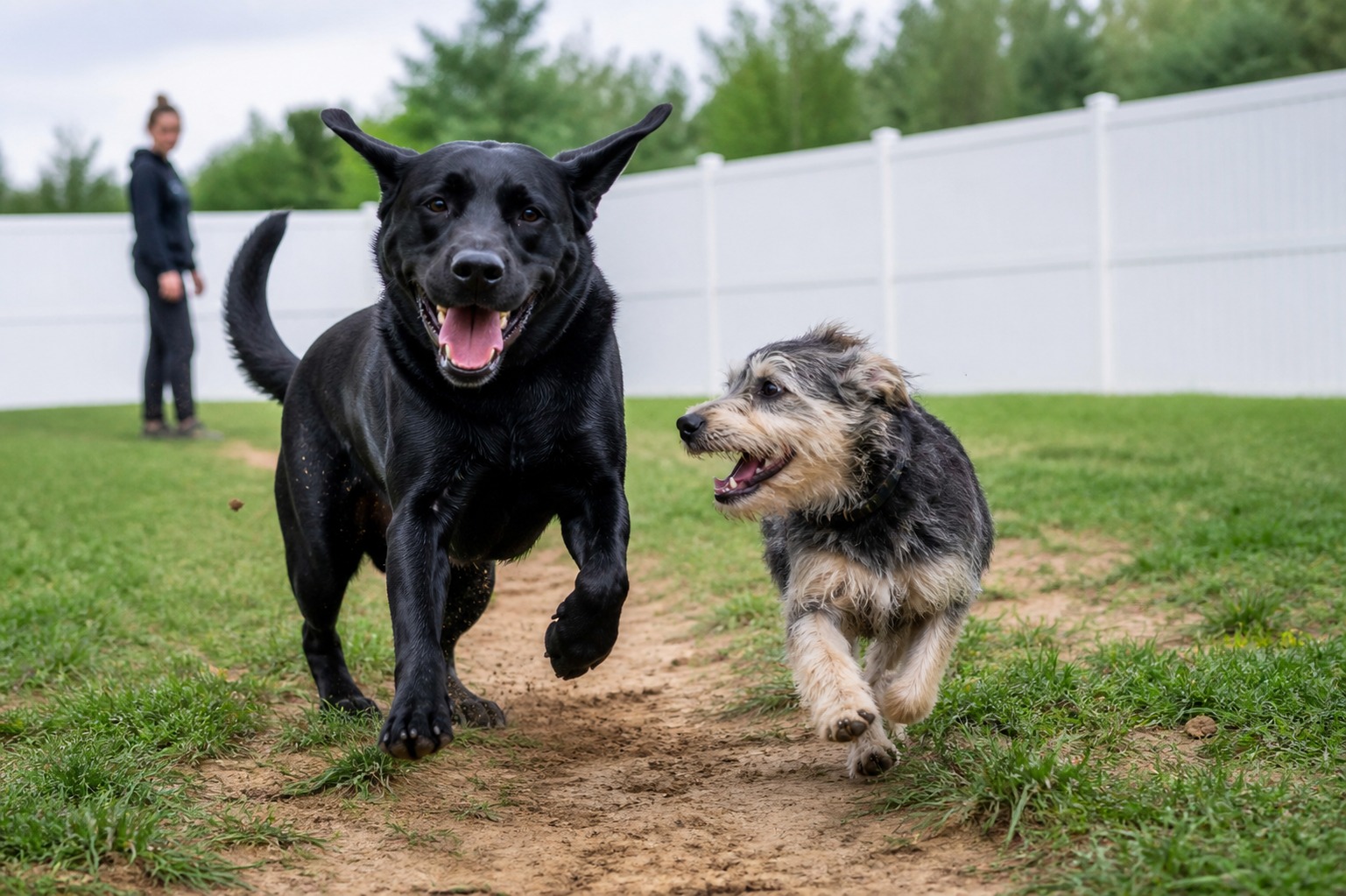
Here’s something that reframes the whole “big happy group” image. When researchers looked at social play among adult dogs housed together, they found that the overwhelming majority of play happened in pairs. In one study of hundreds of play bouts, all but one were between just two dogs at a time.
That’s not a limitation, it’s how dogs prefer to operate. Play is a fast, complicated, high-coordination activity full of signals, and it’s much easier for a dog to read one playmate than to track signals flying in from every direction in a big scrum. So the giant free-for-all that daycare photos love to show is often the least comfortable arrangement for the dogs in it. What you actually want is a place that creates smaller groups and lets dogs pair off, not one enormous pack.
Grouping is where skill shows. Size matters when you’re sorting dogs, but play style matters more. A gentle, slow dog and a body-slamming wrestler can be the same size and still be a bad match. The best daycares survey how each dog plays and group accordingly, and they stay flexible, shuffling dogs between groups through the day as energy and mood change. When intensity climbs too high, good staff know that turning the dial up is not an improvement, and they build in the time-outs that keep play from tipping into conflict.
The number that quietly decides everything
If you remember one metric, make it the ratio of humans to dogs. The working consensus is that one handler to ten dogs is about the ceiling, with 1:15 being a stretch, and some experts arguing that 1:5 is where real supervision lives. The math is blunt: one person watching ten dogs is two eyes and two legs against 40 legs, 20 eyes, and 20 sets of teeth, and that person also has to referee scuffles and clean up accidents.
This is why the “one big group” model tends to fail. Splitting dogs into several small groups allows for much closer supervision, but it only works if the daycare actually staffs those extra groups instead of stretching the same handful of people thinner. When you tour, count the humans, count the dogs, and do the division yourself.
And handlers need more than a love of dogs. Loving kids doesn’t make someone a first-grade teacher, and the same gap exists here. The hands-on staff, not just the certified owner who’s rarely on the floor, need to actually read canine body language, because play and aggression share a lot of the same movements and the meaning can flip in a second. A handler who can’t tell an escalating situation from a rowdy-but-fine one is the difference between a safe room and a lucky one.
The tell I give people is simple: watch whether the staff are managing the room or just occupying it. In a good daycare, someone is always reading the dogs, breaking up the pushy stuff early, and sending a wound-up dog to rest before it boils over. If the humans are mostly standing around while the dogs sort it out themselves, it doesn’t matter how nice the floors are.
Not every dog belongs there, and a good daycare will say so
This is the part marketing never mentions, and it’s one of the truest signs of a quality operation. Some dogs simply aren’t daycare dogs. For some, being around other dogs sparks anxiety or aggression. Others can’t wind down in a group no matter how well it’s run. A daycare that screens for this and turns dogs away when it can’t safely handle them is showing you it takes welfare seriously. A daycare that proudly takes all comers is telling you it doesn’t.
The gateway is a real behavior assessment. Even a dog who’s done fine in similar settings can react differently to a new mix of sounds, smells, and management, so a good daycare evaluates each dog before letting them loose, uses that read to decide whether they can meet the dog’s needs, and keeps working with the dog over time to help them settle in rather than parking a poor-fit dog in a kennel all day. “Social butterfly” at the dog park does not guarantee “thriving” at daycare.
It’s also worth remembering daycare isn’t the only option. Depending on the dog, a long sniff-heavy walk, a training class, a small playgroup, a good dog walker, or even just a window with a view of the street may suit them better. The goal isn’t daycare for its own sake. It’s the right day for your specific dog.
The tour: you’re the interviewer
When you visit, flip the dynamic. The daycare assesses your dog, but your real job is to interview them. Walk in with these questions and don’t accept vague answers.
How is the space set up? Take the tour. Is it clean? Are there separate areas for different play styles and group sizes? Is there outdoor access for bathroom breaks, and a designated place for rest? If they use kennels, ask how they keep kenneling low-stress.
What does the daily schedule look like? “All-day play” is the wrong answer, and now you know why. You want bathroom breaks, ideally outdoors, plus playtime and genuine quiet time. Ask specifically how they build in rest.
How big are the groups, and what’s the ratio? Push for the real number, aim for 1:10 or better, and be skeptical of anything looser.
What training do the hands-on handlers have? Not the owner’s credentials, the people actually on the floor. Ask them directly about their experience reading dog behavior.
How are new dogs introduced? “We just throw everyone in together” is a fail. Gradual, managed introductions are what you want.
Do they take every dog? If yes, that’s a concern, not a comfort. Ask what disqualifies a dog and how they handle a poor fit.
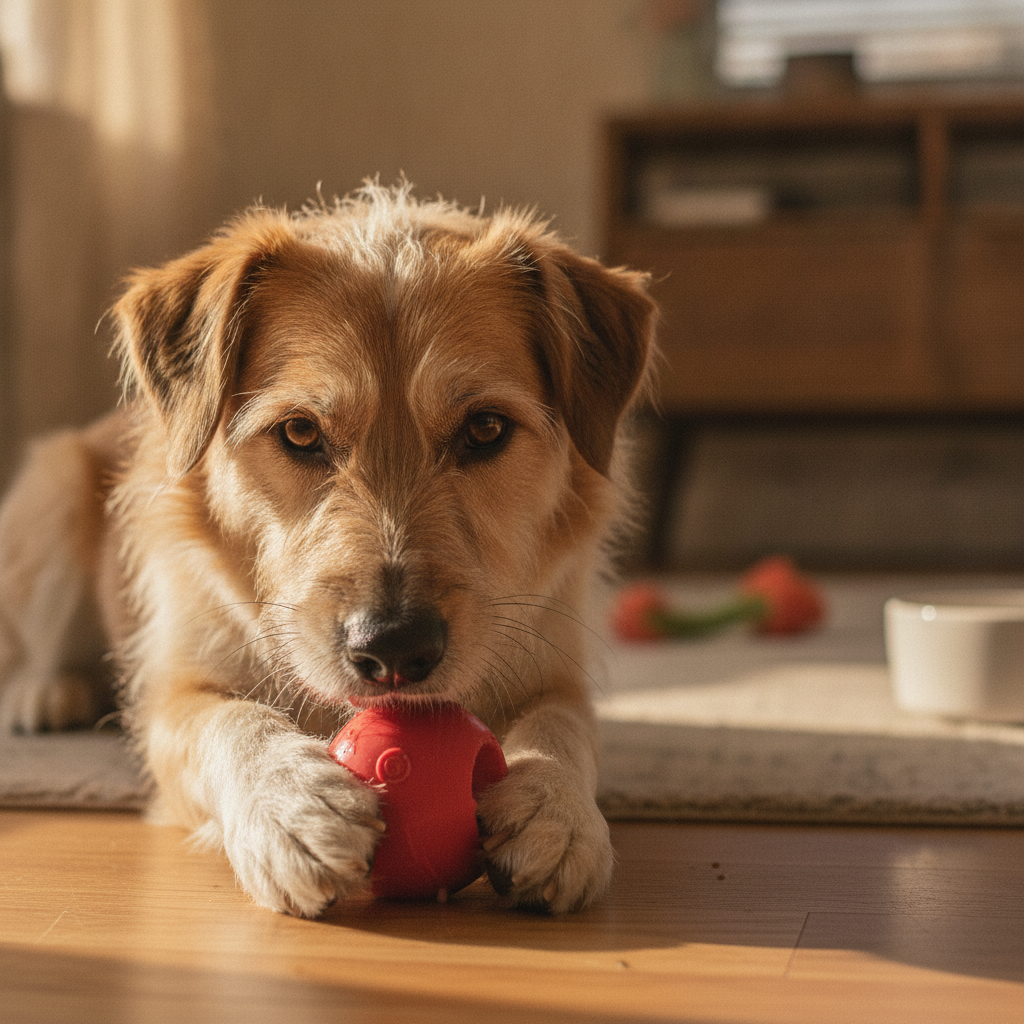
What about toys, and how do they handle resource guarding? Even if your dog doesn’t guard, the daycare should have a plan for the ones who do.
Is medical help available? Ideally a relationship with a vet and staff trained in canine first aid and CPR. Accidents happen even in great rooms, and a fast response can be the whole game.
Ask all of it, tour with your eyes open, and the right answer for your dog usually becomes obvious. If daycare turns out to be the fit, your dog gets exercise, company, and a genuinely good day. If it doesn’t, you’ve saved them from a room that would have wound them tighter, and that’s a win too.
References
- Horowitz, Alexandra. “Attention to Attention in Domestic Dog (Canis familiaris) Dyadic Play.” Animal Cognition, vol. 12, no. 1, 2009, pp. 107–118.
- Belpedio, C., et al. “Understanding of Social Play Behavior in Adult, Group-Housed Domestic Dogs.” Journal of Veterinary Behavior, 2010.
- Bradshaw, John W. S., et al. “Dominance in Domestic Dogs—Useful Construct or Bad Habit?” Journal of Veterinary Behavior, vol. 4, no. 3, 2009, pp. 135–144.