


Your Cat Remembers More Than You Think, Especially the Things You Wish They'd Forget
The real question isn't whether cats have good memories. It's what they choose to keep. The filter turns out to be emotion and usefulness, which explains a lot about your cat.

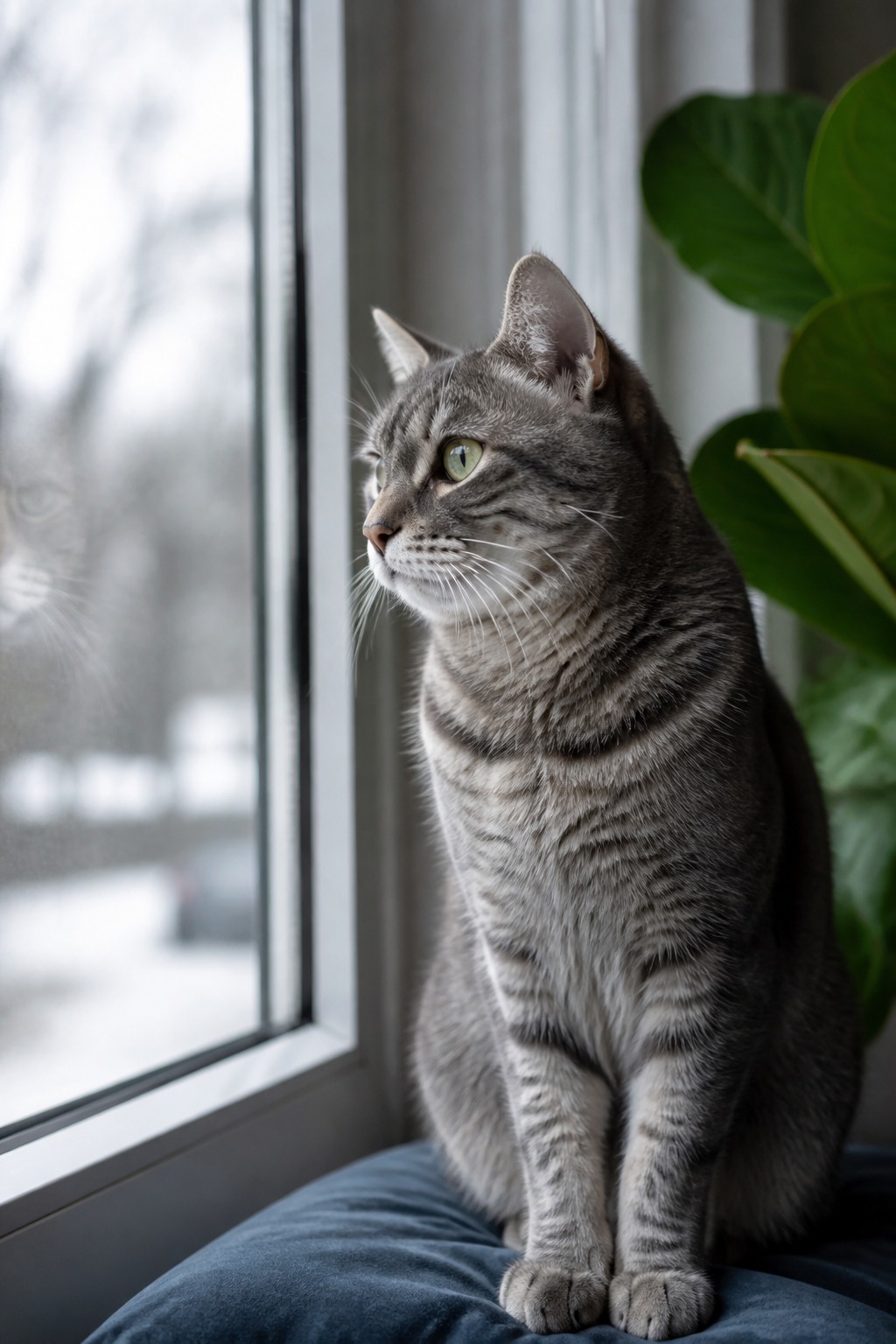
We hand the “great memory” trophy to elephants without thinking twice. But if you’ve ever watched a cat sprint to the kitchen at the exact sound of a specific drawer opening, or refuse to forgive the carrier three years after a bad vet trip, you already suspect the truth: a cat’s memory is nothing to sneeze at. The more interesting question isn’t whether cats remember well. It’s what they bother to remember, and why. Because cats, it turns out, are ruthlessly selective, and the filter they use tells you almost everything about how they move through the world.
First, yes, the memory is real
The raw capacity is genuinely impressive, and it holds up in research. In studies of big cats, a lion that learned how to open a puzzle box could still open it seven months later, no refresher required. Domestic cats show the same knack on a smaller scale: in experiments where house cats were shown bowls that did and didn’t contain food, they remembered which was which after a delay. And cats clearly track time and attachment, one study found that cats purred noticeably longer when reunited with a person who’d been gone for four hours than with one who’d only stepped away for fifteen minutes. They noticed the difference, and it mattered to them.
There’s a developmental wrinkle worth noting. Very young kittens probably don’t form durable, lasting memories until they reach a certain age, much the way humans remember little from our earliest years. Cats may start banking memories a little sooner than humans do, possibly around a few weeks of age, but a kitten’s foggy first chapter is normal. Once the system comes fully online, though, the retention is formidable.
What they keep: threats and strong feelings
Here’s where the selectivity starts. Cat brains, like ours, are wired to hang onto emotionally charged experiences far more tightly than neutral ones, and, like ours, they’re tilted toward the negative. A cat has excellent long-term memory for anything tied to their safety or comfort. Being lost, being startled, being yelled at, these stick, because remembering and avoiding a threat is exactly what memory evolved to do. It’s why a cat can turn wary around a particular loud voice, or a specific person, long after a single bad encounter. Their brain flagged it as important and filed it under “avoid.”
The emotion doesn’t have to be negative to lodge, though. The rule seems to be intensity: the stronger the feeling attached to an experience, good or bad, the better it’s remembered, along with the surrounding details. Which is the flattering flip side. If you’re the person who reliably tears off bits of rotisserie chicken and hands them over, your cat has almost certainly built a warm, well-lit memory around the sound of you in the kitchen. The carrier and the chicken are stored by the same machinery. Only the emotional charge differs.
What they keep: whatever’s useful to them
The second half of the filter is pure practicality. Cats remember what’s useful to them, and they’re indifferent to nearly everything else. This produces some genuinely striking feats. Cats form strong associations between activities and the places those activities happen, which is why a cat will march to their designated catnip corner when they want catnip and their play spot when they want to play. They’ve mapped the house by function. In more dramatic cases, cats have navigated homes they hadn’t set foot in for years from memory, and cats blind from birth can move confidently through a familiar space they haven’t been in for a very long time, because the layout is stored as useful spatial information rather than something they need to see.
The catch, and it’s a helpful thing to keep in mind before you take your cat’s indifference personally, is that “useful to a cat” and “useful to a human” are different lists. Cats hold onto the things that affect their own lives, food, safety, routine, territory, and let the rest evaporate. If something has no bearing on your cat’s day, there’s a decent chance they simply won’t retain it. That’s not a memory failure. It’s a memory strategy.
What newer research adds
Two lines of research have pushed this further and made cats look a lot more sophisticated than the “food and threats” model suggests. In work led by researchers at Kyoto University, cats were able to recall both what and where from a single, incidental experience, remembering, after one exposure, which food they’d found in which spot. The reason that’s a big deal is that recalling the specifics of a one-time past event is a hallmark of what scientists call episodic-like memory, the kind of “I remember that particular time” recall we tend to assume is a human specialty.
A later study probed what’s called social-spatial cognition, essentially, do cats keep a mental map of where their people are? Cats were placed in a room and heard a recording of their owner calling their name from one location, then a different sound from another, and their reactions suggested they’d formed an expectation about where their human should be. Put simply, your cat may be quietly keeping track of your whereabouts by ear, updating an internal map of where you are in the house. The old caricature of the aloof, oblivious cat doesn’t survive contact with the data.
When memory fades
Just like us, cats can lose some of this as they age. Senior cats can develop cognitive decline that looks a great deal like dementia in people. You might see a cat pacing, calling out at night, forgetting spaces they’ve known for years, or looking adrift in a home they know well. It’s a real, recognized change, not just “getting old.”
The good news is that supporting an aging cat’s brain is fairly intuitive: keep them on a steady schedule for meals and play, offer regular enrichment through toys and games to keep the mind engaged, and ask your vet whether any supplements might help preserve sharpness and daily comfort. It’s also worth a vet visit for another reason. What looks like simple senior forgetfulness isn’t always age-related brain change. It can also stem from underlying illness, kidney disease, thyroid disease, or diabetes among them, all worth ruling out rather than chalking up to years.
One more thing to expect: memory varies from cat to cat, exactly the way intelligence and personality do. A cat who seems a little absent-minded may just be shy, while confident, curious cats often appear to retain routines and experiences better, likely because they’re more engaged with their surroundings in the first place. There’s no single “cat memory.” There’s your cat’s memory.
People ask me if their cat remembers them, and the honest answer is that your cat remembers what you made them feel. Cats encode emotionally significant events extremely well, which is wonderful when you’re the source of good things and inconvenient when you’re the one who gave the pill. If you want to live well in your cat’s memory, be the reliable source of safety and good outcomes. They’re keeping score, just not on the things we’d expect.
References
- Takagi S, et al. “Use of incidentally encoded memory from a single experience in cats.” Behavioural Processes, 2017.
- Takagi S, et al. “Cats’ vocal recognition and social-spatial cognition of their owners.” (2021)
- Cornell Feline Health Center: Cognitive Dysfunction in Senior Cats
- International Cat Care: Cognitive Dysfunction Syndrome in Older Cats
Dr. Chen is a small-animal veterinarian who leads health and safety coverage at The Pet Times. She writes and reviews the bulk of our illness, condition, and safety content, translating clinical guidance into clear, practical advice owners can act on at home.
Meet our experts ↗Keep reading
 TrainingYour Cat Holds a Picture of You in Their Head, Even When You Leave the RoomDr. Mara Chen · 4 min
 TrainingThat Sneer Is Your Cat Tasting the Air. Here's the Organ Doing ItDr. Amara Solis · 5 min
 Health & WellnessYour Cat Eating Your Shoelaces Isn't a Quirk. It Might Be Pica.Dr. Mara Chen · 7 min
 TrainingYour Cat Might Be Catching Your Stress. A 3,000-Person Study Says So.Dr. Mara Chen · 5 min
 TrainingThe 'Talking Cat' Videos Get It Backwards: Your Cat Is Working You, Not CopyingTom Hadley · 7 min
 TrainingYour Cat Isn't Trying to Come With You. It's the Best Box in the House.Dr. Lena Park · 7 min