


We Cracked the Origin of Cows and Cats. The Dog Still Stumps Us.
Scientists have pinned down where nearly every domestic animal came from. Our oldest companion is the exception. Here is why the dog's origin story is still an open case.

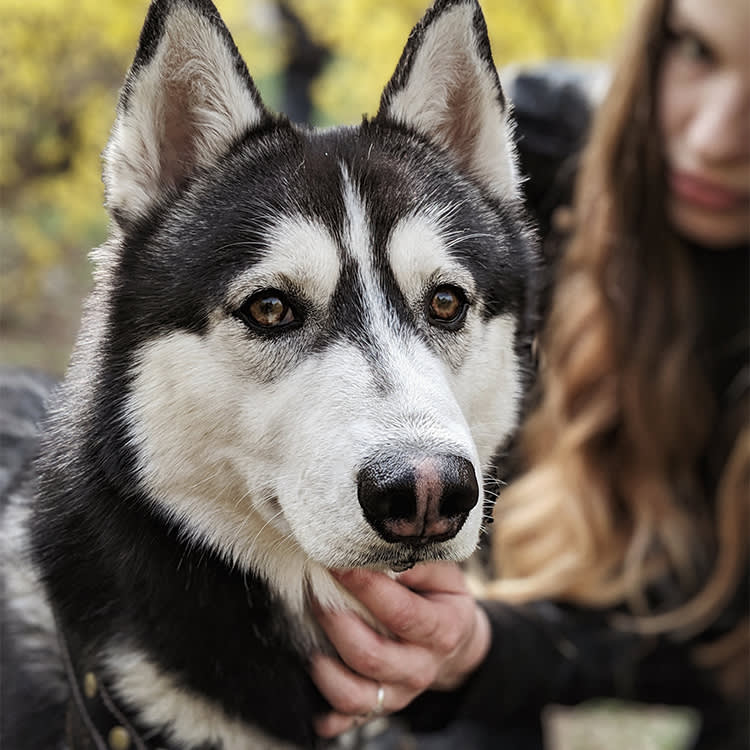
Researchers can tell you where cattle, pigs, sheep, horses, goats, ducks, chickens, and even the house cat came from. The genealogies are drawn, the wild ancestors identified, the timelines mostly agreed on. Then you get to the dog, the animal that has slept at the foot of human beds longer than any other, the most numerous and wildly varied domestic creature on the planet, and the trail goes cold. Our oldest friend is the one whose beginnings we understand least.
That is not for lack of trying. It is because the dog is a genuinely hard problem, harder than a barnyard census would suggest. And the deeper you look, the more the story turns from a settled fact into an active detective case, one where the evidence keeps pointing in two directions at once.
Why the dog resists easy answers
Start with the raw strangeness of the species. A dog is Canis lupus familiaris, sitting in the genus Canis and the family Canidae alongside wolves, jackals, and foxes. About a billion of them roam the globe, a bigger population than any other domestic subspecies. Canine fossils turn up on every continent except Antarctica, some as old as 36,000 years.
Here is the part that broke centuries of classification: no other mammal on Earth varies as wildly in shape, size, temperament, and behavior. A Chihuahua and a Great Dane are the same subspecies. Stranger still, extreme change can appear in as little as a single generation, a kind of evolution at fast-forward. Travel the world and a cat basically looks like a cat everywhere you go. Dogs are a moving target, which is exactly why sorting out how they are related, and where they began, tied the old naturalists in knots.
The modern case: DNA that points two ways
For most of history, scientists could only study bones, teeth, and skull shapes. Genome-wide sequencing changed the game, letting researchers test old theories at the molecular level. It also produced a beautiful contradiction.
In 2013, Robert Wayne, an evolutionary biologist at UCLA, and his team put out a sweeping data set arguing that dogs descended from a now-extinct group of European wolves, roughly 19,000 to 32,000 years ago. Two years later, molecular biologist Peter Savolainen and colleagues at Stockholm’s Royal Institute of Technology published equally convincing results placing the origin in East Asia, specifically China south of the Yangtze River, with the dog lineage splitting from wolves around 33,000 years ago.
Both teams were reading DNA. So why did their maps land on opposite sides of the world? A lot of it came down to direction of travel. Savolainen’s group worked backward from modern dogs, while Wayne’s tracked ancient DNA forward from prehistoric wolf and wolf-dog bones, watching genetic diversity shrink as animals shifted from wolf to dog and treating dead-end lineages as extinctions.
The elegant resolution, floated in 2016, is that they might both be right. A team comparing genetic data against the archaeological record concluded that dogs might have arisen independently from two different wolf populations on opposite ends of the Eurasian continent, with a genetic split still visible between modern East Asian and European dogs. If that holds, dogs were domesticated not once, as the tidy version of the story goes, but twice, with many early lineages later dying out as humans and their animals weathered upheavals like climate change. Rival findings that seemed to cancel each other out may simply be describing different chapters of the same messy book.
A quick detour through everyone who guessed wrong
It is worth appreciating how long humans have been stuck on this, because it makes the modern uncertainty feel less like failure and more like the latest round of a very old argument.
Writing in the fourth century BCE, Aristotle weighed in, though he cared less about where dogs came from than about insisting they had simply always existed. In his telling, dogs were crossed with foxes to yield small ones and with bears to yield large ones, a notion that is charmingly wrong about cross-species breeding yet quietly right that humans were shaping the animal.
By the late Middle Ages, naturalists were building orderly classification systems, but the bigger “where did life come from” question stayed boxed inside theology. The 16th-century English cleric Edward Topsell, author of The History of Four-Footed Beasts, sorted animals by morality, casting the predatory wolf and the noble, loyal dog as two moral opposites. That was not as odd as it sounds; people then had real reason to fear wolves, and since every other domesticated farm animal had come from prey species, it seemed almost blasphemous that the gentle dog could have descended from the wolf.
Then came Darwin, who got the mechanism right and several details wrong. He believed dogs had multiple origins, tracing them to wolves, to jackals, and, he thought, to a South American species or two, citing dogs he had seen in Patagonia and Central America. He also floated multi-regional domestication and used breeds as a showcase for natural selection. Contemporaries like Lamarck and Wallace had reached for similar connections, but Darwin’s insight was that the engine was natural selection, not striving or design. Even so, the dog stayed an untidy puzzle, one that molecular biology would only begin to unlock generations later.
What newer research adds
The two-populations idea did not stay frozen in 2016. In 2022, a large team led by researchers at the Francis Crick Institute, including Pontus Skoglund, sequenced 66 new ancient wolf genomes spanning Europe, Siberia, and northwestern North America, tracking natural selection in a single lineage across 100,000 years. Their conclusion, published in Nature, was that dogs carry a dual ancestry: an eastern wolf source that contributed to all dogs, plus a separate, more westerly source that contributed to some. Dogs in the Near East and Africa, for instance, draw up to half their ancestry from that second population.
Crucially, even this landmark study could not close the case. The dual ancestry might mean wolves were domesticated more than once, with the populations later mixing, or it might mean domestication happened a single time and those first dogs then interbred with wild wolves. The scientists were candid that they cannot yet tell which. So the newest, most powerful evidence available lands right back on the same fork in the road that has puzzled everyone from Darwin forward.
Why an unsolved mystery is worth loving
It would be easy to find this frustrating. It is more fun to find it fitting. The dog is the animal that refuses to be pinned down, the one that changes shape in a generation and turns up on every continent and still, after all our sequencing, keeps the exact circumstances of its own beginning to itself. The search matters beyond curiosity, too; the where, the when, and the how-many-times of domestication touches real questions in evolutionary theory.
For now, the honest answer to “where did dogs come from” is the most interesting kind: from wolves, somewhere across Eurasia, at least once and maybe twice, sometime in a window tens of thousands of years wide, and we are still working out the rest. The dog asleep on your couch is carrying a genome scientists are actively arguing over. Not bad for an animal whose main ambition today is the next walk.
References
- Bergström, Anders, et al. “Grey Wolf Genomic History Reveals a Dual Ancestry of Dogs.” Nature, vol. 607, 2022, pp. 313–320. https://www.nature.com/articles/s41586-022-04824-9
- Francis Crick Institute. “Ice Age Wolf DNA Reveals Dogs Trace Ancestry to Two Separate Wolf Populations.” 29 June 2022. https://www.crick.ac.uk/news/2022-06-29_ice-age-wolf-dna-reveals-dogs-trace-ancestry-to-two-separate-wolf-populations
- Freedman, Adam H., and Robert K. Wayne. “Deciphering the Origin of Dogs: From Fossils to Genomes.” Annual Review of Animal Biosciences, vol. 5, 2017, pp. 281–307. https://doi.org/10.1146/annurev-animal-022114-110937
- Bergström, Anders, et al. “Origins and Genetic Legacy of Prehistoric Dogs.” Science, 2020. https://www.science.org/doi/10.1126/science.aba9572
- “Siberia: 18,000-Year-Old Frozen ‘Dog’ Stumps Scientists.” BBC News, 28 Nov. 2019. https://www.bbc.com/news/world-europe-50586508
Common questions
When did dogs first appear?
Somewhere between roughly 15,000 and 30,000 years ago, depending on which line of evidence you weigh. The oldest widely accepted dog remains come from the Bonn-Oberkassel site in Germany and are about 14,000 years old, though some canine fossils reach back 36,000 years.
What did dogs evolve from?
Gray wolves. Every genetic line of evidence points back to wolves, not jackals or coyotes, even though early naturalists guessed otherwise.
Were dogs domesticated once or more than once?
That is the open question. Some genetic studies suggest a single domestication; others point to dogs emerging from two separate wolf populations on opposite ends of Eurasia. The most recent ancient-DNA work still cannot rule either out.
Was 'Dogor' a dog or a wolf?
Dogor is an 18,000-year-old pup found frozen in Siberian permafrost, so well preserved that its fur, nose, and whiskers survived. Tellingly, scientists still cannot say for certain whether it was an early dog or a wolf, which is a neat illustration of how blurry that line was.
Marcus Webb writes about the gear, gadgets, and everyday choices that make life with a pet easier. His coverage runs from product picks to training and the causes worth paying attention to, always with an eye on what actually earns a place in your home.
Meet our experts ↗Keep reading
 LivingSF Is a Dog's City. The Leash Line Moves Every Few Hundred Feet.Jordan Ellis · 12 min
 LivingIt Was Never Really About Pets vs. KidsSasha Ford · 10 min
 LivingSofía Valdés's Corgi Pees on Her Pillow Out of Spite. She Wrote a Love Song About Her Anyway.Sara Lim · 6 min
 LivingIn Most States, Your Dog Is Legally a Couch. A Few Are Finally Changing That.Jordan Ellis · 7 min
 LivingThe Best Companion Dog Breeds, Matched to How You Actually LiveNina Vasquez · 10 min
 LivingChewbacca's Soul Came From a Dog, His Voice From a Zoo BearJames Okafor · 5 min