


A Nike Designer Decided Eco Dog Gear Didn't Have to Be Ugly
Sustainable pet products have a reputation for looking earnest and drab. House Dogge founder Angela Medlin spent 30 years in streetwear and set out to prove eco-conscious could be genuinely covetable, treating sustainability as a design problem instead of a marketing badge.

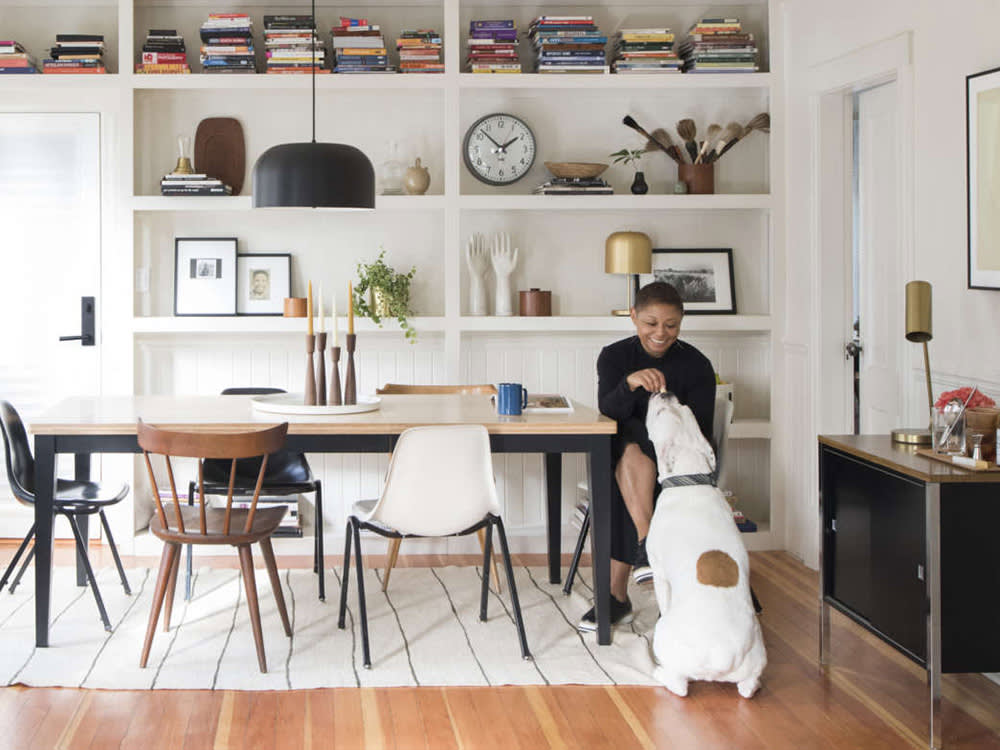
There is an unspoken tax on buying sustainable: the eco version is supposed to look a little worse. Beige, crunchy, well-meaning. Angela Medlin never accepted that tradeoff, and House Dogge, the brand she founded in 2017, is essentially a 30-year argument against it. Her thesis is simple and a little radical for the category: sustainability is a design constraint, not an excuse, and a well-designed eco product should be something you actually want, not something you tolerate to feel good.
Medlin came to pet products from an unlikely direction. She spent three decades as an apparel designer and director for global brands including Nike, Adidas, the North Face, and Levi Strauss, absorbing the discipline of making things people crave. When she left the corporate world, she carried that instinct to a category she felt had been coasting on good intentions.
The dog who started it
The immediate inspiration was her Olde English Bulldogge, Wubbi, who died a couple of years before the brand found its footing. Watching him at home, noticing what he actually needed to be comfortable in a shared living space, gave her the brief. Grief and observation turned into a product line, which is a more honest origin story than most brands can claim.
That focus on the home is deliberate. Medlin frames House Dogge around the idea of dogs as full family members occupying every room, and says the products in the pipeline are built for what a dog and its humans each need, room by room. It reframes pet gear from accessories to household design.
Design discipline as the whole strategy
Ask Medlin what her design background contributed and the answer is: nearly everything. A lesson drilled into her early was how to wring the most from the least, to make a small budget look richer and more considered than it had any right to. Another, from a mentor, was to express an idea using the least information possible, which is the root of the minimalist look the brand is known for.
Applied to sustainability, that discipline becomes the entire pitch. The common perception, as she puts it, is that eco-friendly products are bland. She wanted to prove they could be colorful, textured, and elevated instead. So House Dogge’s sustainability shows up as recycled materials kept out of landfills, upcycled materials given new life, and natural, nontoxic materials free of PVC and BPA. By her account about 80 percent of the line is natural, renewable, or eco-minded in one form or another, against a stated goal of reaching 100 percent, a target she has been candid about being hard for a small brand to hit given cost and minimum-order hurdles.
Safety sits alongside style in her calculus. Dogs carry things in their mouths constantly, so she weighs how every material affects the dog, the home, and the humans in it, a priority sharpened by having lost dogs to cancer and not wanting her products to contribute.
The hoodie, and the Oprah moment
The product that put House Dogge on the map is charmingly low-tech: a customizable hoodie, made in matching versions for dog and human. Medlin’s logic is pure comfort-first design. The hoodie was her own favorite garment, a piece she practically lives in, and she describes it as “wearing a hug.” Bringing that to dogs, and letting owners match, was the whole idea.
Then it landed on Oprah’s Favorite Things list, which Medlin calls a pivotal, banshee-scream-inducing surprise. She had long imagined introducing the brand to Oprah, a dog lover whose ethos of doing work authentic to yourself had inspired her, and when the chance came she took it. The business effect was seismic: sales jumped 3,000 percent, and the brand went, in her words, on the map overnight. Her stated challenge since has been to keep growing authentically rather than living off that single moment forever.
Giving back, built in
A percentage of every House Dogge purchase goes to dog rescues. Medlin regularly supports the Portland-based Northwest Dog Project, which rescues senior, neglected, and abused dogs and nurses them back to health, and the Pongo Fund, a local organization whose food bank helps people keep and care for their dogs through hard times. The through-line, again, is that the brand’s values are structural rather than promotional.
As for whether she will adopt another dog, Medlin says she plans to, once startup life leaves her enough time to give an animal the attention it deserves, a restraint that fits a person who thinks carefully about impact before acting.
Why this matters beyond one brand
House Dogge is a small operation, but the argument behind it has aged well. The broader pet market has moved steadily toward recycled, upcycled, and nontoxic materials, and the brands winning shelf space increasingly look good doing it, which is exactly the future Medlin bet on. The useful takeaway for a shopper is not to buy any one item but to internalize her filter: ask what a product is made of, how it affects your dog and your home, and whether the company treats sustainability as a real constraint or a sticker. That question does more for the planet, and your dog, than any single purchase.
House Dogge’s products are sold directly through the brand.
References
- House Dogge. housedogge.com
- Northwest Dog Project. northwestdogproject.org
- The Pongo Fund. thepongofund.org
Sasha Ford is a certified cat behaviour consultant who has worked with shelters, catteries, and private clients across the country. They review all feline behaviour content at The Pet Times, with expertise in multi-cat households, indoor enrichment, and stress-related disorders.
Meet our experts ↗Keep reading
 LivingThe 'Compostable' Poop Bag Is Often Greenwashing. Smarter Eco Swaps for Your DogNina Vasquez · 4 min
 Product PicksThis Montana Factory Grinds Up Your Dog's Old Toy and Makes You a New OneSara Lim · 8 min
 Product PicksThese Dog Treats Are Made From Juice Scraps and Bugs. Your Dog Will Beg for Them Anyway.Leila Torres · 5 min
 LivingThe Poop-Bag Label You Trust Is Probably Lying. Here's the One That Isn'tTom Hadley · 6 min
 Product PicksShe Left 12 Years in Finance to Make Dog Beds That Don't Look Like Dog BedsLeila Torres · 5 min
 Product PicksEco Dog Toys Are the Last Holdout. These $16 Handmade Ones Show Why.Nina Vasquez · 4 min