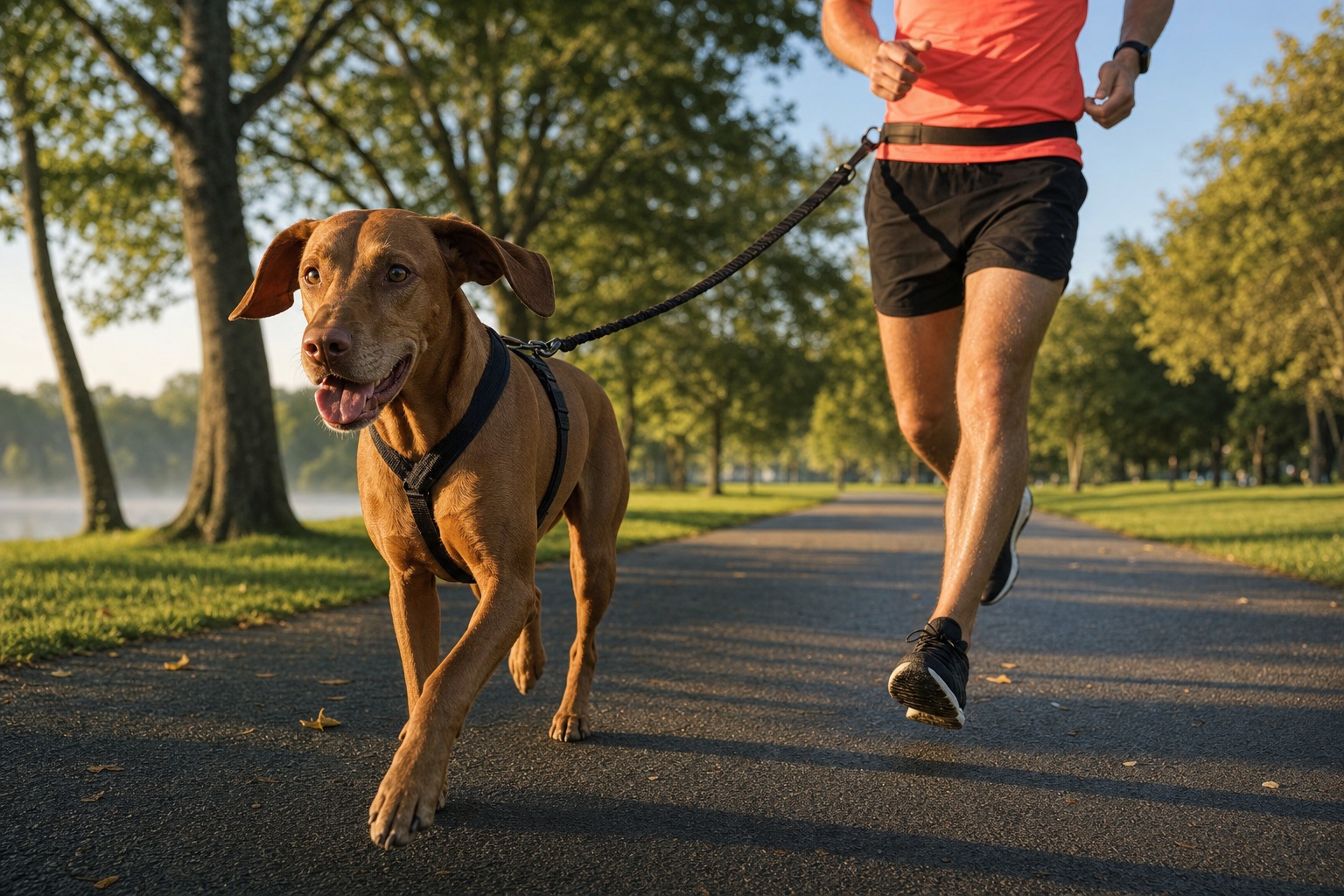
Getting up at 6 a.m. to run with a dog is a lot of things, and “convenient to manage one-handed” is not one of them. An enthusiastic dog zig-zags. You’re carrying water. Somewhere in there you’d like to not drop your phone. The obvious fix is a hands-free leash, a lead that clips around your waist or across your body so your hands are free for literally anything else.
Before you buy one, though, the honest safety talk, because a hands-free leash is a great tool for the right dog and a genuinely bad idea for the wrong one.
The fine print, from a vet
“Going hands-free only pays off if your dog can already heel reliably,” says Dr. Ravi Mehta. “Take a dog who’s a mess on a normal leash, tie that same dog to your torso, and you haven’t solved the problem, you’ve just deleted your quickest way to react. With a dog that lunges or bolts, the odds of somebody getting hurt climb rather than drop.”
He wants people to weigh a few things before clipping in. Start with length: for a run, choose a shorter lead so your dog stays fixed at your side the whole way instead of drifting under your feet. Then consider your own body. These leads attach either across the shoulder or around the waist, and while he leans slightly toward the cross-body option on safety grounds, he warns that either one can wrench your lower back, with a heavier dog raising the odds of a hard, sudden jerk. If your dog behaves on leash and you keep your head up, a hands-free lead is a fine choice for walking, running, or hiking. If not, sort out the leash manners first.
With that settled, here are seven, sorted by how you move.
For everyday walks: Fable Magic Link
Leashes get gross, a truth pet owners rarely say out loud. The Fable Magic Link answers that with custom matte-black aluminum hardware and a tough, brushed cord, both waterproof and genuinely easy to wipe down. It’s the do-everything option: sturdy enough for daily use, handsome enough that you won’t mind it living by the door. If you want one leash for the routine walk rather than a specialized running rig, start here.
For hardcore hikers: Wilderdog Cascade
Wilderdog’s Cascade leash is built for people who train through rain, snow, and trail. It’s built from genuine rock-climbing cord, which gives it a grip and durability the fashion-first options can’t match. This is the pick for backcountry miles and big, strong dogs, where you want a lead you’d trust to hold under a hard, sudden pull. It’s overkill for a stroll around the block, and that’s exactly the point.
For a lead that’s also a keepsake: Found My Animal
The Found My Animal rope leash is hand-crafted, and its ombré-dyed cotton rope looks more like something you’d want to keep than a piece of walking equipment. It’s practical, secure, and easily the most photogenic on this list. If aesthetics matter to you and your walks are relaxed rather than a full sprint, this is the one you’ll reach for.
For casual, adjustable use: Zee.Dog
Zee.Dog’s take is laid-back and adjustable, and it comes in a wide range of colors if you want a bit of personality. The standout feature is a quick-lock design that lets you loop the leash around a park bench or post when you or your dog need a water break, a small convenience that turns out to be surprisingly useful mid-outing. It’s the middle-ground choice between the technical Wilderdog and the fashion-forward Found My Animal.
For the eco-minded: West Paw
If sustainability factors into your buying, West Paw’s leash uses webbing woven entirely from recycled polyester, and it threads in double-sided reflective stitching for real low-light safety, plus color. It’s the responsible pick that doesn’t ask you to give up visibility or looks to get there, and the reflectivity makes it a smart choice for anyone doing those early-morning or after-dark runs.
For people who can’t decide: Dog + Bone convertible
The most versatile option here, the Dog + Bone adjustable leash converts between hand-held and hands-free depending on what a given walk calls for, and a heavy-duty buckle keeps your dog secured. If you’re not sure you’ll go fully hands-free every time, this hedges the bet: use it like a normal leash on errands, then reconfigure it for a run without buying a second lead.
For keeping the leash you love: Strange Tails adapter
Already own a leash you’re attached to? A Strange Tails hands-free adapter clips onto your existing lead and converts it into a hands-free setup, no new leash required. It’s the cheapest way to test whether the hands-free life is for you, and the most sustainable, since it puts the gear you already own back to work.
What newer research adds
The one habit worth pairing with any of these is reflectivity and lighting, and it’s more than a nice-to-have. Low-visibility conditions, dawn, dusk, and after dark, are when dog-walkers and runners are most likely to be struck by a vehicle, which is why several picks above build in reflective thread. If your leash doesn’t have it, add a clip-on light or a reflective collar. A hands-free leash is meant to keep you moving safely, and being seen is a bigger part of that than any buckle.
References
- American Kennel Club, Leash Training and Walking Equipment
- American Veterinary Medical Association, Walking Safely with Your Dog