


Chocolate Isn't the Scariest Thing in Your Halloween Candy Bowl
Everyone guards the chocolate. Meanwhile the sneakier Halloween hazards, a sweetener now hiding under a friendlier name, a cracked glow stick, an open front door, are the ones sending dogs to the emergency vet. Here are seven, ranked by how badly they can bite.

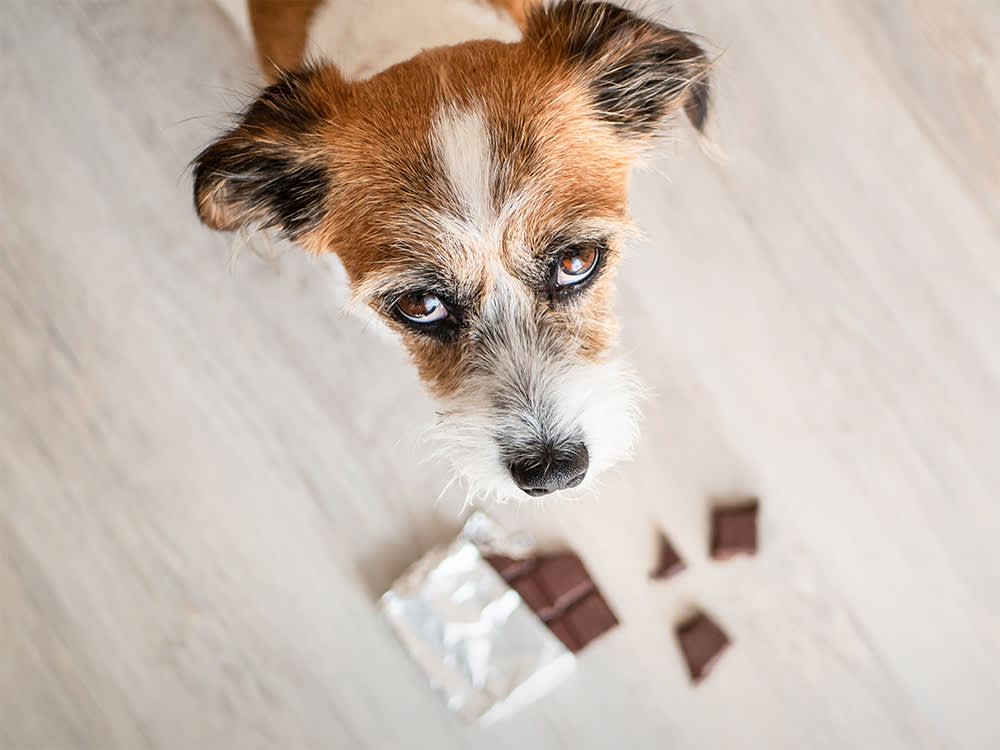
Ask a dog parent to name the big Halloween danger and almost everyone says the same thing: chocolate. They are not wrong. But they are guarding one door while several others swing wide open. The most dangerous item in the candy bowl on October 31 is often not the chocolate at all, and some of the worst Halloween emergencies have nothing to do with candy. Here are seven hazards worth planning around, starting with the one everyone knows and moving toward the ones that actually catch people off guard.
1. Chocolate, the famous one
Chocolate earns its reputation. Given half a chance, most dogs will hoover up candy, wrappers and all, and chocolate contains two stimulants, theobromine and caffeine, that dogs metabolize far too slowly. As a rule, the darker the chocolate, the more dangerous it is, with dark and baking chocolate the worst offenders and milk chocolate less potent by weight. Depending on how much and what kind a dog eats, signs can start at increased thirst, vomiting, stomach upset, and restlessness, and climb to severe agitation, an abnormal heart rhythm, muscle tremors, a dangerously high body temperature, seizures, and, in the worst cases, death. If your dog raids the bowl, call your vet or an emergency hospital. They can run the numbers against your dog’s weight to decide whether the amount crosses into a toxic dose.
2. Xylitol, the sneakier killer
Here is the one that should scare you more than chocolate does. Xylitol, an artificial sweetener in sugar-free gum and many sugar-free baked goods, is dramatically more toxic to dogs than chocolate, gram for gram. In people it does nothing to blood sugar. In dogs it can trigger a sudden, severe crash in blood sugar, called hypoglycemia.
“Every Halloween I brace for the chocolate calls, but the xylitol cases are the ones that keep me up,” says Dr. Lena Park. “A dog can eat a few squares of milk chocolate and be uncomfortable. A small dog that finds a pack of sugar-free gum can be in liver failure by morning. Speed matters enormously, so call before you wait and see.”
The numbers are alarming precisely because they are so small. The hypoglycemic dose is roughly 0.1 grams per kilogram of body weight, and a single stick of gum can hold 0.3 to 0.4 grams. Run those figures for a 10-pound dog and you land somewhere around a stick and a half of gum being enough to do harm. Disorientation and seizures can appear within about 30 minutes, or hide for several hours. Worse, larger amounts can cause outright liver failure, which is sometimes fatal; that dose is about ten times the hypoglycemic one, meaning a single unopened pack of gum can be enough to put a small dog into liver failure. Any suspected xylitol ingestion is a same-day, call-now emergency.
3. Glow sticks and glow jewelry
The necklaces and bracelets that make trick-or-treaters visible are a classic Halloween chew toy for a curious dog. The liquid inside is not usually life-threatening, but it is intensely bitter, and a dog who punctures one will often drool heavily, foam, paw at their mouth, and act frantic. It looks terrifying and it makes dogs miserable. Offer a little food or water to dilute the taste, wipe any liquid off the coat before they lick it, and call your vet if the distress doesn’t settle.
4. Candles and lit jack-o’-lanterns
A wagging tail and an open flame are a bad combination. Lit candles inside pumpkins or on low tables are within easy reach of a nose or tail, and a startled or excited dog can knock one over, risking burns to your pet and a fire in your home. Keep open flames well out of tail range, or switch to flameless LED candles, which give the same glow with none of the drama.
5. Decorative pumpkins and corn
The pumpkin on your porch is largely nontoxic while it’s fresh. The problem is time: as decorative pumpkins soften and mold, they can seriously upset a dog’s digestive system, so a dog who gnaws a week-old jack-o’-lantern may pay for it. Decorative corn deserves more caution. The kernels themselves are fine in small amounts, but a swallowed cob is a genuine risk for an intestinal obstruction, which is a surgical emergency.
6. Costumes
That outfit is adorable and also worth a second look. Plenty of dogs react badly to a tight or scratchy costume, so if your dog is a willing model, do a dress rehearsal a few days early rather than springing it on them the night of. Check for any little parts that dangle or pull loose too easily, since those turn into choking hazards, and make sure nothing can snag on furniture or twist and injure them. A costume should never restrict how your dog moves, hears, breathes, or barks. If your dog has sensitive skin, watch for itching or agitation from synthetic fabrics, and when in doubt, a simple festive bandana counts as a full costume.
7. The open door, the real number one
If we ranked these by how often they end in a genuine crisis, the front door might beat the candy bowl. On Halloween the doorbell rings dozens of times, strangers in strange shapes keep appearing, and every time the door opens there is a gap a spooked dog can bolt through. A lost dog on the busiest, most chaotic night of the neighborhood’s year is a nightmare. Keep your dog in a room away from the door, and make sure their safety net is in place before the sun sets: a collar with current tags, and, far better, a microchip that is actually registered with your up-to-date contact information. If you’re not sure the chip is active, your vet can scan it in a minute.
Don’t forget the fear itself
Not every Halloween hazard is physical. For a dog whose whole job is to bark at whoever approaches the door, a night of that doorbell going off every few minutes is genuinely exhausting and stressful. You have good options: tuck your dog into a quiet, well-insulated room away from the noise, leave a help-yourself candy bowl on the walkway so the bell stays silent, board your dog somewhere calm for the evening, or simply turn off the porch light and sit the holiday out. Your dog will not mind trading the doorbell for a quiet night in.
What’s new since this was written
The xylitol warning has gotten more urgent for a sneaky reason: labeling. Manufacturers increasingly list xylitol under friendlier-sounding names, most commonly “birch sugar,” along with “wood sugar” and “birch bark extract.” It is the same toxin, wearing a healthier costume, and it now turns up not just in gum but in sugar-free candy, peanut butter, baked goods, supplements, and even some toothpastes. If you scan an ingredient list for the word “xylitol” and stop there, you can miss it entirely. The FDA has kept its “Paws Off” warning active, and poison-control data shows xylitol cases running well above where they were a few years ago, up roughly three-quarters since 2020. This Halloween, read the whole label, and treat “birch sugar” as the red flag it is.
References
- U.S. Food and Drug Administration. “Paws Off! Xylitol is Toxic to Dogs.” Accessed July 2026. https://www.fda.gov/animal-veterinary/animal-health-literacy/paws-xylitol-toxic-dogs
- ASPCA Animal Poison Control Center. “Animal Poison Control.” Accessed July 2026. https://www.aspca.org/pet-care/animal-poison-control
- VCA Animal Hospitals. “Xylitol Toxicity in Dogs.” Accessed July 2026. https://vcahospitals.com/know-your-pet/xylitol-toxicity-in-dogs
- Pet Poison Helpline. “Halloween Pet Safety.” Accessed July 2026. https://www.petpoisonhelpline.com/
Not a substitute for your vet. Our guidance is educational. For urgent symptoms, contact a vet or emergency clinic right away. Editorial standards
Dr. Mehta is a board-certified veterinary nutritionist who evaluates pet food formulations, ingredient quality, and the science behind dietary trends. He writes and reviews all nutrition content at The Pet Times, including our food rankings and feeding guides.
Meet our experts ↗Keep reading
 TrainingYour Dog Isn't Being Dramatic About Storms. Four Fears Are Hitting at Once.Dr. Nina Kohl · 6 min
 Health & WellnessA Once-a-Year Flea and Tick Shot Is Here. The Real Story Is the Gap It ClosesDr. Ravi Mehta · 4 min
 Health & WellnessThere's No Single 'Lily' Poisoning in Dogs. There Are Four Different OnesDr. Priya Nair · 8 min
 FoodYour Dog Ate Grapes and Was Fine. That's the TrapDr. Lena Park · 5 min
 Health & WellnessNeem Oil Won't Shield Your Dog From Fleas. Here's What It Can Actually Do.Dr. Amara Solis · 7 min
 Health & WellnessYour Tick Meds Won't Catch Them AllDr. Lena Park · 6 min