


The Biggest Dog Cancer Study Ever Run Found Something Better Than a Cure
Three thousand Golden Retrievers, fourteen years, a blood sample every year until death. It has not produced a cancer drug. It has produced something more useful, and a hard warning about breeding disease away.

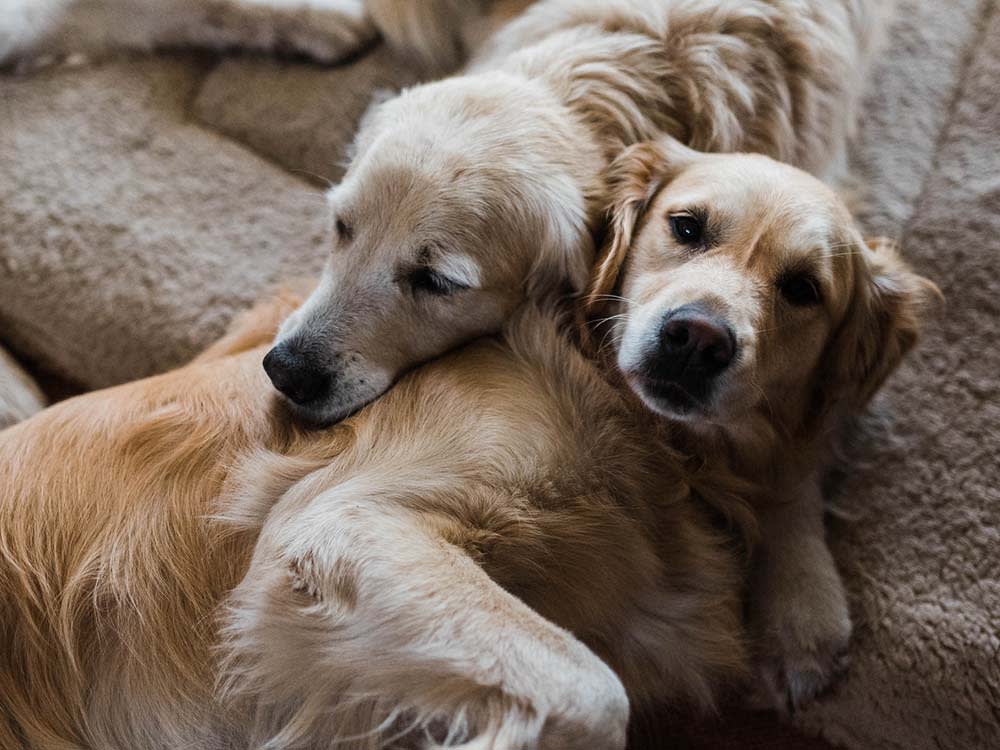
The instinct, when a breed gets sick, is to breed the sickness out. Find the gene, test the dogs, remove the carriers, done.
The largest and longest study of canine health ever attempted has spent fourteen years quietly demonstrating that this instinct, applied crudely, will make things worse. That is not the finding anybody set out to get. It may be the most valuable one.
Start with the number that made this necessary
Cross the ten-year line and a dog has roughly a fifty-fifty chance of having received a cancer diagnosis of some kind. For people, the same coin flip lands around seventy.
That sounds catastrophic, and then it doesn’t, because of a second number: catch a canine cancer early enough and about half of them can be cured. Cancer in dogs is not the sentence it was.
It also is not evenly distributed. Cancer mortality across breeds runs from under 10 percent to over 60 percent, and the single best predictor is size. Stay under 20 pounds and the risk collapses. A Chihuahua, Dachshund, Maltese, Miniature Pinscher, or Pomeranian has a lifetime cancer chance below 10 percent. The suspected mechanism is IGF-1, a growth hormone that small dogs carry at low levels.
At the other end: Bernese Mountain Dog, Bouvier des Flandres, Boxer, Bullmastiff, and Golden Retriever.
Why the Golden, specifically, is a scientific gift
Here is the fact that turned a breed’s tragedy into a research instrument.
In a 1988 health survey out of the University of Pennsylvania’s veterinary school, Golden Retrievers were neither over- nor under-represented for cancer. Ten years later, the Golden Retriever Club of America published a health report finding cancer as the cause of death in 61.4 percent of their dogs.
That is a catastrophic shift inside a single decade. And it is recent, which means it is not ancient breed architecture. It is something that happened.
Then the comparison that makes it a study rather than a tragedy: European Goldens die of cancer at 38.8 percent, per a 2010 figure. Still far above average, but dramatically lower than the North American population.
The two look like the same dog. Genetically they are two distinct populations, separated by geography, with gene pools so large and so rarely crossed that they have drifted apart. Lab work suggests the cancer risk in North American Goldens traces to relatively recent mutations.
So you have a natural experiment: two large populations of nominally the same breed, one of which got dramatically sicker, in living memory. Find the difference and you may find something that applies to every dog.
The mechanism: the popular sire
The reason a closed population can go sideways this fast has a name.
Registries require that every ancestor of a registered dog also be registered, which makes each breed a closed population with no gene flow in. Into that closed system drops the popular sire effect: one dog with desirable traits gets bred, repeatedly, to a large fraction of the available females. Every descendant inherits his mutations, the useful ones and the ruinous ones alike, and those variants then propagate through the pool at speed until they can become fixed, meaning the alternatives are simply gone.
A breed can acquire a catastrophic disease risk in ten years without anyone doing anything wrong by the rules. That is the story.
The study
After a 1998 club survey confirmed what breeders already feared, the Golden Retriever Foundation began funding cancer research, eventually putting up $1 million and asking Morris Animal Foundation to match it. A canine cancer summit set three goals: build a tumor archive, fund more studies, devise prevention strategies.
Assembling the people took a whole discipline of its own: geneticists and epidemiologists, oncologists and surgeons, toxicologists and nutritionists, plus the breeders and donors without whom none of it happens. That group then spent three and a half years just designing the study, because animal epidemiology is brutally hard. The obstacles are structural: thin funding, private practices recording data in non-standard ways, pedigrees that are difficult to verify, grieving owners who understandably do not want a necropsy, and cancers silent enough that a sudden death never gets attributed to them. Studies bleed participants and then die before they reach significance.
The Morris Animal Foundation Golden Retriever Lifetime Study launched on August 30, 2012. Nothing like it existed: one breed, followed from puppyhood until the animal died, with nobody letting go in between.
Between 2012 and 2015 it enrolled 3,000 dogs, aged six months to two years. Every year, for the rest of each dog’s life, the owner fills out an exhaustive questionnaire and the dog gets a physical exam and gives up samples: blood, urine, feces, hair, toenail clippings. More than 2,050 veterinarians are doing the collecting. Owners commit, up front, to being asked about a necropsy at the end.
The questionnaires reach into places most studies never go. Chemicals used in the home, in the yard, and on the dog. Drinking water source. Food. Exposure by air, by contact, by ingestion.
Rodney Page, the veterinary oncologist at Colorado State’s Flint Animal Cancer Center who serves as principal investigator, has been blunt about the target. The curable half is not the problem. The study is aimed at the cancers you cannot cut out: the mast cell tumors that are inoperable, lymphoma, which is systemic, and osteosarcoma and hemangiosarcoma, both of which have usually spread by the time anyone notices. Those four account for roughly 80 percent of cancer deaths in Golden Retrievers. They start climbing at five or six years old and peak around nine or ten, though they can appear in dogs under two.
Goldens were chosen not because they are the highest-risk breed, but because there are so many of them, and because they do so many different jobs, from assistance work and search-and-rescue to field trials to lying on a sofa. That variety means a broad spread of environmental exposures inside one genetically coherent population.
The uncomfortable finding: don’t breed it out
Rhonda Hovan, a Golden Retriever breeder and the GRCA’s research facilitator, has spent decades making an argument that runs directly against instinct, and it may be the most important thing in this entire body of work.
Genetic testing to purge dogs from the breeding pool is not the solution it appears to be.
Dogs share more than 300 inherited diseases with humans, from narcolepsy and hemophilia to diabetes and lupus. You cannot breed away from all of them and still have a functioning gene pool. Every dog you remove takes all of its genes with it, not just the bad one. Reduce diversity, and you raise the odds that something else surfaces later. In a breed that has already lost diversity to popular sires, this is not a hypothetical.
Hovan’s warning runs like this. Purging every dog with a minor condition inflicts more harm on the generations that follow than simply breeding those dogs would have, provided it is done sparingly and with care. And when a trait is targeted without a good reason for targeting it, there is a genuine chance that whatever surfaces in its place is worse than the thing you were running from.
Her alternative is “test and replace,” not “test and eliminate.” For recessive conditions, breed carriers and affected dogs to genetically normal dogs. You keep the line’s genetic variety and you walk toward normal offspring over generations, instead of amputating whole branches of the tree.
To find out what is actually there, the GRCA has been working with a research team at UC Davis to survey the breed’s genetic diversity across types and geography, collecting samples across the US and Canada. Hovan’s framing of why is the plainest sentence in the whole enterprise: you cannot change what you do not measure.
“The reflex to purge every carrier is the same reflex that got the breed here,” says Dr. Lena Park. “You get one generation of relief and you pay for it in the next three. I would rather a breeder keep a carrier and breed it carefully than lose that dog’s entire genome to be safe.”
What newer research adds
The study is now in its fourteenth year, and it has quietly turned into something bigger than a cancer study.
In 2025 alone, nine published papers drew on its data and samples, including work linking lymphoma to environmental exposures and, more surprisingly, work connecting the protein content of dog food to aggression.
The most striking output is not about cancer at all. Researchers pulled complete blood count and biochemistry data from 2,412 of the dogs across 16,678 visits and built a biological aging clock out of ordinary blood markers, achieving a correlation of about 0.78. A model using the full biomarker panel predicted both lifetime and one-year mortality better than age alone.
Read that again in practical terms. A routine blood panel, the kind your dog already gets, may be able to tell you how old your dog actually is, as opposed to how old he is on paper, and how long he has. That is not a cancer cure. It is arguably more useful, because it applies to every dog, of every breed, at every annual exam, and it turns a test you already pay for into a prognostic tool.
The pipeline has also opened up in a way that says something about where this is heading. In April 2025, for the first time, a project using the study’s data won funding through Morris Animal Foundation’s competitive review process rather than being run in-house: researchers at Colorado State examining how wildfire smoke exposure affects Golden Retrievers’ health and longevity.
That is what the study was actually built to be. Not one answer, but a permanent, deep, well-characterized dataset that scientists who were not born when it started can come back and ask their own questions of. David Haworth, the Morris Animal Foundation CEO who enrolled his own dog, has made the point that a cohort study like this only survives on the fanatical participation of its subjects’ owners. Which, he has noted, is easier when the subjects are Golden Retrievers.
References
- Morris Animal Foundation. Golden Retriever Lifetime Study. morrisanimalfoundation.org
- Morris Animal Foundation. Golden Retriever Lifetime Study 2025 Outcomes & Impact. morrisanimalfoundation.org
- “Lifetime age-related changes in clinical laboratory results, aging clocks and mortality predictors in 2412 Golden Retrievers.” PMC, 2025. pmc.ncbi.nlm.nih.gov
- “Cohort profile: The Golden Retriever Lifetime Study (GRLS).” PMC. ncbi.nlm.nih.gov
- Morris Animal Foundation. Top Animal Health Research Findings of 2025. morrisanimalfoundation.org
- Colorado State University Flint Animal Cancer Center. csuanimalcancercenter.org
- Golden Retriever Club of America. Health and Genetics. grca.org
Not a substitute for your vet. Our guidance is educational. For urgent symptoms, contact a vet or emergency clinic right away. Editorial standards
Dr. Mehta is a board-certified veterinary nutritionist who evaluates pet food formulations, ingredient quality, and the science behind dietary trends. He writes and reviews all nutrition content at The Pet Times, including our food rankings and feeding guides.
Meet our experts ↗Keep reading
 Health & WellnessOne Flea Bite Can Wreck an Allergic Dog. The Count Never Mattered.Dr. Priya Nair · 9 min
 Health & WellnessYour Dog Can Take the Anti-Aging Pill Today. Read the Fine Print First.Dr. Ravi Mehta · 7 min
 Health & WellnessYour Dog Isn't Getting Lazy in Winter. Their Body Chemistry Shifted.Dr. Lena Park · 5 min
 Health & WellnessMost Dog Coughs You Can Soothe at Home. A Few You Really Can't.Dr. Amara Solis · 9 min
 Health & WellnessYour Dog Has an Ear Infection and Money's Tight. Read This First.Dr. Priya Nair · 8 min
 Health & WellnessA Worm Can Smell Cancer. That's the Idea Behind the At-Home Dog Test.Dr. Mara Chen · 7 min