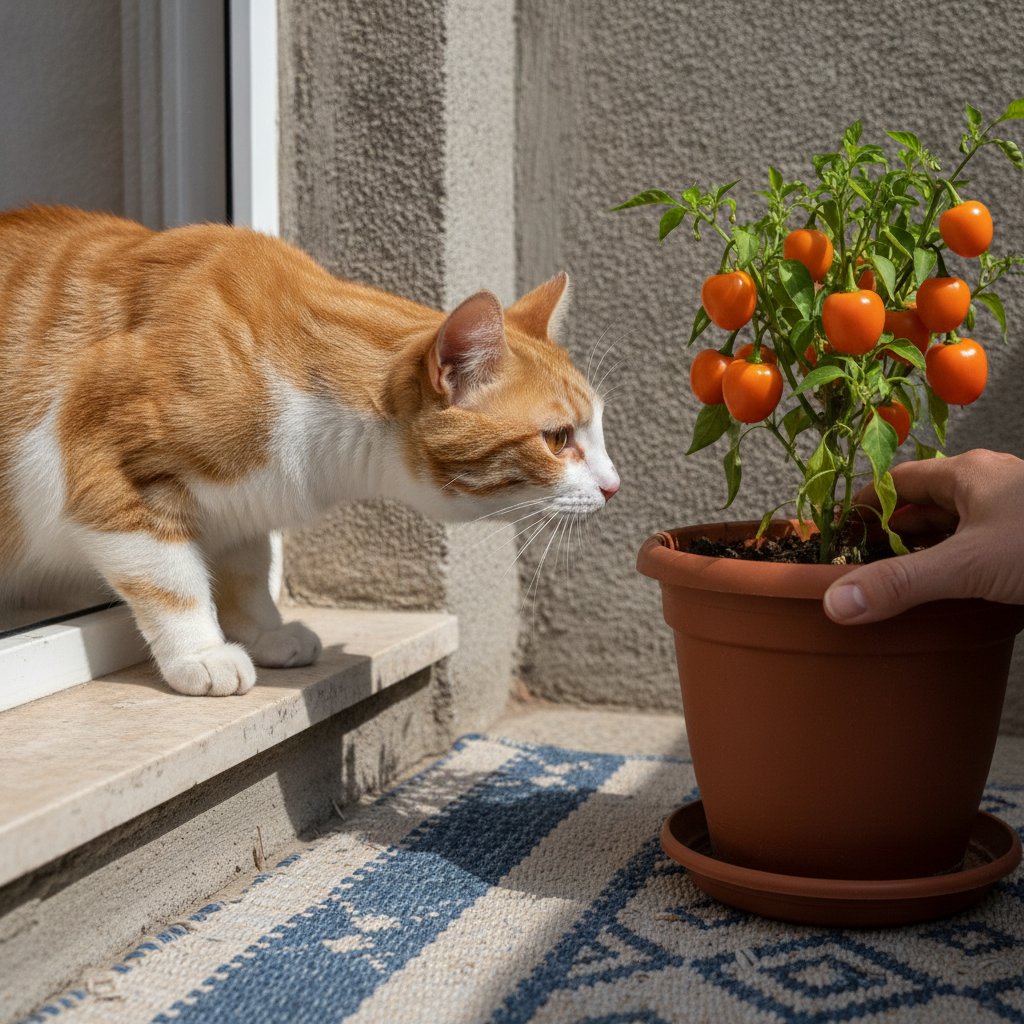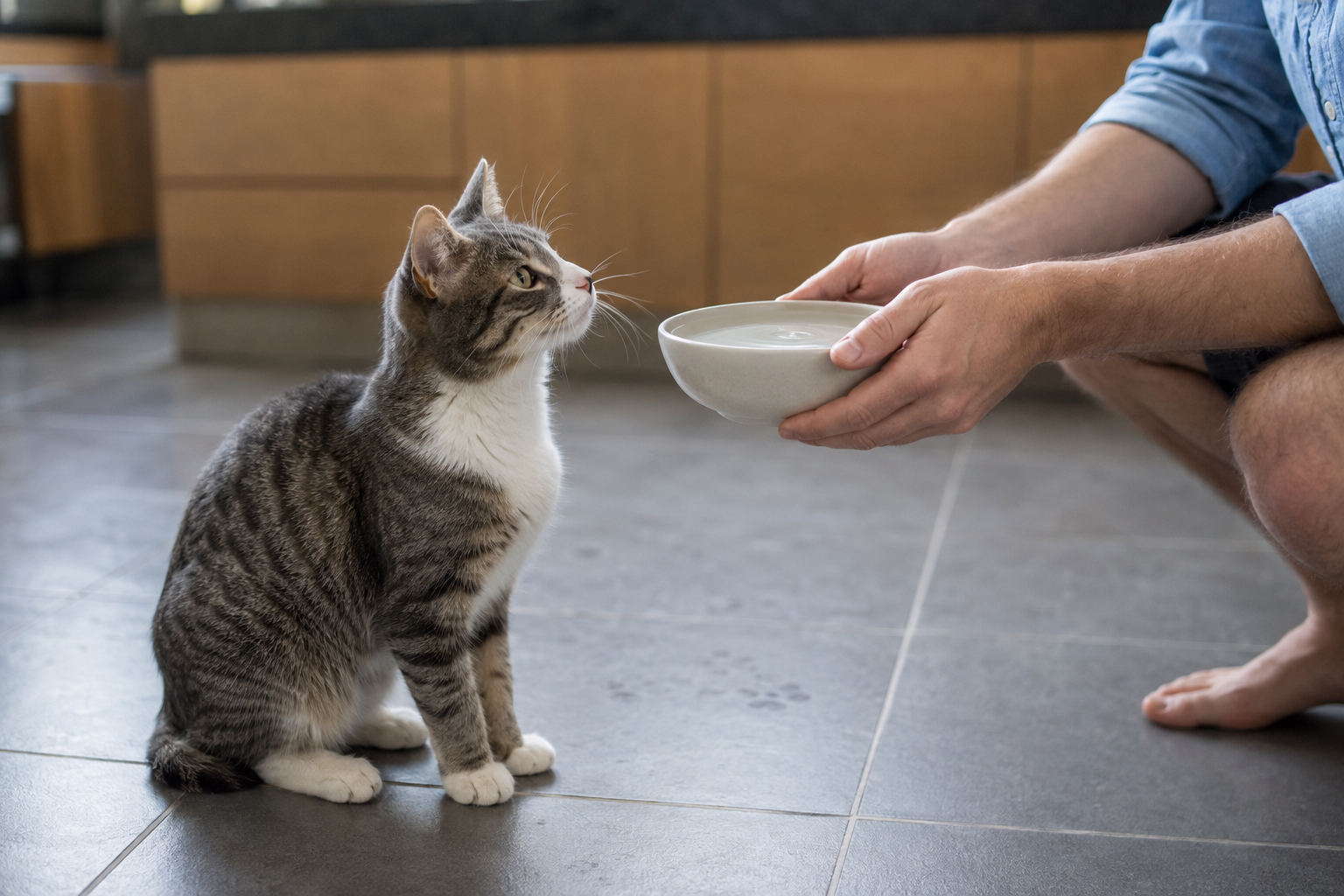
If you have ever stood over your cat’s water bowl silently willing them to drink, you are fighting biology, not stubbornness. Cats descend from desert-dwelling hunters who got most of their water from the bodies of their prey, so they never developed a strong drive to drink standing water the way a dog does. Left to their own instincts, many house cats run a little dry all the time.
That single fact reframes the whole problem. The goal is not to nag a reluctant cat into lapping more from a dish. It is to work with their wiring, get water into them through their food, and strip away the small annoyances that make them walk away from the bowl. Do that, and hydration stops being a daily battle. First, though, it helps to know what dehydration actually looks like, because a chronically under-hydrated cat is quietly at higher risk for urinary and kidney trouble.
How to tell if your cat is actually dehydrated
A few signs are worth knowing, because catching dehydration early can head off a bigger problem.
- Panting. Cats, unlike dogs, rarely pant. If yours is, treat it as a red flag for pain, overheating, or dehydration, not normal cooling.
- Poor appetite and lethargy. A cat who is off their food and unusually flat may be low on fluids.
- Sunken eyes. Eyes that look set deeper in the sockets than usual.
- Dry, tacky gums. Press a finger gently on the gums; they should blanch from white back to pink in under two seconds. If your finger feels sticky, the gums look bright red, or the color takes longer than two seconds to return, your cat is likely dehydrated.
- Loss of skin elasticity. Gently lift the loose skin over the shoulders and let go. In a hydrated cat it snaps back almost instantly; in a dehydrated one it stays “tented” or falls slowly. One caveat: senior cats can lose skin elasticity even when properly hydrated, so this test is less reliable in older cats.
Any of these, especially in combination, is a reason to call your vet.
What causes dehydration in the first place
Sometimes a cat isn’t just a lazy drinker, they’re sick. A number of conditions drive water loss, including diabetes, kidney disease, some cancers, inflammatory bowel disease, and hyperthyroidism. Dental pain is a sneaky one, because a sore mouth pushes a cat away from the bowl and the dish alike. If yours appears to be drinking normally or eating plenty of wet food yet still looks dehydrated, don’t chase it with more tricks. See your vet to rule out an underlying illness.
“Chronic mild dehydration is one of those things that doesn’t look like an emergency until it is,” says Dr. Priya Nair. “It quietly stresses the kidneys and the bladder over months and years. That’s why I’d rather build moisture into a cat’s daily life early, mostly through diet, than wait until we’re treating a urinary blockage or advanced kidney disease. A cat who drinks a little more is nice. A cat eating a moisture-rich diet is protected.”
The tips that actually move the needle
Here is what works, roughly in order of impact.
Feed wet food. This is the big lever, and it’s why it comes first. Canned food is around 70 to 80 percent water, so a cat eating it takes in a large share of their daily fluids without “drinking” at all. Even a water-avoidant cat rarely skips a meal, so the easiest way to hydrate a cat is to hide the water in the food. If you can’t switch fully, mixing some wet food into the routine, or adding a splash of water or a cat-safe broth to meals, still helps.
Offer running water. Cats often prefer moving water, partly because still water is more likely to harbor bacteria, and their instincts steer them toward a fresher-seeming source. A pet fountain (many include filters) or even a dripping faucet can draw a cat in, and the sound carries across a room to remind them the water is there.
Move the bowl, and add more of them. Some cats dislike drinking near their food, they instinctively treat water next to a “kill site” as contaminated, while others are more likely to sip if reminded at mealtime. Experiment with locations, and above all increase access: put bowls and fountains in several rooms so a drink is never more than a few steps away. Cats won’t go out of their way for water, but they’ll happily sip if it’s right there. Keep every station away from noisy startles like the fridge, ice maker, or washing machine.
Keep it scrupulously clean and fresh. Cats have an extraordinary sense of smell, roughly 200 million scent receptors to our five million, so a dish that seems fine to you can smell foul to them. Wash bowls often and refresh the water regularly.
Respect the whiskers. Whiskers are exquisitely sensitive, and some cats hate the feeling of them brushing the sides of a deep or narrow bowl. Filling the bowl to the brim so your cat doesn’t have to dip their face in, or switching to a wide, shallow, or slightly raised bowl, can remove a friction point you never knew was there. Raised bowls also let a cat drink without craning down, which older or stiff cats especially appreciate.
Flavor the water, carefully. A little tuna juice, clam juice, or unsalted chicken broth stirred in can turn plain water into something worth crossing the room for. You can freeze the broth into ice cubes to both flavor the water and keep it at the cool temperature cats tend to prefer. Just make sure anything you add is free of added salt, onion, and garlic, all of which are toxic to cats, and skip milk, sugary additives, and plant extracts. Check with your vet before making diet changes.
What newer guidance adds
The moisture math is more striking than most cat owners realize, and it’s why vets have shifted the conversation from “the bowl” to “the diet.” Dry kibble contains only about 10 percent water, while canned food runs 70 to 80 percent. To stay properly hydrated, a cat’s food needs to be roughly 63 percent moisture or higher; on a dry-only diet, a cat would have to drink close to an extra cup of water a day to make up the difference, which almost none of them do. That gap is the whole argument for wet food.
It matters even more for cats with kidney disease. Compromised kidneys struggle to hold onto water, which drives more urination and more dehydration in a vicious cycle, so moisture-rich diets are now a cornerstone of managing feline chronic kidney disease. Vets often aim for wet food to supply more than half of a CKD cat’s daily fluids, and target roughly 50 milliliters of total fluid per kilogram of body weight per day from all sources combined. If your cat has any diagnosed condition, let your vet set those targets, but the direction is clear: for cats, the best water bowl is often a can.
References
- Cornell Feline Health Center. “Hydration.” Cornell University College of Veterinary Medicine.
- VCA Animal Hospitals. “Nutrition for Cats with Chronic Kidney Disease.” vcahospitals.com.
- Purina Institute. “Maintaining Hydration in Cats With CKD.” purinainstitute.com.
- Zaghini, G., and G. Biagi. “Nutritional aspects of feline lower urinary tract disease and hydration.” peer-reviewed veterinary nutrition literature.