


The 'Bloat Surgery' Doesn't Prevent Bloat. It Prevents the Part That Kills.
Gastropexy gets called bloat prevention, and that's misleading. It doesn't stop a stomach from filling with gas. It stops the deadly twist, and for the right dog, that distinction is the whole reason to consider it.

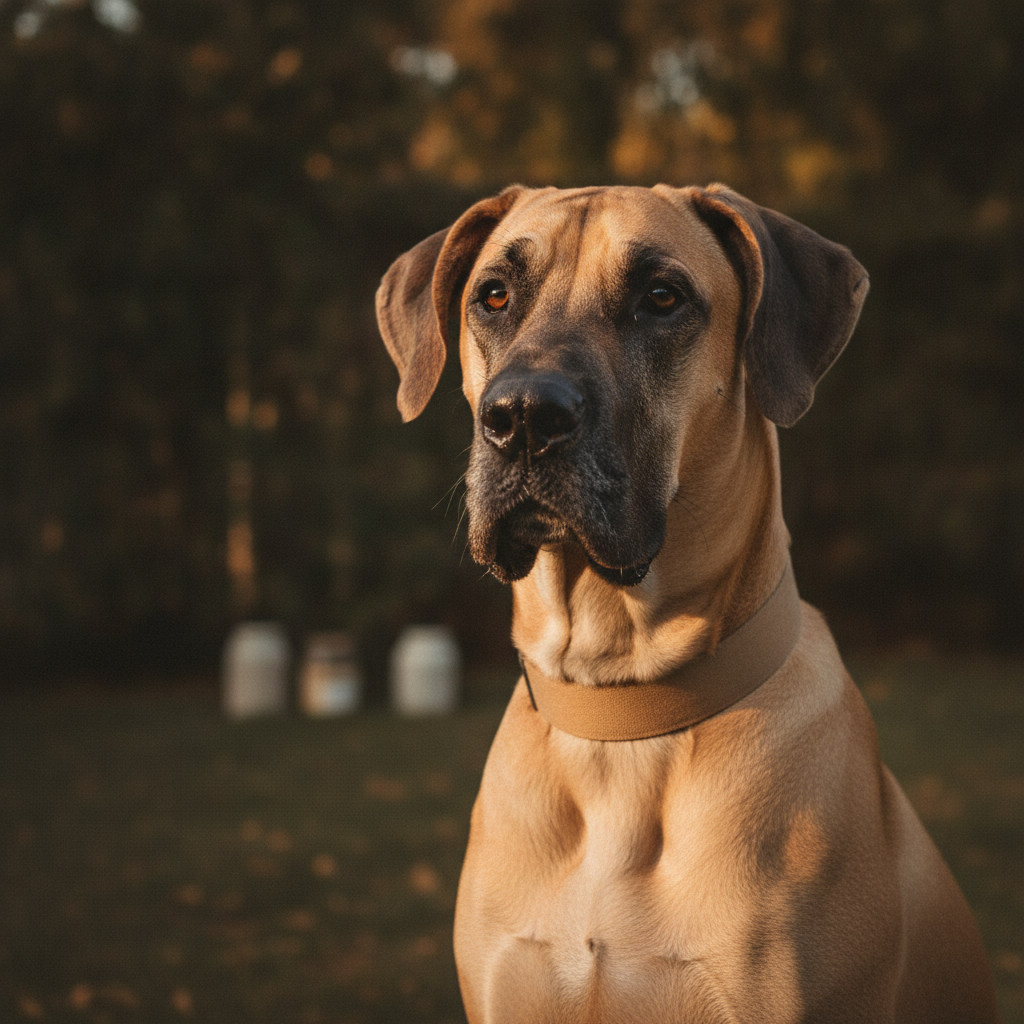
If you have a deep-chested dog, you have probably been warned about bloat, and told that a surgery called gastropexy can prevent it. That framing is common, and it is wrong in a way that actually matters. A gastropexy does not stop your dog’s stomach from bloating. What it stops is the twist that turns bloat from uncomfortable into fatal. Understanding that difference is the key to deciding whether the surgery is right for your dog.
What bloat really is
The clinical name is gastric dilatation and volvulus, or GDV, and it is one of the leading killers of large, deep-chested breeds. It happens in two stages. First, the stomach dilates, filling with gas or fluid. Sometimes it stops there. Often it doesn’t, and the distended stomach rotates and twists on itself, which is the volvulus. Once that twist happens, blood supply is cut off, the situation cascades fast, and an untreated dog can die within hours. This is a same-hour emergency, not a wait-and-see one.
The surgical answer to that twist is a gastropexy.
What the surgery does
In a gastropexy, a surgeon attaches the stomach to the body wall with sutures so it physically can’t rotate out of position. In an emergency, the surgeon first untwists the stomach and returns it to place, then pexies it. But you don’t have to wait for a crisis. A planned version, a prophylactic gastropexy, is done to prevent a first or future episode, and it is frequently performed at the same time as a spay or neuter, when the dog is already under anesthesia. For dogs already altered, a minimally invasive laparoscopic approach uses small incisions and tends to cause only minor issues, most commonly a temporary fold of skin.
Does it work? Yes, with one honest caveat
Here is the crucial nuance. A gastropexy does not prevent the stomach from bloating, from filling with gas. It prevents the life-threatening rotation. That is still a very good thing, because the rotation is what kills.
The numbers are striking. In dogs that have already had a GDV episode, recurrence without a gastropexy can run as high as 55 percent; with one, it drops to around 4 percent. But “greatly reduced” is not “gone.”
I tell owners to hear the caveat as clearly as the benefit. A pexy makes a deadly recurrence far less likely, and for a giant breed that can be the difference between a long life and a midnight emergency. But it is not a force field. I have seen a pexied stomach still bloat, so the surgery buys you enormous risk reduction, not permission to ignore the signs.
Which dogs are actually at risk
This surgery is a conversation for specific dogs, not every dog. Large breeds carry roughly a 24 percent lifetime chance of developing GDV, and the risk climbs with age. Breeds predisposed to bloat include Great Danes, St. Bernards, Weimaraners, Rottweilers, Irish Setters, Gordon Setters, Boxers, Standard Poodles, Basset Hounds, Doberman Pinschers, German Shepherds, Bloodhounds, Newfoundlands, and Old English Sheepdogs.
Cost is part of the calculus too. Treating a full-blown GDV emergency with surgery generally runs between $2,000 and $5,000, and considerably more if there are complications, whereas a planned preventive pexy is typically far cheaper, especially bundled with a spay or neuter.
What newer research adds
Larger studies since have sharpened the case for at-risk breeds. Work following hundreds of dogs after preventive incisional gastropexy has reported that a small share, around one in nine, still experienced some gastric dilatation afterward, reinforcing that the surgery targets the twist, not the gas. But the survival math is lopsided in the surgery’s favor for the highest-risk dogs: prophylactic gastropexy has been associated with a dramatic reduction in death from GDV, roughly two-fold in Rottweilers and on the order of nearly 30-fold in Great Danes. In other words, the more predisposed the breed, the more a preventive pexy is worth serious discussion.
The one thing every owner of an at-risk dog should remember
Whether or not your dog ever has this surgery, the rule does not change: if your dog’s stomach becomes distended and hard, if they retch without producing anything, pace, drool, or seem suddenly distressed, get to a veterinarian immediately, pexy or no pexy. Preventive surgery lowers the odds of the fatal twist. It does not replace the emergency vet. For a deep-chested dog, knowing the signs, and moving fast, is the part that saves lives.
References
- Ward, M. P., et al. “Benefits of Prophylactic Gastropexy for Dogs at Risk of Gastric Dilatation-Volvulus.” Preventive Veterinary Medicine, vol. 60, no. 4, 2003, pp. 319–329. pubmed.ncbi.nlm.nih.gov
- Loy Son, N. K., et al. “Outcomes and Complications of Prophylactic Incisional Gastropexy in 766 Dogs (2009–2019).” ncbi.nlm.nih.gov
- American College of Veterinary Surgeons. “Gastric Dilatation-Volvulus.” acvs.org
Common questions
Which dogs should consider a preventive gastropexy?
Deep-chested, large and giant breeds at high risk of GDV, Great Danes especially, along with St. Bernards, Weimaraners, Standard Poodles, and others. Talk it through with your vet based on breed, family history, and age.
How much does it cost?
Treating a full GDV emergency with surgery typically runs about $2,000 to $5,000, and more with complications. A planned preventive gastropexy, often done at spay or neuter, is usually far less than an emergency.
Is the surgery safe?
Beyond the normal risks of anesthesia and surgery, gastropexy is generally well tolerated. A minimally invasive laparoscopic version exists for dogs already spayed or neutered, with mostly minor complications reported.
Not a substitute for your vet. Our guidance is educational. For urgent symptoms, contact a vet or emergency clinic right away. Editorial standards
Dr. Mehta is a board-certified veterinary nutritionist who evaluates pet food formulations, ingredient quality, and the science behind dietary trends. He writes and reviews all nutrition content at The Pet Times, including our food rankings and feeding guides.
Meet our experts ↗Keep reading
 Health & WellnessStop Watching Your Puppy Breathe. Start Counting.Dr. Lena Park · 8 min
 Health & WellnessEye Gunk Is Normal. The Color and the Count Tell You When It Isn't.Dr. Ravi Mehta · 9 min
 Health & WellnessThe 'Miracle' Antibiotic for the Mystery Dog Illness Isn't a Cure. It's a Last Resort.Dr. Lena Park · 6 min
 Health & WellnessThe 60-Second Belly Check That Could Save Your Dog's LifeDr. Mara Chen · 7 min
 Health & WellnessYour Dog's Panting Isn't the Problem. Panting With No Job to Do Is.Dr. Ravi Mehta · 8 min
 Health & WellnessThe Worm You Can See Isn't the One That KillsDr. Amara Solis · 7 min