


'Freeze-Dried' Tells You Nothing About Your Cat's Food. Two Labels Do.
Freeze-dried raw cat food is booming, and the word 'freeze-dried' is doing a lot of marketing work it hasn't earned. Here's what the process actually is, the real safety tradeoffs, and the two things on the label that decide everything.

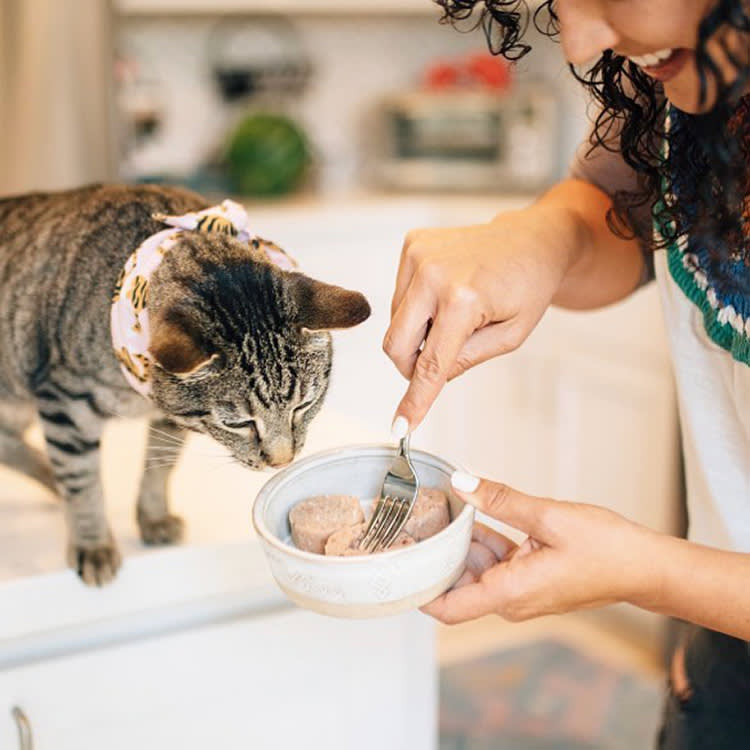
Cats are professional food critics, and the rejection stings every time. You finally find the flavor your cat inhales, do a small victory lap, and a week later they are staring at the same bowl like you have insulted them. It is no wonder the cat-food aisle has exploded with options, and among the buzziest is freeze-dried food — almost all of it freeze-dried raw.
Here is the thing the marketing does not want you to sit with: “freeze-dried” describes how the food was preserved, not what is in it or whether it is safe. It is a process, not a promise. Before you switch your cat over, it helps to separate what the label is actually telling you from what it only seems to.
What “freeze-dried” really means
Freeze-drying removes moisture from food at low temperatures so it can be shelf-stable and rehydrated later. That is the whole claim. It says nothing about ingredient quality, nutritional completeness, or safety. Two freeze-dried foods can be wildly different: one a balanced daily diet, the other a protein-only topper that would slowly harm a cat fed nothing else.
The word also quietly reassures people that the food has been “processed” in a way that makes it clean. It has not, at least not in the sense that matters for germs. Because almost all freeze-dried cat food is raw, the safety questions that follow any raw meat product follow this too.
The safety tradeoff nobody advertises
This is where many veterinarians get cautious about raw diets, and the reasoning is straightforward. Raw meat can carry bacteria and parasites — Salmonella, E. coli, and the toxoplasmosis parasite among them — that ordinary cooking would kill. Freeze-drying does not cook anything. It pulls out water at low temperature and leaves those pathogens intact.
That creates a two-way risk. Your cat can get sick, and so can you, because handling and serving contaminated food puts the germs on your hands, your counters, and your cat’s bowl. The danger climbs steeply for anyone with a weakened immune system, whether from illness or medication, and for the very young and the elderly, feline or human. If you feed a raw diet, thorough hand-washing is not a nicety; it is part of the routine.
It is also worth being clear-eyed about the flip side. Ask a devoted raw feeder and you will hear glowing reports: glossier coats, cleared-up skin and digestive troubles, better appetite, and smaller, firmer, less pungent stool. Those outcomes may be real for some cats, but they have not been confirmed in published scientific studies, so it is genuinely hard to tell how much is benefit and how much is enthusiasm. Go in with realistic expectations rather than a wish list.
The two labels that decide everything
If you take one thing from this, take these two checks. They matter more than any front-of-bag claim.
1. The AAFCO “complete and balanced” statement. Cats have unusual, non-negotiable nutritional needs, and a diet that misses them causes serious harm over time. Only a food that carries a statement saying it meets the Association of American Feed Control Officials’ standards for “complete and balanced nutrition” is safe as your cat’s everyday diet. Plenty of freeze-dried products are intended as treats or supplements, not full meals — and some are marketed to look like complete diets without carrying that statement. If the AAFCO line is missing, do not feed it as the main course, no matter what the packaging implies.
2. Evidence the brand fights contamination. Because freeze-drying does not kill pathogens, the best raw brands add a step that does more of the work. The main one is high-pressure processing (HPP), which uses intense pressure without heat to knock down bacteria and parasites. It is not a perfect sterilizer — nothing here is 100 percent — but it dramatically lowers the risk. The most careful companies go further and test each batch of food for contamination before it ships. A brand that uses HPP and batch-tests, and says so plainly, is taking the safety problem seriously. One that is silent on both is asking you to take it on faith.
When a client wants to try freeze-dried raw, I don’t lecture them out of it, I hand them a checklist. Is there an AAFCO complete-and-balanced statement? Does the company use high-pressure processing and test their batches? Can you commit to handling it like raw chicken every single time? If the answer to all three is yes, we can talk. If any one is no, that’s my pause.
Handling it like what it is: raw meat
If you go this route, treat the food with the same respect you would give raw poultry in your own kitchen. Wash your hands thoroughly after every contact. Clean every bowl and utensil thoroughly with hot water and soap once the meal is done. Keep other people — especially children — from handling or accidentally tasting it. And do not let rehydrated food sit out at room temperature; pick up leftovers and clean the bowl promptly after your cat eats. None of this is paranoia. It is the price of admission for feeding raw safely.
It is also smart to loop in your veterinarian before switching, particularly to a raw diet. Some cats have medical conditions that call for specific foods or rule certain ingredients out, and your vet can flag that before it becomes a problem.
What’s new: the bird flu factor
Since freeze-dried raw diets took off, a serious new hazard has moved to the front of the conversation: highly pathogenic avian influenza, H5N1 bird flu. It is no longer hypothetical. In 2025, U.S. regulators warned pet owners after testing confirmed H5N1 in raw cat food, and at least one brand recalled product after a cat that ate it fell ill and had to be euthanized, with the same strain of the virus found in both the cat and the food. Investigations have tied the strain to raw poultry-based pet food.
The response has been significant. The FDA now requires cat and dog food manufacturers to specifically address H5N1 in their food-safety plans — a direct acknowledgment that raw poultry ingredients can carry a virus that is often deadly to cats. This does not mean every freeze-dried food is dangerous, but it does raise the stakes on the safety questions above, especially for raw diets built on chicken and turkey. If you feed raw, watch for recalls, favor brands with rigorous testing, and take the handling precautions seriously. When in doubt, talk to your vet about whether a cooked or gently processed alternative gets you the benefits you are after with less risk.
The part about money, honestly
High-quality freeze-dried raw diets — the ones doing the HPP and the batch testing — are expensive, and that may simply not fit every budget. That is completely okay. There are excellent cat foods at every price point, and diet is only one of many costs of cat ownership. It is worth setting money aside for the things that quietly protect your cat’s health: annual checkups, vaccines, dental cleanings, and a cushion for the unexpected. And, of course, a little left over for the cat beds and catnip toys that trigger the good zoomies. A pricier bag is not automatically a better one. A safe, complete, well-handled diet your cat actually eats is the real goal.
References
- U.S. Food and Drug Administration. Cat and Dog Food Manufacturers Required to Consider H5N1 in Food Safety Plans. https://www.fda.gov/animal-veterinary/cvm-updates/cat-and-dog-food-manufacturers-required-consider-h5n1-food-safety-plans
- U.S. Food and Drug Administration. FDA Notifies Pet Owners of H5N1 Contamination in Certain Lots of Raw Cat Food. https://www.fda.gov/animal-veterinary/cvm-updates
- Association of American Feed Control Officials (AAFCO). Understanding pet food labels. https://www.aafco.org/consumers/understanding-pet-food/
- U.S. Food and Drug Administration. Get the Facts! Raw Pet Food Diets Can Be Dangerous to You and Your Pet. https://www.fda.gov/animal-veterinary/animal-health-literacy/get-facts-raw-pet-food-diets-can-be-dangerous-you-and-your-pet
Not a substitute for your vet. Our guidance is educational. For urgent symptoms, contact a vet or emergency clinic right away. Editorial standards
Dr. Nair is a veterinarian focused on diet and feeding. She covers everyday nutrition, treats, and the many "can they eat this?" questions owners ask, grounding each answer in what is actually safe and sensible for dogs and cats.
Meet our experts ↗Keep reading
 FoodThe 'Natural' Raw Diet Is Failing Cats on Two FrontsDr. Amara Solis · 7 min
 Health & WellnessBlue Ridge Beef Recall of Puppy and Kitten Food Now Covers 16 StatesDr. Ravi Mehta · 4 min
 Health & WellnessOne Customer Complained. That's the Only Reason the Duck Was Pulled.Dr. Lena Park · 5 min
 FoodThe Recalled Raw Food Was Never the Only Thing at Risk. Your Kitchen Was.Dr. Nina Kohl · 5 min
 FoodSalmonella and Listeria in Darwin's Raw Pet Food: The Exact Lots to TossDr. Amara Solis · 4 min
 Health & WellnessA Raw-Food Recall, Decoded: What Blue Ridge Beef's Salmonella Scare MeansDr. Ravi Mehta · 6 min