


The Summer Weed That Burrows Into Your Dog and Doesn't Stop
A foxtail is not a burr you brush off. It is a barbed grass seed built to travel one direction only, deeper into the body, and it neither dissolves nor reverses. Here's how to spot foxtail injuries early and keep a hike from turning into surgery.

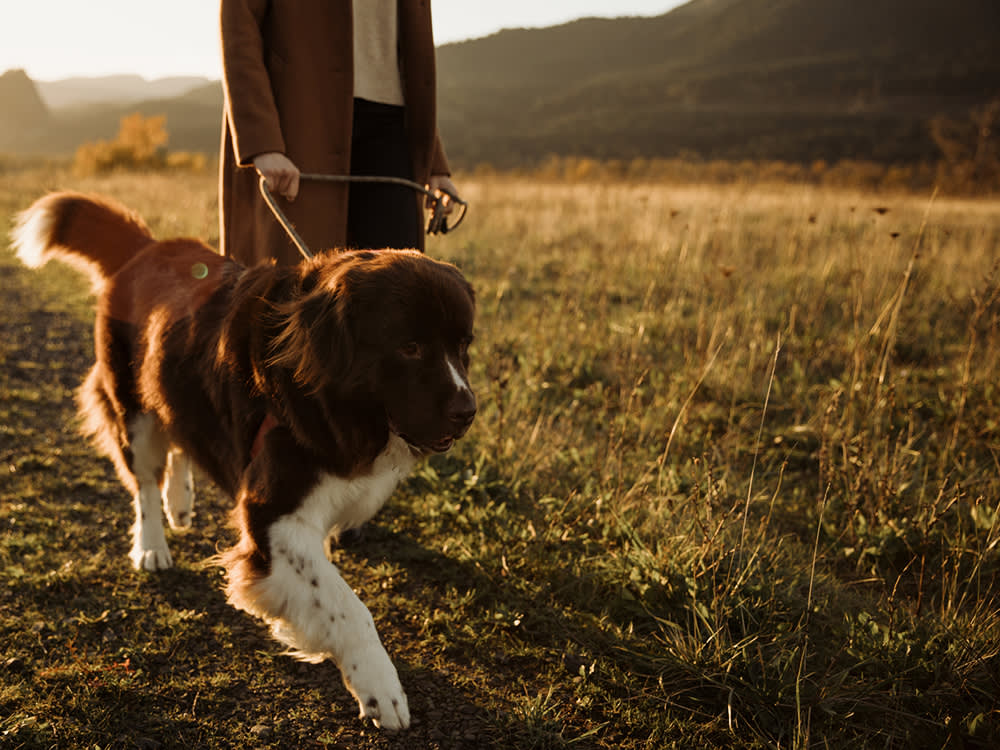
Dogs pick up plant matter constantly, and almost all of it is harmless. A foxtail is the exception, and it is worth understanding exactly why, because the reason is what makes this particular weed so dangerous. A foxtail is not sticky like a burr and it does not just cling to fur. It is a dried grass seed covered in tiny backward-facing barbs, shaped like an arrowhead, and those barbs let it move in one direction only: forward, and inward. Every step your dog takes, every muscle twitch, ratchets it a little deeper. It cannot back out, and the body cannot dissolve it. Left alone, “stuck in the fur” quietly becomes “buried in the tissue.”
That one-way-arrow design is the whole story. It is why a foxtail you could have plucked off in the yard becomes, weeks later, an abscess deep in the chest. As an emergency vet, I can tell you the season has a sound: spring and summer shifts fill up with dogs whose only complaint is sudden, furious sneezing. So before the next hike, here is what these seeds are, how to read the warning signs by body part, and how to make sure a good day outside does not end in the operating room.
What a foxtail actually is
Foxtails are the seed heads of several dried annual grasses, named for their bushy, tapered shape. Through the wet season the grasses shoot up fast; as the weather heats and dries, the seed head brittles and its individual barbed awns break loose to hitch a ride on anything passing by. That is the plant doing exactly what it evolved to do: spread its seed by burrowing into a moving host. Your dog is simply a more vulnerable host than the plant ever counted on. The awns also carry bacteria, so the tunnel they carve is an infected one from the start.
Where they grow, and when
Foxtails were long thought of as a West Coast scourge, but the harmful barbed species now turn up across much of the country. Only some grasses produce the dangerous awns: foxtail barley, found nationwide except parts of the South Atlantic and Gulf Coast; giant foxtail; bristlegrass; cheatgrass; Canada wild rye, common in the Midwest and along the East Coast; and ripgut brome, named for what it does to livestock. Season depends on climate, but in warm regions it can stretch from late April well into October, peaking in the dry mid-to-late summer when the seed heads shatter. Sporting and field dogs are the classic victims, since they plunge through tall brush, but a foxtail does not care whether your dog is flushing quail or sniffing a roadside on a walk.
How to spot the plant
Scan for stiff, bristly, cylinder-shaped seed heads that jut up above the grass around them; that shape is the giveaway that sets a foxtail apart. It gets harder before the seed fully forms, and because so many grass species produce these backward-barbed awns, the safest habit is to treat any dry, bristly grass field as suspect rather than trying to key out the exact species.
Why a foxtail is a genuine emergency
Often a foxtail is caught in the coat and brushed away with no harm done. The trouble starts when one finds an opening. They enter through the nose, ears, eyes, and mouth, and they can also drive straight through skin or into genital openings. A landmark 1983 study of grass-awn migration found these seeds accounted for 61 percent of all plant foreign-body cases in dogs and cats, with the external ear canal the single most common landing spot, followed by the feet, eyes, nose, lower back, and chest cavity.
From there, the barbs do their work. The body cannot break the awn down, and it can only travel inward, so an untreated foxtail either walls itself off into an internal abscess or keeps tunneling, potentially reaching the spine, the abdominal organs, or the lungs, seeding infection and tissue damage the whole way. Once it is on the move internally, it becomes a true needle in a haystack, notoriously hard to locate and remove. That is the entire case for acting early.
Read the symptoms by where the seed went
Because a foxtail can end up almost anywhere, the signs vary by location. In general, watch for intense sneezing, head-shaking, coughing, obsessive licking, swelling, redness, discharge, pain, or labored breathing. More specifically:
- Paws: Nonstop licking of one paw or pad, a puffy raised swelling in the toe webbing, or a tiny pinhole in the skin where a tract is draining as the seed tunnels along.
- Nose: Violent, sudden sneezing fits, pawing at the nose, sometimes a nosebleed.
- Eyes: Squinting, pawing or rubbing at the eye, heavy tearing or discharge, sometimes an eye that gums shut.
- Ears: Sudden head-tilting or hard side-to-side shaking, ear discharge or odor, and clear pain when the ear is touched.
- Mouth and throat: Gagging, hard coughing, exaggerated swallowing like a person with a sore throat, difficulty swallowing, sometimes bad breath.
- Lungs: An inhaled awn can travel down from the nose to the lungs, causing coughing and labored breathing.
- Under the skin and abdomen: A lump, sore, or abscess with swelling where a seed has lodged beneath the surface.
Any of these after time in dry grass is a same-day vet call, not a wait-and-see.
Prevention is almost entirely about the after-check
The only foolproof protection is avoidance: stay out of dry, seed-heavy grass during foxtail season whenever you can. When you can’t, the after-outing exam is what saves dogs. Every single time your dog comes in from grassy terrain, run your hands over the whole body and brush the coat out, then deliberately inspect the ears, the nose, the eyes, between every toe and pad, and under the collar. Keeping the fur clipped short at the feet, in the toe webbing, and by the ears gives seeds fewer places to hide and makes the ones that do sneak in easier to spot. For dogs who work or hike in heavy brush, protective mesh headgear designed to keep awns out of the eyes, ears, and mouth is worth the investment.
The dogs who do well are the ones whose owners check them the same day, not the next week. A foxtail you find in the fur is a thirty-second fix with your fingers. The same seed a week later can be a sedated procedure or worse. Nothing about foxtail care rewards waiting, so make the after-walk pat-down as automatic as wiping muddy paws.
What removal looks like, and what it costs
A superficial foxtail in the skin or the front of the nose is often a quick removal in the exam room. Once the seed is out, you keep the area clean as your vet directs. But a seed that has traveled deep into the nose, the genitals, or the lungs may require an endoscope, a slim camera-and-grabber tool passed through the nose, mouth, or rectum, which is far gentler than open surgery. Once an awn has migrated into the chest or abdomen, an operation is occasionally the only way left to retrieve it.
That range is exactly why timing matters for your wallet as well as your dog. Reported costs run anywhere from under a hundred dollars for a simple, early removal to several thousand for a deep, migrated seed that demands imaging, sedation, or surgery. The price climbs with every day the seed keeps moving.
If you suspect a foxtail anywhere on or in your dog, call your veterinarian right away to find out what to do, at home or in the clinic, before a small barbed seed turns into a big problem.
References
Common questions
How do I know if my dog has a foxtail?
Watch for sudden, violent sneezing, head-shaking, a swollen bump or draining hole between the toes, squinting or a weepy eye, ear pain, or gagging and hard swallowing. Symptoms depend on where the seed entered. Any of these after time outdoors in dry grass warrants a vet visit.
How much does foxtail removal cost?
It ranges widely. A simple removal of a superficial foxtail can run under a hundred dollars, while a deep, migrated seed needing sedation, endoscopy, or surgery can reach several thousand. Costs generally climb the longer the seed has been traveling, which is the best argument for checking your dog the same day.
Not a substitute for your vet. Our guidance is educational. For urgent symptoms, contact a vet or emergency clinic right away. Editorial standards
Dr. Mehta is a board-certified veterinary nutritionist who evaluates pet food formulations, ingredient quality, and the science behind dietary trends. He writes and reviews all nutrition content at The Pet Times, including our food rankings and feeding guides.
Meet our experts ↗Keep reading
 Health & WellnessThe Corn Cob Emergency: Why the First Hour Decides EverythingDr. Mara Chen · 7 min
 Health & WellnessPoisoned Bait Killed 3 Dogs and 51 Coyotes in Tucson. No One Was CaughtJames Okafor · 5 min
 Health & WellnessThe Summer Hazards That Actually Land Dogs at the Vet: 10 to WatchDr. Ravi Mehta · 10 min
 Health & WellnessThe Underwear Isn't the Joke. The Surgery Is.Dr. Lena Park · 7 min
 Health & WellnessHydrogen Peroxide for Dogs: The First-Aid Staple That's Being RetiredDr. Ravi Mehta · 7 min
 Health & WellnessYour Dog's Panting Isn't the Problem. Panting With No Job to Do Is.Dr. Ravi Mehta · 8 min