


That 'Calm' Flat-Faced Dog? The Science Says It's Mostly How You Raised Them.
Flat-faced dogs have a reputation for being mellow, friendly homebodies. A large new study pulls apart what's actually baked into their skull shape and what comes down to the pampered, under-trained lives they tend to lead.

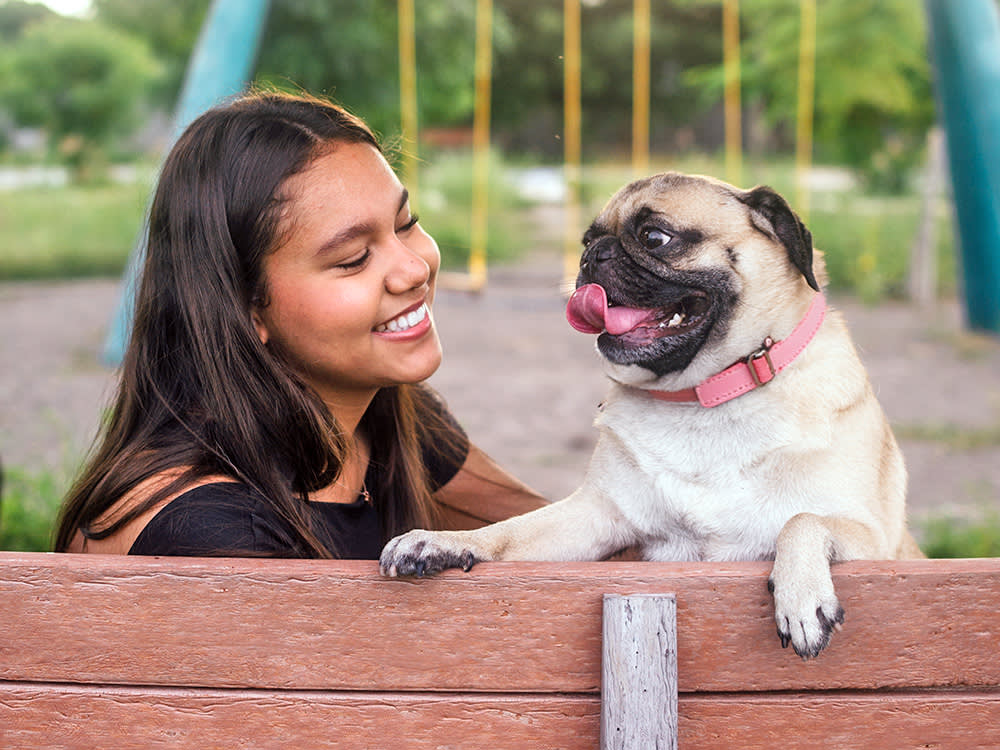
Flat-faced dogs come with a personality reputation attached: calm, friendly, gentle with kids, happy to lounge. It’s a big part of why French Bulldogs have topped the American Kennel Club’s popularity rankings for four straight years and why 93 percent of flat-faced dog owners say they’d get the same breed again. But a large new study asks the uncomfortable, more interesting question underneath that reputation: how much of it is actually written into a squished skull, and how much is just the kind of life these dogs tend to be handed? The answer reshuffles a lot of what people assume.
What the researchers did
A team surveyed the owners of more than 5,000 purebred dogs, using two questionnaires. The first scored four personality traits: calmness, trainability, sociability, and boldness (courage and confidence). The second looked at 12 behavior problems, and the analysis zeroed in on the four most common: jumping on people, pulling on the leash, over-reacting when guests arrive, and not coming when called.
On the surface, the flat-faced dogs (the “brachycephalic” or short-nosed group) looked calmer and bolder than long-nosed dogs. But they came with their own baggage: they were harder to train, more likely to lose it when visitors showed up, and less likely to come when called.
The twist: it wasn’t all about the face
Here’s where the study earns its keep. When the researchers looked at how these dogs actually live, a pattern jumped out. Flat-faced dogs were far more likely to be kept purely as companions, to get no formal training, to live exclusively indoors, to walk less than an hour a day, and to be allowed on the owner’s bed. Their owners also skewed young, in the 19-to-30 range.
Those lifestyle facts turned out to explain a lot. Once the team statistically controlled for body size and training, the supposedly hardwired “low trainability” of short-nosed dogs largely evaporated. As lead author Borbála Turcsán summarized, the low trainability comes mainly from their small size and lack of training, not their head shape, and once you account for those, the difference across head shapes disappears. The apparent extra sociability had a similar catch: it was mostly because the flat-faced dogs in the sample were younger, and puppies are simply more social than older dogs.
This is the kind of finding that should change how people shop for a dog. A lot of what gets sold as breed temperament is really just the environment that breed tends to grow up in. Calm and untrained are not the same thing, even though they can look alike on the couch.
What actually is head-shape deep
A few traits did hold up as genuinely tied to skull shape, even after the researchers controlled for everything else: calmness, boldness, and poor recall. Those three appear to travel with the short head itself.
Why? One possibility is anatomical. Short-nosed dogs have more rounded brains, which could shift how they regulate behavior. But there’s a more sobering explanation the researchers raise, and it’s worth sitting with. Dogs coping with breathing difficulty, pain, or musculoskeletal problems move less and seek comfort, and owners can read that quiet, low-energy state as a mellow personality. In other words, some of that prized “calm” may not be contentment at all. It may be a dog conserving effort because breathing and moving are hard.
That reframing matters, because the flat face that gives these breeds their look is the same feature that causes real, documented suffering. Breeding for an extreme muzzle is linked to serious airway, eye, and skin problems, and the popularity of these dogs has raced ahead of those welfare concerns.
What’s new: the welfare conversation is catching up
The context around this study has shifted quickly, and it’s the update owners should have. The French Bulldog’s grip on the top of the AKC’s list has only tightened, which means more of these dogs are entering homes than ever. At the same time, veterinary and welfare bodies have grown louder about the health cost of extreme flat-faced conformation, with researchers at the UK’s Royal Veterinary College among those documenting how common and severe the breathing, eye, and skin problems are. Several European countries have moved toward restricting the breeding of the most extreme brachycephalic types; the United States has not enacted comparable rules, so in the U.S. the responsibility still falls on buyers and breeders to prioritize dogs that can breathe, walk, and sleep comfortably. If you’re drawn to a flat-faced breed, the current guidance is to seek out lines bred for a more functional muzzle and to treat any noisy breathing or exercise intolerance as a medical issue, not a personality quirk.
The real takeaway: training beats genetics
For all the nuance, the researchers land somewhere refreshingly practical. Even the most genetically “calm” dog can’t develop good behavior without the right environment, and the type of dog most likely to be pampered and under-trained is exactly the one that most needs structure. Their bottom line, in Turcsán’s words, is that proper training rather than indulgence is what fosters good behavior in these breeds.
So if you love a flat-faced dog, the kindest thing you can do is treat them like a dog with a job to learn rather than a living accessory to spoil. Enroll in real training. Work on recall specifically, since it’s one of the traits genuinely stacked against them. Keep them moving within the limits their breathing allows, and watch closely for signs that “calm” is actually discomfort. The face may be fixed at birth. The behavior, and a lot of the wellbeing, is still in your hands.
References
- Turcsán, Borbála, et al. “The Effect of Head Shape on Personality and Behavior Problems in Companion Dogs.” Animals, vol. 15, no. 15, 2025.
- American Kennel Club. “The Most Popular Dog Breeds of 2025.”
- Royal Veterinary College, VetCompass. “Welfare problems of flat-faced dogs — can we ever solve them?”
Dr. Chen is a small-animal veterinarian who leads health and safety coverage at The Pet Times. She writes and reviews the bulk of our illness, condition, and safety content, translating clinical guidance into clear, practical advice owners can act on at home.
Meet our experts ↗Keep reading
 Health & WellnessThat Cute Snorting Noise Has a Name. So Do the Two That Aren't Cute.Dr. Mara Chen · 7 min
 TrainingScientists Built an ADHD Test for Dogs. The Catch Is What It Measures.Dr. Lena Park · 6 min
 TrainingThe Dog That Bites Your Kid Isn't the One on the SidewalkDr. Mara Chen · 8 min
 Health & WellnessYour Dog Doesn't See the World. They Smell It.Dr. Ravi Mehta · 10 min
 Health & WellnessWhen One Dog Dies, the Other One Changes. Science Finally Has Numbers on It.Dr. Mara Chen · 7 min
 TrainingYour Dog Isn't Ignoring You. They Hear Things You Physically Can't.Dr. Lena Park · 8 min