Here is the fact that should reframe how you think about the Fourth of July: the single busiest day of the year at animal shelters is not the Fourth itself. It is July 5, the morning after, when the dogs who bolted during the fireworks start arriving as strays. Shelter Animals Count, which tracks intake data nationwide, found July 5 was the top day for stray-dog intake three years running, and 2024 held the pattern. Animal-control agencies routinely see lost-pet numbers jump 30 to 60 percent across the holiday.
That is the real stakes of fireworks anxiety. It is not just a rough evening for a sensitive dog; it is the leading cause of dogs going missing all year. So before we get to products, the highest-value thing you can do costs nothing: confirm your dog’s microchip is registered with your current phone number, and make sure their collar tag is readable. Every tool below works better when it is backed by the one thing that reunites a panicked runaway with their family.
With that in place, the goal of a good fireworks kit is not to find one magic gadget. It is to stack several small effects that work through different mechanisms, so they add up. Here is how the tools actually break down.
“The mistake I see is people grabbing a single product at 6 p.m. on the Fourth and expecting a miracle,” says Dr. Lena Park. “What works is a layered plan you set up days ahead: cover the sound, add a pressure or pheromone cue, and give the dog something absorbing to do. And if your dog truly panics every year, that is a conversation to have with your vet in June, not a purchase to make in July.”
Why fireworks hit dogs so hard
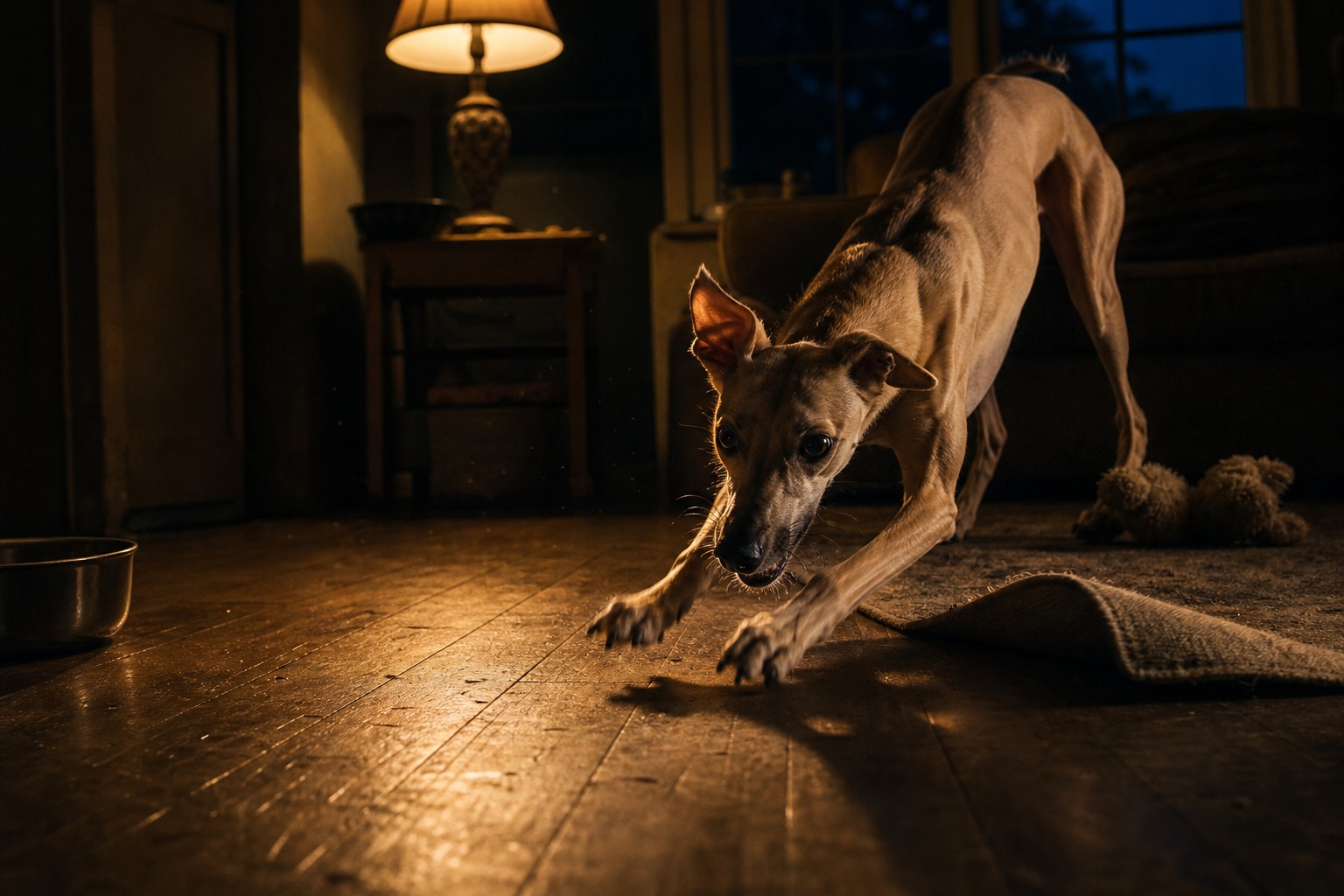
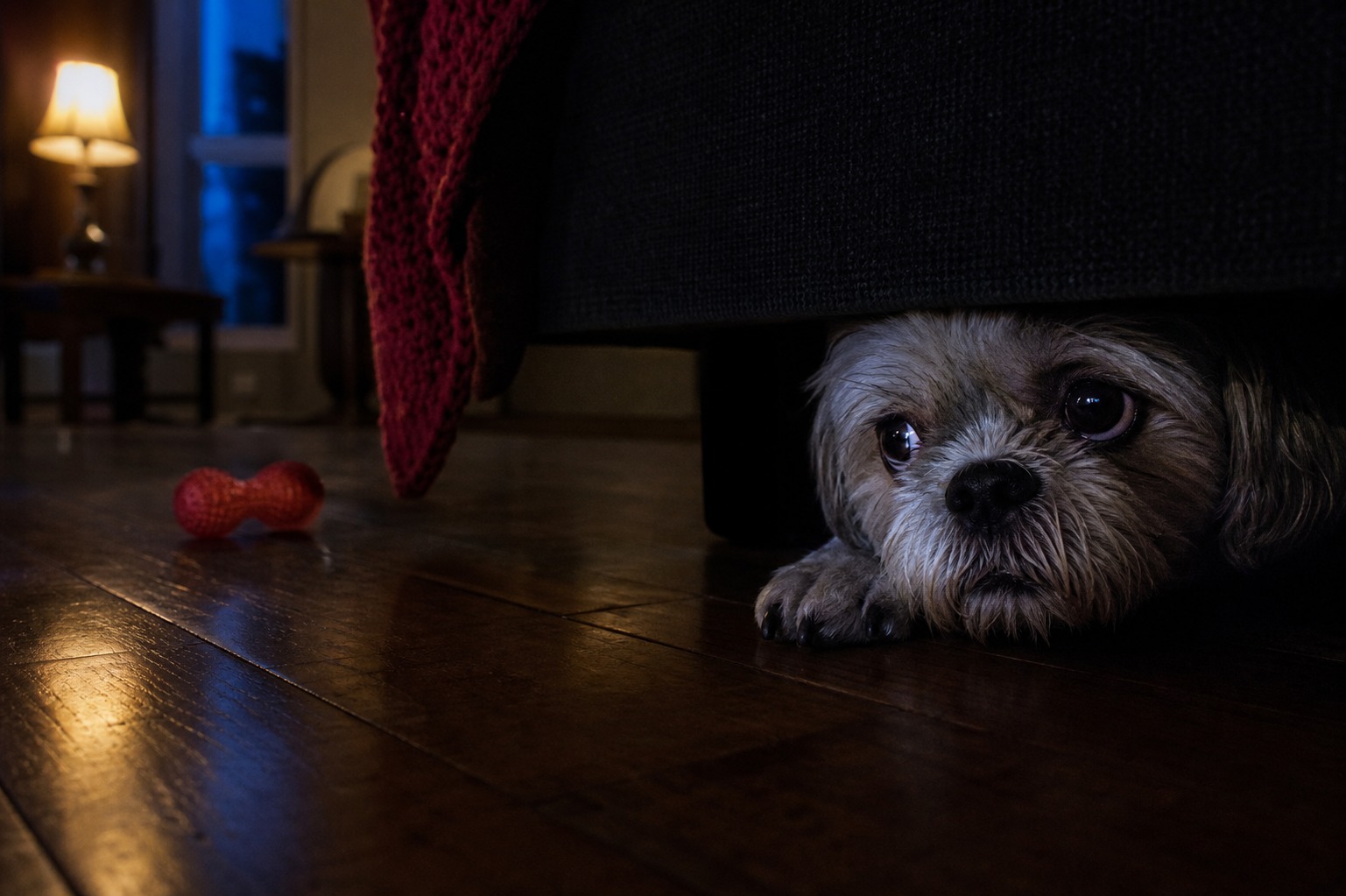
Like thunderstorms, fireworks are loud, sudden, and unpredictable, and a dog’s hearing is far sharper than ours. Their brain can only read that pattern as a threat, which triggers the classic anxiety signs: panting, trembling, pacing, whining, hiding, or the urge to run. And unlike a storm you can see coming, neighborhood fireworks go off at random all summer, not just on the holiday. You cannot control the noise. You can control the tools you bring to it.
Layer 1: fight sound with sound
The most direct approach is to manage what your dog hears.
A calming-music speaker. Devices like the Pet Acoustics speaker play frequency-modified music designed to mask outside booms, and you can stream your own audio over Bluetooth. Steady, predictable sound gives the brain something other than the bangs to latch onto.
Dog-fitted ear protection. Properly fitted earmuffs are the gold standard for actually reducing the volume reaching your dog. Options like the derYEP muffs come in sizes from small to XL and can cut noise substantially. The catch, and it is a big one: most dogs need training to tolerate wearing them, so this is a tool to introduce weeks ahead, not something to spring on your dog the night of the show.
Layer 2: pressure and pheromones
These tools work on the dog’s body and chemistry rather than their ears.
A pressure vest. The ThunderShirt is the original of the category for good reason. It applies gentle, constant swaddling pressure, the canine equivalent of a firm hug, which helps some dogs settle. It is drug-free and can be worn through the whole evening.
A pheromone diffuser. Products like Adaptil release a synthetic version of the appeasing pheromone a mother dog produces while nursing, a scent cue that reads as “safe” to the dog’s nervous system. Plug one in near your dog’s safe spot ahead of time so the area already smells reassuring when the noise starts.
A heartbeat blanket. A blanket with a built-in simulated heartbeat mimics the presence of a littermate or mother, giving an anxious dog a warm, rhythmic anchor to curl against.
Layer 3: distraction and enrichment
A busy brain has less room for fear. These are often the unsung heroes of a fireworks night.
A snuffle-and-lick mat. Mats like the Injoya combine snuffling and licking, two behaviors that are naturally calming for dogs. Scatter dinner or treats into it and let the hunt occupy them through the worst of the barrage.
A frozen lick mat. Smear a mat with something your dog loves, a dog-safe nut butter or a calming spread, freeze it, and hand it over at peak-noise time. The long, repetitive licking is soothing, and a frozen version lasts far longer than a fresh one.
Layer 4: calming supplements (talk to your vet)
Some dogs benefit from ingestible support, but this is the layer to run past your veterinarian, especially if your dog takes other medication.
Hemp or melatonin chews. Calming chews such as Zesty Paws hemp bites often include melatonin, which can help a dog stay drowsy and settled as fireworks stretch late into the night.
A homeopathic calming serum. Rescue Remedy Pet is a dropper-style serum you add to food or a treat ahead of the noise; many owners of very anxious dogs report their pup is calmer and more willing to settle after a dose.
That is nine tools across four mechanisms. You do not need all of them. Pick one from the sound layer, one from the pressure-or-pheromone layer, and one from the enrichment layer, and you have a real plan.
If your dog genuinely panics, add a vet
Products blunt ordinary fireworks stress. They do not fix true, severe panic, and no snuffle mat will. If your dog shakes uncontrollably, tries to escape, or hurts themselves every year, that is real anxiety that deserves a veterinary plan, which may include prescription medication like trazodone timed for the evening. Loop your vet in well before the holiday, and never give a dog any new supplement or medication, prescription or not, without checking first.
What’s new since this was written
The lost-pet data has only gotten more pointed. Recent reporting on Shelter Animals Count figures continues to show July 5 topping the stray-intake calendar and lost-pet reports spiking roughly 30 percent or more across the holiday weekend, with shelters and rescues now running dedicated Fourth of July reunification pushes. The consistent message from that data is the same one worth repeating: the tools in this kit reduce panic, but a current microchip and a readable tag are what get a bolted dog back home. Do the free thing first, then build the kit.
Go forth, or Fourth, with a layered plan and a chip that actually points to you. And keep some high-value training treats on hand, so your very good, very brave dog knows exactly what a trooper they were for making it through.