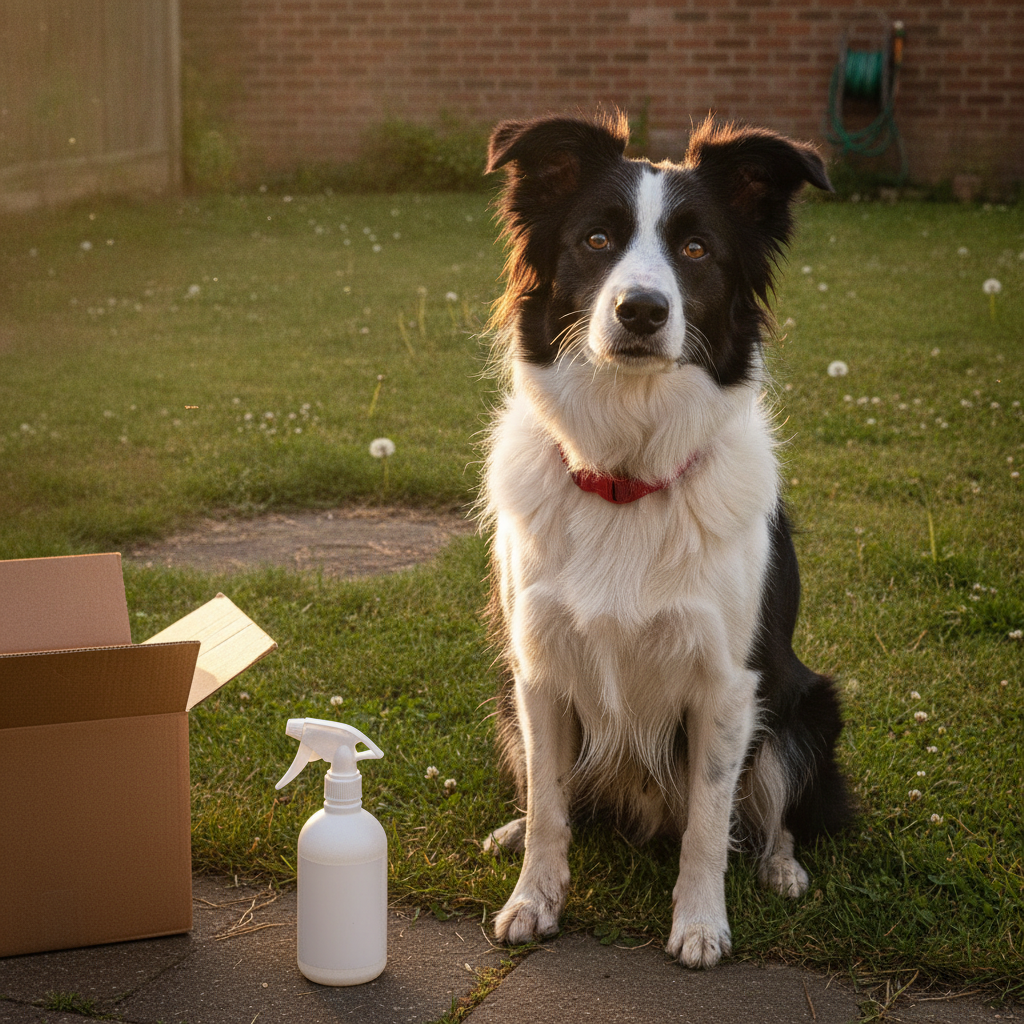
There is a version of dog ownership that fits neatly into a cramped city apartment: a quiet breed, a couple of short walks, a nap on the couch while you work. And then there is Hank.
Hank is a Great Pyrenees–Rhodesian Ridgeback cross who lives on Fat Cat Farm in rural Mississippi, and he is the living case study for a truth most adoption guides bury: a dog’s happiness has less to do with how much you love them and more to do with whether the life you can offer matches the life their body and brain were built for. Get that match right and everything gets easier. Get it wrong and even a devoted owner ends up frustrated, and the dog ends up back at a shelter.
The person who got it right is Estelle Lemmler, and how she did it is worth copying.
From menswear studios to a produce counter
Lemmler spent close to eight years designing menswear in New York, rising to lead designer on a Totokaelo project and contributing to Need Supply’s in-house menswear line. What kept nagging at her was sustainability. Every attempt she made to green a production run seemed to run into the same wall: too expensive, not truly sustainable, or just a different flavor of waste. Fashion, she decided, was not where she could move the needle.
Food was. A New Orleans native, she had always treated cooking, sourcing, and eating as both an escape and a way to make lower-impact choices. Farmers markets became her refuge. When she started applying for farming apprenticeships, though, she hit a wall of her own making: convincing anyone that an art-school-trained designer could handle the physical grind of a farm was harder than she expected.
So she took the long way in. She quit design and took a cashier job at a whole-animal butcher shop near her Brooklyn apartment, then got bumped up to produce and grocery buyer. Suddenly she was talking with farmers, distributors, and chefs every day, watching customers vote with their dollars for climate-conscious sourcing. That job did two things at once: it taught her the trade and it convinced her that food was a real lever on the future. She and her family saved for two years, bought farmland an hour from New Orleans, and in October 2021 she moved south to rehabilitate the soil and start farming for real.
The loneliest chapter, and the dog who fixed it
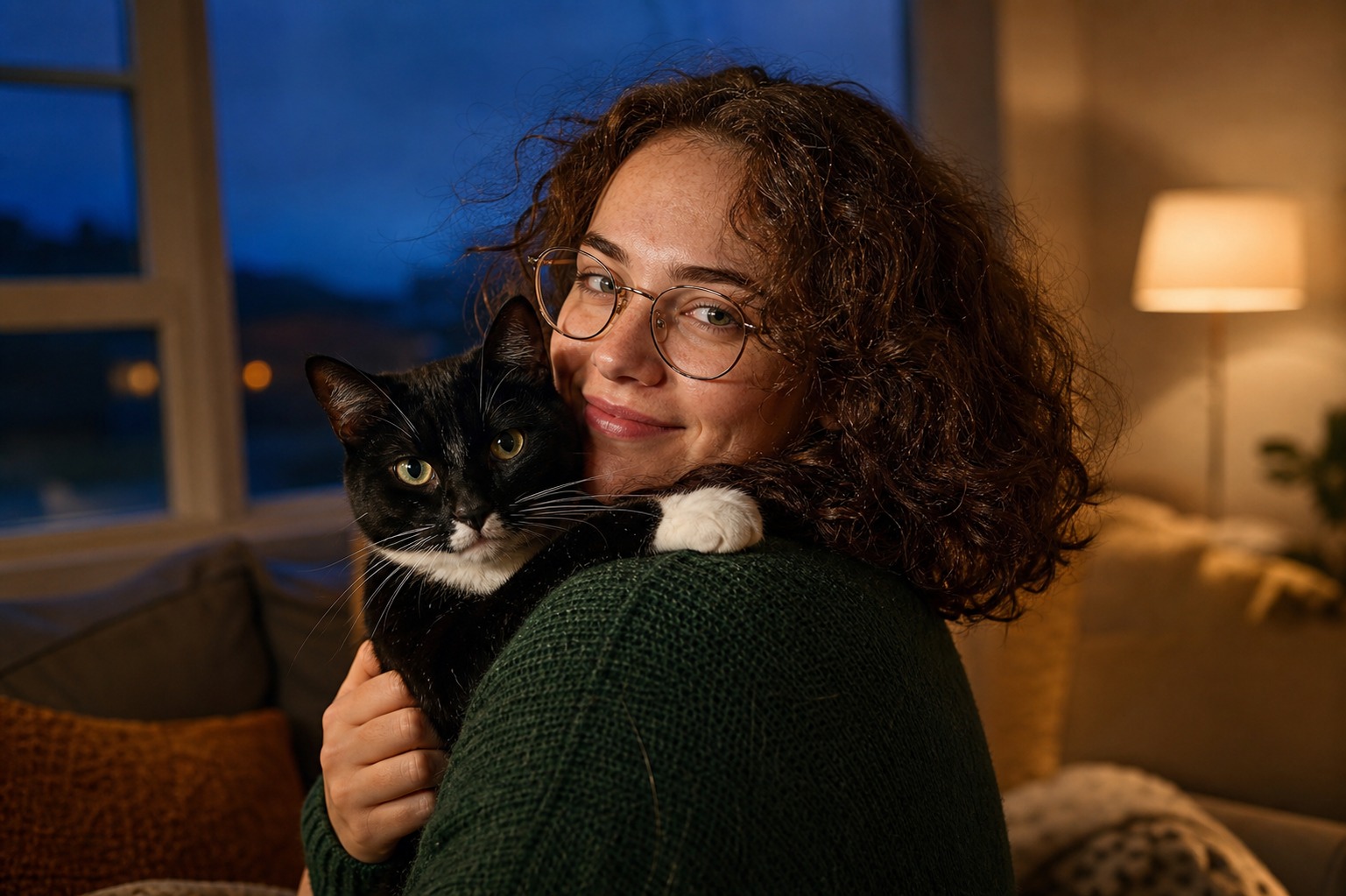
The move cost her nearly everything familiar: her job, her New York friends and mentors, and a relationship of three-plus years. She had endless time outdoors and almost no one to share it with. Isolation set in fast. A puppy, she reasoned, could be the thing she poured herself into, a source of daily joy exactly when she needed one, and, out alone in the country, a large dog felt less like a luxury and more like sensible company after dark.
Here is where she did the part most new adopters skip. She researched first. She wanted a dog that could eventually guard livestock, and she read up on the large working breeds built for that job before she fell for a face. Great Pyrenees kept surfacing: calm with chickens and other stock, naturally nocturnal (which makes them excellent overnight sentries), quick to bark an alert, and genuinely sweet. Her one hesitation was the breed’s heavy coat in the Southern heat.
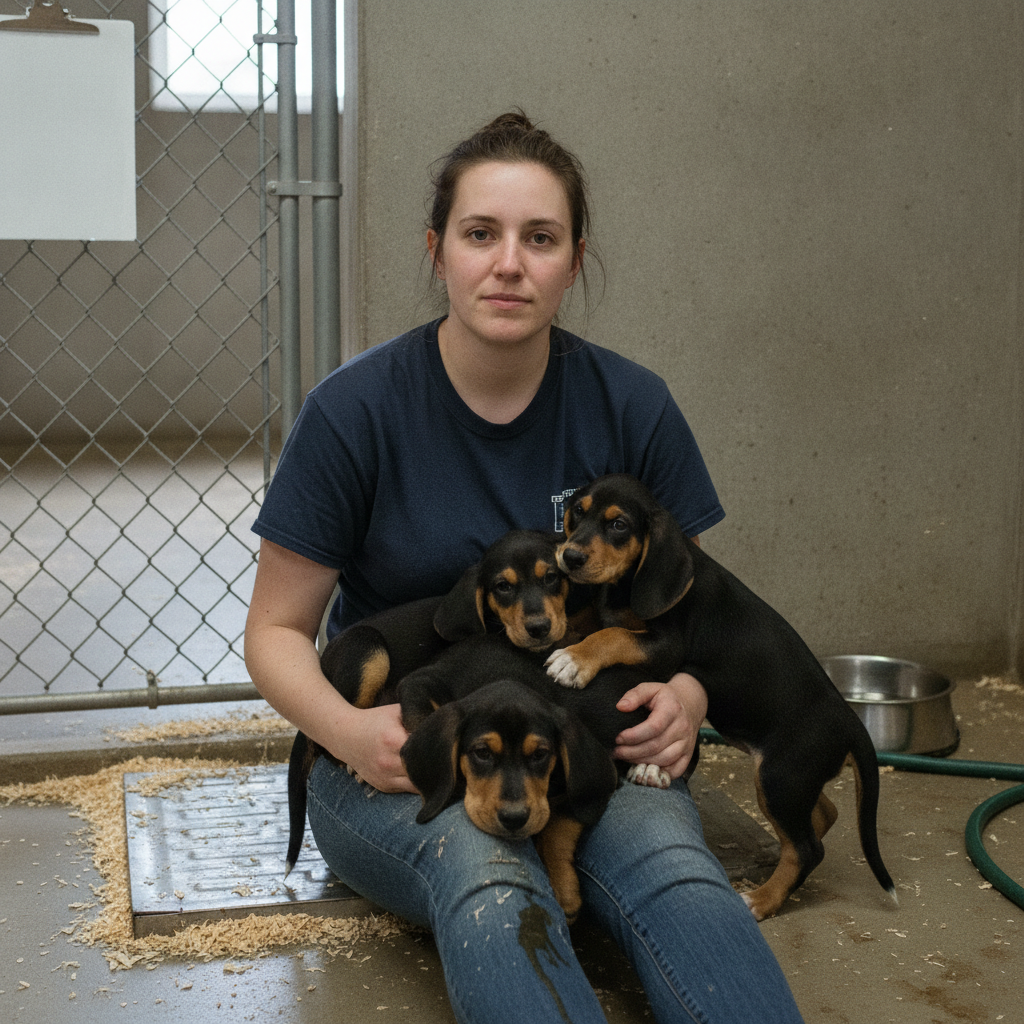
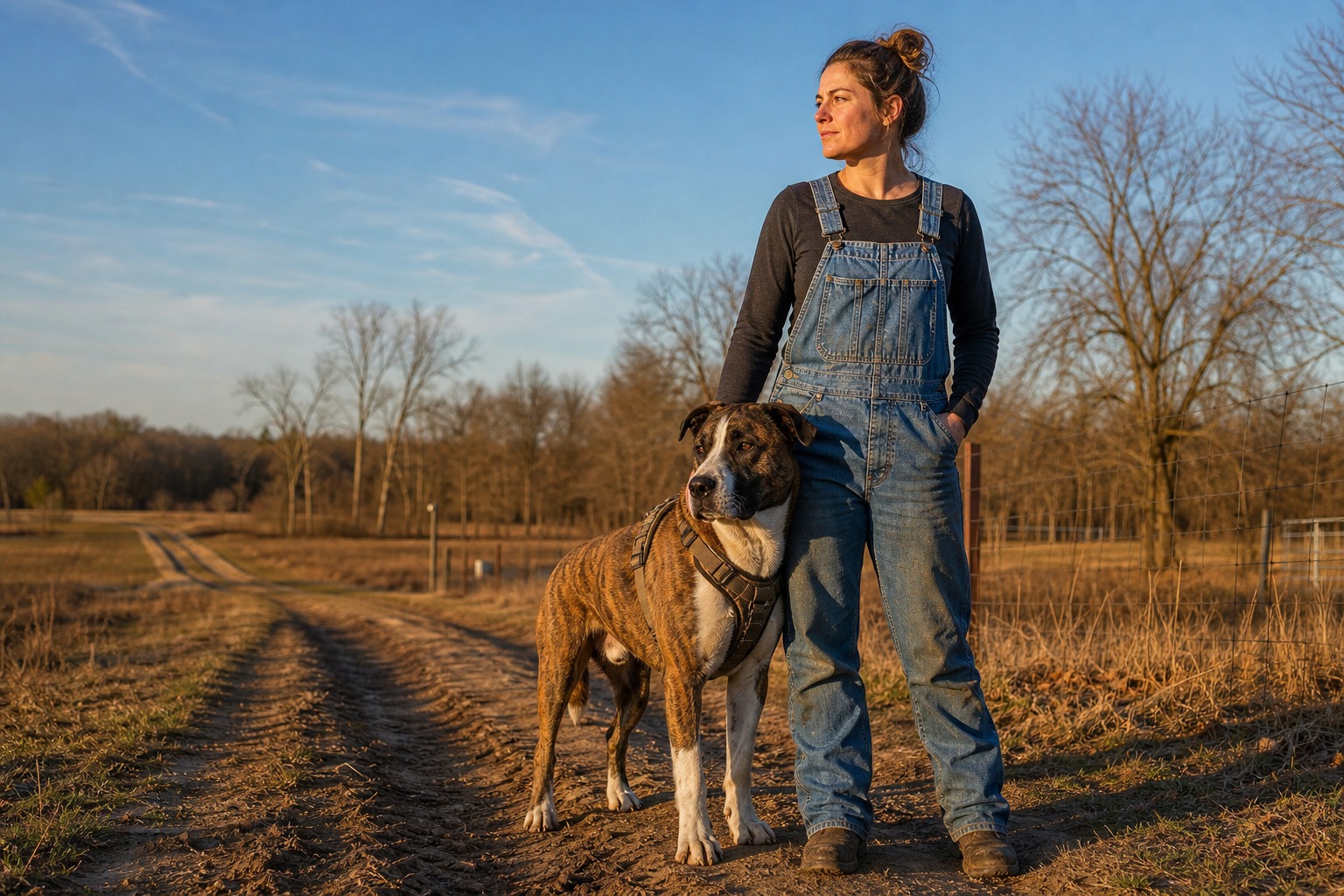
Then, scrolling Petfinder one evening, she found a litter of Great Pyrenees–Rhodesian Ridgeback mixes at a local SPCA that was overflowing with puppies after Hurricane Ida. She looked into Ridgebacks too, smart, loyal, independent, athletic, the classic “velcro” companion, and decided the unusual cross was, oddly, a perfect fit. The Ridgeback side even solved the coat problem: Hank came out with a short, painted, freckled coat and, in Lemmler’s telling, the longest tail she had ever seen. She knew on meeting him. He was all kisses and clowning, and they bonded quickly.
A dog with a job is a different animal
Hank has been, in Lemmler’s word, a handful, exactly as promised. She did not, however, expect 45 pounds by 22 weeks. He is the smartest and the most active dog she has owned, and the two traits compound: if his brain and body aren’t worked during the day, the nocturnal Pyrenees wiring keeps him up at night.
The farm is what makes it work. When they arrive at the 15-acre property, she tells him they’re heading to the job, and he bolts for the car door. They walk the full perimeter and the woods on arrival and again on the way out, which lets Hank do exactly what his breeds crave: survey the land for changes, scan for the deer, wild turkeys, wild boar, and, yes, the cougar tracks she has spotted, and log hours of scent work, running, and recall. While she farms, he watches, digs in the spots he’s allowed, or gnaws a cow ear from the butcher shop. By the hour-long drive back to the city, he is asleep before they hit the highway.
That is the whole lesson in miniature. The same energy that would shred a small apartment becomes an asset the second it has an outlet. Lemmler even credits Hank with improving her own life: on the days the world feels like too much, the dog still has to be walked, so she goes outside.
“People fall for a puppy’s face and then try to shrink the dog to fit their life. It runs the other way. A high-drive working breed needs a real job, real space, and real hours every day, and if you can’t hand him those, the kindest thing you can do is choose a different dog,” says Dr. Amara Solis.
The sustainability runs through the dog, too
Lemmler folded Hank into the same low-waste ethic that pulled her out of fashion. She thinks about where his gear comes from, what it’s made of, and where it goes when a growing giant outpaces it, he has already burned through three harness sizes and outgrows a collar about monthly, so she favors durable materials and passes outgrown items to smaller dogs or back to the shelter. His food gets the same scrutiny as her own. Her butcher-shop years taught her to use the whole animal, so she simmers chicken scraps and bones into stock for his kibble and feeds him grass-fed offal when she can get it. Cooking all of his food from scratch is the eventual goal.
None of this is exotic. It is just a person applying the values she already holds to the animal in front of her, which is a good deal more sustainable than buying a closet’s worth of disposable pet gear.
The part every future adopter should sit with
Ask Lemmler what would surprise a city dog owner about farm life and she doesn’t talk about mud or predators. She talks about honesty. Some large, active, working dogs simply will not be happy in an apartment, and the loving move is to know that before you adopt, not after. She is candid that Hank’s life would have been impossible back in her old New York apartment, all thousand cramped square feet of it.
She has the counterexample close to home. One of Hank’s littermates was returned to the shelter after her adopters realized she would grow too big for their small children and wasn’t getting enough activity, a rehoming that is hard on the dog and the family alike. Lemmler is now trying to adopt that sister, too. Her advice is unglamorous and exactly right: the resources to research a breed’s real needs are everywhere, and using them before you commit is the single best thing you can do for a dog.
What newer research adds
The instinct to “just add love” is strong, but the science of dog rehoming keeps pointing back to fit. Behavioral incompatibility, unmet exercise needs, and unexpected size or energy are among the most common reasons dogs are surrendered, and returns cluster in the first weeks after adoption, when the mismatch becomes obvious. Breed alone is not destiny, individual temperament varies a lot, but working and guardian lines like Hank’s do carry higher baseline needs for space, activity, and a job, and shelters increasingly try to counsel adopters on lifestyle match rather than looks. The takeaway hasn’t changed since Lemmler learned it on Petfinder: a little research up front prevents a lot of heartbreak later.