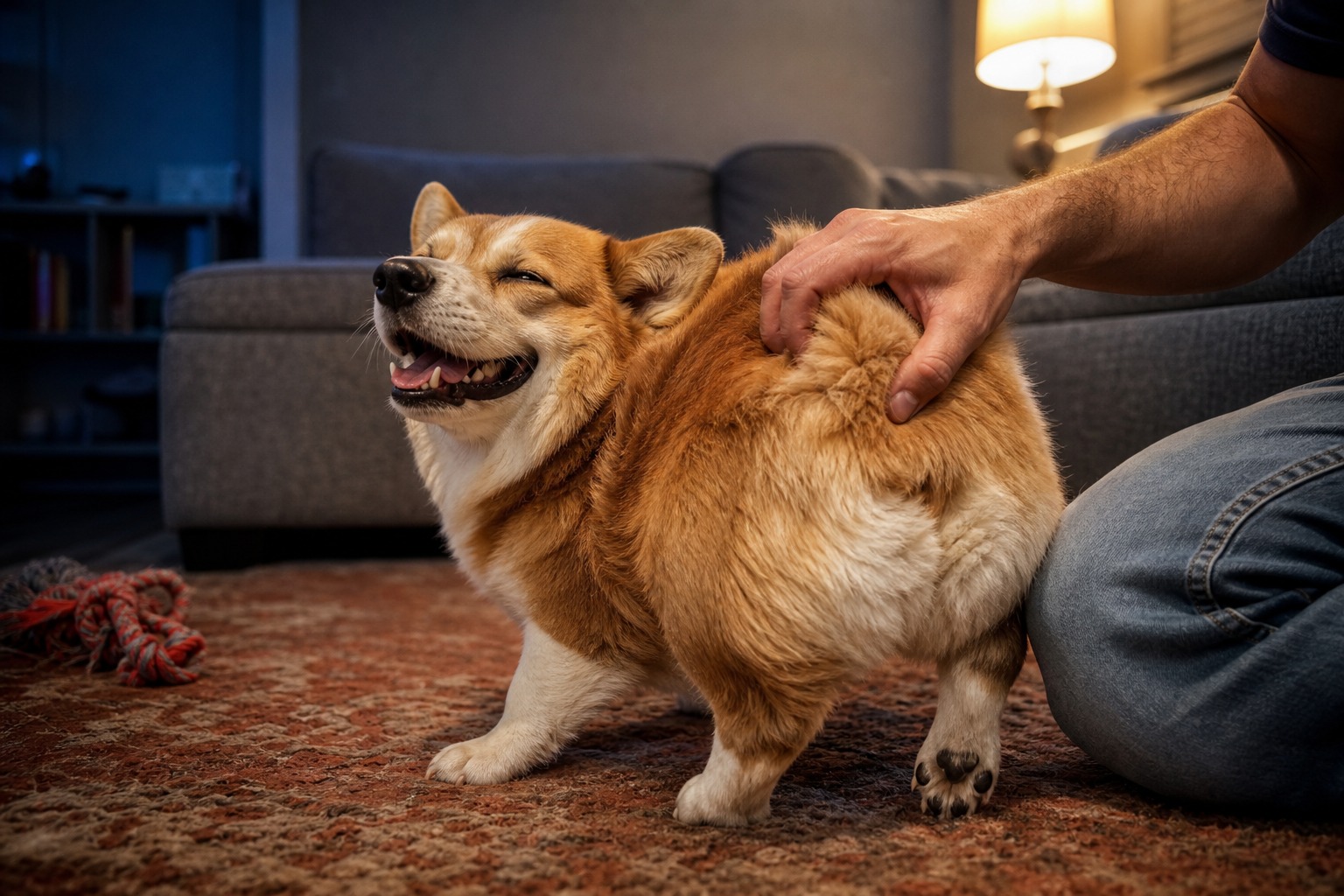

You can spend months teaching your dog to stay calm and still watch that training evaporate the instant you tense up. There’s a reason, and it’s not stubbornness. Your dog is wired into your physiology far more tightly than most people realize. When your body ramps up, theirs tends to ramp up with it, often within minutes. The practical upshot is strange and a little humbling: one of the most powerful things you can do for an anxious dog is regulate yourself first.
The evidence is in the heartbeat
Researchers at Queen’s University Belfast put numbers on this in a way that’s hard to argue with. They strapped heart rate monitors on 28 dog owners and their dogs, then split the owners into two groups. Half took a deliberately stressful digital test. The other half were guided through a relaxation exercise: breathing, plus affirmations, including one as sweet as picturing the joy their dog brings them.
Then they watched the two heartbeats move together. When owners did the stressful task, their heart rates climbed, and their dogs’ heart rates climbed too. When owners relaxed, their dogs eased down alongside them. Statistically, the change in the owner’s heart rate predicted the change in the dog’s. The researchers described what they were seeing as emotional contagion, the catching of another’s emotional state, layered with social referencing, where a dog checks in with their person to figure out how worried to be in an unfamiliar situation.
One more detail matters for daily life: across the session, the dogs’ heart rates tended to drift downward as they got used to the new room. Familiarity itself is calming. Give a dog time to settle into a strange place and their body starts to stand down, no intervention required.
“A dog in a new or scary place is asking a question with their whole body: is this okay? And they read the answer off of you,” says Dr. Nina Kohl. “If your breathing is shallow and your shoulders are up by your ears, you’ve answered ‘no’ before you’ve said a word. The leash carries that signal straight down to them.”
This isn’t a one-off finding
The Belfast results slot into a well-established pattern. Older work stretching back decades found that people living with more reactive, aggressive dogs tended to test as more tense themselves. A 2018 study zeroed in on personality: owners who scored low on emotional stability, one of the five broad traits psychologists use to map personality, tended to live with dogs who had more behavior trouble. And a separate line of research using worn and dried human sweat showed that dogs can literally smell the difference between a calm person and a stressed one, and shift their own mood in response.
None of this means a nervous owner “causes” a difficult dog, or that you should feel guilty for having a bad day near your pet. Temperament, genetics, early socialization, and health all shape a dog’s baseline. What the research does say is that your state is one live, adjustable input into your dog’s state, in real time. That’s not a burden. It’s a lever.
How to use the two-way wiring
Because the effect runs on your nervous system, the tools are the ones that lower your arousal, and they pay off fastest in exactly the moments dogs struggle most.
- The vet waiting room. This is the textbook case, and it’s the one the Belfast team had in mind: a stressed owner can amplify a dog’s fear in the clinic. Before you walk in, slow your own breathing, unclench the leash hand, and drop your voice. Ask if you can wait in the car until the room is ready, or step to a quiet corner, so your dog gets the acclimatization window that naturally lowers heart rate.
- Training sessions. Frustration is contagious too. If a session is going sideways and you feel your jaw tighten, that’s the cue to end on an easy win rather than push. A calm two minutes teaches more than a tense twenty.
- Storms, fireworks, and doorbells. Resist the urge to flood a scared dog with frantic reassurance in a high, worried voice, which reads to them as confirmation that something’s wrong. Model boring. Sit, breathe slowly, act like nothing is happening, and let your steadiness be the reference point they borrow.
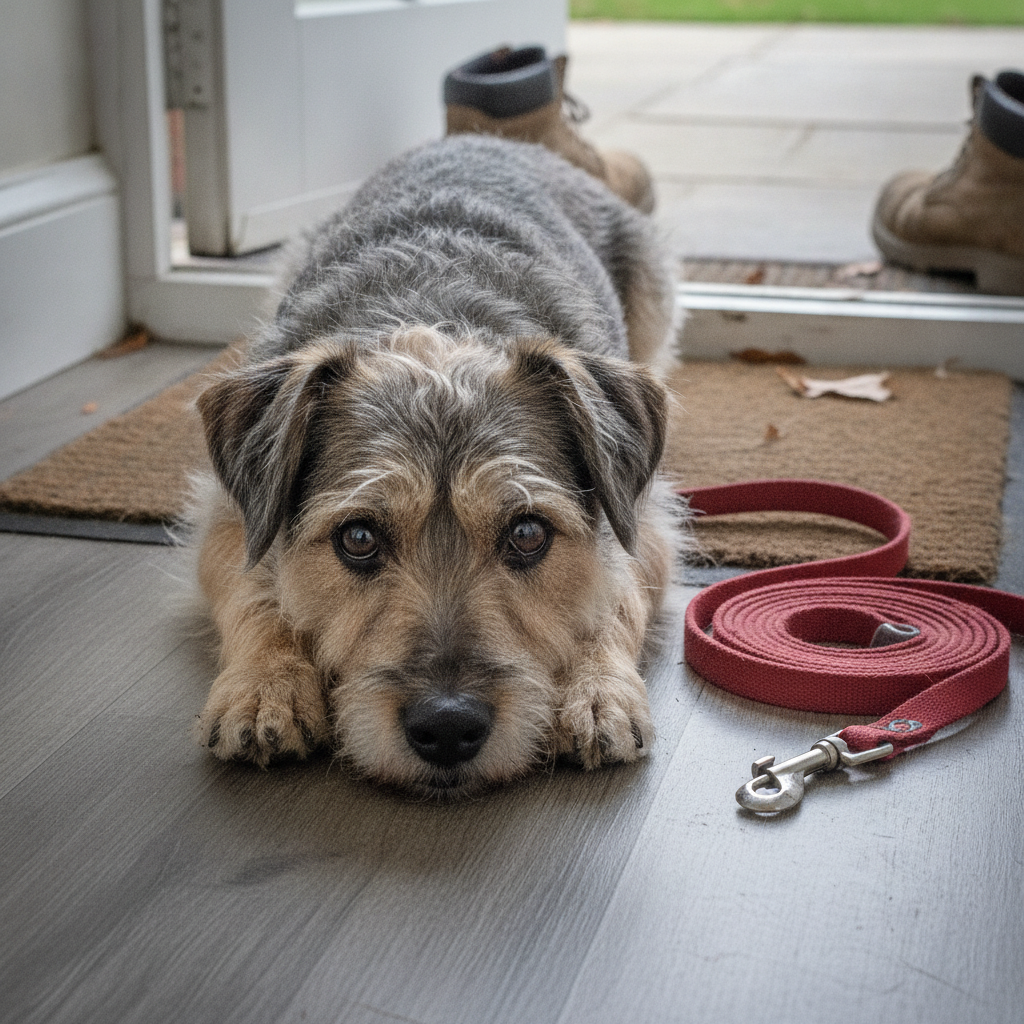
- Everyday transitions. Rushing out the door in a cortisol haze sets the tone your dog carries into the day. A few slow breaths before you clip the leash is not a wellness cliché here; it’s a physiological handoff.
What newer research adds
The Belfast heart-rate study is one of the freshest pieces in a fast-moving field, and it pushes the picture past the older idea that dogs merely “sense” our moods. We now have a physiological receipt: a measurable, minute-to-minute link between two heart rates, in both directions. That direction of travel, from vague intuition to something you can monitor and shift, is the real development. It reframes owner calm from a nice-to-have into an active, evidence-backed part of managing a dog’s stress, especially in the settings that scare them most.
So the next time your dog is coming apart and nothing seems to help, check yourself first. Slow your breath, soften your body, and let the wiring work for you instead of against you. What’s genuinely good for your own nervous system turns out to be good for your dog’s too. If your dog’s anxiety is severe or worsening, though, don’t try to manage it alone, a vet or a qualified behaviorist can build a plan that goes beyond deep breaths.
References
- Byrne, Aoife, et al. “The influence of owner stress on canine stress.” Queen’s University Belfast, School of Biological Sciences, 2024, https://www.qub.ac.uk/News/Allnews/2024/Newstudyrevealshowyourstresslevelsareaffectingyourdog-1.html.
- “The interplay between the human and canine stress response.” Irish Times coverage of Queen’s University Belfast research, 2024, https://www.irishtimes.com/ireland/education/2024/12/03/dogs-mirror-human-stress-levels-queens-university-study-finds/.
- D’Aniello, Biagio, et al. “Interspecies transmission of emotional information via chemosignals: from humans to dogs (Canis lupus familiaris).” Animal Cognition, vol. 21, 2018, pp. 67-78.