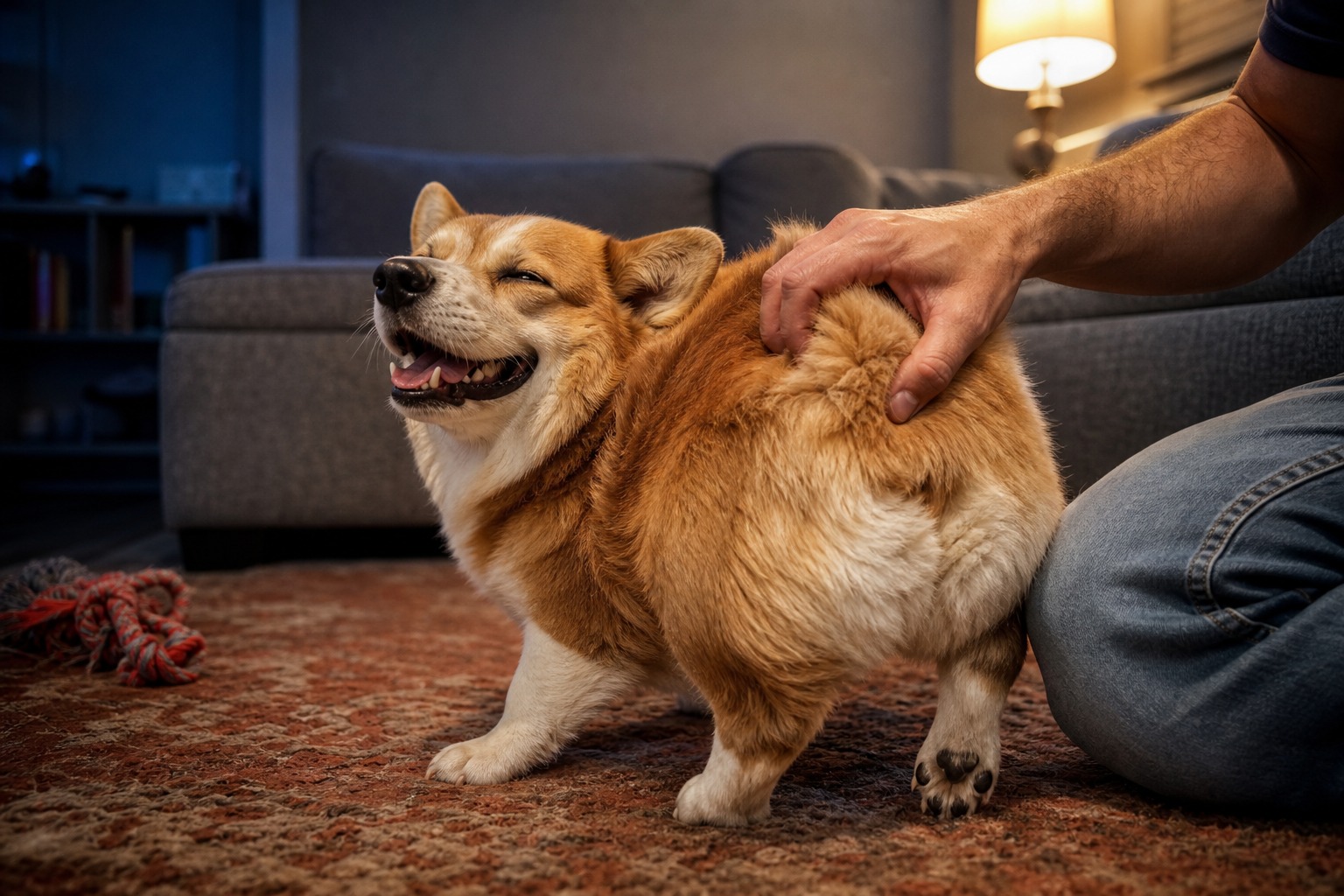
Every dog person knows the maneuver. You reach down for a normal, dignified head pat, and your dog executes a crisp 180, backs up like a delivery truck, and looks at you over one shoulder with an expression that says you know what to do.
The tail-base scratch request is one of the most universal moves in the canine repertoire, and the explanation behind it is a tidy little stack of anatomy, neurology, and, once in a while, medicine. Here is why so many dogs treat the rump scratch as the peak of human usefulness, and when the begging is actually a symptom wearing a cute disguise.
An itch built out of reach
Start with mechanics. A dog’s body is a marvel of flexibility until you get to the patch of real estate above the tail. They can chew a front paw, nibble a flank, and drag a cheek across the carpet, but the lower back and tail base sit in a physical dead zone: too far forward for the teeth to reach by bending, too far back for a hind leg to service properly. Every dog spends its whole life with one spot it can never quite get.
Think of the one place in the middle of your own back you cannot reach, and how absurdly good it feels when someone else scratches it. Now imagine never having owned a back scratcher and never having had thumbs. That is the daily condition of your dog, and you, conveniently, are a heated, food-dispensing back scratcher that loves them.
“The tail base is the itchiest unreachable place on a dog, and it’s also packed with sensory nerve endings, so a good scratch there delivers an outsized payoff. When my patients back into their owners, I tell them it’s a compliment. You’ve been promoted to the only tool for the job,” says Dr. Priya Nair, a Pet Times veterinary expert.
That nerve density is the second half of the answer. The area around the tail base is richly innervated, which turns a well-placed scratch into a genuinely intense sensory experience, the same reason many dogs do the involuntary back-leg twitch or the trance-like lean when you hit the spot. Unreachable plus hypersensitive is a perfect recipe for a lifelong obsession.
When the request is actually a symptom
Here is the part worth filing away: an enthusiastic butt-scratch fan is normal, but a dog who becomes obsessed with the area is running a flag up the pole. The tail base happens to be ground zero for several common problems, and the begging can shade into self-treatment.
Watch for the difference between enjoying and needing. Red flags include your dog scratching, chewing, or licking the area constantly on their own, hair thinning or bald patches over the rump, redness or scabbing, a distinctly bad odor from the back end, or scooting across the floor. That cluster points toward things a scratch cannot fix: flea trouble, and flea allergy dermatitis in particular, classically targets the lower back and tail base; impacted or infected anal glands announce themselves with scooting, licking, and a fishy smell; and skin allergies of all kinds love that same patch of real estate. Any of those earn a vet visit rather than a longer scratch session.
Ask before you scratch
One more nuance, and it is an important one: not every dog is a member of the fan club. Dogs who are fearful of handling may find a rear-approach touch alarming rather than delightful, and for seniors carrying arthritis in the spine, hips, or knees, pressure over the back end can genuinely hurt. Rescue dogs with unknown histories may have their own reasons for guarding that zone.
So let the dog vote. Offer a brief scratch, then stop and see what happens. A dog who backs in harder, leans, or paws at you has cast a clear ballot for more. A dog who stiffens, moves away, growls, or snaps has answered too, and the polite response is to take the hint without taking it personally. Some dogs simply prefer their affection at the front end, and a chest rub buys the same goodwill with none of the friction.
For the rest of them, the great over-the-shoulder pleaders of the world, congratulations: you own the back scratcher now. It is a lifetime appointment.