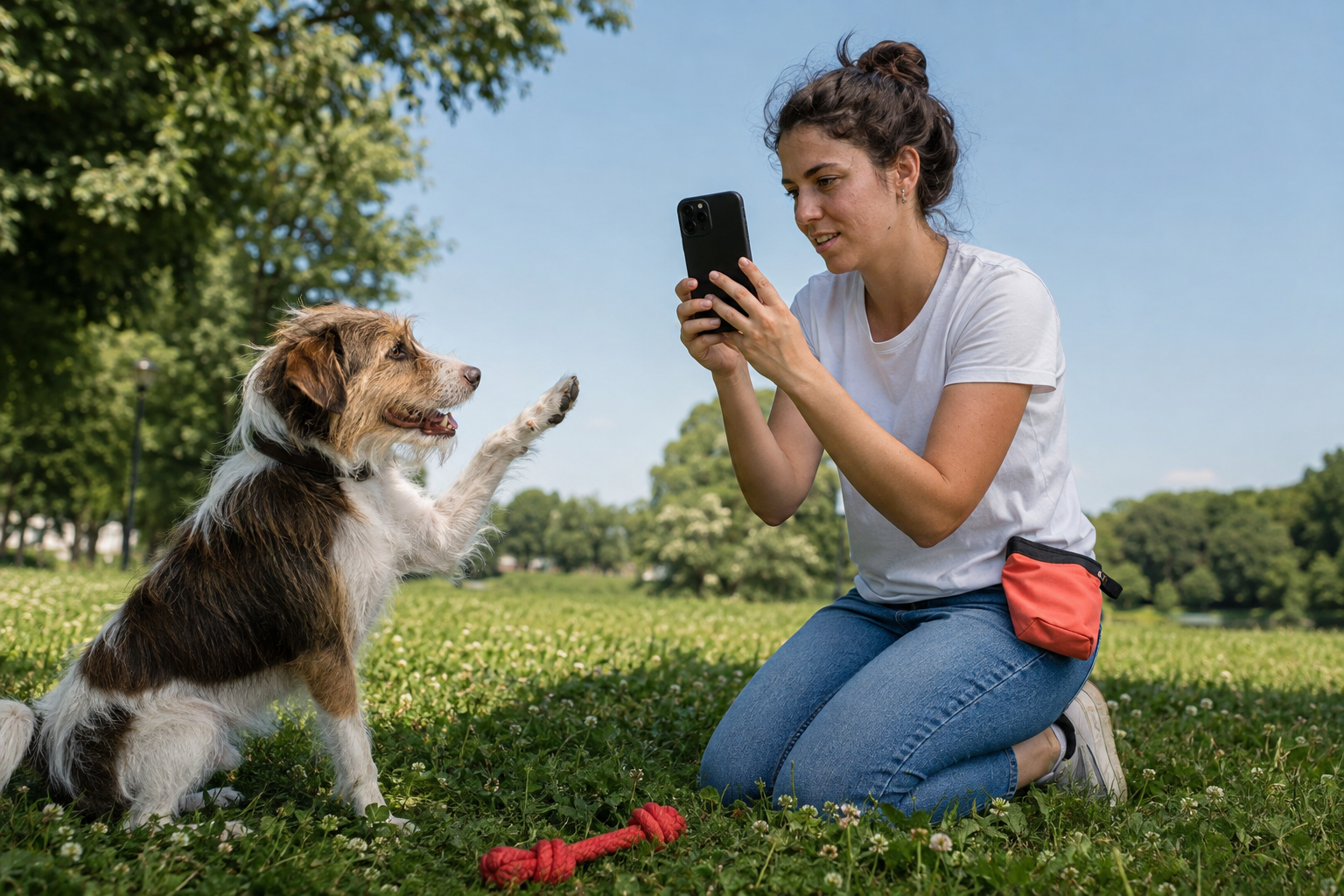
There’s doomscrolling and there’s dogscrolling, and only one of them is good for you. Used well, Instagram is a genuinely useful place to pick up training know-how between sessions, short clips of a real behavior problem being solved, right there on your phone, whenever your dog decides to reinvent chaos.
Used badly, it’s a minefield. The platform is full of confident people demonstrating techniques that range from unhelpful to harmful, and a slick edit can make an aversive, fear-based method look like magic. So before the list, one filter that matters more than any single account.
How to vet a trainer before you trust their feed
The dog-training world has no universal license, which means the burden is on you. Two quick tests. First, look at the method: reputable, science-aligned trainers work force-free, or under the LIMA principle (least intrusive, minimally aversive), building behavior with rewards rather than fear, pain, or intimidation. Be wary of anyone leaning on prong collars, shock/e-collars, “dominance,” or “alpha” language, or promising to fix a serious problem in one dramatic session. Second, look at the dog: in a good trainer’s videos the dog is loose, willing, and engaged, not shut down, cowering, or lip-licking its way through the “success.” Every account below passes both tests, which is precisely why they made it.
“The hard part for owners isn’t finding dog-training content, it’s telling good from bad, because the harmful stuff is often the most confident and the most viral. Watch the dog’s body language, not the trainer’s certainty. A relaxed, willing dog is the credential that matters,” says Dr. Mara Chen.
The eight
@kikopup — Emily Larlham operates at the far end of what’s possible with positive reinforcement. Her dogs will tuck their nose on cue, stroll with their feet balanced on hers, duck behind a houseplant, and dance (there’s a clip of two of them crossing paws to Michael Jackson’s “Thriller”). Beyond the showpieces, she’s a bottomless free resource on the fundamentals, from why a solid sit is worth teaching to shaping a dog onto a platform. Start here if you want to see how high the ceiling goes.
@ameliathedogtrainer — Amelia Steele pairs down-to-earth, encouraging training advice with something rarer: emotional generosity. Alongside the how-to, her reels address the owner’s anxiety, the guilt people carry about their dog’s behavior, and how to salvage a genuinely bad day. Follow her if you want to get better at training and feel less alone while you do it.
@jwdogtraining — Juliana DeWillems is the account for the specific, everyday problems that make people want to scream into a leash. Reactive to other dogs? There’s a reel. Won’t settle on a mat, blows off recall, greets guests like a linebacker, barks the apartment down, loses it at fireworks, can’t hold it together on a café patio? Reel, reel, reel. Deeply practical.
@eileenanddogs — Eileen Anderson insists she isn’t a dog trainer, and technically she’s right; she doesn’t do it professionally. She also trains dogs beautifully and understands the science underneath the methods better than most people who charge for it. She reads widely across the research and applies it inventively to life with her own dogs, which makes her feed a steady source of clever, evidence-based solutions.
@lilita_yaya — Lili Chin is an artist, not a trainer, but her illustrations of canine body language have taught more people to actually read their dogs than most training programs manage. Understanding what a dog is telling you is the foundation everything else is built on, and her drawings deliver it in a way words can’t. A joy to scroll regardless.
@theogrottendog — Ayoka Bubar showcases rally obedience with her Rottweiler, Saga, and the appeal is the visible joy: this is a gorgeously trained dog who clearly loves the work, and Saga happens to be a smiler. The account’s tagline, “Big Dogs. Big Ideas. Big Heart. Big Mouth,” is fully earned, and it’s a great counter to the myth that precise obedience and a happy dog are at odds.
@smartbitchdogtraining — The name alone earns a follow, and Jiovany Alcaide and Taylor Barconey back it up. Their New Orleans account is heavy on enrichment, games, and creative activities, and they’re vocal and consistent about rejecting harsh methods of any kind. Fun to watch, and a good model for keeping training playful.
@patriciamcconnellphd — Trisha McConnell is a certified applied animal behaviorist, a trained academic, and a gifted storyteller, and her feed radiates warmth, humor, and hard-won knowledge, with the relationship between people and dogs always at the center. Her posts will make you laugh, occasionally cry, and regularly mutter “a-ha.” A foundational voice worth learning from.
Why we trimmed the list
You’ll notice this is a tighter roster than a typical roundup. That’s deliberate. Every account here is one you can hand your leash to, metaphorically, without a caveat, all force-free, all built on reading the dog first. A shorter list of trainers you can trust completely is more useful than a longer one padded with names you’d have to qualify. Follow these eight, apply the vetting filter to anyone else the algorithm serves you, and your feed becomes an actual asset instead of a source of bad ideas.