


That Sneeze During Play Isn't a Sneeze. It's a Sentence.
The little 'a-choo' your dog lets out mid-play probably isn't clearing their nose. Behaviorists think it's communication. Here's what your dog may be saying.

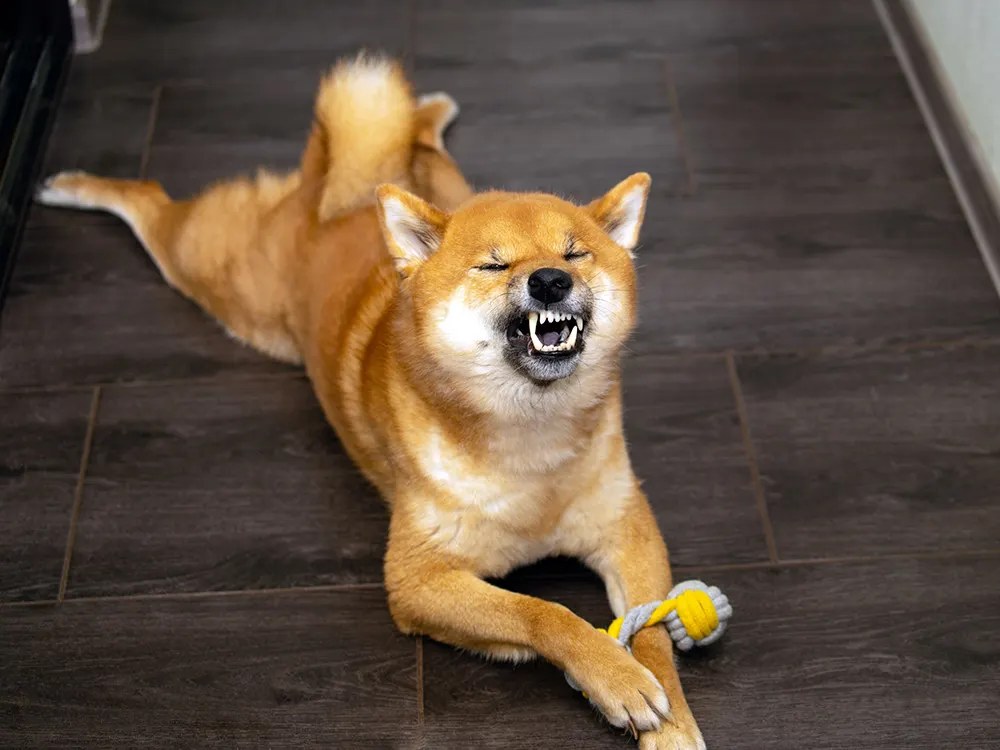
You’re watching your dog wrestle with their best friend at the park, soaking up one of life’s simple pleasures, when it happens: a-choo. A little sneeze, right in the middle of the fun. Your dog clearly isn’t sick. So what was that?
Here’s the twist that reframes the whole question. That mid-play sneeze probably isn’t a sneeze at all. It’s closer to a snort, and a growing number of animal behaviorists think it’s your dog saying something. This piece is about what.
First, what a real sneeze actually is
A true sneeze, in dogs and people alike, is involuntary plumbing. It’s a quick, forced blast out the nose (and a bit through the mouth) that flushes out irritants the body doesn’t want in the nasal lining: dust, pollen, smoke, and other fine debris. Dogs absolutely can have genuine sneezes during play, because roughhousing kicks up dust. But a real sneeze triggered by real dust in the middle of a game is just a coincidence of timing. That’s not the thing we’re talking about.
The behavior worth decoding is different. It’s softer, airier, and shush-ier than a full sneeze, and it originates near the front of the face rather than convulsing the whole nose, mouth, and throat. Behaviorists sometimes give it a nickname, “sneerting,” a mashup of sneeze and snort that captures the half-and-half quality perfectly. Once you learn to hear the difference, you can’t unhear it.
The honest headline: nobody has studied this yet
Before the theories, the caveat, because it’s the most interesting part. There is essentially no formal scientific research on why pet dogs play-sneeze. We are at the observation stage, the part of science where people who watch animals closely notice a pattern, form hunches, and keep watching. That’s not a weakness. It’s how good behavior research starts, and it means your own backyard observations are as current as anyone’s.
So what follows isn’t settled fact. It’s the best pattern-reading from people who have spent decades watching dogs play, offered as hypotheses that still beg for a real study.
What behaviorists think the sneeze means
When you gather the observations of applied animal behaviorists, a handful of recurring themes emerge, and it’s likely more than one is true. Different dogs may sneert for different reasons.
“I’m excited to see you.” Several behaviorists have noticed dogs sneezing specifically when greeting people they adore, not during play at all. That points to excitement and affection as a trigger, not just physical activity.
“Let’s do something.” A common reading is social solicitation: the sneeze is a bid for interaction. Behaviorists describe dogs who stare, drop their head into a stalking posture, then sneeze to snag a human’s attention, or who snort to kick off a play session with another dog.
“This is getting good.” Some observers tie the sneeze to arousal level, noticing it surface right as play escalates in intensity. On this reading, the sneeze is a pressure-release valve for a dog whose excitement is climbing.
The purely physical angle. There’s a mechanical hypothesis too. During “bitey-face” play, where dogs mouth at each other’s heads and necks, they pull their lips back and scrunch their noses, and that facial contortion alone may physically produce the sneeze. Some dogs also sneeze after bonking their head and shaking it off, which is closer to a plain reflex.
“I’m done, are you?” Perhaps the most striking idea is that sneezing can be a deliberate negotiation about ending play. Some behaviorists have watched one dog sneeze as if to say the session is over; if the partner sneezes back, the game winds down, and if it doesn’t, play continues. The same dogs reportedly sneeze at their humans after being told “not right now,” as if registering the answer.
Taken together, the leading theories are that dogs sneeze because of play-driven excitement, high arousal generally, a wish for interaction, a signal about whether to keep playing, an attempt to lower the temperature of a rowdy game, or simple physical contact with the nose.
What I love about play-sneezing is that we genuinely don’t have the answer yet, which is rare. The best thing an owner can do is watch closely and notice the context: who their dog sneezes at, and what happens right after.
Dogs aren’t the only sneeze-talkers
If the idea of a sneeze as a message sounds far-fetched, other species make it more plausible. In a well-known 2017 study, researchers watching African wild dogs in Botswana discovered the packs use sneezes to “vote” on whether to leave a resting spot and go hunt. During pre-hunt social rallies, the more dogs sneezed, the more likely the pack was to move, with the sneezes functioning as a kind of quorum. The vote wasn’t perfectly equal: when the dominant pair joined the rally, only a few sneezes were needed to trigger departure, but when they hung back, it took roughly ten.
Horses do something comparable. Equine behavior researchers describe a soft, drawn-out snort that shows up as a burst of high excitement resolves, whether the excitement was positive or negative, including during play as intense action mellows into gentler roughhousing, and even during training. A forceful exhale that isn’t about clearing the nose, it turns out, is a widespread animal habit.
When a sneeze is worth a second look
Play-sneezing is charming and harmless. But not every sneeze is a social one, so keep an eye out for the kind that isn’t. Frequent, forceful, or repeated sneezing, especially with nasal discharge, blood, pawing at the muzzle, or drawn-out reverse-sneezing fits, can signal allergies, a lodged foreign object like a grass seed, dental trouble, or infection. Those warrant a vet visit. The rule of thumb: a soft sneeze inside happy, loose-bodied play is communication; a hard sneeze outside of play, on repeat, is a symptom.
What newer research adds
Here’s the honest update: in the years since this behavior started getting attention, formal study of pet-dog play-sneezing still hasn’t really materialized, and it remains one of those everyday dog mysteries science hasn’t cracked. The firmest evidence for sneezes-as-communication still comes from that African wild dog work, which continues to be cited as the clearest case of an animal using sneezes to coordinate a group decision.
What has grown is the broader field of canine play signals. Researchers increasingly treat play as a rich communication system, full of bows, pauses, and self-handicapping that keep the game fair and friendly. The play-sneeze fits naturally into that picture as one more signal in the conversation, which makes the lack of a dedicated study feel less like a dead end and more like an open invitation. Next time your dog sneerts mid-wrestle, you’re watching a genuinely unstudied behavior. What do you think they’re saying?
References
- Walker, Reena H., et al. “Sneeze to leave: African wild dogs (Lycaon pictus) use variable quorum thresholds facilitated by sneezes in collective decisions.” Proceedings of the Royal Society B, September 2017.
- Something to sneeze about: Democratic voting in African wild dog packs. ScienceDaily, September 2017.
Common questions
Is my dog's play-sneeze the same as a real sneeze?
Usually not. A true sneeze is an involuntary blast of air that clears an irritant like dust or pollen from the nose, and it's loud and full-bodied. A play-sneeze is softer, airier, and comes from the front of the face, closer to a little snort. Same soundtrack, different machinery.
Why does my dog sneeze when they get excited or greet me?
Behaviorists think play-sneezing is tied to excitement and social solicitation. Many dogs sneeze when greeting a favorite person, when asking for play, or when arousal spikes during a rowdy session. It appears to be communication, not a symptom.
Should I worry about play-sneezing?
No, a soft sneeze during happy, loose-bodied play is normal and harmless. Worry about sneezing that's frequent, forceful, or paired with nasal discharge, blood, pawing at the nose, or reverse sneezing fits, which can point to allergies, a foreign object, or infection and deserve a vet visit.
Do other animals sneeze to communicate?
Yes. African wild dogs sneeze to 'vote' on when the pack should leave a resting spot and start hunting, and horses produce a similar snort as excitement winds down. Non-nose-clearing sneezes as social signals aren't unique to pet dogs.
Dr. Kohl is a board-certified veterinary dentist with a particular interest in preventive oral care. She reviews all dental health content at The Pet Times and contributes practical guides on home dental routines, professional cleaning, and oral disease prevention.
Meet our experts ↗Keep reading
 TrainingYour Puppy's Evening Meltdown Isn't Extra Energy. It's Exhaustion.Dr. Amara Solis · 5 min
 TrainingYour Dog Can Smell You From a Block AwayDr. Ravi Mehta · 6 min
 TrainingYou Love Your Dog Like a Primate. That's the Whole ProblemJordan Ellis · 5 min
 Health & WellnessYour 'Hyper' Dog Might Just Be Exhausted. 7 Signs You're Reading It Wrong.Dr. Lena Park · 6 min
 LivingYour Dog Isn't a Character Judge. But Their Cold Shoulder Still Means Something.Sasha Ford · 6 min
 TrainingYour Dog Reads You Better Than a Chimp Can. That's Not an Accident.Dr. Nina Kohl · 5 min