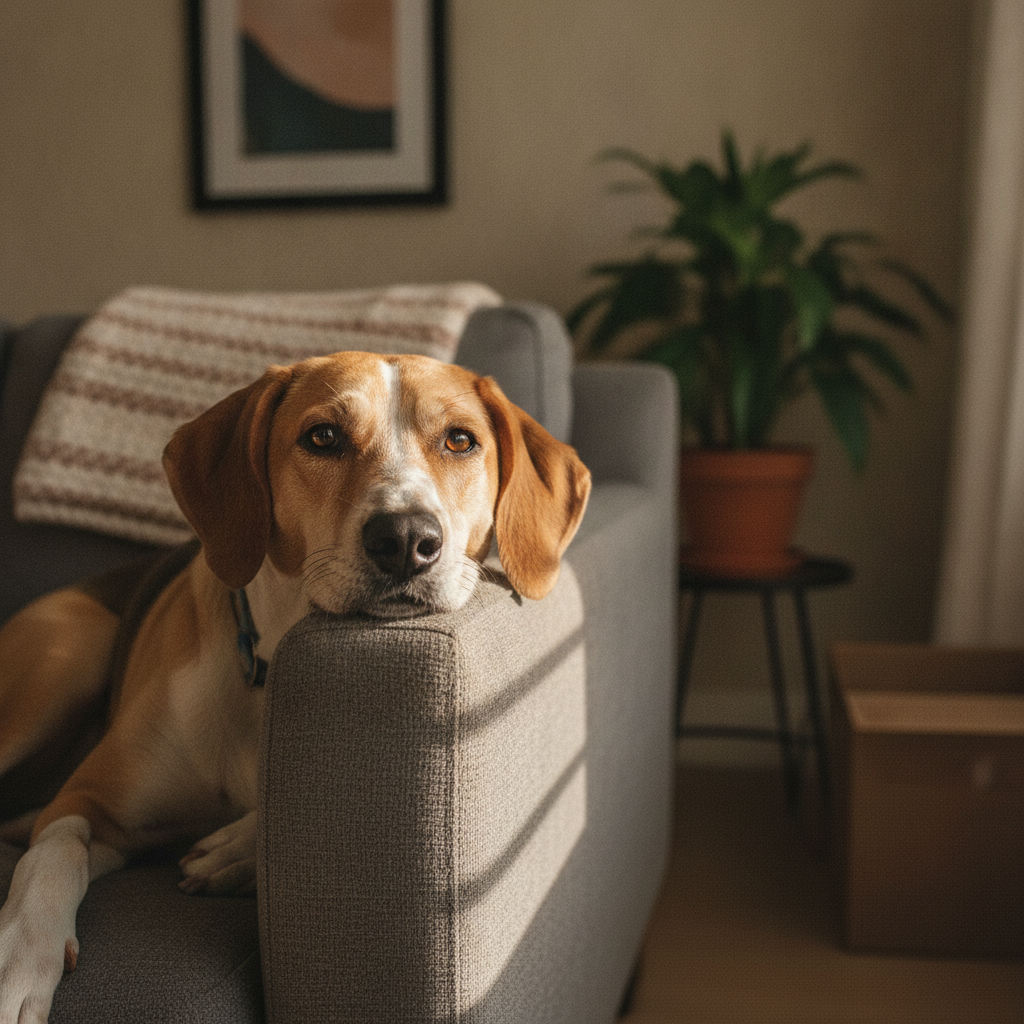
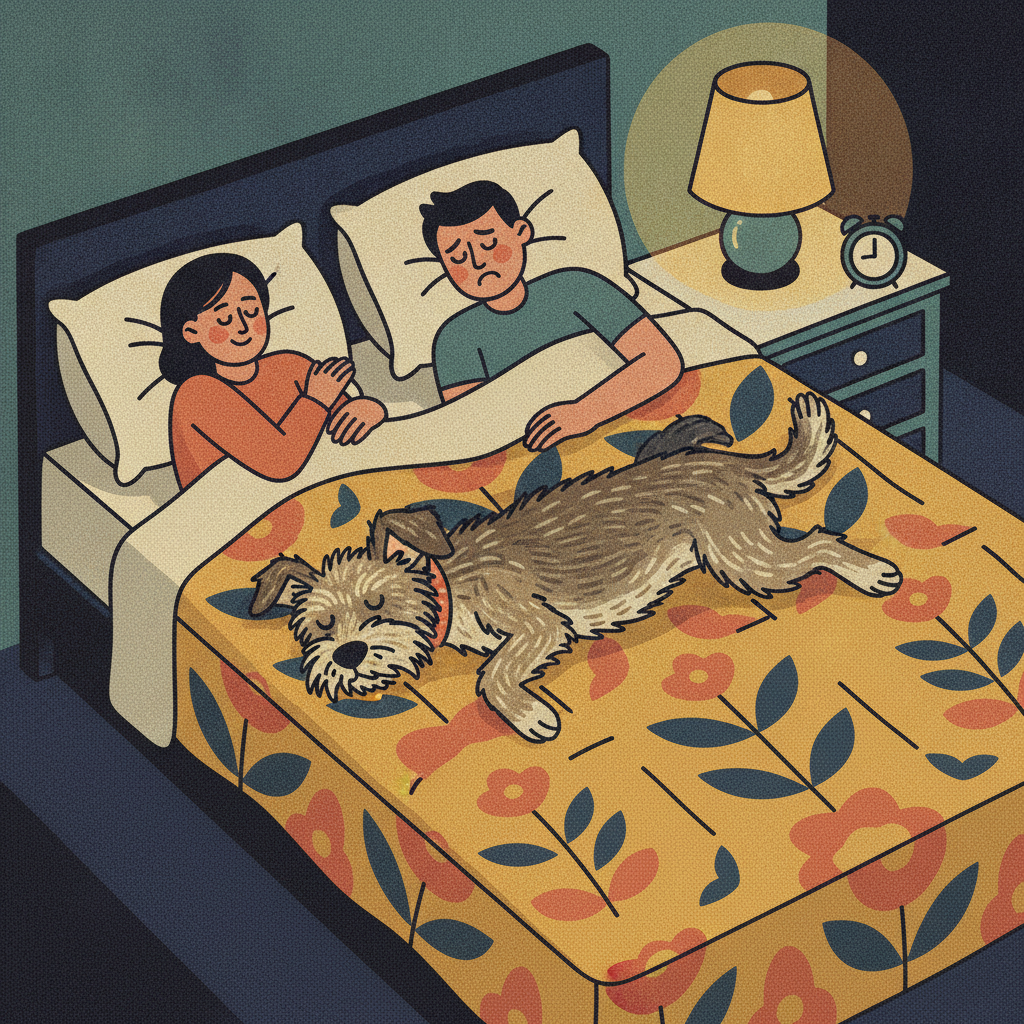
The objections write themselves. Dirty paws on clean sheets. Hair in every crevice. A fifty-pound dog starfished across the middle of the mattress, kicking in their sleep, snoring like a chainsaw, and quietly ending any romance that might otherwise have happened there. Stacked against all that is exactly one argument in favor: snuggles. On paper, it’s not close.
And yet the fight over whether the dog sleeps in the bed is one of the most stubborn standoffs couples have, and it almost never gets resolved by the pros-and-cons list, because it was never really about the dog. It’s about compromise, control of a shared space, and whose comfort wins at 2 a.m. Here’s how to actually settle it.
Why the dog is so committed to your mattress
It helps to understand what your dog is fighting for. Your bed is warm and soft, sure, but the bigger draw is you. It’s soaked in the scent of the people they’re most attached to, and it’s where their humans spend hours, so it reads as the safest, most togetherness-rich spot in the house. Dogs are social sleepers, and the bed is the beating heart of the pack.
That’s real, and it’s also not the whole story. Togetherness can happen on a couch, on a dog bed beside yours, on the floor in a sunbeam. Wanting your own square footage of mattress does not make you a cold person. Two humans are allowed to have a space that is just theirs, and a dog can feel loved without being under the duvet.
The consistency trap
Here’s the mistake that quietly sabotages more bed policies than any behaviorist ever could: wobbling. One classic pattern is the couple where one partner holds firm that the dog stays off the bed, and the other lets the dog right back onto the pillows the moment that partner travels. The dog learns the rule perfectly, it’s just that the rule they learn is “the bed is available sometimes, so it’s always worth trying.”
Dogs are magnificent at detecting inconsistency. Whatever policy you land on, the couple has to actually agree on it and hold it every night, or you’re not enforcing a boundary, you’re running a slot machine that occasionally pays out in pillow access. That’s a recipe for a dog who never stops lobbying.
How to actually move a dog out of the bed
Say you’ve decided the dog is graduating to their own bed, whether because a new partner drew a line or because you regret your own past permissiveness. It’s very doable, but you have to make the new arrangement worth your dog’s while rather than simply banishing them.
“Dogs don’t give up the best real estate in the house just because we’d prefer they did, so you have to out-compete the bed, not just block it,” says Dr. Amara Solis. “Give them a spot that’s every bit as cozy and secure, then load that spot with all the good stuff, praise, a warm blanket, a bedtime treat, so choosing it feels like winning. Punishing them off the bed teaches fear; rewarding the new bed teaches a habit.”
In practice, that means starting with a new bed that is genuinely as appealing as yours, comfortable, warm, and positioned so your dog still feels part of things. Reward every time they use it. Then make the mattress the less obvious choice: line up pillows so there’s no dog-sized gap to claim, or relocate the new bed outside the bedroom and shut the door. The whole trick is making the change easy and rewarding for the dog, not turning bedtime into a nightly confrontation.
And if full eviction feels too harsh, a negotiated middle path works beautifully. Plenty of couples run a permission system: the dog is only allowed up when specifically invited, and only at certain times. A morning-only rule, where the dog has to wait for a clear cue before hopping up, can hand you a mostly dog-free night and a cuddly weekend lie-in, which is often the actual thing everyone wanted.
What’s new since this was written
The compromise most couples stumble toward by instinct turns out to be backed by sleep science. Researchers at the Mayo Clinic tracked 40 dog owners and found that where the dog sleeps matters more than whether it’s in the room at all. People whose dog slept somewhere in the bedroom, but not on the bed, kept a solid 83 percent sleep efficiency, essentially undisturbed. Once the dog climbed into the bed, that slipped to 80 percent, and those sleepers woke more often through the night.
Read that as permission, not a verdict. A dog in the bedroom is not the sleep-wrecker it’s often assumed to be, so the pet parent who can’t bear to exile their dog to another room has real cover. The evidence-based sweet spot is a comfortable dog bed on the floor beside yours: your dog gets to stay close and feel safe, you and your partner get the mattress back, and everyone sleeps better. It’s the rare compromise where the science, the relationship, and the dog all come out ahead. And yes, if a little morning snuggle sneaks in, the research suggests it’s a price your sleep can afford.
References
- Patel, S. I., et al. “The Effect of Dogs on Human Sleep in the Home Sleep Environment.” Mayo Clinic Proceedings, 2017. https://www.mayoclinicproceedings.org/article/S0025-6196(17)30486-X/abstract
- Mayo Clinic News Network. “Mayo Clinic Minute: Let the dogs sleep.” Accessed July 2026. https://newsnetwork.mayoclinic.org/discussion/mayo-clinic-minute-let-the-dogs-sleep/
- American Kennel Club. “Should Your Dog Sleep in Your Bed?” Accessed July 2026. https://www.akc.org/expert-advice/lifestyle/should-your-dog-sleep-in-your-bed/